Introduction
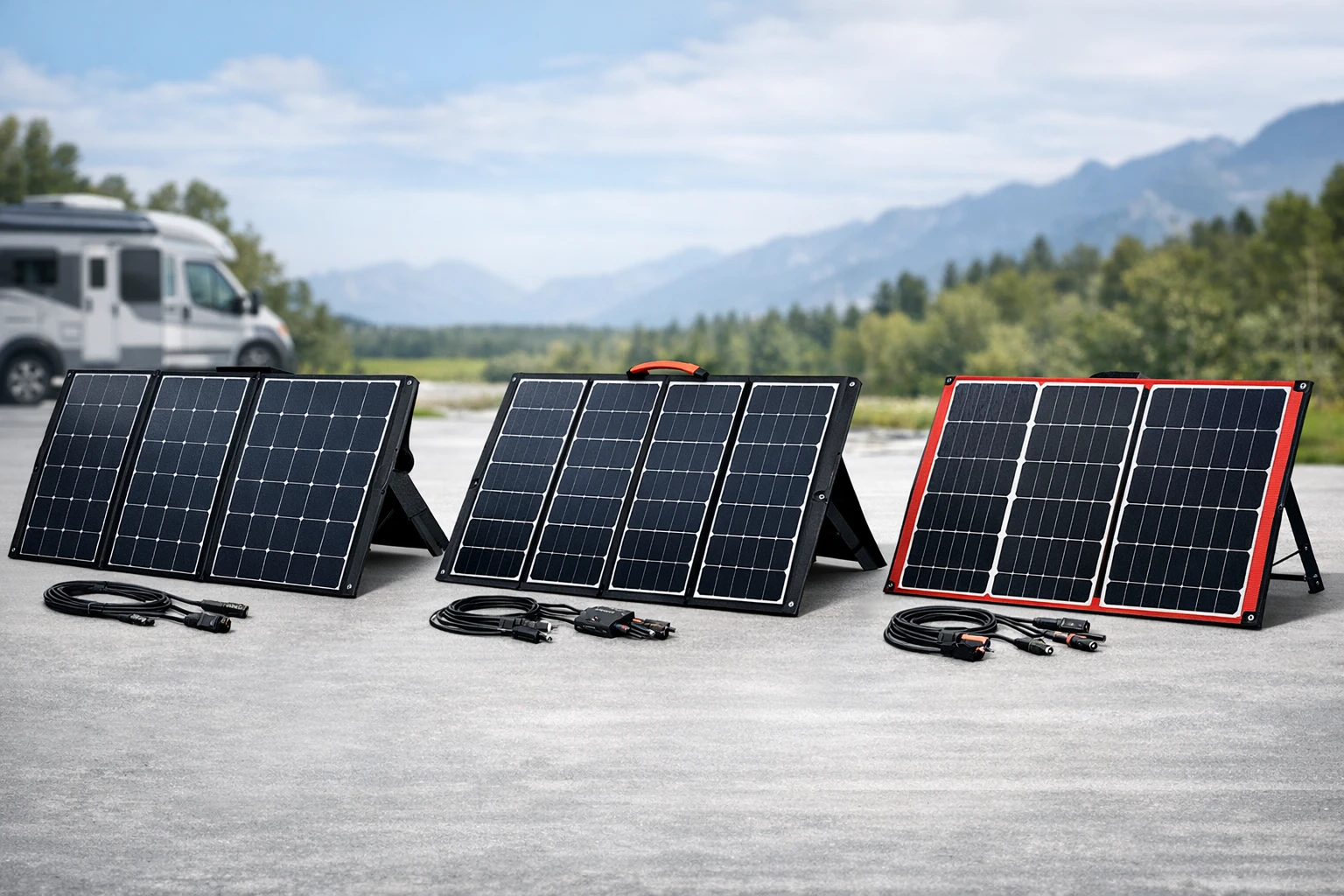
Portable solar panels have become essential tools for campers, RV owners, and emergency‑preparedness enthusiasts. This article compares three 200‑watt models that are currently available on Amazon: the TWELSEAVAN 200W Portable Solar Panel, the ZOUPW 200W Foldable Solar Panel, and the DOKIO 200W Portable Solar Panel Kit. Understanding the differences among these units helps buyers select a panel that matches their power needs, budget, and deployment environment.
The three products share a nominal 200‑watt rating but differ in cell efficiency, connector ecosystems, weight, and ancillary features such as USB‑C fast‑charging ports. By analysing real‑world customer feedback, technical specifications, and pricing, this review provides a balanced perspective that is useful for both novice and experienced outdoor power users.
Each section of the article follows a consistent structure: a concise overview, a head‑to‑head comparison across key dimensions, and a final recommendation. The analysis remains strictly based on the data supplied in the product listings and verified customer reviews.
Individual Product Overviews
TWELSEAVAN 200W Portable Solar Panel
The TWELSEAVAN panel uses A+ grade monocrystalline cells that achieve a 24% conversion efficiency, which is among the highest in the 200‑watt class. The ETFE laminated case provides over 95% light transmission and an IP65 waterproof rating, ensuring durability in rain or dusty conditions. At 15.7 lb and a folded size of 23 × 22 inches, the panel is lightweight and includes a magnetic handle for easy transport. It also offers a 60 W USB‑C Power Delivery port, an 18 W QC3.0 port, and a standard 5 V/3 A USB port, allowing simultaneous charging of multiple devices.
Customers frequently praise its performance under sub‑optimal conditions. One reviewer wrote, "I absolutely love the Twelseavan 200W Portable Solar Panel. On a mostly cloudy day I was able to charge my Bluetti AC180 from 60% to 100% between 9:00 a.m. and 1:00 p.m." The panel’s 9.8 ft MC4 cable and 5‑in‑1 connector set simplify connection to a wide range of power stations.
Price: $179.99, Rating: 4.5 / 5.0 from 722 reviews, Availability: In Stock.
ZOUPW 200W Foldable Solar Panel
The ZOUPW model also employs A+ grade monocrystalline cells with a reported 23.5% efficiency. Its surface is protected by industrial‑grade ETFE and carries an IP67 waterproof rating, offering greater resistance to immersion than the TWELSEAVAN unit. Weighing 18.96 lb, the panel folds into a briefcase‑style case measuring 25 × 21.06 × 1.97 inches and includes magnetic handles for quick deployment.
Connectivity is a strong point; the panel ships with a 5‑in‑1 cable that supports XT60, Anderson, DC7909, DC8020, and DC5521 connectors, enabling compatibility with most major power stations. Integrated USB‑A (QC3.0) and USB‑C (PD 60 W) ports provide direct device charging without a separate power station.
Customer sentiment highlights reliability: "Extremely solid performer and losing by a few percent to panels weighing more than twice as much is hard to call a real loss." Price: $179.99, Rating: 4.6 / 5.0 from 813 reviews, Availability: In Stock.
DOKIO 200W Portable Solar Panel Kit
DOKIO’s offering is a complete kit that includes a separate PWM controller, four DC adapters, and a 9.84 ft cable. The panel’s monocrystalline cells are described as high‑efficiency, though the exact percentage is not disclosed. At 9.7 lb and a folded footprint of 20 × 27 × 1.1 inches, it is the lightest of the three products.
The kit’s standout feature is its versatility; users can connect the panel to 12 V batteries directly or via the included controller, and dual USB ports allow charging of phones and small gadgets. However, the connector set relies on SAE, XT60, and alligator clips rather than the industry‑standard MC4, which may require adapters for some power stations.
Reviews note respectable output under varied conditions: "I was shocked. I've seen it get up to 160ish Watts, and never expected to see more than 75% power (150W)." Price: $108.90, Rating: 4.1 / 5.0 from 3,763 reviews, Availability: In Stock.
Head-to-Head Comparison
Price and Value
All three panels target the mid‑range market, but DOKIO is priced significantly lower at $108.90, representing a savings of roughly $71 compared with the TWELSEAVAN and ZOUPW models, each listed at $179.99. The lower price reflects DOKIO’s omission of high‑grade USB‑C fast‑charging ports and a less robust waterproof rating (IP65 versus IP67). For budget‑conscious users who already own a compatible controller, DOKIO offers the best value per watt.
Conversely, the TWELSEAVAN and ZOUPW panels justify their price through higher cell efficiency (24% and 23.5% respectively) and integrated fast‑charging ports that can power laptops or cameras directly. Users who prioritize convenience over raw cost may find the additional $70 worthwhile.
Features and Specifications
All three panels are foldable and include kickstand systems, but the design philosophies differ. TWELSEAVAN provides four adjustable kickstands and a magnetic handle, while ZOUPW’s briefcase design incorporates magnetic clasps and a single set of four kickstands that claim a 25‑30% gain by angling the panel to 45°. DOKIO supplies four kickstands as well, but reviewers describe them as “a little flimsy.”
Connector ecosystems vary considerably. TWELSEAVAN offers a 5‑in‑1 MC4 cable plus three DC adapters, making it compatible with popular power stations such as Jackery, EcoFlow, and Bluetti. ZOUPW’s 5‑in‑1 cable supports XT60, Anderson, and several DC barrel types, broadening compatibility but requiring adapters for MC4‑only stations. DOKIO relies on SAE, XT60, and alligator clips, which are less common in solar applications and may necessitate additional adapters.
Both TWELSEAVAN and ZOUPW include built‑in USB‑C (PD 60 W) and USB‑A (QC3.0) ports for direct device charging. DOKIO provides only dual USB‑A ports (5 V/2.4 A) without fast‑charging capabilities, limiting its usefulness for high‑draw devices.
Customer Ratings and Feedback
ZOUPW holds the highest average rating at 4.6 / 5.0 from 813 reviewers, while TWELSEAVAN follows closely with 4.5 / 5.0 from 722 reviewers. DOKIO’s rating is lower at 4.1 / 5.0 despite a larger review volume (3,763). Positive comments for TWELSEAVAN focus on high efficiency and reliable output in cloudy conditions. ZOUPW reviewers commend its solid construction and thoughtful accessories, though a few note limited kickstand adjustability and occasional USB‑C power limitation. DOKIO users appreciate the lightweight design and comprehensive kit, yet many criticize the non‑standard connectors and inconsistent power delivery relative to the advertised 200 W rating.
Performance and Reliability
Real‑world performance data from customer reviews reveal that TWELSEAVAN consistently reaches close to its rated output even under overcast skies. One user reported generating 177 W at 10:00 a.m. on a winter day, attributing the result to the panel’s 24% efficiency and ETFE cover. ZOUPW’s reviewers observe “near the top” performance among 100 W panels, with a noted drop to 45 W on the USB‑C port under hazy conditions, suggesting a possible voltage negotiation limitation.
DOKIO’s output appears more variable. Reviewers have measured 112 W to 160 W in full sun, but many experience 20‑40 W under cloudy conditions, which aligns with the panel’s unspecified efficiency. Some users report connector degradation at high temperatures, indicating a potential durability concern for the SAE and XT60 plugs.
Best Use Cases
TWELSEAVAN excels for users who need high efficiency in low‑light environments, such as winter camping or shaded campsite locations. Its fast‑charging USB‑C port makes it suitable for powering laptops and cameras directly.
ZOUPW is ideal for users who value a rugged, water‑resistant design (IP67) and require a versatile cable set for multiple power station brands. It suits marine applications and rainy‑season RV trips.
DOKIO is best suited for lightweight backpackers and cyclists who prioritize portability and already own a compatible controller. Its low price and included accessories make it a practical entry‑level solution.
Comparison Table
| Feature | TWELSEAVAN 200W | ZOUPW 200W | DOKIO 200W Kit |
|---|---|---|---|
| Price (USD) | $179.99 | $179.99 | $108.90 |
| Cell Efficiency | 24% | 23.5% | Not disclosed (high‑efficiency claim) |
| Weight | 15.7 lb | 18.96 lb | 9.7 lb |
| Folded Size | 23 × 22 in | 25 × 21.06 × 1.97 in | 20 × 27 × 1.1 in |
| Waterproof Rating | IP65 | IP67 | IP65 (surface only) |
| USB‑C PD | 60 W | 60 W | None |
| QC3.0 USB‑A | 18 W | 18 W | 5 V/2.4 A |
| Connector Type | 5‑in‑1 MC4 + 3 DC adapters | 5‑in‑1 (XT60, Anderson, DC) | SAE, XT60, alligator clips |
| Kickstand Adjustability | 4 adjustable | 4 (limited range) | 4 (flimsy) |
| Average Rating | 4.5/5 (722) | 4.6/5 (813) | 4.1/5 (3,763) |
Pros & Cons
TWELSEAVAN 200W Portable Solar Panel
- Pros: Highest reported cell efficiency (24%); fast USB‑C PD port; robust ETFE case with IP65 rating; extensive MC4 compatibility; strong performance in cloudy conditions.
- Cons: Kickstand angle range could be wider; slightly heavier than DOKIO; IP65 rating is lower than ZOUPW’s IP67.
ZOUPW 200W Foldable Solar Panel
- Pros: IP67 waterproof rating; versatile 5‑in‑1 cable supporting multiple connector standards; solid construction; integrated fast‑charging ports.
- Cons: Kickstand adjustability limited; USB‑C output sometimes limited to 45 W in hazy weather; heavier than TWELSEAVAN.
DOKIO 200W Portable Solar Panel Kit
- Pros: Lowest price; lightest weight; includes separate PWM controller and extensive accessory set; easy to carry for backpacking.
- Cons: Non‑standard connectors (SAE, XT60) may require adapters; lower reported efficiency; occasional connector overheating; USB ports lack fast‑charging capability.
Recommendations
For users who require the most efficient energy capture and want built‑in fast‑charging for laptops or cameras, the TWELSEAVAN 200W Portable Solar Panel is the optimal choice. Its 24% cell efficiency and robust MC4 ecosystem make it suitable for over‑paneling setups and low‑light conditions.
Outdoor enthusiasts who anticipate exposure to rain, splashes, or marine environments should consider the ZOUPW 200W Foldable Solar Panel. The IP67 rating and the broad connector set provide confidence in harsh weather and compatibility with a wide range of power stations.
Backpackers, cyclists, and budget‑focused users will find the DOKIO 200W Portable Solar Panel Kit most appealing. Its lightweight design and inclusive accessory bundle deliver acceptable performance for short trips where weight and cost are primary concerns.
FAQ
- Can these panels be used with any 200 W power station? All three panels are compatible with most major brands, but the connector type differs. TWELSEAVAN uses MC4, ZOUPW provides XT60/Anderson options, and DOKIO relies on SAE and XT60, so adapters may be required for some stations.
- What is the difference between IP65 and IP67 ratings? IP65 protects against water jets from any direction, while IP67 offers protection against temporary immersion up to 1 m for 30 minutes. ZOUPW therefore provides a higher level of waterproofing than the other two models.
- Will the USB‑C ports charge a laptop at full speed? Both TWELSEAVAN and ZOUPW advertise a 60 W PD port, which can charge most ultrabooks and tablets at full speed. DOKIO does not include a USB‑C port.
- How does temperature affect connector reliability? DOKIO reviewers reported SAE connectors softening at 90 °C, leading to intermittent connections. TWELSEAVAN and ZOUPW use more heat‑resistant MC4 and XT60 connectors, which generally perform better under high temperatures.
- Is it safe to over‑panel a power station? Yes, provided the power station has built‑in regulation to limit input. Reviewers of TWELSEAVAN successfully over‑paneled a Jackery SOLIX C300 without issues.
- Can these panels be mounted on a vehicle roof? All three panels can be mounted using their kickstand systems or additional brackets. The lightweight nature of DOKIO makes roof‑mounting easier, while ZOUPW’s briefcase design may require a custom mounting solution.
- Which panel offers the best value per watt? DOKIO provides the lowest cost per watt at approximately $0.54 / W, compared with $0.90 / W for both TWELSEAVAN and ZOUPW. However, value should also consider efficiency, durability, and included features.
Conclusion
All three 200‑watt portable solar panels deliver reliable power for off‑grid applications, yet they serve distinct market segments. TWELSEAVAN leads in conversion efficiency and fast‑charging convenience, making it the preferred option for power‑hungry users and those operating in low‑light environments. ZOUPW offers the most robust waterproofing and a versatile connector suite, which is advantageous for marine and rainy‑season travel. DOKIO excels in affordability and portability, ideal for lightweight backpacking where cost constraints dominate.
Considering price, performance, and feature set, the recommended hierarchy is: TWELSEAVAN for premium efficiency, ZOUPW for rugged waterproof performance, and DOKIO for budget‑conscious portability.
Products Mentioned in This Review
Frequently Asked Questions
What are the main differences between the TWELSEAVAN, ZOUPW, and DOKIO 200W portable solar panels?
The TWELSEAVAN offers higher cell efficiency and a USB‑C fast‑charge port, ZOUPW is the lightest with a rugged frame, and DOKIO includes a full kit with a charge controller and multiple connectors.
Which 200W panel is best for lightweight backpacking?
The ZOUPW 200W panel, at around 5 lb, is the lightest and folds compactly, making it ideal for backpacking.
How many 200W panels are needed to fully charge a 2000Wh power station in a day?
Assuming 5 hours of peak sun, two 200W panels can generate roughly 2 kWh, so about two panels are required to charge a 2000Wh station in one sunny day.
Do these panels work with standard MC4 connectors?
All three panels include MC4 adapters, but the DOKIO kit comes with a built‑in MPPT controller that directly accepts MC4 inputs.
Is there a noticeable price difference among the three models?
Yes; the TWELSEAVAN is typically the most expensive, ZOUPW is mid‑range, and the DOKIO kit is the most affordable when considering the included accessories.