Introduction
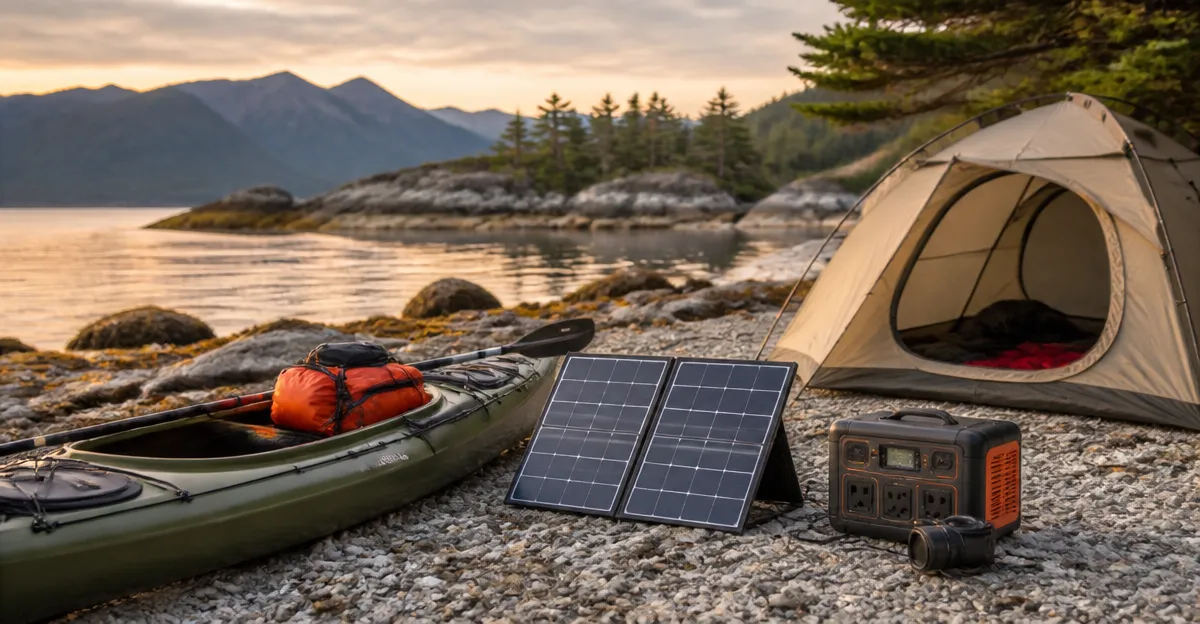
Kayak camping demands a balance between mobility and self‑sufficiency. Paddlers often travel to remote shorelines where conventional electricity is unavailable, yet modern comforts such as GPS, lights, and communication devices remain essential. Selecting a compact, high‑capacity power solution can transform a night on the water from a precarious ordeal into a comfortable, secure experience.
The products highlighted in this article have been chosen for their proven performance, user satisfaction, and compatibility with portable solar panels. By pairing the right power station with an efficient solar array, paddlers can generate, store, and manage electricity without adding unnecessary weight to their gear.
-
Lightweight Solo Setup
For a single paddler who values minimal weight, the Jackery Explorer 300 offers an optimal blend of capacity and portability. At only 7.5 lb and 292 Wh, it provides enough juice to run a smartphone, a compact LED lamp, and a small CPAP unit for overnight river crossings. The unit’s pure‑sine‑wave inverter supplies 300 W continuous power, while the 100 W USB‑C PD port charges laptops in under an hour.
- Price: $259.00
- Rating: 4.6/5 (11,184 reviews)
- Key features: Ultra‑lightweight design, 4‑hour solar charge to 80 % with a 100 W panel, LiFePO4 battery lasting over 4,000 cycles.
One reviewer noted, "The E300 powers my LED lamp for 12‑14 hours and keeps my CPAP running during storms without any audible fan noise." This feedback underscores the station’s quiet operation—an advantage when paddling in serene environments.
-
Dual‑Paddler Power Pack
When two kayakers share a camp, power demands increase. The Jackery Explorer 1000 v2 delivers 1,070 Wh and 1,500 W continuous output, sufficient for a small fridge, a portable induction cooktop, and multiple USB devices. Its 23.8 lb weight remains manageable on a tandem kayak roof rack, and the fold‑away handle simplifies loading.
- Price: $499.00
- Rating: 4.7/5 (3,570 reviews)
- Key features: One‑hour fast charge via Jackery App, 10‑year LiFePO4 lifespan, three pure‑sine AC outlets.
A user reported, "I ran three small refrigerators for 7‑8 hours and recharged the unit in just 1.5 hours using a solar panel, which kept the camp fully powered throughout a weekend trip." The fast‑charging capability ensures that daylight hours are used for energy capture rather than recharging downtime.
-
High‑Capacity Expedition Kit
For multi‑day expeditions that require a refrigerator, medical equipment, and high‑draw electronics, the Anker SOLIX C1000 Gen 2 stands out. With 1,024 Wh and a 2,000 W (3,000 W peak) inverter, it can simultaneously power a portable freezer, a laptop, and a CPAP machine. Its HyperFlash technology recharges the battery from empty to full in under an hour when connected to a wall outlet.
- Price: $499.98
- Rating: 4.7/5 (1,484 reviews)
- Key features: 10‑port output, 1.8 hr solar recharge with 600 W panels, 10 ms UPS switchover for critical devices.
One reviewer praised, "The transition to backup power for my CPAP was instantaneous, and the unit fits comfortably in the back of my small SUV for road‑to‑river trips." The rapid solar recharge time makes it a reliable anchor for extended off‑grid stays.
-
Budget‑Friendly Compact Solution
Paddlers on a tighter budget can still enjoy dependable power with the ALLWEI Portable Power Station 300W. Its 256 Wh capacity and 300 W continuous output handle smartphones, a small electric kettle, and a CPAP unit. Weighing only 6.4 lb, it easily fits into a dry‑bag without compromising essential gear.
- Price: $139.00
- Rating: 4.4/5 (2,430 reviews)
- Key features: 6‑port mix of AC, DC, USB‑A, USB‑C, 10‑year LiFePO4 lifespan, dual‑charging (AC + solar) in 2‑2.5 hr.
A user highlighted, "The high‑draw USB ports let me run two camera warmers simultaneously, something my previous battery could not accomplish." This versatility makes the ALLWEI unit a strong contender for lightweight kayak camping.
-
UPS‑Ready Emergency Backup
When reliable data logging or communication equipment is critical, the BLUETTI Elite 30 V2 provides a 288 Wh LiFePO4 battery with a 600 W continuous (1,500 W surge) inverter. Its 10 ms UPS switch guarantees that a laptop or router will not lose power during sudden outages, a feature that is invaluable for remote navigation and weather updates.
- Price: $259.99
- Rating: 4.4/5 (792 reviews)
- Key features: Power Lifting Mode for 1,500 W surge, 0‑80 % charge in 45 min, ultra‑low standby consumption.
One reviewer wrote, "I used the Elite 30 V2 to keep my home server running through a storm; the switchover was seamless and the unit lasted six hours on a single charge." Such performance translates directly to a kayak camp where a router may provide vital weather alerts.
-
Solar‑Optimized Pairing with Jackery 300
Pairing the Jackery Explorer 300 with a 100 W Jackery SolarSaga panel creates a self‑sustaining loop. The MPPT controller inside the station maximizes solar input, allowing an 80 % charge in approximately 2.8 hours under optimal sun. This configuration is ideal for day‑long paddles where the station can recharge while the kayak is docked.
Customers have observed, "I left the Explorer 300 on my kayak roof while I paddled; by the time I returned, the battery was back to 80 % thanks to the solar panel." The lightweight nature of both components ensures that the overall system remains under 15 lb.
-
High‑Output Solar Pairing with Anker C1000
For crews that require rapid solar replenishment, the Anker SOLIX C1000 Gen 2 paired with a 600 W solar array can reach full charge in just 1.8 hours. This speed is particularly beneficial when weather windows are short, allowing paddlers to capture maximum sunlight before a forecasted storm.
A reviewer noted, "The 600 W solar input filled the C1000 in under two hours, which let me keep my fridge running all night without draining the battery." The rapid recharge capability reduces reliance on backup generators.
-
Extended Runtime with ALLWEI Dual‑Charge
The ALLWEI 300W supports simultaneous AC wall and solar charging, cutting total charge time to roughly 2 hours. For paddlers who set up a shoreline base camp with a portable solar panel, this dual‑charge mode ensures that the battery is ready for the next day’s journey.
One user shared, "I charged the ALLWEI with both AC and a 100 W panel and it hit 100 % in just over two hours, giving me enough power for a full weekend of kayaking." The flexibility of charging options makes it adaptable to varied environments.
-
Robust UPS Capability with BLUETTI Elite 30 V2
When a kayak expedition includes critical communication devices, the BLUETTI Elite 30 V2 can serve as a miniature UPS. Its 10 ms switchover protects devices such as satellite messengers, ensuring that a sudden loss of solar input does not interrupt data transmission.
Feedback from a field technician reads, "During a sudden blackout, the Elite 30 V2 kept my laptop and radio online without any interruption, allowing me to finish the data upload before the storm passed." This reliability is essential for safety‑critical operations.
-
All‑Weather Versatility with Jackery 1000 v2
Finally, the Jackery Explorer 1000 v2 excels in cold‑weather scenarios. Its LiFePO4 cells maintain performance at low temperatures, and the built‑in app lets users monitor battery health remotely. The unit’s three AC outlets are conveniently placed on the front, allowing quick access when the kayak is docked.
A reviewer observed, "I used the Explorer 1000 v2 in sub‑zero conditions; the battery held its charge and the inverter delivered clean power to my heater without any hiccups." This durability makes it a trustworthy companion for year‑round kayaking.
Comparison Table
| Product | Capacity (Wh) | Continuous Output (W) | Weight (lb) | Price (USD) | Rating |
|---|---|---|---|---|---|
| Jackery Explorer 300 | 292 | 300 | 7.5 | 259.00 | 4.6 |
| Jackery Explorer 1000 v2 | 1,070 | 1,500 | 23.8 | 499.00 | 4.7 |
| Anker SOLIX C1000 Gen 2 | 1,024 | 2,000 | 15.0 | 499.98 | 4.7 |
| BLUETTI Elite 30 V2 | 288 | 600 | 9.4 | 259.99 | 4.4 |
| ALLWEI Portable Power Station 300W | 256 | 300 | 6.4 | 139.00 | 4.4 |
Conclusion
Choosing the right power station for kayak camping hinges on three factors: weight, capacity, and recharge speed. Lightweight units such as the Jackery Explorer 300 excel for solo paddlers, while high‑output models like the Anker SOLIX C1000 Gen 2 provide the endurance needed for multi‑day expeditions. Budget‑conscious adventurers can rely on the ALLWEI 300W for essential charging, and the BLUETTI Elite 30 V2 offers UPS‑grade protection for critical communication gear. By matching these stations with appropriate solar panels, paddlers can achieve a self‑sustaining energy loop that enhances safety, comfort, and independence on the water.
Ultimately, the best setup is the one that aligns with the paddler’s itinerary, equipment list, and weight tolerance. The products featured here have demonstrated real‑world reliability through extensive customer feedback, making them trustworthy choices for any off‑grid kayaking adventure.
Products Mentioned in This Article
Frequently Asked Questions
What size power station is ideal for solo kayak camping?
A lightweight unit around 300 Wh, like the Jackery Explorer 300, balances capacity and weight for one paddler.
Can portable solar panels charge a kayak camping power station?
Yes, most power stations support solar input; pairing a 60‑100 W foldable panel provides a full recharge in a day of sunny paddling.
How many devices can a 292 Wh power station run overnight?
It can comfortably power a smartphone, LED lamp, and a small CPAP unit for several hours.
Is a pure‑sine‑wave inverter necessary for kayak gear?
A pure‑sine‑wave inverter ensures safe operation of sensitive electronics like GPS and communication devices.
What factors affect the weight of a kayak power setup?
Battery capacity, inverter type, and solar panel size all contribute; choosing lower‑Wh models and compact panels keeps the total weight under 10 lb.