
Introduction
Portable power stations have evolved from simple backup batteries to sophisticated energy hubs that can be controlled remotely through open application programming interfaces (APIs). This evolution enables homeowners to integrate backup power directly into smart home ecosystems, allowing automated responses to outages, scheduled charging, and remote monitoring.
For readers who value reliability, flexibility, and the ability to manage energy consumption from a smartphone or voice assistant, selecting a power station with open API support is essential. The following list highlights ten scenarios in which a portable power station can enhance daily life, each illustrated with real‑world products available on Amazon.
Compact Travel Companion
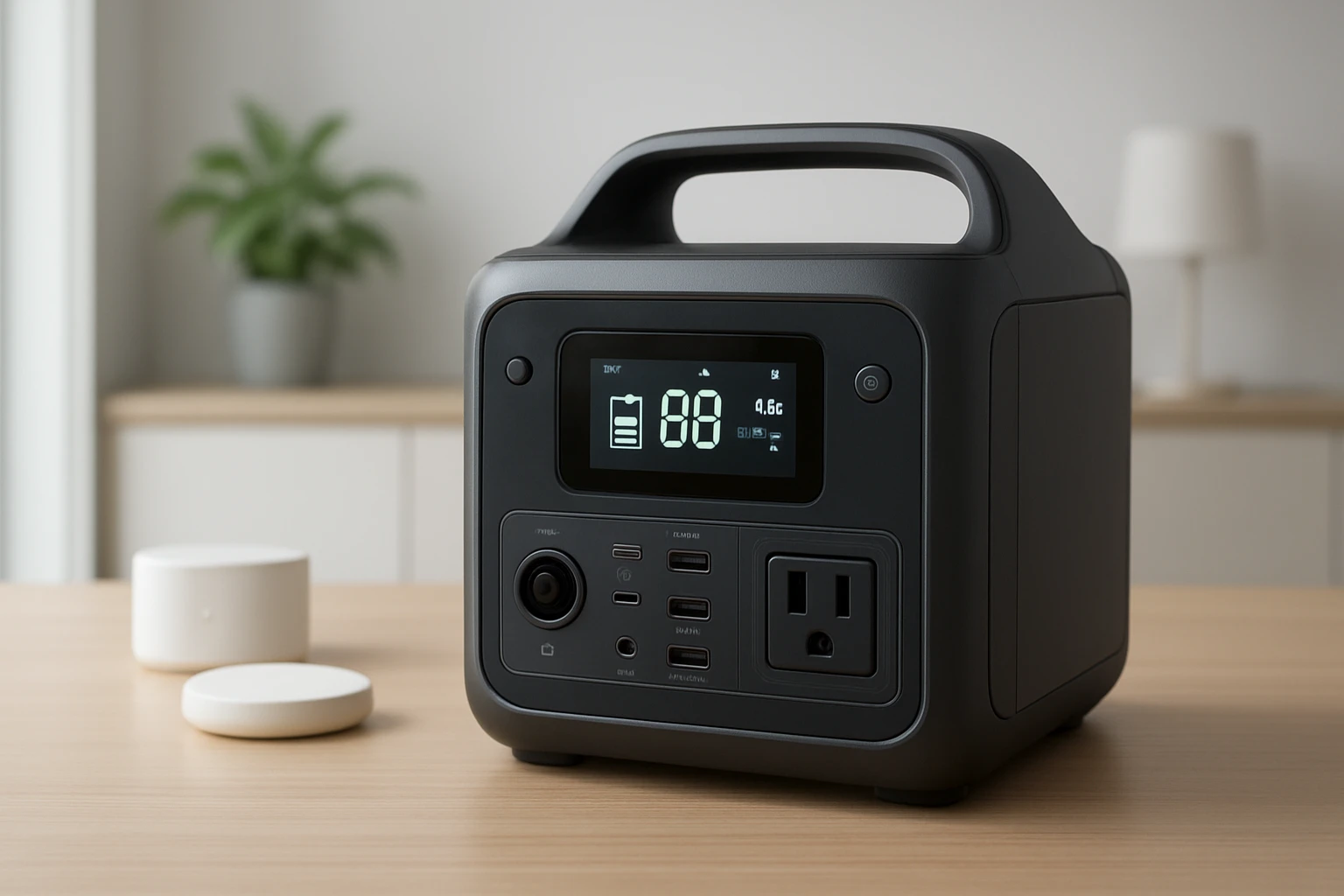
When embarking on a weekend camping trip, weight and size are paramount. The Anker SOLIX C300 delivers 288 Wh of LiFePO4 energy in a chassis that is 15 % smaller than competing models. Its 300 W continuous output (600 W surge) can power a mini fridge, laptop, and LED lighting simultaneously. The dual 140 W USB‑C ports enable rapid recharging of smartphones and tablets, while the quiet 25 dB operation ensures a peaceful campsite.
Customers note the convenience of the optional strap, describing it as “a backpack‑friendly solution that does not compromise on power.” The unit recharges to 80 % in just 50 minutes using a wall outlet, making it ideal for short getaways where time is limited.
Home Backup for Essential Appliances
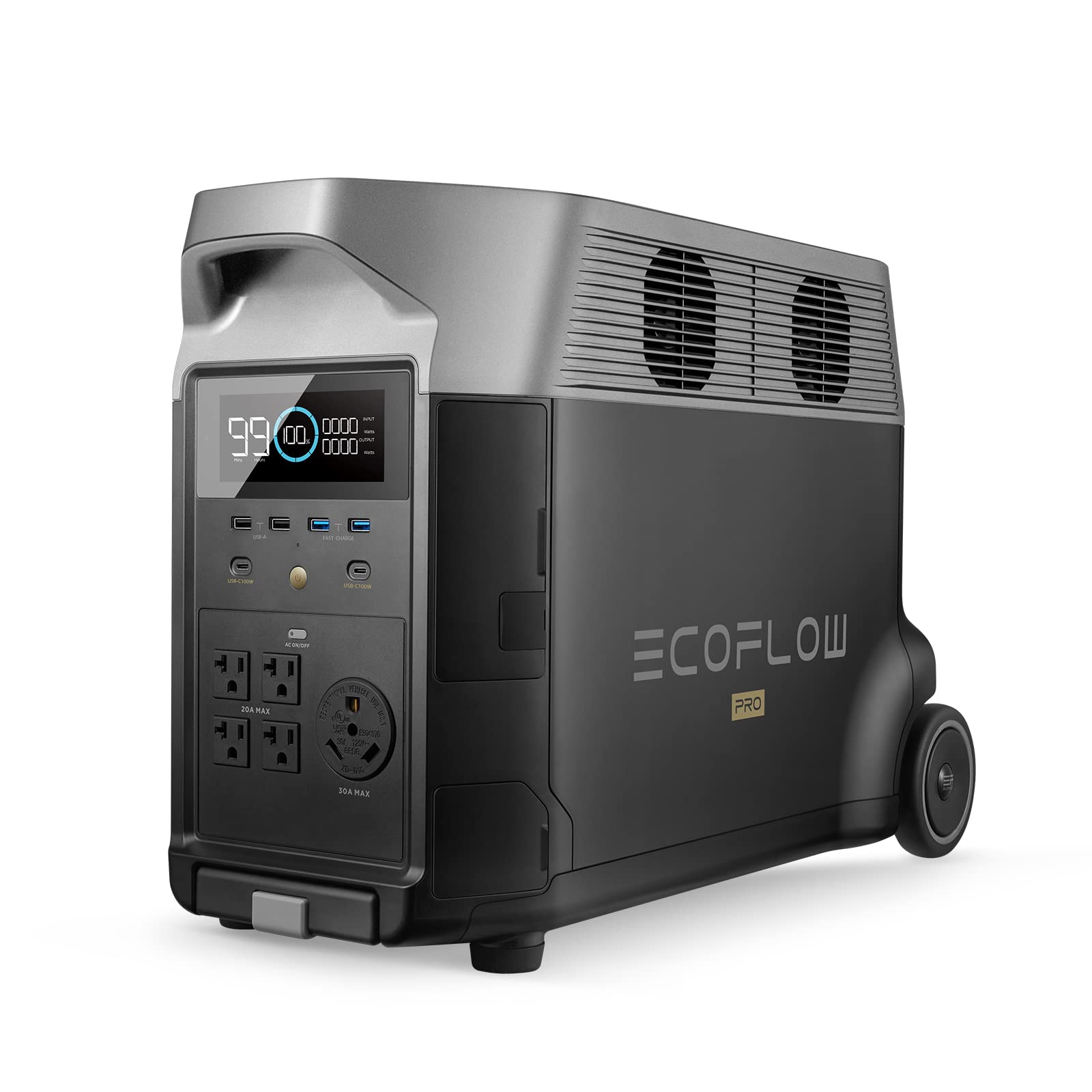
During a prolonged power outage, a high‑capacity station is required to keep critical appliances running. The EF ECOFLOW DELTA Pro offers a massive 3600 Wh LiFePO4 battery, capable of delivering 3600 W of continuous AC power. With five 120 V AC outlets, users can connect a refrigerator, medical equipment, and a home office setup simultaneously.
Its X‑Boost technology expands output to 4500 W, and the unit can be paired with an additional DELTA Pro to reach 7200 W for larger homes. The open API allows integration with smart home platforms, enabling automated start‑up when the grid voltage drops below a defined threshold.
Smart Power Strip for Integrated Control
Even the most powerful station benefits from intelligent distribution. The Kasa Smart Plug Power Strip provides three individually controlled outlets and two USB ports, all managed through the Kasa app. Voice commands via Alexa or Google Assistant add hands‑free convenience, while surge protection safeguards sensitive electronics.
Users appreciate the ability to schedule outlet activation, for example, turning on a dehumidifier only during nighttime hours to reduce energy consumption. The strip’s open API can be linked to the power station’s monitoring system, allowing the station to shut off non‑essential loads automatically during low‑battery conditions.
Solar‑Ready Expedition Unit
Adventurers who rely on renewable energy need a station that pairs seamlessly with solar panels. The Anker SOLIX C300 supports 100 W solar input and recommends Anker’s own 60 W or 100 W panels for optimal performance. The two‑way fast‑charging USB‑C ports also accept solar‑derived power, enabling continuous operation without a wall outlet.
Field reports highlight the station’s ability to keep a drone charging while a satellite phone remains online, a combination essential for remote research teams.
Rapid Recharge for Emergency Services
First‑responders require equipment that can be recharged quickly between calls. The DELTA Pro’s X‑Stream fast‑charging technology restores the battery to full capacity in 1.8 hours when connected to a 240 V outlet delivering 3000 W. This speed surpasses most competing generators, reducing downtime during critical missions.
Emergency personnel have praised the unit’s robust build and the ability to monitor charge status remotely via the EcoFlow app, ensuring that the device is always ready for deployment.
Multi‑Device Charging Hub
Modern households often need to power laptops, power tools, and entertainment systems simultaneously. The SOLIX C300 offers eight versatile ports, including three AC outlets, a 120 W car socket, two high‑power USB‑C ports, and a USB‑A port. This diversity eliminates the need for multiple adapters and simplifies cable management.
Reviewers frequently cite the “all‑in‑one” nature of the station as a decisive factor when choosing a backup solution for both indoor and outdoor use.
Scalable Energy for Growing Needs
Homeowners planning future expansion can benefit from a modular system. The DELTA Pro can be paired with additional battery modules, increasing total storage from 3.6 kWh to a remarkable 25 kWh. This scalability aligns with the open API’s capacity to adjust power allocation based on real‑time demand.
Such flexibility is valuable for users who anticipate adding electric vehicle charging or solar array expansion in the coming years.
Quiet Operation for Indoor Use
Noise can be a disruptive factor when a power station operates indoors. The SOLIX C300 emits only 25 dB from a distance of 3.3 ft, making it suitable for use in a home office or during a live broadcast. The low acoustic profile ensures that productivity is not compromised during an outage.
Customers have reported that the station “runs silently even when all ports are active,” a testament to its refined internal cooling system.
Integrated Monitoring and Automation
Both the Anker and EcoFlow stations provide companion apps that expose battery health, temperature, and charge‑discharge cycles. Through open APIs, these data points can be fed into home automation platforms such as Home Assistant or OpenHAB, enabling rules like “turn off non‑essential loads when battery level falls below 30 %.”
This level of automation reduces manual intervention and optimizes energy usage during prolonged outages.
Budget‑Friendly Smart Outlet Solution
For readers seeking an affordable entry point into smart energy management, the Kasa Smart Plug Power Strip offers a cost‑effective solution at $24.99. Despite its low price, it maintains a 4.6‑star rating from over 16,000 reviews, indicating reliable performance.
The strip’s ability to integrate with the same open API ecosystem as larger power stations provides a cohesive user experience without a significant financial commitment.
Comparison Table
| Product | Capacity (Wh) | Continuous Output (W) | Ports | Price (USD) | Rating |
|---|---|---|---|---|---|
| Anker SOLIX C300 | 288 | 300 | 3 AC, 1 Car, 3 USB‑C, 1 USB‑A | Not listed | 4.6/5 (1,754 reviews) |
| EF ECOFLOW DELTA Pro | 3600 | 3600 (up to 4500 with X‑Boost) | 5 AC, 2 USB‑A, 2 USB‑C, 2 DC, 1 Car, 1 Anderson | 749.00 | Not listed |
| Kasa Smart Plug Power Strip | N/A | N/A | 3 Smart AC, 2 USB | 24.99 | 4.6/5 (16,394 reviews) |
Conclusion
Choosing a portable power station with open API capabilities empowers users to create resilient, automated energy solutions that adapt to both everyday convenience and emergency scenarios. The Anker SOLIX C300 excels in compact travel applications, the EF ECOFLOW DELTA Pro dominates home backup with scalable capacity, and the Kasa Smart Plug Power Strip offers an economical gateway to smart outlet control. By integrating these devices into a unified automation framework, households can achieve seamless power management, reduced energy waste, and enhanced peace of mind.
Frequently Asked Questions
What is an open API in a portable power station and why is it useful?
An open API allows third‑party apps or smart home platforms to control and monitor the power station remotely, enabling automation like scheduled charging or outage alerts.
Can a portable power station with an open API be integrated with voice assistants?
Yes, many models support Alexa, Google Assistant, or Siri, letting you start or stop power output and check battery status using voice commands.
Which features should I look for when choosing a compact travel power station?
Prioritize lightweight design, high energy density (Wh), sufficient continuous wattage for your devices, and USB‑C Power Delivery ports for fast charging.
How does remote monitoring improve reliability during power outages?
Remote monitoring provides real‑time battery level, load, and health data, so you can anticipate depletion and manage loads before the power runs out.
Is it safe to use a portable power station to run a mini fridge on a campsite?
Yes, as long as the station’s continuous wattage exceeds the fridge’s draw (typically 80‑120 W) and it has enough capacity (e.g., 300 Wh) for the desired runtime.