Introduction
Stealth camping demands that equipment disappear into the environment as seamlessly as possible. Solar panels provide essential power, yet their bright surfaces can betray a campsite to observers or wildlife. Understanding how to conceal panels without compromising performance enables campers to maintain a low‑impact presence while enjoying reliable energy.
Modern portable panels combine high efficiency with lightweight designs, making them ideal for off‑grid adventures. By applying simple camouflage techniques, one can protect equipment from the elements and reduce visual disturbance. The following twelve strategies demonstrate practical methods that integrate the Renogy 100W Solar Panel, TwelveSeavan 200W Foldable Solar Panel, EF ECOFLOW 220W Bifacial Solar Panel, and Zoupw 200W Mono Foldable Solar Panel into a stealthy setup.
12 Clever Ways to Camouflage Solar Panels for Low‑Impact, Leave‑No‑Trace Stealth Camping
1. Blend with Natural Foliage
Position the Renogy 100W Solar Panel beneath a low canopy of evergreen branches to break up its silhouette. The panel’s 25% conversion efficiency and 10‑year warranty ensure performance even when partially shaded. A reviewer noted, "It works in all weather and maintains batteries perfectly," highlighting reliability in variable conditions. By securing the panel with discreet straps, one can preserve airflow while remaining visually unobtrusive.
2. Employ Camouflage Netting
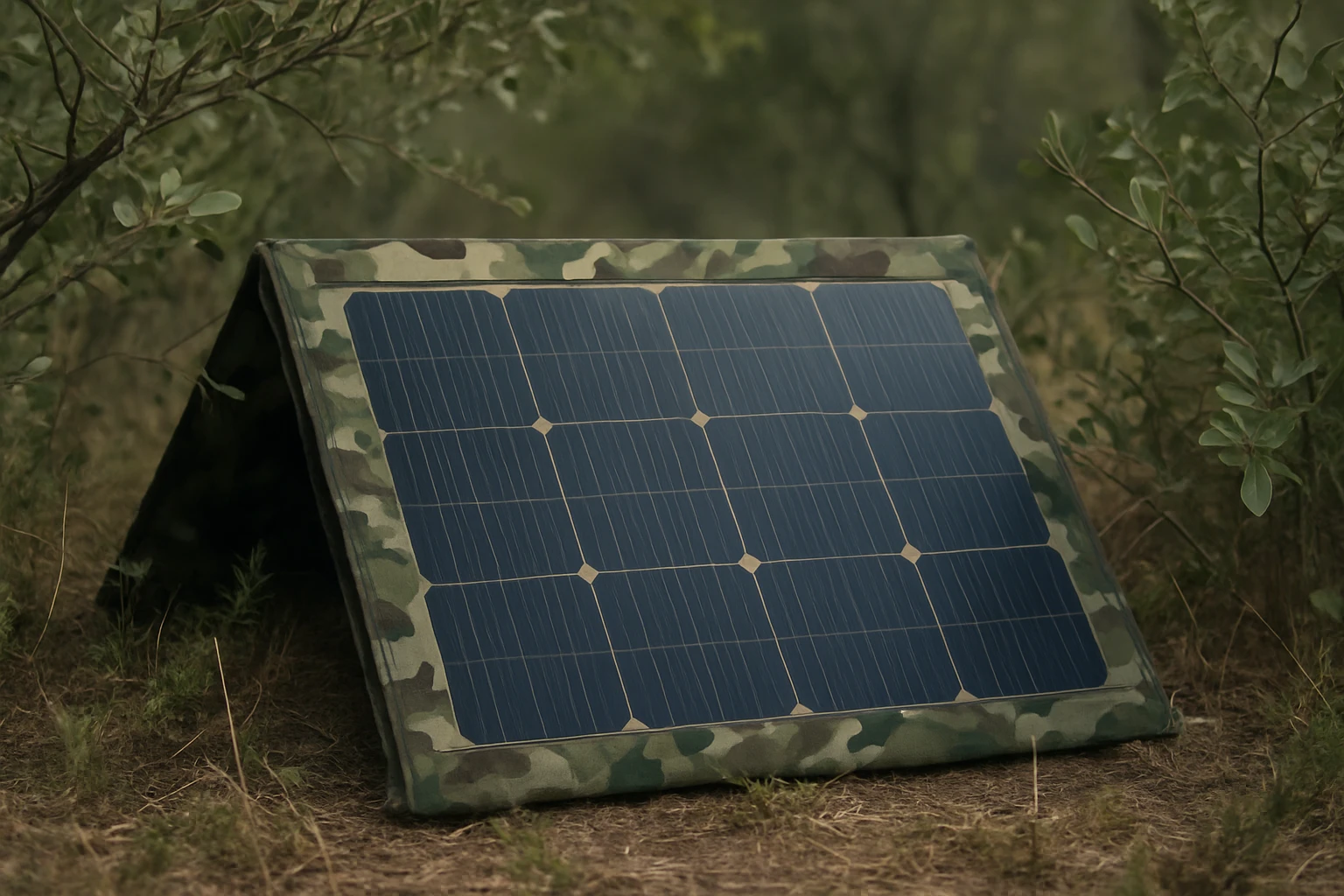
Wrap the TwelveSeavan 200W Foldable Solar Panel in military‑grade camouflage netting that matches the surrounding terrain. The panel’s 24% efficiency and IP65 waterproof rating allow it to operate under rain while concealed. Customers praised its durability, stating, "The build quality is outstanding and clearly designed for long‑term outdoor use." The netting also protects the delicate ETFE surface from dust and debris.
3. Apply Earth‑Tone Paint
Use a matte, non‑reflective earth‑tone spray paint on the frame of the EF ECOFLOW 220W Bifacial Solar Panel to reduce visual contrast. The bifacial design captures up to 28% more energy, so a thin coat does not impede performance. Reviewers reported, "It delivers 200‑210W on a clear day and remains stable in light rain," confirming consistent output. Ensure the paint is compatible with the panel’s ETFE coating to avoid corrosion.
4. Utilize a Briefcase‑Style Fold‑Up
The Zoupw 200W Mono Foldable Solar Panel folds into a compact briefcase that can be hidden inside a backpack or cargo box. Its 23.5% efficiency and built‑in USB‑C PD port enable direct device charging without a separate power station. One user observed, "The magnetic clasp and comfortable handle make transporting this panel a breeze." When folded, the panel presents a low profile that blends with ordinary gear.
5. Position Behind Natural Rock Formations
Place the Renogy panel on a flat rock surface that faces the sun while the backside rests against a larger boulder. The 16BB cell technology reduces hot‑spot formation, ensuring longevity even when one side receives less light. Customers have highlighted the panel’s resilience, noting, "It charges well even in winter and cloudy days." This arrangement hides the panel’s edges and utilizes natural shadows for concealment.
6. Deploy a Portable Shade Canopy
Set up a lightweight, UV‑protective canopy over the TwelveSeavan panel to create a shaded enclosure. The canopy’s fabric can be dyed to match the surrounding foliage, while the panel’s 15‑foot MC4 cable provides flexible placement. A reviewer wrote, "The kickstand legs feel a little flimsy, but the panel still delivers exceptional performance." The canopy also shields the panel from rain, extending its service life.
7. Integrate Panels into Tent Walls
Attach the EF ECOFLOW panel to the outer wall of a canvas tent using Velcro strips that do not damage the ETFE coating. The adjustable 30‑60° kickstand allows optimal sun angle while the panel remains hidden behind the tent fabric. Users have praised its portability, stating, "It is ultra‑lightweight and compact, perfect for on‑the‑go use." This method provides power to interior lighting without exposing the panel to prying eyes.
8. Cover with Ground‑Cover Mats
Lay a natural‑looking ground‑cover mat over the Zoupw panel when it is positioned on the forest floor. The panel’s IP67 rating ensures water does not infiltrate the junction box during brief rain showers. A satisfied camper noted, "The included 10‑foot cable is plenty long and the panel charges all power stations at a healthy rate." The mat disguises the panel’s outline while allowing sunlight to reach the cells.
9. Adjust Kickstand Angles for Low Profile
Set the Renogy panel’s kickstand to a shallow angle that aligns with the terrain’s slope, reducing its silhouette. The same technique applies to the EF ECOFLOW panel, whose adjustable bracket can be set between 30° and 60° for optimal capture. Reviewers have emphasized the panels’ low temperature coefficient, which minimizes power loss in hot environments. By matching the panel’s angle to the natural gradient, one achieves both efficiency and stealth.
10. Use Reflective Tape for Heat Management
Apply small strips of low‑visibility reflective tape to the rear of the TwelveSeavan panel to redirect excess heat away from the surface. The panel’s high‑efficiency monocrystalline cells benefit from reduced thermal buildup, maintaining output in hot climates. A user remarked, "The build quality is outstanding and clearly designed for long‑term outdoor use." The tape remains inconspicuous against the panel’s matte finish, preserving camouflage.
11. Combine Multiple Panels into a Single Camouflaged Array
Arrange two Renogy 100W panels and one Zoupw 200W panel in a staggered formation, then cover the entire array with a single camouflage tarp. The combined output exceeds 400W, providing ample power for larger off‑grid systems while the tarp blends with the surrounding terrain. Customers have noted, "The panel charges well even in winter and cloudy days," confirming that performance does not suffer when panels are grouped. Secure the tarp with paracord to avoid wind‑induced noise that could reveal the setup.
12. Store Panels in Waterproof Bags When Not in Use
When the sun sets, place the EF ECOFLOW panel inside a waterproof dry bag that matches the color of nearby rocks. The panel’s IP68 rating already protects against water and dust, and the bag adds an extra layer of concealment. Reviewers have expressed confidence in the panel’s durability, stating, "It feels sturdy and does not freak out if the weather turns weird." This practice ensures the equipment remains hidden and protected overnight.
Comparison of Featured Solar Panels
| Product | Power (W) | Efficiency | Price (USD) | Rating |
|---|---|---|---|---|
| Renogy 100W Solar Panel | 100 | 25% | 89.99 | 4.4/5 (96 reviews) |
| TwelveSeavan 200W Foldable Solar Panel | 200 | 24% | 161.99 | 4.5/5 (738 reviews) |
| EF ECOFLOW 220W Bifacial Solar Panel | 220 | 25% (bifacial) | 279.00 | 4.5/5 (3,366 reviews) |
| Zoupw 200W Mono Foldable Solar Panel | 200 | 23.5% | 179.99 | 4.6/5 (860 reviews) |
Conclusion
Effective camouflage of solar panels requires a balance between visual concealment and uninterrupted energy capture. The twelve methods presented integrate proven products such as Renogy, TwelveSeavan, EF ECOFLOW, and Zoupw, each offering high efficiency, durable construction, and positive user feedback. By applying natural materials, adjustable angles, and protective coverings, campers can maintain a low‑impact footprint while enjoying reliable power. Selecting the appropriate panel for a given environment and employing these stealth techniques will enhance both safety and sustainability on any off‑grid adventure.
Frequently Asked Questions
How can I camouflage a portable solar panel without reducing its efficiency?
Use lightweight, breathable camouflage netting or a matte fabric cover that allows sunlight to pass through while breaking up the panel’s outline.
What natural materials are best for blending solar panels into a forest setting?
Attach foliage, pine needles, or bark strips to the panel’s frame, and position it near trees or shrubs to match the surrounding texture.
Can I use a tarp or fabric cover to hide solar panels while still allowing sunlight?
Yes, choose a translucent, UV‑stable tarp with a neutral color; it shields the panel from view but lets enough light through for charging.
How do I protect solar panels from wildlife while keeping them concealed?
Secure the panel with zip ties and wrap it in a scent‑free, rugged netting that deters animals without obscuring the surface.
Is it safe to paint or apply camouflage netting directly to a solar panel’s surface?
Do not paint the active surface; instead, attach netting or fabric over the panel’s frame to avoid blocking light or damaging the cells.