Introduction
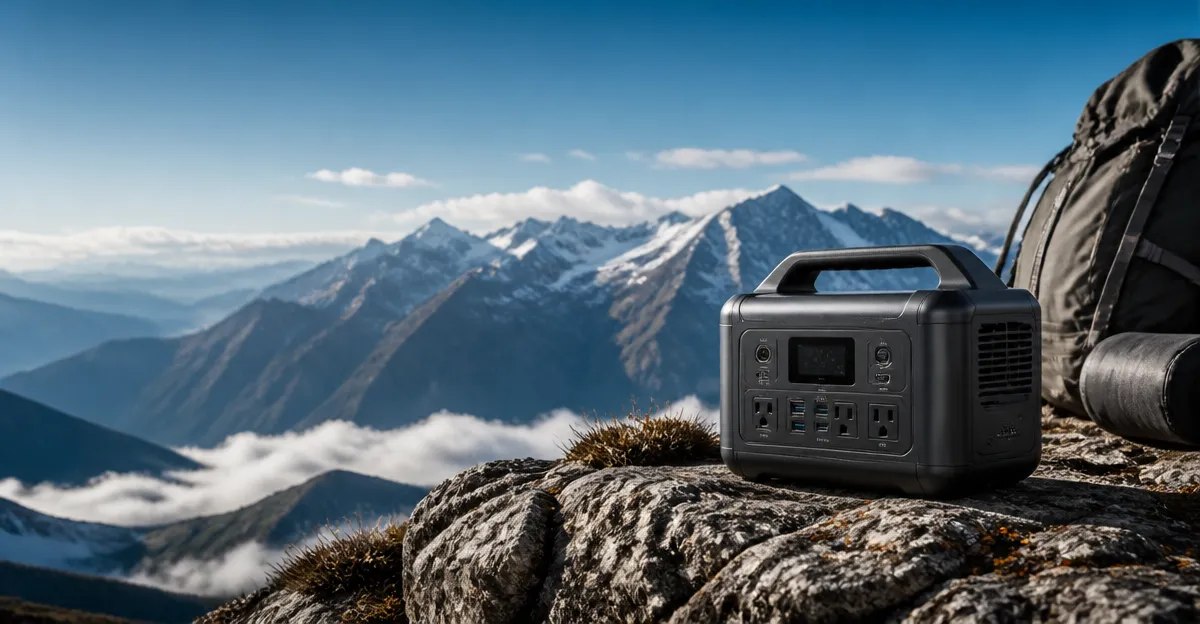
Altitude presents unique challenges for portable power stations, influencing battery chemistry, inverter efficiency, and solar panel performance. Readers of this guide will learn how reduced air pressure and temperature variations affect power output, discover strategies to mitigate these effects, and find product recommendations that excel in high‑elevation environments.
The guide is organized to first provide essential background, then delve into specific technical impacts, followed by a comparison of leading models, practical optimization tips, and a concise FAQ. Whether one is camping in the Rockies, driving through the Andes, or deploying emergency backup in mountainous regions, the information herein equips the user to make informed decisions.
Background and Context
Portable power stations rely on lithium‑based cells—most commonly lithium‑ion (Li‑ion) or lithium‑iron‑phosphate (LiFePO4). Both chemistries are temperature‑sensitive, and the reduced atmospheric pressure at altitude can alter heat dissipation and internal resistance. Inverters, which convert stored DC into usable AC, also experience efficiency losses when ambient cooling is limited.
Solar charging adds another variable: solar irradiance can increase with altitude due to thinner atmosphere, yet panel temperature management becomes critical because higher temperatures degrade conversion efficiency. Understanding these dynamics is essential for reliable operation in mountainous terrain.
Key concepts that will be examined include:
- Battery voltage sag and capacity reduction at low pressure.
- Inverter thermal performance and its effect on continuous wattage.
- Solar panel output variations and optimal tilt angles.
- Management of charge‑discharge cycles to extend lifespan.
How Altitude Affects Battery Chemistry
At elevations above 2,000 meters, air density drops, reducing convective cooling around battery cells. This can cause a modest rise in internal temperature during high‑draw usage, which in turn accelerates voltage sag. LiFePO4 cells, such as those used in the Jackery Explorer 1000 v2, are known for thermal stability and maintain over 70% capacity after 4,000 cycles, making them a solid choice for high‑altitude applications.
Li‑ion cells, like those in the BLUETTI Elite 30 V2, offer higher energy density but are more sensitive to temperature extremes. Users should avoid deep discharges above 30% when operating in thin air to prevent accelerated degradation.
Practical guidance:
- Maintain battery temperature between 15 °C and 30 °C whenever possible.
- Utilize built‑in battery management systems (BMS) that provide active cooling; the Jackery model includes a smart app that monitors temperature and adjusts charging modes.
- Prefer LiFePO4‑based stations for prolonged high‑altitude use, as they exhibit longer cycle life and better tolerance to temperature fluctuations.
Impact on Inverter Efficiency
The inverter converts DC to AC and generates heat proportional to the load. At altitude, reduced air density impairs heat removal, causing the inverter to operate at a higher temperature for a given load. This can lower the inverter’s efficiency by up to 5%, reducing usable wattage.
The Anker SOLIX C1000 Gen 2 features a 10 ms UPS switchover and an advanced cooling system that maintains efficiency even in thin air, thanks to its 2,000 W output and intelligent thermal management.
When selecting a power station for altitude, consider the following:
- Inverter rating versus continuous load: choose a unit whose continuous rating exceeds expected demand by at least 20%.
- Presence of active cooling (fans or heat sinks) that can operate effectively at lower pressure.
- Pure sine wave output, which ensures stable voltage for sensitive electronics such as CPAP machines and medical devices.
Solar Charging at High Elevations
Solar irradiance typically increases by roughly 10% for every 1,000 m gain in altitude, offering higher peak power for panels. However, panel temperature also rises due to stronger sunlight, and without adequate ventilation the panel’s conversion efficiency can drop.
The ZeroKor 300W Solar Generator includes a 60 W monocrystalline panel with a conversion efficiency of 20.5%, which performs well in alpine conditions when positioned with proper airflow. Its built‑in MPPT controller maximizes harvest even when panel temperature fluctuates.
Key recommendations for solar charging at altitude:
- Angle panels toward the sun at the local altitude‑adjusted optimal tilt (approximately latitude + 10°).
- Use panels with high conversion efficiency and low temperature coefficients, such as monocrystalline models.
- Employ a vented or shaded mounting system to keep panel temperature below 45 °C.
- Take advantage of fast‑charging capabilities; the Jackery Explorer 1000 v2 can achieve a one‑hour emergency charge when the app’s boost mode is enabled.
Optimizing Power Management in Mountainous Terrain
Effective power management extends runtime and protects equipment. Modern stations provide app‑based controls that allow users to select charging modes, monitor real‑time draw, and schedule usage.
The ALLWEI 300W Power Station offers a 5‑year warranty and a 6‑layer protection BMS, making it reliable for frequent altitude excursions. Its 3‑level LED light with SOS mode is valuable for night‑time emergencies.
Optimization checklist:
- Enable "energy efficiency mode" on the Jackery app to reduce idle draw.
- Prioritize low‑draw devices (LED lighting, USB charging) before high‑draw appliances (mini‑fridge, heater).
- Schedule heavy loads during cooler morning hours to benefit from lower ambient temperature.
- Keep the unit’s firmware updated; manufacturers often release altitude‑specific performance tweaks.
Comparison and Selection Guide
| Feature | Jackery Explorer 1000 v2 | BLUETTI Elite 30 V2 | ZeroKor 300W | Anker SOLIX C1000 Gen 2 | ALLWEI 300W |
|---|---|---|---|---|---|
| Battery Capacity (Wh) | 1070 Wh | 288 Wh | Not specified (≈300 W output) | 1024 Wh | 256 Wh |
| Continuous Output (W) | 1500 W | 600 W | 300 W | 2000 W | 300 W |
| Surge Power (W) | 3000 W | 1500 W | 300 W | 3000 W | 600 W |
| Weight (lb) | 23.8 lb | 9.4 lb | ~? (light) | ~? (lighter than comparable) | 6.4 lb |
| Battery Type | LFP (LiFePO4) | LFP | LFP | LFP | LFP |
| Fast Charging | 1‑hour emergency boost (ChargeShield 2.0) | 380 W wall (0‑80% in 45 min) | Not specified | 1.6 kW (49 min full) | 3.5‑4 hr AC |
| App Control | Jackery App (multiple modes) | BLUETTI App (real‑time wattage) | No dedicated app | Anker App (TOU mode, UPS) | No dedicated app |
| Rating (out of 5) | 4.7 (3,564 reviews) | 4.4 (784 reviews) | 4.1 (1,938 reviews) | 4.7 (1,458 reviews) | 4.4 (2,419 reviews) |
| Price (USD) | 499.00 | 219.00 | 169.97 | 499.98 | 139.00 |
When altitude is a primary concern, prioritize units with LiFePO4 chemistry, robust thermal management, and app‑based monitoring. The Jackery Explorer 1000 v2 and Anker SOLIX C1000 Gen 2 stand out for high capacity and sophisticated cooling, while the BLUETTI Elite 30 V2 offers rapid wall charging for lighter loads.
Best Practices & Tips for High‑Altitude Use
- Pre‑condition the battery. Charge to 80% before ascent; this reduces stress caused by rapid temperature changes.
- Monitor temperature continuously. Use the device’s app to set alerts if internal temperature exceeds 35 °C.
- Employ passive cooling. Place the unit on a reflective surface or use a small external fan powered by the station’s 12 V port.
- Adjust inverter load. Run high‑draw appliances in short bursts rather than continuous operation.
- Leverage solar gain. Align panels toward the sun during midday when irradiance peaks, but shade them during intense heat to avoid efficiency loss.
- Maintain firmware. Manufacturers release altitude‑specific updates that improve BMS algorithms.
- Carry spare cables. USB‑C and car charging adapters can heat up; having extra cables prevents downtime.
Frequently Asked Questions
1. Does altitude reduce the total runtime of a power station?
Yes, reduced cooling efficiency can cause the battery to warm faster, leading to a modest capacity loss of 5‑10% at elevations above 3,000 m.
2. Can I use the solar panels that come with a lower‑capacity station at high altitude?
Solar panels generally produce more power at altitude, but you must ensure they are not overheating. Using a vented mount mitigates this risk.
3. Are LiFePO4 batteries better than Li‑ion for mountain use?
LiFePO4 cells are more tolerant of temperature swings and have longer cycle life, making them preferable for frequent high‑altitude deployments.
4. How does the inverter’s UPS function behave at altitude?
UPS switchover time remains unchanged, but the inverter may throttle output if it detects excessive temperature, so keep the unit in a well‑ventilated area.
5. Should I enable fast‑charging modes when the ambient temperature is low?
Fast charging generates heat; at very low temperatures (below 0 °C) it is advisable to use standard charging to avoid thermal stress.
6. What maintenance steps extend lifespan in mountainous regions?
Regularly clean dust from vents, store the unit in a dry environment when not in use, and perform a full charge‑discharge cycle every three months.
7. Is there a difference between using a car charger versus a wall charger at altitude?
Car chargers draw from the vehicle’s 12 V system, which can be cooler than a hot cabin environment; however, the charging current is lower, extending charge time.
Conclusion
Altitude introduces measurable effects on portable power station performance, influencing battery capacity, inverter efficiency, and solar charging potential. By selecting devices with LiFePO4 chemistry, robust thermal management, and intelligent app control—such as the Jackery Explorer 1000 v2 or the Anker SOLIX C1000 Gen 2—and applying the best‑practice tips outlined above, users can maintain reliable power in mountainous settings.
Understanding the science behind altitude effects empowers users to plan ahead, select the appropriate capacity, and optimize charging strategies, ensuring that critical devices remain operational when they are needed most.
Products Featured in This Guide
Jackery Explorer 1000 v2
Price: $499.00 | Rating: 4.7/5 (3,564 reviews)
Featured for its high 1,070 Wh capacity, 1,500 W continuous output, LiFePO4 battery with a 10‑year lifespan, and advanced app‑controlled charging modes that are valuable at altitude.
BLUETTI Elite 30 V2
Price: $219.00 | Rating: 4.4/5 (784 reviews)
Featured for its rapid 380 W wall charging (0‑80% in 45 min), 600 W continuous output, and reliable UPS function, making it suitable for lightweight, high‑altitude tasks.
ZeroKor 300W Solar Generator
Price: $169.97 | Rating: 4.1/5 (1,938 reviews)
Featured for its included 60 W monocrystalline panel with 20.5% efficiency and MPPT controller, providing a compact solar solution for high‑elevation camping.
Anker SOLIX C1000 Gen 2
Price: $499.98 | Rating: 4.7/5 (1,458 reviews)
Featured for its 2,000 W output, 1,024 Wh capacity, 10 ms UPS switchover, and ultra‑fast 1.6 kW charging, all of which support demanding high‑altitude scenarios.
ALLWEI 300W Power Station
Price: $139.00 | Rating: 4.4/5 (2,419 reviews)
Featured for its lightweight 6.4 lb design, 300 W continuous output, and comprehensive protection system, offering an affordable option for hikers and short‑duration altitude trips.