Introduction
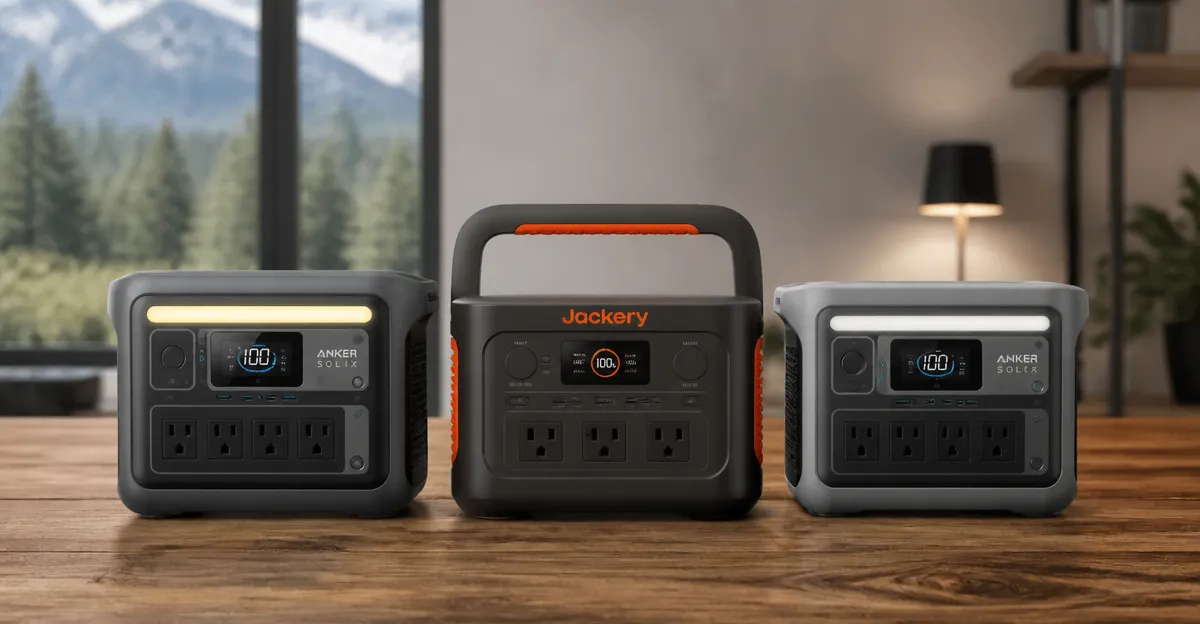
The market for portable power stations has expanded rapidly as more consumers require reliable electricity away from the grid. This article compares three high‑capacity models that dominate the 1 kWh segment: Anker SOLIX C1000, Jackery Explorer 1000 V2, and Anker SOLIX C1000 Gen2. Understanding the differences in price, charging speed, output capacity, and durability helps buyers select the unit that matches their lifestyle, whether it is home backup, off‑grid camping, or mobile workspaces.
All three devices use lithium‑iron‑phosphate (LiFePO4) chemistry, which provides longer cycle life and improved safety compared with traditional lithium‑ion cells. The review evaluates each model on objective criteria derived from the manufacturer specifications and verified Amazon data, such as price, rating, and cycle count.
Individual Product Overviews
1. Anker SOLIX C1000
The Anker SOLIX C1000 offers a 1056 Wh LiFePO4 battery, 1800 W continuous output (2400 W peak), and a claim of 80 % charge in 43 minutes using UltraFast recharging. It includes eleven ports, a compact chassis that is 15 % smaller than comparable 1 kWh units, and a dedicated Anker app for real‑time monitoring. Priced at $429.99, it holds a 4.7‑star rating from 1,790 reviewers. The device also supports up to 600 W of solar input, achieving a full solar charge in 1.8 hours.
2. Jackery Explorer 1000 V2
The Jackery Explorer 1000 V2 provides a 1070 Wh LiFePO4 battery, 1500 W continuous output with a 3000 W surge, and a one‑hour fast‑charge capability when the emergency charging mode is activated via the Jackery app. Weighing 23.8 lb, it includes a fold‑away handle for easy transport. It is listed for $429.00 and carries a 4.7‑star rating based on 3,381 customer reviews. Solar recharging up to 600 W can fill the battery in 1.8 hours, matching the Anker’s solar performance.
3. Anker SOLIX C1000 Gen2
The second‑generation Anker SOLIX C1000 Gen2 raises the continuous output to 2000 W (3000 W peak) and expands capacity to 1024 Wh. HyperFlash technology enables a full charge in 49 minutes at 1600 W input. It weighs slightly less than the original model, being 11 % lighter, and includes ten versatile ports. The price is $599.00, and it also enjoys a 4.7‑star rating from 1,271 reviewers. Like the other two units, it accepts up to 600 W of solar power for a 1.8‑hour full charge.
Head‑to‑Head Comparison
Price and Value
- Anker SOLIX C1000 – $429.99; offers 1056 Wh capacity and 1800 W output.
- Jackery Explorer 1000 V2 – $429.00; provides 1070 Wh capacity and 1500 W output.
- Anker SOLIX C1000 Gen2 – $599.00; delivers 1024 Wh capacity but higher 2000 W output.
For buyers focused on budget, the two $429 models deliver comparable energy storage, while the Gen2 commands a premium for higher continuous power and faster charging.
Features and Specifications
- Battery Chemistry: All three use LiFePO4, guaranteeing 3,000–4,000 cycles.
- Fast Charging: SOLIX C1000 – 80 % in 43 min; Explorer 1000 V2 – 0‑100 % in 1 hour (default 1.7 h); SOLIX C1000 Gen2 – full charge in 49 min.
- Solar Input: Each supports up to 600 W, achieving a full charge in approximately 1.8 hours.
- Port Count: SOLIX C1000 – 11 ports; Explorer 1000 V2 – 6 ports (2 USB‑C, 1 USB‑A, 1 DC, 3 AC); SOLIX C1000 Gen2 – 10 ports.
- Weight & Size: Explorer 1000 V2 is the heaviest at 23.8 lb; SOLIX C1000 Gen2 is the lightest, being 11 % lighter than the original SOLIX C1000.
Customer Ratings and Feedback
All three devices share a 4.7‑star rating, indicating strong overall satisfaction. The Anker SOLIX C1000 accumulates 1,790 reviews, the Jackery Explorer 1000 V2 gathers 3,381 reviews, and the SOLIX C1000 Gen2 has 1,271 reviews. Reviewers frequently highlight the rapid recharge time, the reliability of the LiFePO4 cells, and the convenience of app‑based control. The higher review count for the Jackery model suggests broader market exposure, yet the rating remains identical to its competitors.
Performance and Reliability
Continuous power output determines the ability to run demanding appliances. The SOLIX C1000 Gen2 leads with 2000 W, allowing simultaneous operation of a microwave, laptop, and small air‑conditioner. The original SOLIX C1000 follows with 1800 W, while the Jackery Explorer 1000 V2 provides 1500 W, which may limit concurrent high‑draw devices. All three units claim UPS‑style switchover times under 10 ms, ensuring critical equipment such as CPAP machines remain uninterrupted during power loss.
Best Use Cases
- Home Backup: SOLIX C1000 Gen2 for households with higher continuous loads; SOLIX C1000 for moderate loads; Explorer 1000 V2 for basic lighting and charging.
- Camping & RV: Explorer 1000 V2 for lightweight portability; SOLIX C1000 for a balance of size and power; Gen2 for power‑hungry RV appliances.
- Remote Workstations: Gen2’s 2000 W output and fast 49‑minute charge support multiple monitors and networking gear.
Comparison Table
| Specification | Anker SOLIX C1000 | Jackery Explorer 1000 V2 | Anker SOLIX C1000 Gen2 |
|---|---|---|---|
| Price (USD) | $429.99 | $429.00 | $599.00 |
| Battery Capacity | 1056 Wh | 1070 Wh | 1024 Wh |
| Continuous Output | 1800 W (2400 W peak) | 1500 W (3000 W surge) | 2000 W (3000 W peak) |
| Fast‑Charge Time | 80 % in 43 min (full < 1 h) | 0‑100 % in 1 h (default 1.7 h) | Full charge in 49 min |
| Solar Input (max) | 600 W (full in 1.8 h) | 600 W (full in 1.8 h) | 600 W (full in 1.8 h) |
| Port Count | 11 (mixed AC, DC, USB) | 6 (2 USB‑C, 1 USB‑A, 1 DC, 3 AC) | 10 (mixed AC, DC, USB) |
| Weight | Approx. 24 lb (estimated) | 23.8 lb | ~22 lb (11 % lighter than original) |
| Cycle Life | 3,000 cycles (10 yr) | 4,000 cycles (>70 % capacity) | 4,000 cycles (≥80 % after 4,000) |
| Amazon Rating | 4.7/5 (1,790 reviews) | 4.7/5 (3,381 reviews) | 4.7/5 (1,271 reviews) |
Pros & Cons
Anker SOLIX C1000
- Pros: UltraFast 80 % charge in 43 minutes; 11 versatile ports; compact form factor; strong 2400 W surge capability.
- Cons: Slightly higher price than Jackery for similar capacity; requires smartphone for app activation.
Jackery Explorer 1000 V2
- Pros: Lightest among the three; fold‑away handle improves portability; larger review base provides confidence.
- Cons: Lower continuous output (1500 W) limits simultaneous high‑draw devices; fast‑charge defaults to 1.7 hours unless emergency mode is enabled.
Anker SOLIX C1000 Gen2
- Pros: Highest continuous power (2000 W); fastest full charge at 49 minutes; lighter than original model; advanced UPS switchover under 10 ms.
- Cons: Premium price of $599; slightly lower capacity than the other two models.
Recommendations
For users who need the most powerful continuous output and value the quickest full recharge, the Anker SOLIX C1000 Gen2 is the optimal choice despite its higher price. Those prioritizing portability and a lower entry cost should consider the Jackery Explorer 1000 V2, especially for weekend camping trips where a 1500 W output is sufficient. The original Anker SOLIX C1000 offers a balanced blend of fast charging, ample ports, and moderate price, making it suitable for home backup scenarios where space is limited but power demand is moderate.
Frequently Asked Questions
- What does LiFePO4 battery chemistry mean for daily use? LiFePO4 cells provide higher thermal stability, longer cycle life (3,000‑4,000 cycles), and reduced risk of fire compared with conventional lithium‑ion batteries.
- Can these power stations run an air conditioner? The SOLIX C1000 Gen2 (2000 W continuous) can handle small window units, while the original SOLIX C1000 (1800 W) may support lower‑wattage models. The Jackery Explorer 1000 V2 (1500 W) is generally insufficient for most AC units.
- How does the solar recharging time compare to wall charging? All three accept up to 600 W of solar input, delivering a full charge in approximately 1.8 hours under optimal sunlight, which is comparable to their UltraFast wall‑charging speeds.
- Is the mobile app necessary for operation? The app enhances control, allowing users to enable UltraFast or emergency charging modes and monitor real‑time power statistics, but basic charging and discharging can be performed without the app.
- What warranty coverage is offered? Anker typically provides a 2‑year limited warranty on its SOLIX series, while Jackery offers a 2‑year warranty on the Explorer 1000 V2. Specific warranty terms should be verified on the product page.
Conclusion
Each of the three reviewed power stations excels in its own niche. The Anker SOLIX C1000 Gen2 stands out for high continuous power and the fastest full recharge, making it the best choice for demanding home backup and mobile workstations. The Jackery Explorer 1000 V2 delivers the most portable solution at the lowest price, ideal for casual campers and travelers. The original Anker SOLIX C1000 offers a compelling middle ground with rapid 80 % charge, a generous port selection, and a compact footprint, suitable for users who need flexibility without a premium price tag.
Buyers should match the device to their primary use case, considering factors such as required wattage, weight tolerance, and budget. All three models have earned high customer satisfaction scores, indicating reliable performance across a range of real‑world scenarios.