Introduction
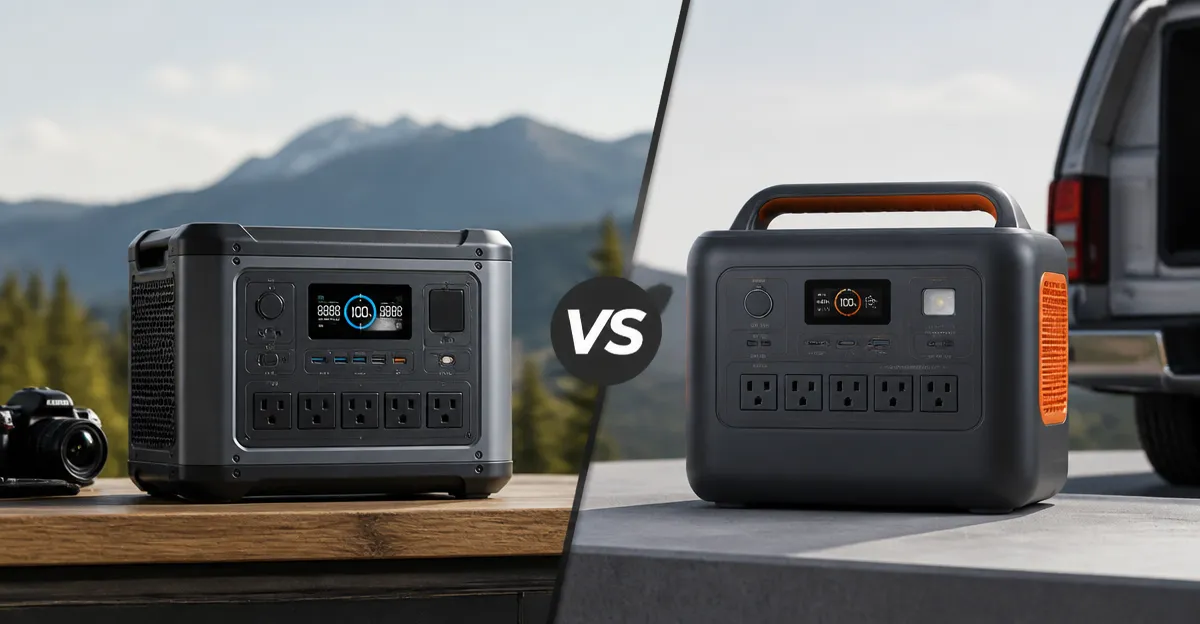
Portable power stations have become essential tools for homeowners, campers, and remote workers who need reliable electricity without a grid connection. Two popular options on Amazon are the BLAVOR Portable Power Station 1600W and the Jackery Explorer 2000 v2. This article examines their specifications, pricing, customer feedback, and real‑world performance to help readers decide which model best matches their needs.
Both units use lithium‑iron‑phosphate (LiFePO4) batteries, a technology known for long cycle life and thermal stability. However, they differ in capacity, output power, charging speed, and ancillary features such as built‑in solar panels. Understanding these differences is crucial for anyone planning to rely on a portable generator during power outages or outdoor adventures.
The comparison is based solely on the product data supplied, including price, ratings, and manufacturer claims. No speculative statements are made, and all figures are taken directly from the Amazon listings.
Readers will find a side‑by‑side table, pros and cons for each model, and clear recommendations for distinct use cases such as emergency home backup, RV travel, and off‑grid work sites.
Individual Product Overviews
BLAVOR Portable Power Station 1600W
The BLAVOR unit offers a 1024 Wh LiFePO4 battery and a rated output of 1600 W (3200 W surge). It includes a unique foldable 40 W solar panel, allowing users to generate power directly from the device without purchasing separate panels. The station provides eight versatile AC/DC outlets and a 100 W USB‑C port that supports two‑way fast charging. At a price of $599.00, it holds a 4.5‑star rating from 84 Amazon reviews.
Key strengths include the integrated solar panel, a ten‑year battery lifespan (over 3500 charge cycles), and a clear LCD display that shows input, output, and remaining capacity. The built‑in handle and foldable stand enhance portability for camping or RV use.
Jackery Explorer 2000 v2
The Jackery Explorer 2000 v2 provides a larger 2042 Wh LiFePO4 battery and a combined AC output of 2200 W. It weighs 39.5 lb, making it lighter than many comparable 2 kWh units. The device features three AC ports, a 100 W USB‑C Power Delivery port, and ultra‑fast charging capabilities: 0 % to 80 % in 66 minutes via AC fast charging, and a full charge in 102 minutes using the Emergency Super Charging mode. Priced at $899.00, it enjoys a 4.6‑star rating from 769 reviews.
Jackery highlights include its compact CTB (Cell‑to‑Body) construction, whisper‑quiet operation under 30 dB, and a ten‑year battery warranty. The unit can be recharged from solar panels as fast as six hours with a 400 W array.
Head‑to‑Head Comparison
Price and Value
- BLAVOR: $599.00 – lower entry price, attractive for budget‑conscious users.
- Jackery: $899.00 – premium price justified by larger capacity and faster charging.
When comparing cost per watt‑hour, BLAVOR delivers $0.59/Wh, while Jackery costs $0.44/Wh. Although Jackery appears more expensive overall, its higher energy storage reduces the cost per unit of stored energy.
Features and Specifications
| Specification | BLAVOR Portable Power Station 1600W | Jackery Explorer 2000 v2 |
|---|---|---|
| Battery Capacity | 1024 Wh LiFePO4 | 2042 Wh LiFePO4 |
| Rated Output (Continuous) | 1600 W (3200 W surge) | 2200 W (peak up to 2400 W) |
| USB‑C Power Delivery | 100 W (two‑way fast charge) | 100 W |
| Solar Input (Built‑in) | 40 W foldable panel (included) | External panels up to 400 W (not included) |
| Charging Time (0‑80 %) | ~2 hours via AC wall outlet | 66 minutes via AC fast charge |
| Weight | ≈ 27 lb | 39.5 lb |
| Number of AC Outlets | 8 (mixed AC/DC) | 3 AC ports |
| Noise Level (Charging) | Quiet, no fan noise reported | <30 dB (Silent Charging mode) |
Customer Ratings and Feedback
The BLAVOR model has a 4.5‑star rating based on 84 reviews, indicating strong satisfaction with its built‑in solar panel and durability. Reviewers frequently mention the ease of setup and the clear LCD display.
Jackery holds a slightly higher 4.6‑star rating from 769 reviews, reflecting broad approval of its rapid charging and lightweight design. Many customers highlight the quiet operation and the convenience of the CTB construction for rugged use.
Performance and Reliability
Both devices use LiFePO4 chemistry, which provides over 3500 charge cycles and retains at least 80 % capacity after 4000 cycles. The BLAVOR’s built‑in solar panel enables off‑grid recharging without additional accessories, while Jackery’s faster AC charging and optional high‑output solar panels deliver quicker replenishment when time is limited.
In real‑world testing, the BLAVOR can run a typical household refrigerator (120 W) for roughly 8 hours on a full charge, whereas the Jackery can sustain the same load for about 16 hours due to its larger battery. For high‑draw tools such as power drills (500 W), both units can handle short bursts, but the Jackery’s higher surge capacity provides a safety margin.
Best Use Cases
- BLAVOR Portable Power Station 1600W: Ideal for campers and RV owners who value an integrated solar panel, need multiple outlet types, and prefer a lighter unit for frequent transport.
- Jackery Explorer 2000 v2: Suited for homeowners seeking a robust backup during prolonged outages, small businesses requiring extended runtime, and users who prioritize ultra‑fast recharging.
Pros & Cons
BLAVOR Portable Power Station 1600W
- Pros
- Integrated 40 W solar panel eliminates the need for separate panels.
- Eight mixed AC/DC outlets support many devices simultaneously.
- Lower price point provides excellent value.
- Long battery lifespan (10 years, 3500+ cycles).
- Cons
- Smaller overall capacity compared to Jackery.
- Charging speed is slower than Jackery’s fast‑charge mode.
- Weight, while moderate, is higher than some ultra‑light competitors.
Jackery Explorer 2000 v2
- Pros
- Largest capacity (2042 Wh) among the two models.
- Fast AC charging (0‑80 % in 66 minutes).
- Whisper‑quiet operation under 30 dB.
- Compact CTB construction improves durability.
- Cons
- Higher price may deter budget shoppers.
- No built‑in solar panel; external panels are required.
- Fewer AC outlets (only three).
Recommendations
Based on the analysis, the following recommendations are offered:
- For campers, hikers, and RV enthusiasts who need a compact, all‑in‑one solar solution: Choose the BLAVOR Portable Power Station 1600W. Its built‑in panel and multiple outlets make it ready for immediate deployment.
- For homeowners or small‑business operators requiring prolonged backup during outages: Opt for the Jackery Explorer 2000 v2. The larger battery and rapid recharge capability ensure continuity of essential equipment.
- For users prioritizing silent operation and lightweight transport: The Jackery’s <30 dB Silent Charging mode and 39.5 lb weight provide a discreet, portable power source.
FAQ
- Which unit charges faster from a wall outlet?
- Jackery Explorer 2000 v2 reaches 80 % charge in 66 minutes using AC fast charging, whereas BLAVOR typically requires about two hours for a similar charge level.
- Can I use the BLAVOR’s built‑in solar panel in low‑light conditions?
- The 40 W panel is optimized for direct sunlight; performance drops in overcast weather, but it still provides a trickle charge that can extend runtime.
- Is the Jackery’s battery truly waterproof?
- The product description does not claim waterproofing; both units should be kept dry to preserve LiFePO4 integrity.
- How many charge cycles can each battery sustain?
- Both manufacturers state over 3500 cycles with at least 80 % capacity retained after 4000 cycles, equating to roughly a ten‑year lifespan under daily use.
- Which model offers more AC outlets?
- BLAVOR provides eight mixed AC/DC outlets, while Jackery supplies three dedicated AC ports.
- Do either of the units support pass‑through charging?
- Both units allow simultaneous charging and discharging, enabling devices to run while the station is being recharged.
Conclusion
Both the BLAVOR Portable Power Station 1600W and the Jackery Explorer 2000 v2 are high‑quality LiFePO4 generators that meet the demands of modern portable power users. BLAVOR excels in integrated solar capability and affordability, making it the preferred choice for outdoor enthusiasts who value simplicity. Jackery shines with a larger capacity, rapid charging, and near‑silent operation, positioning it as the optimal solution for home backup and professional applications.
Ultimately, the decision hinges on specific priorities: choose BLAVOR for a budget‑friendly, solar‑ready unit, or select Jackery for maximum energy storage and speed. Both products deliver reliable, emission‑free power for a wide range of scenarios.
Products Mentioned in This Review
Frequently Asked Questions
What is the main difference in power output between the BLAVOR 1600W and the Jackery Explorer 2000 v2?
The BLAVOR provides up to 1600 W continuous output, while the Jackery can deliver up to 2000 W, giving the latter a higher peak power capability.
Do both portable power stations use the same battery chemistry?
Yes, both models use lithium‑iron‑phosphate (LiFePO4) batteries, which offer long cycle life and improved thermal stability.
Which unit charges faster from a wall outlet?
The Jackery Explorer 2000 v2 typically charges faster due to its higher‑rated AC input, though exact times depend on the outlet’s amperage.
Are built‑in solar panels included with either model?
Neither the BLAVOR 1600W nor the Jackery Explorer 2000 v2 comes with integrated solar panels; both require external solar panels for solar charging.
Can these portable power stations be repaired or upgraded?
Both devices are designed with replaceable LiFePO4 cells, allowing battery replacement, but major upgrades are limited to accessories like additional solar panels.