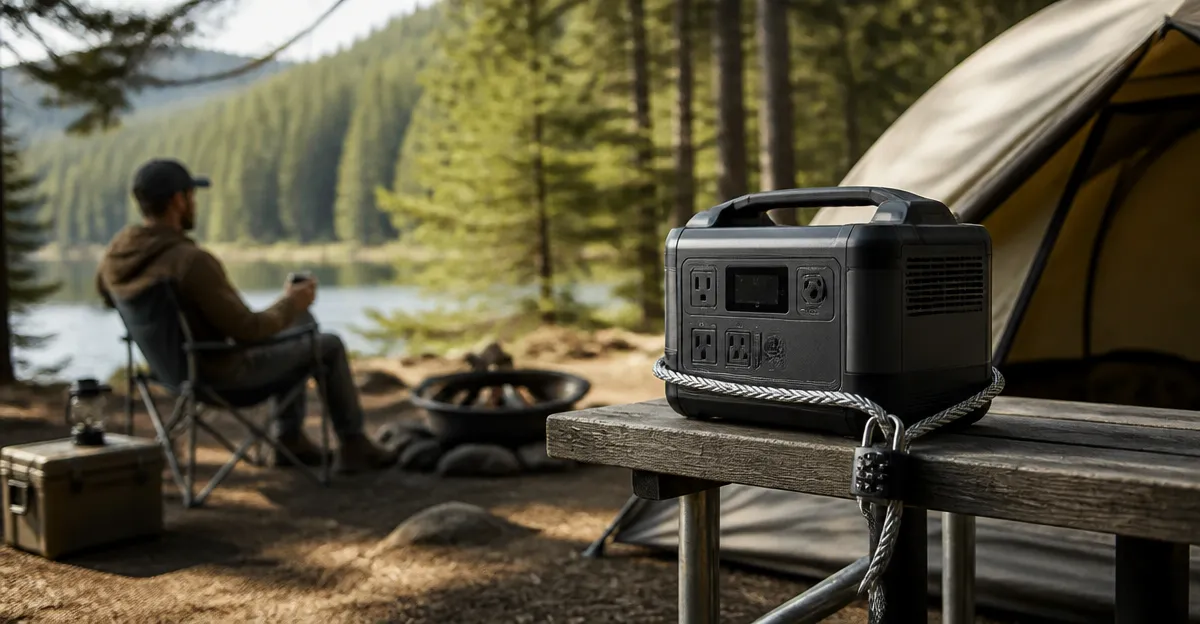
Campsite Theft Prevention: The Ultimate Guide to Securing Portable Power Stations
Introduction
Camping enthusiasts increasingly rely on portable power stations to operate lights, appliances, and electronic devices while away from the grid. Unfortunately, the high value and mobility of these units make them attractive targets for opportunistic thieves. This guide explains the range of risks, outlines proven security strategies, and recommends specific products that can enhance protection at a campsite.
Readers will learn how to assess vulnerability, select appropriate locking hardware, and implement deterrence tactics that reduce the likelihood of theft. By the end of the article, one will possess a comprehensive plan that balances cost, convenience, and effectiveness.
Background/Context
Portable power stations are essentially large battery packs with built‑in inverters, often priced between $100 and $500. They are commonly left unattended while campers explore trails, cook meals, or attend events. The combination of high resale value, easy transport, and limited on‑site supervision creates a fertile environment for theft.
Understanding the typical methods employed by thieves—such as bolt‑cutting, lock‑picking, and opportunistic removal—allows owners to choose countermeasures that directly address these tactics. Moreover, many campgrounds provide limited infrastructure for securing equipment, which places the burden of protection on the individual camper.
Understanding Portable Power Station Vulnerabilities
Most portable power stations feature a single handle or a recessed grip, which can be lifted and carried away without the need for tools. The exterior casing is often made of lightweight polymer, offering little resistance to forced entry. Additionally, charging cables and external adapters are frequently left exposed, providing thieves with multiple points of attack.
Key vulnerability categories include:
- Physical removal: The entire unit can be carried away if not anchored.
- Cable tampering: Charging or power cables can be cut or unplugged, rendering the station unusable.
- Component theft: High‑capacity batteries or control modules may be removed individually.
Addressing each category requires a layered approach that combines mechanical locks, deterrent signage, and situational awareness.
Physical Locking Solutions
Mechanical locks provide the most direct barrier against unauthorized removal. When selecting a lock, one should consider cable thickness, material durability, ease of use, and compatibility with the power station’s frame or handle.
Cable Locks
Heavy‑duty braided steel cables are the industry standard for securing outdoor equipment. The Master Lock Python Cable Lock offers a 6‑foot, 5/16‑inch (8 mm) diameter cable that resists cutting and provides a patented locking mechanism that holds the cable tightly at any length. With a rating of 4.7 out of 5 from 1,096 reviews, it is praised for its versatility in securing coolers, kayaks, and tool boxes.
For RV owners who require a shorter, lighter solution, the Power Watchdog Security Cable Lock supplies a 40‑inch, ¼‑inch thick stainless‑steel cable that weighs only 0.5 lb. Its compact size makes it ideal for securing surge protectors and power adapters without adding significant bulk.
When a longer, adjustable option is needed, the Power Watchdog ADJLOCK Cable Lock provides a 36‑inch, 10 mm thick braided steel cable that can be cinched to a custom loop size. Reviewers highlight its cut‑resistance and suitability for propane tanks, bicycles, and other valuable gear.
Outlet and Charger Locks
Securing the power outlet itself prevents thieves from unplugging a station and walking away with the cable. The Lock Socket Outlet & Charger Lock is engineered to fasten 2‑ or 3‑pronged plugs to a wall plate using a security screw and key. Constructed from fire‑resistant ABS plastic, it has earned a 4.4‑star rating from 127 reviewers and is made in the United States.
For RV surge protectors, the RV Surge Guard Lock Cable combines a stainless‑steel rope with a combination lock. Although the lock mechanism is basic, the 23½‑inch length is sufficient to tether a surge protector to a power cord, adding a layer of deterrence for campers who store equipment in shared sites.
Deterrence Strategies Beyond Locks
Mechanical locks are most effective when complemented by visible deterrents. Simple measures such as warning signs, motion‑activated lights, and audible alarms can increase the perceived risk of theft.
Campers should also consider the following tactics:
- Park the power station near a well‑lit area or within sight of other campers.
- Use a lockable storage bag or hard‑case that encloses both the unit and its cables.
- Register the device with the manufacturer’s online database, providing serial numbers for recovery.
By creating multiple obstacles, a potential thief is more likely to abandon the attempt and move on to an easier target.
Comparison and Selection Guide
| Feature | Master Lock Python Cable Lock | Power Watchdog Security Cable Lock | Power Watchdog ADJLOCK Cable Lock | Lock Socket Outlet & Charger Lock | RV Surge Guard Lock Cable |
|---|---|---|---|---|---|
| Cable Length | 6 ft (1.8 m) | 40 in (1.0 m) | 36 in (0.9 m) adjustable | N/A (outlet cover) | 23½ in (0.6 m) |
| Cable Diameter / Thickness | 5/16 in (8 mm) | ¼ in (6 mm) | 10 mm | ABS plastic cover | Stainless‑steel rope |
| Material | Braided steel with vinyl coating | Stainless steel braided | Heavy‑duty braided steel | Fire‑resistant ABS | Plastic‑wrapped stainless steel |
| Price (USD) | 24.99 | 9.99 | 38.99 | 18.95 | 9.99 |
| Average Rating | 4.7/5 (1,096 reviews) | 4.6/5 (131 reviews) | 4.5/5 (28 reviews) | 4.4/5 (127 reviews) | 4.1/5 (29 reviews) |
| Best Use Case | General outdoor equipment, kayaks, tool boxes | RV surge protectors and small power accessories | Heavy‑duty applications, propane tanks, bicycles | Securing plugs and chargers on walls | Locking RV surge protectors to cords |
When choosing a product, evaluate the required cable length, expected threat level, and budget. For high‑value power stations that will be left unattended for extended periods, a thicker cable such as the Power Watchdog ADJLOCK or Master Lock Python provides superior cut resistance. For lighter applications where weight and convenience are paramount, the Power Watchdog Security Cable Lock offers adequate protection at a lower cost.
Best Practices & Tips
- Secure the handle or frame of the power station with a cable lock, looping the cable around a fixed object such as a campsite post or a heavy bag.
- Lock both the power input and output cables using an outlet lock or a secondary cable to prevent removal of the charging line.
- Rotate the lock’s key or combination regularly to mitigate the risk of key duplication.
- Document serial numbers and retain purchase receipts; this information is essential for police reports and insurance claims.
- When possible, store the power station inside a lockable storage container or a vehicle trunk during periods of inactivity.
Implementing these steps creates a multi‑layered defense that discourages theft and simplifies recovery if an incident occurs.
Frequently Asked Questions
1. How strong does a cable lock need to be for a $300 portable power station?
A cable with a minimum diameter of 5/16 inch (8 mm) made from braided steel provides sufficient resistance against standard bolt cutters. The Master Lock Python Cable Lock meets this specification.
2. Can I use a regular padlock instead of a cable lock?
Padlocks can secure a cable lock but do not replace the need for a strong cable. Using a high‑quality padlock in conjunction with a cable lock creates an additional barrier.
3. Will a stainless‑steel cable rust in humid campsite conditions?
Stainless‑steel cables are highly resistant to corrosion and are suitable for humid or coastal environments. The Power Watchdog Security Cable Lock is constructed from this material.
4. Is it necessary to lock the outlet as well as the power station?
Locking the outlet prevents thieves from unplugging the station and walking away with the cable. The Lock Socket Outlet & Charger Lock is designed for this purpose.
5. What should I do if my lock becomes stuck or fails to open?
Contact the manufacturer’s customer service for assistance. Most reputable brands, such as Master Lock and Power Watchdog, offer lifetime guarantees or replacement policies.
Conclusion
Securing a portable power station at a campsite requires a combination of robust hardware, visible deterrents, and proactive habits. By understanding the vulnerabilities, selecting the appropriate cable or outlet lock, and following best‑practice guidelines, campers can significantly reduce the risk of theft. The products highlighted in this guide provide reliable options across a range of budgets and use cases, ensuring that every outdoor enthusiast can protect their investment.
Products Featured in This Guide
Master Lock Python Cable Lock
Price: $24.99 | Rating: 4.7/5 (1,096 reviews)
Featured because it provides a long, 5/16‑inch braided steel cable with a patented locking mechanism, ideal for securing large power stations and outdoor equipment.
Power Watchdog Security Cable Lock
Price: $9.99 | Rating: 4.6/5 (131 reviews)
Featured for its lightweight, 40‑inch stainless‑steel cable that is well‑suited to securing RV surge protectors and smaller power accessories.
Lock Socket Outlet & Charger Lock
Price: $18.95 | Rating: 4.4/5 (127 reviews)
Featured because it secures plugs and chargers directly to wall outlets, preventing cable theft and providing an additional layer of protection.
Power Watchdog ADJLOCK Cable Lock
Price: $38.99 | Rating: 4.5/5 (28 reviews)
Featured for its 10 mm thick adjustable cable, offering maximum cut resistance for high‑value equipment and heavy‑duty applications.
RV Surge Guard Lock Cable
Price: $9.99 | Rating: 4.1/5 (29 reviews)
Featured because it provides a compact, stainless‑steel rope solution for securing RV surge protectors to power cords, a common target at campgrounds.