Introduction
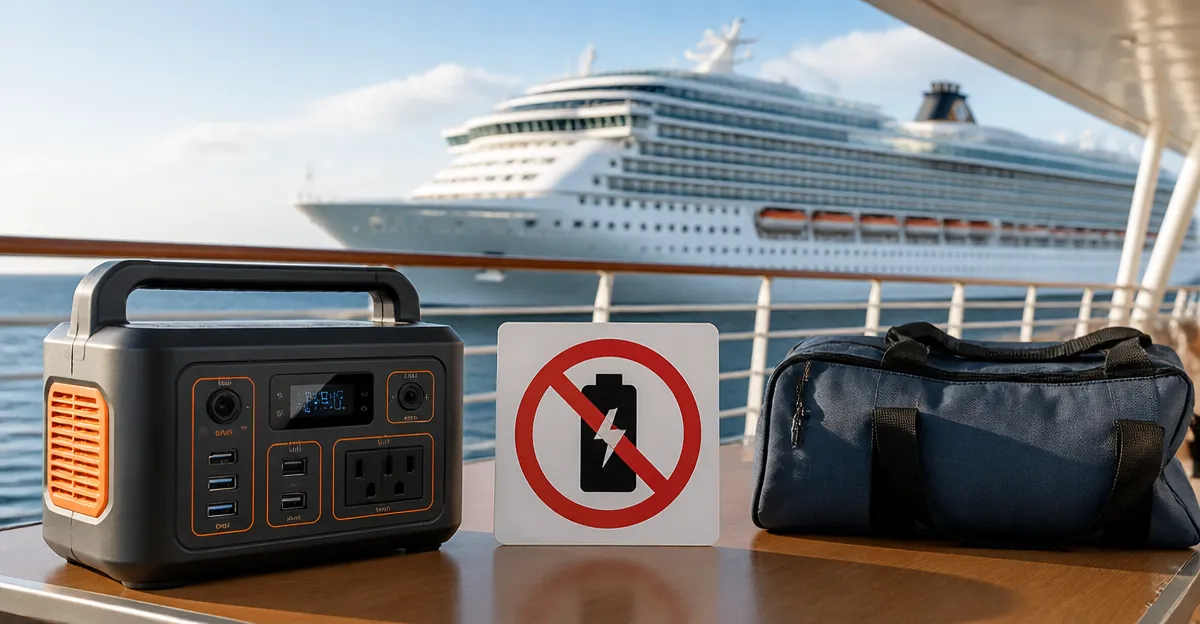
This guide explains the rules that cruise lines enforce for portable power stations, clarifies allowed battery capacities, outlines safety requirements, and provides practical packing tips. Readers will understand how to comply with maritime regulations while maintaining access to reliable off‑grid power during a cruise. The article also recommends specific products that meet the most common cruise‑ship criteria. By following the recommendations, travelers can avoid delays at embarkation and enjoy uninterrupted power for essential devices.
Background and Context
Modern cruise ships operate under strict International Maritime Organization (IMO) standards that govern the transport of lithium‑based batteries. These standards exist to prevent fire hazards in confined vessel spaces and to protect passengers and crew. Portable power stations, which often contain lithium‑ion or lithium‑iron‑phosphate (LiFePO4) cells, fall under the classification of "dangerous goods" when their capacity exceeds defined thresholds.
Most cruise operators adopt the International Air Transport Association (IATA) limits for passenger‑carried batteries, even though the journey occurs at sea. Typically, batteries up to 100 Wh are permitted without additional documentation, while those between 100 Wh and 160 Wh require airline‑style approval. Batteries above 160 Wh are generally prohibited unless the ship grants a special exemption.
In addition to capacity limits, cruise lines demand that batteries be stored in carry‑on luggage, protected from short circuits, and equipped with safety features such as over‑charge protection and temperature monitoring. Understanding these requirements is essential for any traveler who wishes to bring a portable power station on board.
Key Concepts and Regulations
Battery Capacity Limits – The most common rule permits batteries with a rated energy of 100 Wh or less without paperwork. Between 100 Wh and 160 Wh, the passenger must submit a declaration form and receive crew approval before boarding. Above 160 Wh, the battery is typically denied entry unless the ship classifies it as essential equipment for medical or accessibility purposes.
Safety Certification – Cruise lines require that the power station be certified by recognized bodies such as UL, CE, or FCC. The certification confirms that the unit incorporates safeguards against over‑temperature, short circuit, and over‑discharge. Units that employ LiFePO4 chemistry often receive higher safety ratings because the chemistry is less prone to thermal runaway.
Packaging and Handling – Batteries must be packed in original manufacturer packaging or a protective case that prevents the terminals from contacting metal objects. The unit should be turned off, and any removable accessories (cables, adapters) should be stored separately.
Documentation – Passengers should carry the product’s specification sheet, which lists the watt‑hour rating, voltage, and safety certifications. Having this documentation ready speeds up the inspection process at the gangway.
Recommended Portable Power Stations for Cruise Travel
The following products satisfy most cruise‑ship criteria while offering useful power output for personal electronics, medical devices, and small appliances. The first mention of each product includes a clickable link to its Amazon listing.
- Jackery Explorer 300 – 292 Wh LiFePO4 battery, 300 W rated output, 4.6‑star rating from over 11,000 reviews, and a weight of 7.5 lb. The unit includes multiple AC, USB‑C, USB‑A, and car ports, making it versatile for charging phones, laptops, and CPAP machines. Its fast solar charging capability (80 % in 2.8 h with a 100 W panel) adds convenience for shore‑excursions.
- Jackery Explorer 1000 v2 – 1,070 Wh capacity, 1,500 W continuous output, 4.7‑star rating from 3,487 reviews, and a weight of 23.8 lb. Although its capacity exceeds the standard cruise limit, the unit can be declared for essential‑use scenarios such as powering a medical ventilator, provided the ship grants an exemption.
- Daran Portable Power Station – 89.6 Wh LiFePO4 battery, 100 W output, 4.3‑star rating from 834 reviews, and a lightweight design of 2.54 lb. Its compact dimensions (6.5 × 3.3 × 4 in) make it ideal for carry‑on luggage and it stays well within the 100 Wh threshold.
- Anker SOLIX C300 – 288 Wh LiFePO4 battery, 300 W output, 4.6‑star rating from 1,830 reviews, and a weight of 9.1 lb. The unit offers two‑way fast USB‑C charging and a quiet 25 dB operation, suitable for cabin use where noise reduction is valued.
- DaranEner Portable Power Station – 192 Wh capacity, 300 W pure sine wave output, 4.4‑star rating from 366 reviews, and a weight of 5.73 lb. Its built‑in LED flashlight and multiple charging ports provide flexibility for emergency scenarios on board.
Comparison and Selection Guide
When choosing a power station for cruise travel, consider three primary factors: capacity, weight, and compliance with ship regulations. The table below summarizes how each recommended product aligns with these factors.
| Product | Capacity (Wh) | Weight (lb) | Output (W) | Compliance Rating |
|---|---|---|---|---|
| Jackery Explorer 300 | 292 | 7.5 | 300 (600 W surge) | Generally allowed with declaration (100‑160 Wh limit exceeded) |
| Jackery Explorer 1000 v2 | 1,070 | 23.8 | 1,500 (3,000 W surge) | Requires special exemption due to >160 Wh |
| Daran Portable Power Station | 89.6 | 2.54 | 100 (200 W surge) | Fully compliant without paperwork |
| Anker SOLIX C300 | 288 | 9.1 | 300 (600 W surge) | May need declaration; often accepted |
| DaranEner Portable Power Station | 192 | 5.73 | 300 (600 W surge) | May require declaration (100‑160 Wh range) |
Travelers who prioritize ease of boarding should select a unit under 100 Wh, such as the Daran Portable Power Station. Those who need higher output for medical equipment may opt for the Jackery Explorer 300 and obtain a written exemption from the cruise line. The Explorer 1000 v2 is best reserved for private yacht owners who can pre‑arrange cargo handling.
Best Practices & Packing Tips
- Verify the watt‑hour rating on the product label before departure. The rating is calculated by multiplying voltage by amp‑hours (V × Ah).
- Carry the original packaging or a purpose‑built protective case. This prevents accidental short circuits during luggage handling.
- Turn the unit off and disconnect all cables before passing through security checkpoints. Some ships require a visual inspection of the battery terminals.
- Bring a printed copy of the certification sheet (UL, CE, FCC) and the Amazon product page screenshot showing the rating and safety features.
- Store the power station in a carry‑on bag rather than checked luggage. Carry‑on placement ensures immediate access for crew inspection and reduces the risk of temperature extremes in the cargo hold.
- If you travel with multiple devices, distribute the load across the power station’s ports to avoid exceeding the unit’s continuous output rating.
- For solar recharging while docked, verify that the ship’s deck permits the use of external panels. Some cruise lines restrict solar panel deployment on open decks for safety reasons.
Frequently Asked Questions
Can I bring a lithium‑ion power bank on a cruise?
Yes, provided the power bank’s capacity does not exceed 100 Wh or you obtain a declaration for units between 100 Wh and 160 Wh. Batteries above 160 Wh are generally prohibited.
Do I need to declare my power station at check‑in?
If the battery is over 100 Wh, most cruise lines require a written declaration and crew approval before boarding. Present the product’s specification sheet to expedite the process.
Is solar charging allowed on a cruise ship?
Solar panels may be used on private balconies or during shore excursions, but many cruise operators prohibit panel deployment on the ship’s deck for safety reasons. Always ask the crew before setting up a panel.
What safety features should I look for?
Choose a unit with over‑charge protection, temperature monitoring, short‑circuit protection, and a certified pure sine wave inverter. LiFePO4 chemistry, as found in the Jackery Explorer series and Anker SOLIX C300, offers inherent thermal stability.
Can I charge medical devices such as CPAP machines?
Yes, provided the power station’s output matches the device’s voltage and wattage requirements. The Jackery Explorer 300, for example, supplies a stable 300 W pure sine wave output suitable for most CPAP units.
Conclusion
Understanding cruise‑ship battery regulations, selecting a compliant portable power station, and following proper packing procedures ensure a smooth embarkation experience. Travelers can maintain connectivity, power essential medical equipment, and enjoy the convenience of off‑grid energy without violating safety protocols. By referencing the product recommendations and best‑practice checklist, passengers can confidently bring reliable power aboard any cruise vessel.
Products Featured in This Guide
Jackery Explorer 300
Price: $229.00 | Rating: 4.6/5 (11,127 reviews)
Featured because it offers a 292 Wh LiFePO4 battery, multiple charging ports, and fast solar recharge, making it a versatile choice for cruise travelers who need more than 100 Wh but can obtain a declaration.
Jackery Explorer 1000 v2
Price: $469.00 | Rating: 4.7/5 (3,487 reviews)
Featured for its high 1,070 Wh capacity and 1,500 W output, suitable for passengers who require substantial power and can secure a special exemption from the cruise line.
Daran Portable Power Station
Price: $75.99 | Rating: 4.3/5 (834 reviews)
Featured because its 89.6 Wh capacity stays within the unrestricted 100 Wh limit, and its lightweight, pocket‑sized design fits easily into carry‑on luggage.
Anker SOLIX C300
Price: $299.99 | Rating: 4.6/5 (1,830 reviews)
Featured for its 288 Wh LiFePO4 battery, quiet operation, and dual‑direction fast USB‑C charging, offering a balance between capacity and cabin‑friendly noise levels.
DaranEner Portable Power Station
Price: $114.99 | Rating: 4.4/5 (366 reviews)
Featured because it provides a 192 Wh capacity with pure sine wave output, an integrated LED flashlight, and a compact form factor ideal for emergency use on board.