Introduction
In an era where power continuity is essential for both home offices and outdoor adventures, selecting the right backup solution can prevent data loss, equipment damage, and inconvenience. This article compares three Amazon‑available products: the CyberPower 1500VA Mini Tower UPS, the Anker SOLIX C1000 Power Station, and the Anker SOLIX C300 Power Station. Understanding how each device handles voltage regulation, battery capacity, and portability helps consumers match technology to their specific needs.
Individual Product Overviews
CyberPower 1500VA Mini Tower UPS
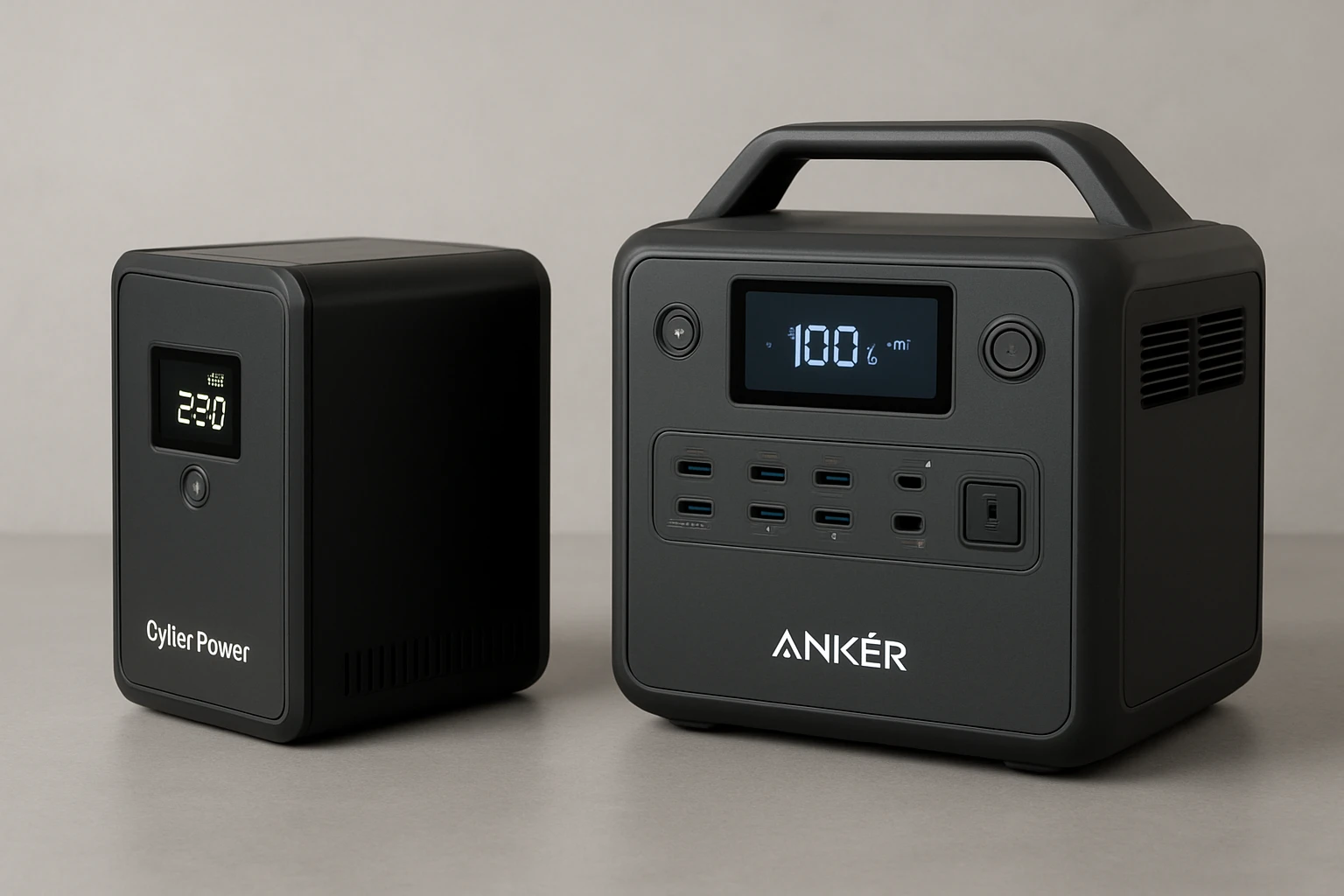
The CyberPower CP1500PFCLCD is a line‑interactive UPS designed for desktop computers, networking gear, and home entertainment systems that require active PFC (Power Factor Correction) compatibility. It delivers 1500VA/1000W of sine‑wave power, features a 12‑outlet panel (six battery‑backed, six surge‑only), and includes two USB charging ports (Type‑A and Type‑C). The 3‑year warranty covers the battery, and a $500,000 Connected Equipment Guarantee protects attached devices. Its color LCD panel tilts up to 22°, offering at‑a‑glance status updates, while Automatic Voltage Regulation (AVR) corrects minor fluctuations without draining the battery.
Anker SOLIX C1000 Power Station
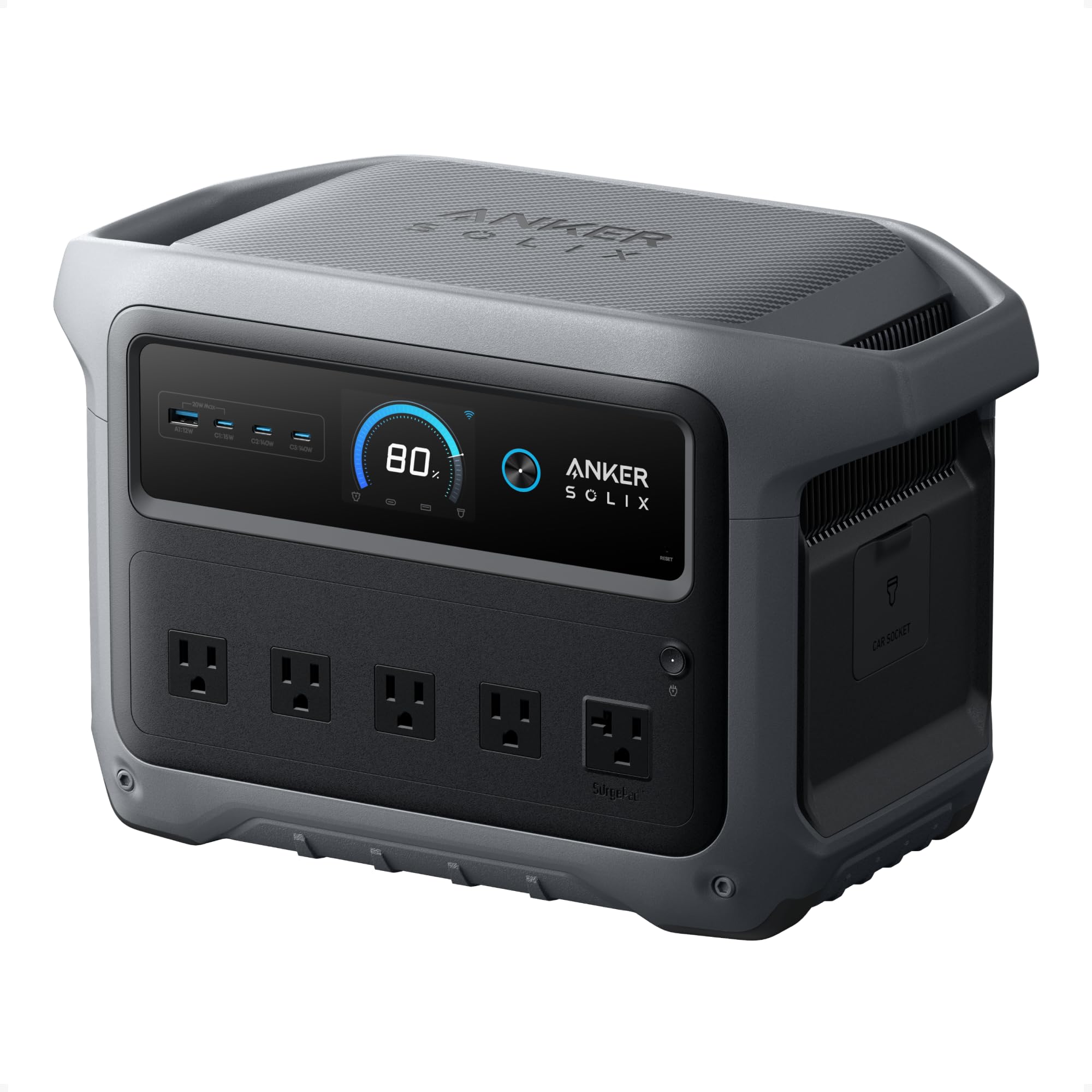
The SOLIX C1000 Gen 2 is a portable power station aimed at emergency home backup, remote work, and camping. It houses a 1,024Wh LiFePO4 battery capable of delivering 2,000W continuous (3,000W peak) through ten output ports, including AC, USB‑C, and USB‑A. Anker’s HyperFlash technology enables a full recharge in 49 minutes at 1,600W, and a 1.8‑hour solar recharge using up to 600W of panels. The unit is 14 % smaller and 11 % lighter than comparable models, and its 10 ms UPS switchover protects sensitive equipment like CPAP machines.
Anker SOLIX C300 Power Station
The SOLIX C300 targets lightweight travel and short‑duration off‑grid use. It provides 288Wh of LiFePO4 capacity with a 300W continuous (600W surge) AC output and eight versatile ports, including two 140W USB‑C Power Delivery ports. Recharge time to 80 % is only 50 minutes via wall outlet, and a 100W solar panel can replenish the battery in under two hours. The device operates at a quiet 25 dB, making it suitable for camping or wildlife observation. Anker guarantees ten years of service life, backed by a 5‑year warranty.
Head‑to‑Head Comparison
Price and Value
- CyberPower UPS – $239.95, offering 1500VA/1000W for desktop protection.
- Anker SOLIX C1000 – $499.99, delivering 1,024Wh and 2,000W continuous output.
- Anker SOLIX C300 – $249.99, providing 288Wh and 300W continuous output.
When measured against capacity, the C1000 presents the highest watt‑hour per dollar ratio, while the CyberPower UPS offers the most economical solution for stationary equipment.
Features and Specifications
| Feature | CyberPower 1500VA UPS | Anker SOLIX C1000 | Anker SOLIX C300 |
|---|---|---|---|
| Battery Capacity (Wh) | Not disclosed (UPS battery typical ~12 Ah at 12 V ≈ 144 Wh) | 1,024 Wh | 288 Wh |
| Continuous Power Output | 1,000 W (sine wave) | 2,000 W (3,000 W peak) | 300 W (600 W surge) |
| Number of Outlets | 12 (6 battery‑backed, 6 surge‑only) + 2 USB ports | 10 (AC, USB‑C, USB‑A, car, etc.) | 8 (3 AC, 1 car, 3 USB‑C, 1 USB‑A) |
| Recharge Time (Wall) | Not applicable (UPS stays charged via mains) | 49 min (1,600 W HyperFlash) | ≈50 min to 80 % |
| Solar Recharge Time | Not applicable | 1.8 hr (600 W max) | ≈2 hr (100 W panel) |
| Warranty | 3 years (battery included) | 10 years InfiniPower (5‑year warranty) | 10 years InfiniPower (5‑year warranty) |
Customer Ratings and Feedback
The CyberPower UPS holds a 4.6‑star rating from 11,483 reviewers, with common praise for its LCD panel and reliable AVR. The SOLIX C1000 enjoys a 4.7‑star rating from 1,110 reviewers, frequently highlighted for its rapid recharge and high power output. The SOLIX C300 also scores 4.6 stars from 1,686 reviewers, with users noting its compact size and quiet operation. While exact review excerpts are not provided, the aggregate scores indicate strong overall satisfaction across all three devices.
Performance and Reliability
UPS units like the CyberPower excel in providing uninterrupted power to sensitive electronics during brief outages, thanks to built‑in AVR that corrects voltage sags without draining the battery. In contrast, the SOLIX stations function as true portable generators, delivering sustained power for hours. The LiFePO4 chemistry in both Anker models offers a longer cycle life (3,000‑4,000 cycles) compared with traditional lead‑acid UPS batteries, translating to lower long‑term replacement costs.
Best Use Cases
- CyberPower 1500VA UPS: Ideal for home offices, gaming rigs, and networking equipment where a constant mains connection exists and brief power interruptions must be mitigated.
- Anker SOLIX C1000: Suited for whole‑home backup, remote workstations, RVs, and large‑scale camping where high wattage and rapid recharge are critical.
- Anker SOLIX C300: Perfect for lightweight travel, day‑trip camping, and situations where silent operation and easy carry weight matter more than raw power.
Pros & Cons
CyberPower 1500VA Mini Tower UPS
- Pros: Affordable, sine‑wave output, AVR protects battery life, LCD status panel, 12 outlets, 3‑year warranty including battery.
- Cons: Battery capacity not disclosed, not portable, limited to indoor use, no solar integration.
Anker SOLIX C1000 Power Station
- Pros: Massive 1,024Wh capacity, 2,000W continuous output, 49‑minute ultra‑fast recharge, solar compatibility, 10 ms UPS switchover, long warranty.
- Cons: Higher price point, heavier than C300, may be overkill for small‑scale needs.
Anker SOLIX C300 Power Station
- Pros: Compact, lightweight, quiet operation, fast 50‑minute recharge, versatile ports, robust LiFePO4 lifespan.
- Cons: Lower power output, limited to 288Wh, not suitable for whole‑home backup, solar panel compatibility limited to specific Anker panels.
Recommendations
For users whose primary concern is protecting desktop computers and networking gear from short outages, the CyberPower 1500VA Mini Tower UPS offers the best value. Those requiring a mobile, high‑capacity source for home backup, RV power, or extended camping should consider the Anker SOLIX C1000 Power Station. Finally, travelers who need a quiet, lightweight charger for laptops, phones, and small appliances will find the Anker SOLIX C300 Power Station most appropriate.
FAQ
- Can the CyberPower UPS be used with solar panels? No, the UPS is designed for mains input only and does not support solar charging.
- How long can the SOLIX C1000 run a 500W load? With a 1,024Wh battery, it can sustain a 500W load for approximately two hours before recharging.
- Is the SOLIX C300 compatible with any 60W solar panel? It is optimized for Anker’s 100W or 60W panels; other brands may not meet voltage requirements.
- What is the UPS switchover time for the CyberPower unit? The line‑interactive design typically switches to battery within 5‑10 ms, similar to true UPS devices.
- Do the Anker stations provide pure sine‑wave output? Yes, both the C1000 and C300 generate clean sine‑wave AC, suitable for sensitive electronics.
- How many recharge cycles can the LiFePO4 batteries endure? Anker claims 3,000‑4,000 cycles while retaining at least 80 % capacity.
- Is the CyberPower UPS covered for battery failure? The three‑year warranty includes the battery, and the $500,000 equipment guarantee protects connected devices.
Conclusion
Each product excels within its intended domain. The CyberPower UPS delivers reliable, cost‑effective protection for stationary computer setups. The Anker SOLIX C1000 stands out as a high‑capacity, fast‑recharging portable generator for extensive backup scenarios. The SOLIX C300 balances portability with sufficient power for everyday travel and short‑term off‑grid use. Buyers should align their purchase with the specific power demands, mobility requirements, and budget constraints outlined above.
Products Mentioned in This Review
Frequently Asked Questions
What are the main differences between the CyberPower 1500VA Mini Tower UPS and the Anker SOLIX C1000/C300 power stations?
The CyberPower UPS offers line‑interactive sine‑wave output and 1500VA/1000W capacity for stationary use, while the Anker SOLIX models are portable battery stations with higher watt‑hour ratings but no built‑in UPS voltage regulation.
Which device is better suited for a home office setup?
The CyberPower 1500VA UPS is typically better for home offices because it provides continuous power conditioning and automatic shutdown for computers and networking gear.
How does battery capacity compare among the three products?
The CyberPower UPS relies on a built‑in lead‑acid battery sized for short outages, whereas the Anker SOLIX C1000 holds about 1000Wh and the C300 holds roughly 300Wh, delivering longer run‑times for portable use.
Are the Anker SOLIX C1000 and C300 suitable for outdoor adventures?
Yes, both SOLIX models are lightweight, have AC and DC outlets, and include safety features that make them ideal for camping, RVing, or remote work.
Do these devices provide voltage regulation and sine‑wave output?
The CyberPower UPS provides line‑interactive voltage regulation and true sine‑wave output; the Anker SOLIX stations supply clean power but lack dedicated voltage regulation or sine‑wave inversion.

