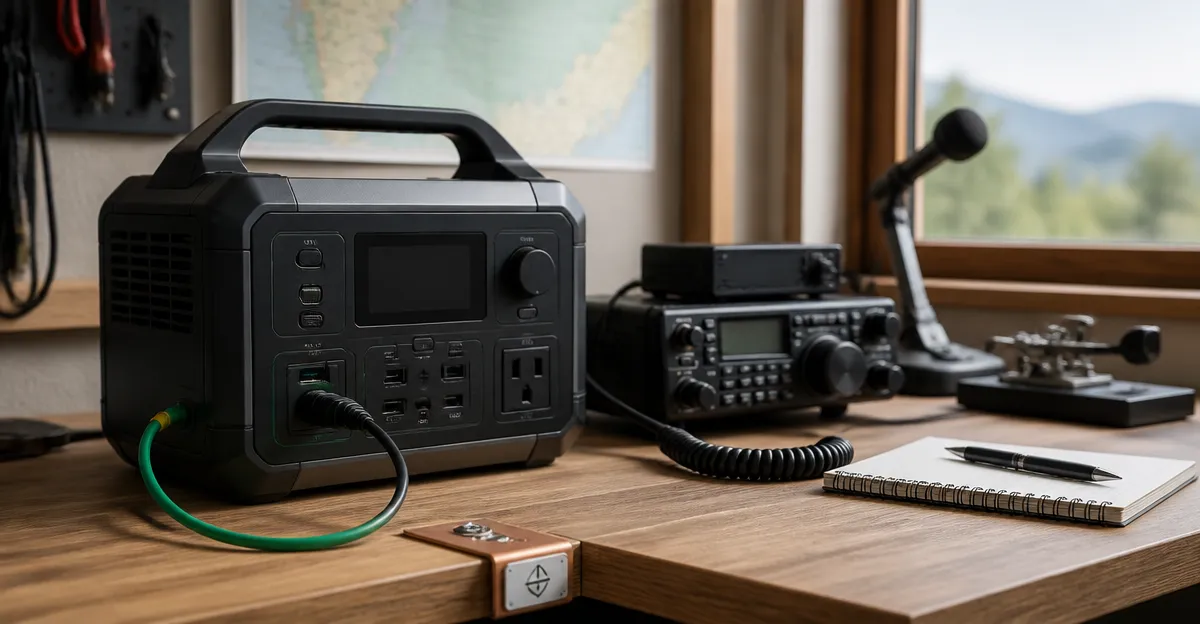
How to Ground a Portable Power Station for Ham Radio: Complete Guide to Safe, Effective RF Grounding
Introduction
Grounding a portable power station is a critical task for any ham radio operator who wishes to protect equipment and maintain signal integrity. This guide explains the underlying principles of RF grounding, outlines practical installation steps, and recommends reliable products that simplify the process. Readers will learn how soil characteristics affect grounding resistance, how to select the appropriate grounding rod, and how to verify that the system meets safety standards.
Throughout the article, the author references three Amazon‑listed items that have earned high customer ratings and are specifically suited for portable‑station grounding. The recommendations are integrated with technical explanations rather than dominating the narrative, ensuring that the guide remains valuable even to readers who choose alternative components.
Background and Context
Effective grounding serves two primary purposes: it provides a low‑impedance path for lightning and static discharge, and it establishes a reference plane for radio frequency (RF) currents. In ham radio, improper grounding can lead to elevated standing‑wave ratios, increased noise, and damage to sensitive electronics. The concept of ground resistance, measured in ohms, is central to evaluating a grounding system; a typical target for portable stations is less than 5 Ω, although lower values are preferable in high‑lightning‑risk areas.
Soil resistivity varies with moisture content, temperature, pH, and composition. Clay‑rich soils retain moisture and generally offer lower resistance, whereas sandy or rocky terrain may require longer or multiple rods. Understanding these variables allows the operator to adapt the grounding strategy to the deployment site, whether it is a backyard, a remote field station, or a temporary event setup.
Choosing the Right Grounding Rod
Grounding rods are classified by material, diameter, length, and the method of attachment to the conductor. Copper‑bonded steel rods combine the conductivity of copper with the structural strength of steel, making them suitable for diverse soil conditions. The following products exemplify these attributes.
The first recommendation is the GOUNENGNAIL 4' Grounding Rod. This 4‑foot rod features a 3/8‑inch copper‑weld coating over a hardened steel core, complies with ASTM E8/E8M‑16 and ASTM B368‑2014, and includes a pre‑installed screw clamp for rapid connection. With a 4.7‑star rating from 999 reviews, it demonstrates strong customer confidence.
For operators who need multiple grounding points, the Bulls 4' Ground Rod (2‑Pack) offers two identical rods at a competitive price of $33.50. Each rod is copper‑plated steel, includes a rolled driving spike for easier installation, and carries a 4.8‑star rating from 795 reviews. The dual‑pack format is advantageous for creating a ground loop or for use in environments with high soil resistivity.
When a portable power station requires a dedicated grounding kit with flexible wiring, the Qidarusxl Generator Grounding Kit provides a 17.4‑inch steel rod, a 6.2‑ft copper‑clad wire, crocodile clips, and tinned lugs. Rated 4.8 stars by 148 reviewers, this kit is priced at $19.99 and is designed for quick attachment to generators, electric fences, or antenna bases.
Installation Procedure
Step 1: Site Selection. Choose a location with the highest possible moisture content, away from large rocks or buried utilities. Mark a spot at least one meter from the power station chassis to avoid interference.
Step 2: Rod Placement. Drive the chosen grounding rod vertically into the ground using a sledgehammer or a ground‑rod driver. For the GOUNENGNAIL or Bulls rods, the rolled driving spike reduces the effort required. Aim for a depth of at least 2.5 m (8 ft) where soil conditions permit; otherwise, use multiple rods in parallel.
Step 3: Conductor Connection. Attach the pre‑installed screw clamp on the rod to the grounding wire of the power station. Ensure a tight mechanical connection and verify that the copper surface of the clamp contacts the rod without oxidation.
Step 4: Wire Routing. Route the grounding wire along the shortest path to the power station, avoiding sharp edges that could damage insulation. For the Qidarusxl kit, use the provided PVC‑insulated wire and secure it with the crocodile clips if a temporary connection is needed.
Step 5: Verification. Measure the ground resistance with a handheld earth‑resistance tester. A reading below 5 Ω confirms adequate grounding; if the value is higher, add a second rod (such as the second piece from the Bulls 2‑Pack) and connect both rods in parallel to lower overall resistance.
Comparison and Selection Guide
| Feature | GOUNENGNAIL 4' Rod | Bulls 4' Rod (2‑Pack) | Qidarusxl Generator Kit |
|---|---|---|---|
| Material | Copper‑weld over hardened steel | Copper‑plated steel | Steel core with copper‑clad finish |
| Length | 4 ft | 4 ft each | 17.4 in rod + 6.2 ft wire |
| Connector | Pre‑installed screw clamp | Pre‑installed screw clamp | Crocodile clips & tinned lugs |
| Rating | 4.7 / 5 (999 reviews) | 4.8 / 5 (795 reviews) | 4.8 / 5 (148 reviews) |
| Price | Not listed | $33.50 | $19.99 |
| Best For | Single‑point, high‑conductivity grounding | Multiple‑point or ground‑loop setups | Generator or portable‑station kits requiring flexible wiring |
Operators should select the GOUNENGNAIL rod when a single, robust grounding point is sufficient and when the highest conductivity is desired. The Bulls 2‑Pack is ideal for sites with poor soil conductivity, as the parallel configuration reduces overall resistance. The Qidarusxl kit excels when a short rod is needed for tight spaces or when a flexible wire system is preferred.
Best Practices & Tips
- Inspect the rod surface before installation; remove any oxidation to ensure optimal conductivity.
- Apply a corrosion‑inhibiting compound to the exposed portion of the rod after installation, especially in coastal environments.
- Use a grounding strap with a minimum cross‑section of 6 mm² (10 AWG) for connections to the power station.
- Periodically test ground resistance, particularly after severe weather events that may alter soil moisture.
- Document the grounding layout with photos and measurements to aid future troubleshooting.
Frequently Asked Questions
1. Why is copper‑bonded steel preferred over pure copper for grounding rods?
Copper‑bonded steel combines the high conductivity of copper with the tensile strength of steel, allowing the rod to withstand mechanical stresses while maintaining low resistance.
2. Can I use a grounding rod that is shorter than 4 ft?
Shorter rods, such as the 17.4‑in rod in the Qidarusxl kit, can be effective in high‑moisture soils or when multiple rods are installed in parallel to achieve the desired resistance.
3. How often should I test the ground resistance of my portable station?
Testing after each major storm, season change, or relocation is advisable. Routine checks every six months help ensure continued safety.
4. Is it necessary to ground the antenna separately from the power station?
Ideally, the antenna and power station share a common ground point to prevent ground loops that can introduce noise. Using a single grounding rod with multiple connections achieves this goal.
5. What safety precautions should be taken when driving a grounding rod?
Wear protective gloves and eye gear, ensure the area is clear of underground utilities, and use a rod driver or hammer with a suitable handle to avoid personal injury.
6. Can I use the same grounding system for both a portable power station and a generator?
Yes, provided the grounding conductor is sized appropriately for the combined fault current. The Qidarusxl Generator Grounding Kit offers a flexible wire that can accommodate both devices.
Conclusion
Grounding a portable power station for ham radio requires a blend of theoretical knowledge, careful site assessment, and the right hardware. By understanding soil resistivity, selecting a suitable grounding rod, and following the installation steps outlined above, operators can achieve a low‑impedance, reliable grounding system that protects equipment and enhances signal performance. The featured products—GOUNENGNAIL 4' Grounding Rod, Bulls 4' Ground Rod (2‑Pack), and Qidarusxl Generator Grounding Kit—provide versatile options that address a wide range of grounding scenarios.
Adhering to best‑practice guidelines and performing regular resistance checks will ensure long‑term safety and operational excellence for any ham radio enthusiast.
Products Featured in This Guide
GOUNENGNAIL 4' Grounding Rod
Rating: 4.7/5 (999 reviews)
Why featured: Provides a copper‑weld coating over hardened steel, meets ASTM standards, and includes a pre‑installed screw clamp for quick connection.
Bulls 4' Ground Rod (2‑Pack)
Price: $33.50
Rating: 4.8/5 (795 reviews)
Why featured: Offers two copper‑plated steel rods with rolled driving spikes, enabling parallel grounding for low‑resistance installations.
Qidarusxl Generator Grounding Kit
Price: $19.99
Rating: 4.8/5 (148 reviews)
Why featured: Includes a short steel rod, copper‑clad flexible wire, crocodile clips, and tinned lugs, making it ideal for generator and portable‑station grounding.