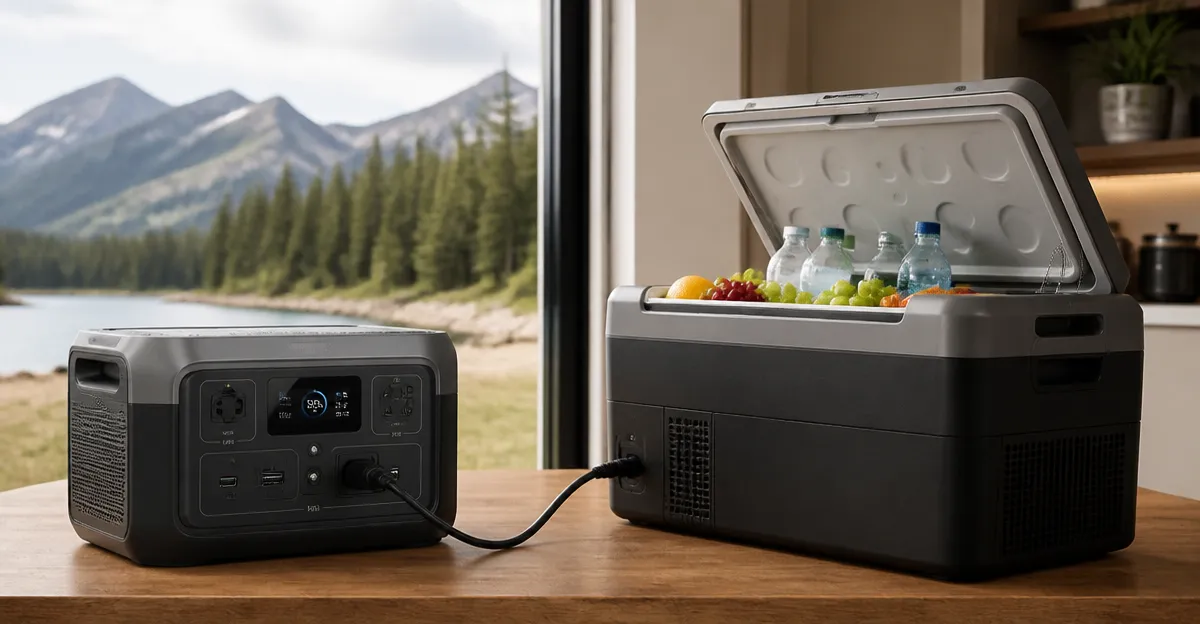
How to Run a Variable-Speed Compressor Fridge on a Portable Power Station: Complete Step-by-Step Guide
Introduction
Running a variable‑speed compressor fridge off a portable power station is a practical solution for off‑grid living, emergency preparedness, and outdoor recreation. This guide explains the electrical principles, sizing calculations, and safety considerations that enable reliable operation. Readers will learn how to assess power requirements, select an appropriate power station, and implement best‑practice wiring techniques. By the end of the article, one will be equipped to power a fridge confidently in any location without compromising performance.
Background and Context
A variable‑speed compressor fridge differs from a traditional fixed‑speed unit by adjusting motor speed to match cooling demand, resulting in higher efficiency and lower power draw. The compressor operates at multiple wattage levels, typically ranging from 30 W during idle periods to 150 W or more under heavy load. Understanding this dynamic load profile is essential for matching a portable power station’s output capacity and battery capacity.
Portable power stations combine a rechargeable battery, an inverter, and multiple charging inputs into a single, transportable unit. Lithium iron phosphate (LiFePO4) batteries are common because they provide long cycle life, stable voltage, and enhanced safety compared to lead‑acid chemistries. The inverter converts the battery’s DC voltage to AC power suitable for household appliances such as a fridge.
Key technical terms include:
- Continuous Power Rating: The maximum power the inverter can supply continuously without overheating.
- Peak (Surge) Power Rating: The short‑duration power the inverter can deliver to start motor loads.
- Battery Capacity (Wh): The total energy stored in the battery, expressed in watt‑hours.
- Depth of Discharge (DoD): The proportion of battery capacity that can be safely used without reducing lifespan.
These concepts form the foundation for accurate sizing and safe operation of a fridge‑powered portable system.
Assessing Your Fridge’s Power Needs
The first step is to determine the fridge’s average and peak power consumption. Manufacturers often list a maximum power draw, but real‑world usage is lower due to the variable‑speed technology. A practical method involves measuring the fridge with a plug‑in power meter for at least 24 hours to capture cycling behavior.
Typical measurements for a 12‑liter variable‑speed compressor fridge are:
- Average power: 45 W
- Peak start‑up power: 150 W
- Daily energy consumption: approximately 1.1 kWh
These figures guide the selection of a power station that can both start the compressor and sustain operation for the desired runtime.
Selecting the Right Portable Power Station
Two products stand out for this application: the Jackery Explorer 2000 v2 and the Anker SOLIX C300. Both employ LiFePO4 batteries, provide ample continuous power, and feature fast‑charging capabilities.
The Jackery Explorer 2000 v2 offers 2200 W continuous output, a massive 2042 Wh capacity, and a USB‑C PD 100 W fast‑charge port. Its weight of 39.5 lb makes it the lightest 2 kWh class unit, and it includes a silent‑charging mode that operates below 30 dB. These attributes ensure the fridge can start reliably and run for multiple days without recharging.
The Anker SOLIX C300 provides 300 W continuous output with a 288 Wh capacity, making it a more compact option for short‑term use. Its 140 W two‑way USB‑C fast‑charging ports enable rapid replenishment, and the unit operates at a whisper‑quiet 25 dB. While its capacity is lower, it remains suitable for weekend trips where recharging is readily available.
When choosing, consider the following criteria:
- Continuous power rating must exceed the fridge’s peak draw (≥150 W).
- Battery capacity should support at least 24 hours of operation (≥1.1 kWh).
- Weight and portability matter for mobile scenarios.
- Charging speed influences how quickly the system can be restored after depletion.
Step‑by‑Step Setup Procedure
Follow these steps to connect a variable‑speed compressor fridge to a portable power station safely.
- Calculate Required Capacity: Multiply the fridge’s average consumption (45 W) by the intended runtime in hours. For a 24‑hour period, the required energy is 45 W × 24 h = 1080 Wh. Add a 20 % safety margin, resulting in approximately 1300 Wh.
- Select the Power Station: Choose a unit whose battery capacity meets or exceeds the calculated requirement. The Jackery Explorer 2000 v2 (2042 Wh) comfortably satisfies this need, whereas the Anker SOLIX C300 (288 Wh) would require supplemental solar panels or an additional battery.
- Verify Inverter Rating: Ensure the inverter’s continuous power rating exceeds the fridge’s peak start‑up power. Both Jackery (2200 W) and Anker (300 W) meet this criterion, but the Anker leaves less headroom for additional loads.
- Connect the Fridge: Plug the fridge’s power cord into a dedicated AC outlet on the power station. Avoid using extension cords, as they can introduce voltage drop.
- Activate Silent Mode (Optional): If operating in a quiet environment, enable the power station’s silent‑charging mode to keep fan noise below 30 dB.
- Monitor Battery Levels: Use the power station’s built‑in display or companion app to track remaining capacity. Plan recharging before the battery falls below 30 % DoD to preserve longevity.
After completing these steps, the fridge will operate autonomously, maintaining consistent temperature while the power station supplies clean, silent electricity.
Comparison and Selection Guide
The table below contrasts the two recommended power stations across key parameters relevant to fridge operation.
| Feature | Jackery Explorer 2000 v2 | Anker SOLIX C300 |
|---|---|---|
| Battery Capacity (Wh) | 2042 Wh | 288 Wh |
| Continuous AC Output | 2200 W | 300 W |
| Peak (Surge) Output | 2200 W (same as continuous) | 300 W |
| Weight | 39.5 lb (17.9 kg) | 13.2 lb (6 kg) |
| Charging Time (0‑80 %) | 66 min (AC Fast) | 50 min (wall outlet) |
| Solar Input Capability | Up to 400 W panels, full charge in ~6 h | Compatible with 100 W Anker solar panel |
| Noise Level (Silent Mode) | <30 dB | 25 dB |
| Warranty | 10‑year battery warranty | 5‑year warranty |
| Amazon Rating | 4.6 / 5.0 (826 reviews) | 4.6 / 5.0 (1,816 reviews) |
For extended, unattended operation, the Jackery Explorer 2000 v2 is the superior choice due to its larger capacity and higher power output. For short excursions where weight is paramount and recharging options are abundant, the Anker SOLIX C300 provides a lightweight alternative.
Best Practices and Tips
- Maintain Adequate Ventilation: Place the power station on a flat surface with at least 6 inches of clearance on all sides to allow airflow.
- Use a Pure Sine Wave Inverter: Both recommended units deliver pure sine wave AC, which protects sensitive fridge electronics and improves efficiency.
- Implement a Battery Management Strategy: Avoid deep discharges below 30 % DoD to maximize the LiFePO4 battery’s lifespan.
- Leverage Solar Recharging: Pair the Jackery with a 400 W solar array or the Anker with a 100 W panel to extend runtime indefinitely during daylight.
- Monitor Temperature: Use an external thermometer inside the fridge to verify that cooling performance remains within the desired range.
- Plan for Redundancy: For critical applications, consider a secondary power station or a small gasoline generator as a backup source.
Frequently Asked Questions
1. Can a variable‑speed compressor fridge run on a 300 W power station?
Yes, provided the fridge’s peak start‑up power does not exceed the station’s continuous rating. The Anker SOLIX C300 supplies 300 W continuously, which matches typical peak demands of 150 W, leaving sufficient margin for safety.
2. How long will the Jackery Explorer 2000 v2 power a fridge that consumes 45 W on average?
With a 2042 Wh battery, the unit can theoretically run the fridge for 2042 Wh ÷ 45 W ≈ 45 hours. Accounting for inverter losses (≈10 %) and a 20 % safety buffer, realistic runtime is about 35‑38 hours.
3. Is it safe to use a portable power station indoors?
Yes. LiFePO4 power stations emit no fumes and have built‑in temperature monitoring. Ensure the unit is placed on a non‑flammable surface and avoid covering ventilation openings.
4. What solar panel size is optimal for continuous fridge operation?
To replace 45 W of consumption continuously, a solar array delivering at least 60 W under typical sunlight conditions is required. The Jackery’s 400 W capability allows rapid replenishment, while the Anker’s 100 W panel provides ample margin for short‑term use.
5. How does depth of discharge affect battery life?
LiFePO4 batteries tolerate deep cycles better than other chemistries, but repeatedly discharging below 30 % DoD can shorten overall cycle life. Maintaining a charge above this threshold extends the warranty‑covered lifespan.
6. Can I connect additional devices to the power station while the fridge runs?
Both units have multiple AC and USB ports. Adding low‑draw devices such as LED lights or phone chargers will not impact fridge performance as long as total load remains below the continuous rating.
Conclusion
Powering a variable‑speed compressor fridge with a portable power station is entirely feasible when the system is sized correctly and operated responsibly. By calculating energy needs, selecting a power station with sufficient capacity and continuous output, and following best‑practice wiring and charging procedures, one can achieve reliable refrigeration in remote locations, during emergencies, or while traveling. The Jackery Explorer 2000 v2 and Anker SOLIX C300 exemplify the balance of power, portability, and durability required for such applications.
Products Featured in This Guide
Jackery Explorer 2000 v2
Price: $799.00 | Rating: 4.6/5.0 (826 reviews)
Featured because its 2042 Wh LiFePO4 battery and 2200 W continuous output provide ample capacity and power headroom for extended fridge operation, while its lightweight design and silent‑charging mode make it suitable for both indoor emergencies and outdoor adventures.
Anker SOLIX C300
Price: $299.99 | Rating: 4.6/5.0 (1,816 reviews)
Featured because its compact 288 Wh LiFePO4 battery, 300 W continuous output, and rapid 140 W USB‑C fast‑charging ports make it an ideal lightweight solution for short‑term fridge use during travel or weekend camping, especially when paired with a compatible solar panel.