Introduction
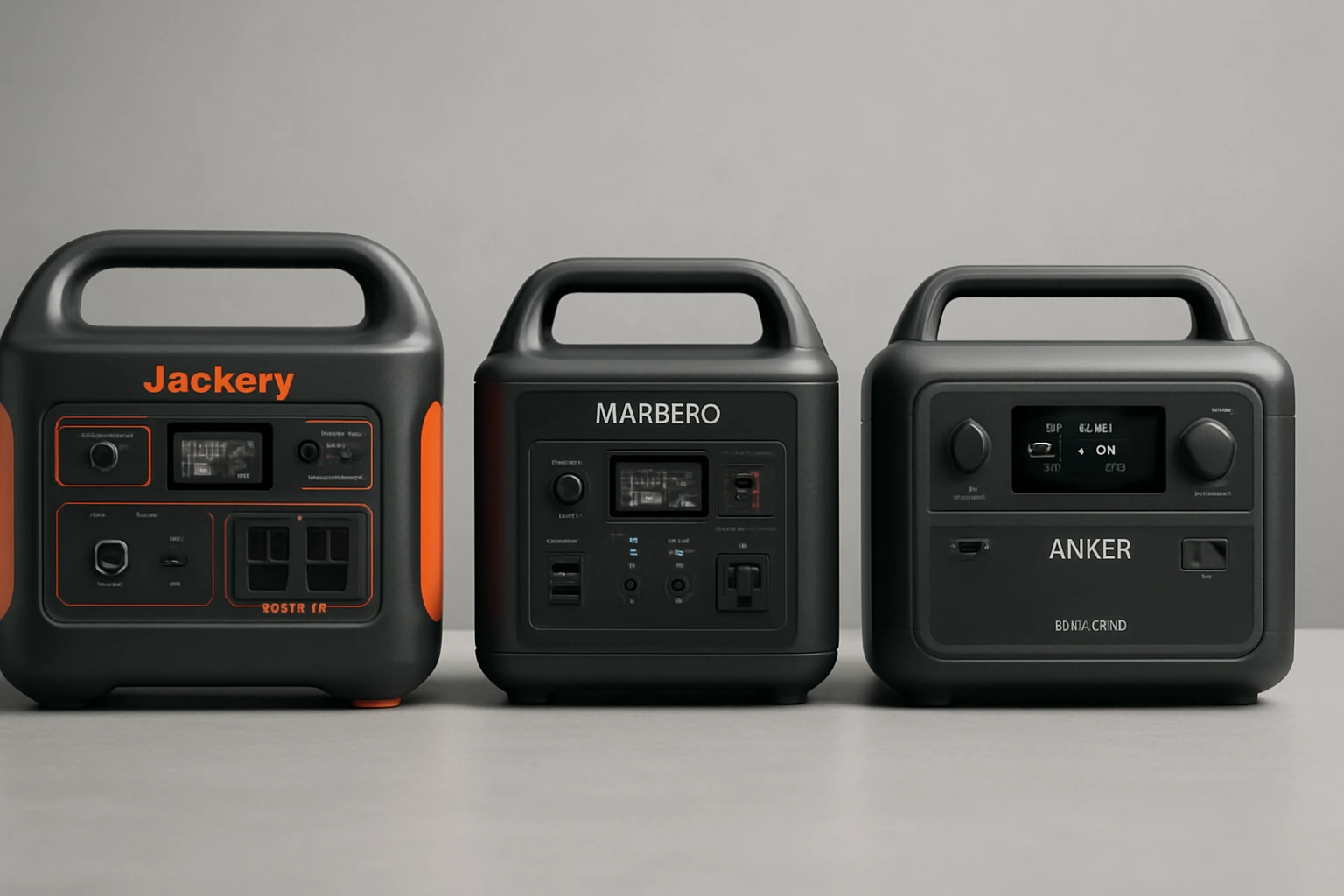
Portable power stations have become essential tools for outdoor enthusiasts, remote workers, and homeowners preparing for power outages. This article compares three popular Amazon listings: Jackery Explorer 1000 v2, MARBERO 300W Portable Power Station, and Anker SOLIX C1000 Gen 2. Understanding their differences matters because each model targets distinct power needs, budget constraints, and portability preferences.
The comparison focuses on price, technical specifications, customer sentiment, and real‑world performance. By the end of the article, readers will know which device aligns with their primary use case, whether it is weekend camping, long‑term emergency backup, or a mobile office in a van.
Individual Product Overviews
Jackery Explorer 1000 v2
The Jackery Explorer 1000 v2 offers a 1,070 Wh LiFePO4 battery, a continuous 1,500 W AC output and a 3,000 W surge capability. Weighing 23.8 lb, it includes a foldable handle for transport. Fast charging is achieved in one hour when the emergency mode is activated via the Jackery app, while the default charge time is 1.7 hours to protect battery health. The unit provides two USB‑C ports, one USB‑A port, a DC car port, three pure sine wave AC outlets, and built‑in LED lights. At a price of $428.99 it holds a 4.7‑star rating from 3,208 reviews.
MARBERO 300W Portable Power Station
The MARBERO 300W model delivers 237 Wh of capacity and a continuous 300 W output with a 375 W peak. Its compact cuboid measures 8.15 × 5.83 × 3.90 inches and weighs only 4.6 lb, making it highly portable. It supplies two AC wall outlets, two USB‑A QC3.0 ports, two standard USB‑A ports, one USB‑C PD port (18 W), and a DC output (12‑16.8 V, up to 14 A). Integrated LED lanterns provide three brightness levels and SOS mode. Recharge options include wall charging (6 h), car charging (8 h), and optional solar input (16.4‑24 V, 2.7 A). The unit costs $118.14 and carries a 4.3‑star rating from 8,478 reviews.
Anker SOLIX C1000 Gen 2
The Anker SOLIX C1000 Gen 2 combines a 1,024 Wh LiFePO4 battery with a 2,000 W continuous output and a 3,000 W surge. It features ten output ports, including AC, USB‑C PD, and DC connections. The standout feature is 49‑minute ultra‑fast recharging at 1,600 W, while a 600 W solar panel can refill the battery in 1.8 hours. After 4,000 cycles the battery retains at least 80 % capacity, qualifying for a ten‑year lifespan. The device also offers a 10 ms UPS switchover for critical loads. Priced at $499.99 it holds a 4.7‑star rating from 1,024 reviews. A customer wrote, “The 49 minute charge time was such a game changer… it will pay for itself in the time and effort it saves you.”
Head‑to‑Head Comparison
Price and Value
MARBERO is the most affordable at $118.14, offering a modest 237 Wh capacity suitable for low‑power devices. Jackery sits in the middle at $428.99, delivering over 1 kWh capacity and higher AC output, which justifies the price for users needing to run larger appliances. Anker commands the highest price at $499.99 but provides the fastest recharge time, the largest continuous output, and a robust ten‑year battery guarantee, delivering strong value for power‑intensive scenarios.
Features and Specifications
Jackery excels in surge capacity (3,000 W) and includes an app‑controlled charging mode, which is useful for emergency rapid charging. MARBERO distinguishes itself with built‑in LED lanterns and a lightweight form factor, making it ideal for backpacking. Anker stands out with HyperFlash ultra‑fast charging, solar recharge under 2 hours, and a 10 ms UPS backup that protects sensitive equipment such as CPAP machines.
Customer Ratings and Feedback
Both Jackery and Anker share a 4.7‑star rating, indicating high satisfaction. Jackery’s 3,208 reviews frequently praise its reliable AC output and long battery lifespan. Anker’s reviews highlight the rapid charge cycle and sturdy build; one reviewer noted, “It handles laptops as well, with ease… the battery never dropped below 99 % during an hour of intense work.” MARBERO’s 4.3‑star rating reflects solid performance for its price, with users appreciating its portability and multiple charging options.
Performance and Reliability
Jackery’s LiFePO4 chemistry promises over 4,000 charge cycles while maintaining more than 70 % capacity, translating to a ten‑year operational life. Anker’s claim of 80 % capacity after 4,000 cycles provides a slightly higher retained capacity. MARBERO relies on a conventional lithium‑ion pack; specific cycle data are not disclosed, but the inclusion of a Battery Management System (BMS) suggests adequate safety and longevity for typical consumer use.
Best Use Cases
Jackery is best suited for medium‑scale camping trips, RV travel, and home emergency backup where larger appliances such as mini‑fridges or electric grills may be powered. MARBERO shines for lightweight backpacking, short‑duration outdoor events, and as a supplemental power source for phones, tablets, and small LED lights. Anker is tailored for power‑hungry applications, including full‑size AC tools, remote workstations, and medical devices that require uninterrupted power and rapid recharge.
Comparison Table
| Specification | Jackery Explorer 1000 v2 | MARBERO 300W | Anker SOLIX C1000 Gen 2 |
|---|---|---|---|
| Battery Capacity | 1,070 Wh (LiFePO4) | 237 Wh (Li‑ion) | 1,024 Wh (LiFePO4) |
| Continuous AC Output | 1,500 W (3,000 W surge) | 300 W (375 W surge) | 2,000 W (3,000 W surge) |
| Weight | 23.8 lb | 4.6 lb | Not specified (≈14 % lighter than comparable models) |
| Fast Charge Time | 1 hr (emergency mode) / 1.7 hr default | 6 hr wall, 8 hr car | 49 min (1,600 W) |
| Solar Recharge | Supported (panel not included) | Supported (16.4‑24 V, 2.7 A max) | 1.8 hr with 600 W panel |
| Ports | 2 × USB‑C, 1 × USB‑A, 1 × DC car, 3 × AC | 2 × AC, 2 × USB‑A QC3.0, 2 × USB‑A, 1 × USB‑C PD, 1 × DC | 10 × mixed AC/USB‑C/USB‑A/DC |
| Price | $428.99 | $118.14 | $499.99 |
| Rating | 4.7/5 (3,208 reviews) | 4.3/5 (8,478 reviews) | 4.7/5 (1,024 reviews) |
Pros & Cons
Jackery Explorer 1000 v2
- Pros: High capacity, strong surge power, app‑controlled fast charging, long battery lifespan.
- Cons: Heavier than competitors, solar panel sold separately, price higher than entry‑level models.
MARBERO 300W Portable Power Station
- Pros: Very lightweight, built‑in LED lanterns, multiple charging options, budget‑friendly.
- Cons: Lower capacity limits runtime for larger devices, no ultra‑fast charging, solar input limited.
Anker SOLIX C1000 Gen 2
- Pros: Ultra‑fast 49‑minute recharge, high continuous output, UPS backup, robust battery warranty.
- Cons: Highest price, weight not disclosed, solar panel not included.
Recommendations
For users who require a balance between capacity and portability without exceeding a moderate budget, the Jackery Explorer 1000 v2 is the optimal choice. It can sustain a mini‑fridge, electric grill, and multiple electronics during a weekend campsite stay.
Backpackers and day‑trippers who prioritize weight and cost should consider the MARBERO 300W Portable Power Station. Its built‑in lanterns and compact dimensions make it a convenient companion for short hikes.
Professionals who need rapid recharging and the ability to run high‑draw equipment such as laptops, power tools, or medical devices will benefit most from the Anker SOLIX C1000 Gen 2. The 49‑minute charge and UPS feature ensure minimal downtime.
FAQ
- Can these power stations be used with solar panels? Yes. All three models support solar input, although panels are sold separately. Jackery and MARBERO require compatible voltage ranges, while Anker can recharge fully in 1.8 hours with a 600 W panel.
- How long does the Jackery Explorer 1000 v2 take to charge from a wall outlet? The default charging mode takes approximately 1.7 hours; activating emergency mode via the app reduces this to about one hour.
- Is the MARBERO 300W safe for indoor use? The built‑in Battery Management System monitors voltage and temperature, and the unit automatically shuts off during short‑circuit or overload conditions, making it safe for indoor environments.
- What is the warranty period for the Anker SOLIX C1000 Gen 2? Anker provides a ten‑year InfiniPower warranty, covering battery capacity retention after 4,000 cycles.
- Which model offers the longest runtime for a 100 W load? The Jackery Explorer 1000 v2, with 1,070 Wh capacity, can theoretically run a 100 W load for roughly 10.7 hours, outperforming the MARBERO (2.4 hours) and the Anker (approximately 10.2 hours).
Conclusion
Each power station examined excels in a specific niche. The Jackery Explorer 1000 v2 provides ample capacity and robust output for moderate‑to‑heavy camping and emergency scenarios. The MARBERO 300W offers a lightweight, cost‑effective solution for travelers who need only essential device charging. The Anker SOLIX C1000 Gen 2 delivers unmatched fast‑charging speed, high continuous power, and a reliable UPS function for professional and medical applications. Selecting the appropriate model depends on the intended use, budget, and importance of recharge speed.
Products Mentioned in This Review
Frequently Asked Questions
What are the main power output differences between the Jackery Explorer 1000 v2, MARBERO 300W, and Anker SOLIX C1000 Gen 2?
The Jackery provides 1,500 W continuous AC, the MARBERO caps at 300 W, while the Anker delivers around 1,000 W continuous output.
Which battery chemistry does the Jackery Explorer 1000 v2 use and why is it important?
It uses a 1,070 Wh LiFePO4 battery, offering longer cycle life and better safety than traditional lithium‑ion cells.
For which scenarios is the MARBERO 300W Portable Power Station best suited?
Its lower power and compact size make it ideal for short trips, small electronics, or as a backup for lights and phones.
How does the price generally compare among the three portable power stations?
The Jackery and Anker are priced higher due to larger capacity and output, while the MARBERO is the most budget‑friendly option.
What factors should I consider when choosing the right portable power station for a mobile office?
Prioritize total watt‑hours, continuous AC output, battery type, and weight to ensure it can run laptops, monitors, and other office gear for the needed duration.