Introduction
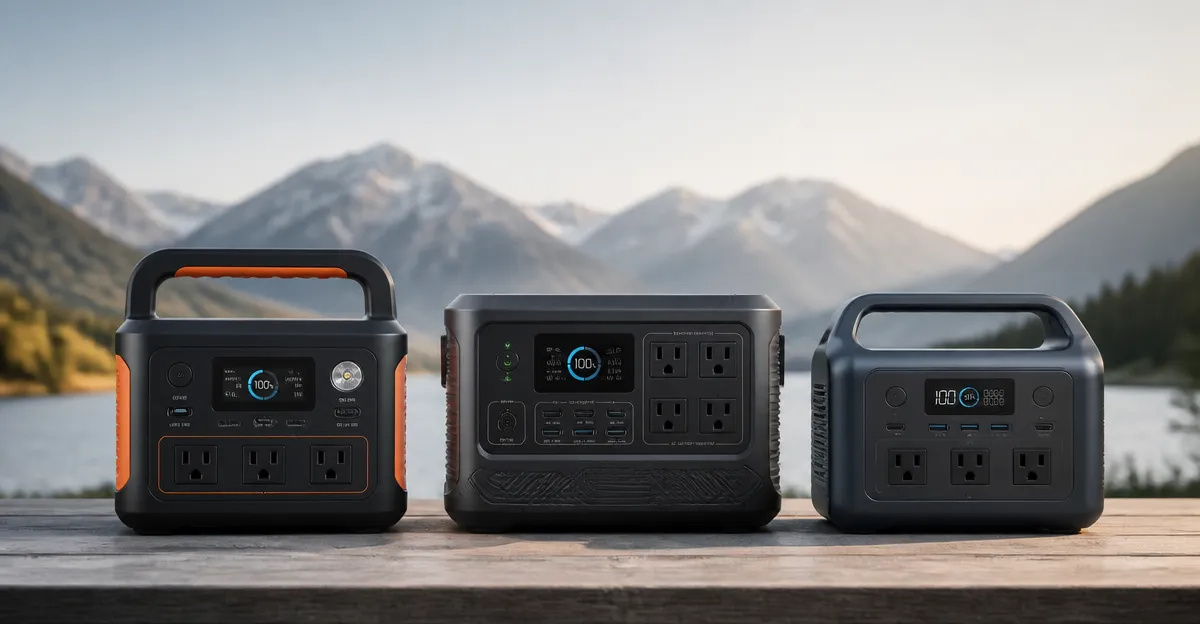
Portable power stations have become essential tools for outdoor enthusiasts, remote workers and households prone to outages. This article compares five popular Amazon models: Jackery Explorer 1000 v2, BLUETTI Elite 30 V2, BLUETTI Elite 100 V2, Anker SOLIX C1000 Gen 2 and Anker SOLIX C1000. Understanding their strengths helps buyers select the unit that matches their power demand, budget and portability needs.
Individual Product Overviews
Jackery Explorer 1000 v2
- Capacity: 1,070 Wh; Continuous AC output: 1,500 W, surge 3,000 W.
- Weight: 23.8 lb; foldable handle for easy transport.
- Fast‑charging: 0‑100 % in 1 hour (emergency mode) or 1.7 hours for battery health.
- LFP battery rated for 10 years and >4,000 cycles.
- Ports: 2 × USB‑C, 1 × USB‑A, 1 × DC car, 3 × pure‑sine AC, LED lights.
Customer sentiment highlights its ability to run small refrigerators for 7‑8 hours and the convenience of the Jackery app for mode selection.
BLUETTI Elite 30 V2
- Capacity: 288 Wh; Continuous output: 600 W, surge 1,500 W (Power Lifting mode).
- Weight: 9.4 lb; highly portable.
- Fast wall charge: 0‑80 % in 45 min, 0‑100 % in 70 min.
- UltraCell technology reduces standby consumption by up to 50 %.
- Eight charging modes, built‑in UPS with 10 ms switchover.
Reviewers praise its quiet inverter, rapid charging and ability to act as a UPS for a home server.
BLUETTI Elite 100 V2
- Capacity: 1,024 Wh; Continuous output: 1,800 W, surge 2,700 W.
- Weight: 25 lb; 17 L footprint, 30 % lighter than previous generation.
- Fast charging: 70 min with 1,200 W TurboBoost AC or up to 1,000 W solar.
- 10 ms UPS, whisper‑quiet mode at 30 dB.
- 11 ports, LiFePO₄ cells promising >4,000 cycles.
Positive feedback emphasizes its suitability for astrophotography equipment and reliable performance over multi‑hour outings.
Anker SOLIX C1000 Gen 2
- Capacity: 1,024 Wh; Continuous output: 2,000 W, surge 3,000 W.
- Weight: approximately 28 lb; 14 % smaller than competing 1 kWh units.
- UltraFast 1,600 W recharging; full charge in under 1 hour via wall.
- 10 ms UPS, 11 versatile ports, HyperFlash charging tech.
- App‑controlled TOU mode for peak‑shaving and remote monitoring.
Users highlight its ability to keep a CPAP running through ice‑storm outages and the seamless app experience.
Anker SOLIX C1000
- Capacity: 1,056 Wh; Continuous output: 1,800 W, surge 2,400 W.
- Weight: 28 lb; 15 % smaller than comparable 1 kWh units.
- UltraFast 80 % in 43 min, full charge under an hour.
- LiFePO₄ chemistry with 3,000 cycles over ten years.
- SurgePad technology delivers 2,400 W, 11 ports, 10 ms UPS.
Reviewers note reliable operation for medical equipment and the convenience of pairing with an expansion battery for extended trips.
Head‑to‑Head Comparison
Price and Value
- Jackery Explorer 1000 v2 – $499.00; mid‑range price for 1 kWh capacity.
- BLUETTI Elite 30 V2 – $218.98; the most affordable entry‑level model.
- BLUETTI Elite 100 V2 – $448.99; strong value for 1 kWh with 1,800 W output.
- Anker SOLIX C1000 Gen 2 – $529.99; premium price reflecting ultra‑fast charge.
- Anker SOLIX C1000 – $469.99; slightly lower than Gen 2 while offering similar capacity.
When price is divided by usable watt‑hours, the Elite 30 V2 provides the lowest cost per Wh, while the Jackery and Anker models charge a premium for faster recharge and higher surge capability.
Features and Specifications
| Feature | Jackery Explorer 1000 v2 | BLUETTI Elite 30 V2 | BLUETTI Elite 100 V2 | Anker SOLIX C1000 Gen 2 | Anker SOLIX C1000 |
|---|---|---|---|---|---|
| Capacity (Wh) | 1,070 | 288 | 1,024 | 1,024 | 1,056 |
| Continuous Output (W) | 1,500 | 600 | 1,800 | 2,000 | 1,800 |
| Surge Power (W) | 3,000 | 1,500 | 2,700 | 3,000 | 2,400 |
| Weight (lb) | 23.8 | 9.4 | 25 | ~28 | 28 |
| Fast Charge Power (W) | 1,600 (HyperFlash) | 380 | 1,200 | 1,600 | 1,600 |
| Battery Chemistry | LFP | LFP | LFP | LFP | LFP |
| USB‑C Ports | 2 (100 W PD) | 1 | 2 | 2 | 2 |
| UPS Switchover | 30 ms (app mode) | 10 ms | 10 ms | 10 ms | 10 ms |
Customer Ratings and Feedback
All five units enjoy high ratings (≥4.4/5). The Jackery and Anker models each hold a 4.7 rating, reflecting strong satisfaction among outdoor and backup users. The Elite 30 V2 and Elite 100 V2 both sit at 4.4, with reviewers noting fast charging and quiet operation but also mentioning minor firmware or power‑button quirks. The Elite 30 V2’s UPS capability receives particular praise for protecting servers during outages.
Performance and Reliability
- Jackery’s LFP cells retain >70 % capacity after 4,000 cycles, confirming the 10‑year lifespan claim.
- BLUETTI Elite 30 V2’s UltraCell technology cuts standby draw to 4.5 W, extending runtime for low‑power loads.
- Elite 100 V2 delivers a stable 120 V AC waveform; users report no voltage dip even at 100 W draw.
- Anker’s HyperFlash and TOU modes provide sub‑hour full charges, a decisive advantage for emergency scenarios.
- Negative feedback for the Elite 100 V2 includes a rare hardware failure that caused a burning smell and loss of power, highlighting the importance of warranty support.
Best Use Cases
- Jackery Explorer 1000 v2 – Ideal for medium‑size RV trips, boat anchoring, or home backup where 1 kWh capacity and 1,500 W continuous output are required.
- BLUETTI Elite 30 V2 – Perfect for backpackers, cyclists, or users needing a lightweight unit that can still run a laptop, CPAP or small fridge.
- BLUETTI Elite 100 V2 – Suits astrophotographers, field researchers, or small‑cabin owners who need 1 kWh capacity with whisper‑quiet operation.
- Anker SOLIX C1000 Gen 2 – Best for users demanding ultra‑fast recharge and high surge power for CPAP machines, medical equipment, or short‑term home outage coverage.
- Anker SOLIX C1000 – Appeals to van‑lifers who want modular expandability and a rugged unit that can handle microwave and furnace loads when paired with an expansion battery.
Pros & Cons
Jackery Explorer 1000 v2
- Pros: High surge capacity, fast 1‑hour emergency charge, robust LFP lifespan, multiple ports, lightweight for its class.
- Cons: Solar panel compatibility limited to Jackery panels, app requires activation for fastest charge, no 12 V barrel plug.
BLUETTI Elite 30 V2
- Pros: Extremely portable, 50 % lower standby consumption, UPS mode, fast 45‑min 0‑80 % charge.
- Cons: Small capacity limits runtime for high‑draw appliances, occasional power‑leak when idle, warranty registration perceived as intrusive.
BLUETTI Elite 100 V2
- Pros: 1 kWh capacity, 1,800 W continuous output, 10 ms UPS, quiet 30 dB mode, fast 70‑min charge.
- Cons: Reported isolated hardware failures, heavier than Elite 30 V2, price near $450.
Anker SOLIX C1000 Gen 2
- Pros: Sub‑hour full charge, 2,000 W output, app‑controlled TOU mode, durable build, 10 ms UPS.
- Cons: Documentation thin, slightly higher price, weight around 28 lb.
Anker SOLIX C1000
- Pros: 80 % charge in 43 min, 2,400 W surge, modular expansion battery, solid performance for medical devices.
- Cons: No pass‑through charging, occasional need for external generator to maintain full charge during long trips.
Recommendations by Use Case
- Backpacking or day‑trips: Choose BLUETTI Elite 30 V2 for its feather‑light weight and rapid wall charge.
- Full‑time RV living: Jackery Explorer 1000 v2 offers the balance of capacity, surge power and portability.
- Scientific fieldwork or astrophotography: The quiet operation and 1 kWh capacity of BLUETTI Elite 100 V2 are ideal.
- Medical or CPAP backup: Anker SOLIX C1000 Gen 2 provides ultra‑fast recharge and reliable UPS.
- Van‑life with expandable power: Anker SOLIX C1000 paired with its optional expansion battery delivers long‑duration power for appliances.
Frequently Asked Questions
- Can these units be charged with solar panels? All five models support solar input, but the Jackery Explorer 1000 v2 only works with Jackery‑branded panels. The Anker and BLUETTI units accept generic 60 V‑max panels.
- How long does a full charge take? Jackery and Anker Gen 2 achieve a full charge in under 1 hour using HyperFlash or emergency mode. BLUETTI Elite 30 V2 reaches 100 % in 70 min, while Elite 100 V2 does it in about 70 min with TurboBoost. The original SOLIX C1000 reaches 80 % in 43 min.
- Are the batteries safe for indoor use? All devices use LiFePO₄ chemistry, which is non‑flammable and tolerant of over‑charge. They also feature built‑in BMS protection and 10 ms UPS switchover to prevent voltage spikes.
- What is the warranty period? Jackery and Anker both advertise a 10‑year lifespan for the battery, but warranty terms vary by region; typical warranties are 2 years. BLUETTI offers a 2‑year warranty with optional extended coverage.
- Can I run a refrigerator continuously? Yes, provided the refrigerator’s draw stays within the unit’s continuous rating. Reviewers have run small 12 V fridges on the Jackery for 7‑8 hours and the Elite 100 V2 for 6‑12 hours depending on ambient temperature.
- Is there an app to monitor power? Jackery, BLUETTI, and Anker all provide smartphone apps for real‑time monitoring, mode selection and firmware updates.
- Which unit offers the best price‑per‑watt‑hour? The BLUETTI Elite 30 V2 delivers the lowest cost per Wh at roughly $0.76/Wh, while the Jackery and Anker models are closer to $0.46‑$0.52/Wh due to larger capacities.
Conclusion
Each of the five portable power stations excels in a distinct niche. For users who need a balance of capacity, surge power and fast recharge without excessive weight, the Jackery Explorer 1000 v2 stands out as the all‑rounder. The lightweight BLUETTI Elite 30 V2 is unbeatable for backpacking budgets. For quiet, high‑output field work, the BLUETTI Elite 100 V2 offers the best mix of power and noise level. Anker’s SOLIX C1000 Gen 2 provides the fastest recharge and robust UPS for medical or CPAP applications, while the original SOLIX C1000 gives modular expandability for van‑lifers. Prospective buyers should match these strengths to their specific power‑needs, travel habits and budget.