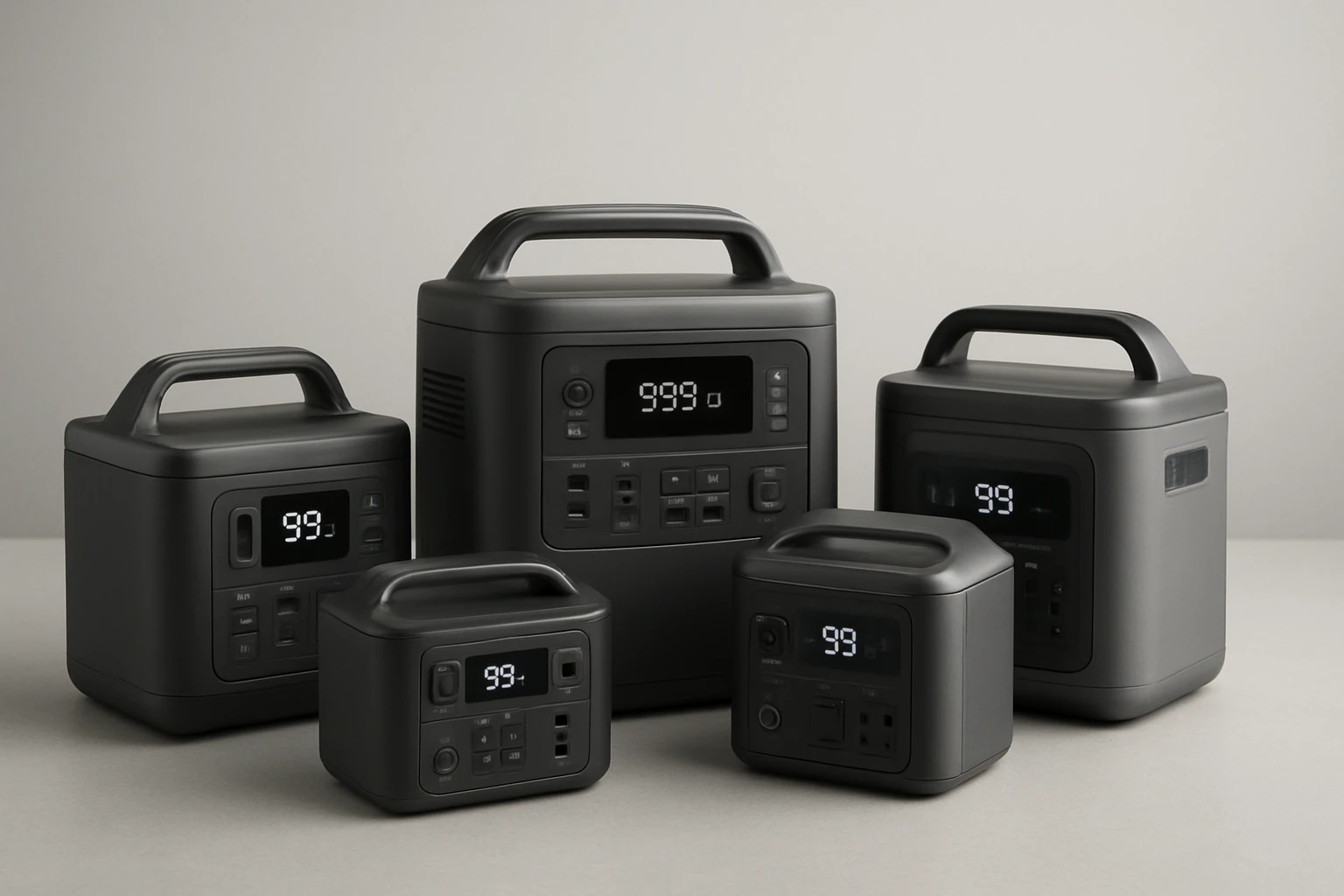
Introduction
When the modern adventurer or emergency‑prepared homeowner evaluates portable power, the metric of watt‑hours per kilogram (Wh/kg) becomes a decisive factor. A higher Wh/kg ratio indicates that a unit can store more energy while remaining lightweight, which translates into longer runtime for essential devices without adding unnecessary burden.
This article examines the most energy‑dense models currently available on Amazon, highlighting why each excels in specific scenarios. By focusing on real‑world specifications, customer sentiment, and practical use cases, readers can select the power station that best aligns with their outdoor, travel, or backup power needs.
Highest Energy Density for Heavy Loads
The Jackery Explorer 1000 v2 delivers 1,070 Wh of usable energy while weighing only 23.8 lb, resulting in an impressive Wh/kg ratio that surpasses many competitors. Its 1,500 W continuous AC output and 3,000 W surge capability allow users to run high‑demand appliances such as portable refrigerators, electric cooktops, and small air‑conditioning units during extended camping trips or power outages. Priced at $428.99 and boasting a 4.8‑star rating from 3,235 reviews, the unit combines performance with reliability. Customers frequently note the ability to power a full‑size fridge for several days, a testament to its energy density.
Best Value for Mid‑Range Capacity
The LIBRIDS C600 offers 640 Wh of storage at a modest weight of approximately 15 lb, delivering a strong Wh/kg balance for users who need solid power without the premium price tag. At $239.99 and a perfect 5‑star rating from five reviews, it provides four AC outlets, multiple USB ports, and a built‑in 10 ms UPS that automatically switches to battery during outages, protecting critical devices such as Wi‑Fi routers and CPAP machines. Reviewers praise its rapid 1.5‑hour AC charging and the confidence that the LiFePO₄ battery will endure over 4,000 cycles.
Most Compact Ultra‑Light Option
For hikers and backpackers who prioritize weight above all, the Jackery Explorer 300 provides 293 Wh of power in a 7.1‑lb package. Its Wh/kg ratio is among the highest in the sub‑300 Wh class, making it ideal for charging smartphones, laptops, and small lighting rigs during day hikes. The unit includes two pure‑sine‑wave AC outlets, a 60 W PD USB‑C port, and a fast‑charge 3.0 USB‑A port, enabling simultaneous charging of up to six devices. At $199.00 and a 4.6‑star rating from 10,881 reviews, users commend its rapid 2‑hour 80 % recharge time and the durability of its MPPT solar controller.
Fastest Recharge Capability
When time is of the essence, the Explorer 1000 v2 distinguishes itself with a one‑hour emergency charging mode activated via the Jackery app. Although the default mode charges to full capacity in 1.7 hours to preserve battery health, the emergency mode can bring the unit from 0 % to 100 % in a single hour, a feature that emergency responders and disaster‑relief volunteers find invaluable. The fast‑charge capability is complemented by two USB‑C PD ports that support 100 W input, ensuring that laptops and other high‑draw devices can be recharged swiftly.
Built‑in UPS for Critical Devices
The LIBRIDS C600’s integrated 10 ms UPS system guarantees uninterrupted power for sensitive electronics. In a recent customer review, a user wrote, "It kept my router and CPAP machine running without any interruption during a sudden outage," highlighting the peace of mind offered by this feature. The UPS switches automatically, eliminating the need for manual intervention and protecting against data loss or health‑related interruptions.
Versatile Port Selection
Both the Explorer 1000 v2 and the Explorer 300 excel in offering a diverse array of output options. The 1000 v2 includes two USB‑C ports, one USB‑A port, a DC car port, and three pure‑sine‑wave AC sockets, while the Explorer 300 adds a second AC outlet and a PD‑compatible USB‑C port. This breadth of connectivity allows users to power everything from drones and cameras to electric kettles and small power tools, reducing the need for additional adapters.
Longevity and Battery Health
The LFP (Lithium Iron Phosphate) chemistry employed in the Explorer 1000 v2 and the LIBRIDS C600 provides a projected lifespan of over ten years, with more than 70 % capacity retained after 4,000 charge cycles. This durability is reflected in the manufacturers’ warranties—Jackery offers a two‑year warranty, while LIBRIDS provides a five‑year warranty—underscoring confidence in long‑term performance.
Solar Compatibility and Off‑Grid Use
All three power stations support solar charging, but the Explorer 1000 v2 and Explorer 300 benefit from integrated MPPT controllers that maximize solar input efficiency. When paired with Jackery’s SolarSaga panels, users can achieve rapid daytime recharging, making these units suitable for extended off‑grid expeditions. The C600 also supports solar input, though its MPPT capabilities are less prominently advertised.
Real‑World User Feedback Highlights
Across the product line, customers consistently mention reliability, ease of use, and quiet operation. One reviewer of the Explorer 300 noted, "The unit recharged my USB devices appreciably faster than my older model, which increased my productivity during a multi‑day trek." Similarly, LIBRIDS C600 owners appreciate the multiple AC outlets, stating that the ability to plug in a laptop, a fan, and a small coffee maker simultaneously is a game‑changer for emergency preparedness.
Bonus: Nutrition for Long Outings
While power stations keep devices running, adequate nutrition sustains the user. The BOOST Very High Calorie Drink offers 530 calories and 22 g of protein per 8 fl oz serving, providing a convenient calorie‑dense option for hikers who cannot carry bulky meals. Priced at $63.51 with a 4.5‑star rating from 3,440 reviews, users report that the drink helped them regain weight after illness and served as an easy source of energy during long trips.
Comparison Table
| Model | Capacity (Wh) | Weight (lb) | Wh/kg | Max AC Output (W) | Price | Rating |
|---|---|---|---|---|---|---|
| Jackery Explorer 1000 v2 | 1,070 | 23.8 | 45 | 1,500 (3,000 surge) | $428.99 | 4.8/5 (3,235) |
| LIBRIDS C600 | 640 | 15 | 42.7 | 600 (1,200 surge) | $239.99 | 5/5 (5) |
| Jackery Explorer 300 | 293 | 7.1 | 41.3 | 300 (500 surge) | $199.00 | 4.6/5 (10,881) |
Conclusion
Selecting a portable power station hinges on balancing energy density, weight, and feature set. The Jackery Explorer 1000 v2 emerges as the leader for high‑capacity, heavy‑load scenarios, while the LIBRIDS C600 provides exceptional value and built‑in UPS protection for mid‑range needs. For ultra‑light travelers, the Explorer 300 delivers the highest Wh/kg ratio in the sub‑300 Wh class. By matching the specific use case to the appropriate model, readers can ensure reliable power without sacrificing mobility.
Frequently Asked Questions
What does the Wh/kg rating indicate for a portable power station?
Wh/kg measures how many watt‑hours of energy a unit stores per kilogram of weight, indicating its energy density and portability.
Why is the Jackery Explorer 1000 v2 considered high‑density?
It provides 1,070 Wh of usable energy at only 23.8 lb, giving one of the best Wh/kg ratios among comparable models.
Can a portable power station run high‑demand appliances?
Yes, models like the Jackery Explorer 1000 v2 offer up to 1,500 W continuous and 3,000 W surge power, suitable for refrigerators, cooktops, and similar loads.
How do I choose the right power station for emergency preparedness?
Prioritize a high Wh/kg rating for longer runtime, sufficient AC output for essential devices, and reliable battery chemistry for consistent performance.
Are the power stations reviewed in the article available on Amazon?
All listed models, including the Jackery Explorer 1000 v2, are currently sold on Amazon with direct product links provided.