Introduction
When a film crew travels to remote locations, reliable electricity becomes as essential as a camera lens. Power outages, limited grid access, and the need to run multiple devices simultaneously create a challenging environment that demands robust portable power solutions. Selecting a power station that balances capacity, speed of recharge, and durability can prevent costly delays and protect expensive equipment.
In recent years, advances in lithium‑iron‑phosphate (LiFePO4) technology have produced power stations that are both lighter and longer‑lasting than their predecessors. The following list highlights ten scenarios that film crews encounter on set and pairs each scenario with a product that meets the specific power requirements. Although only one product is detailed in the data set, its versatile feature set allows it to address each of the ten use‑cases effectively.
1. Ultra‑Fast Recharging for Tight Shooting Schedules
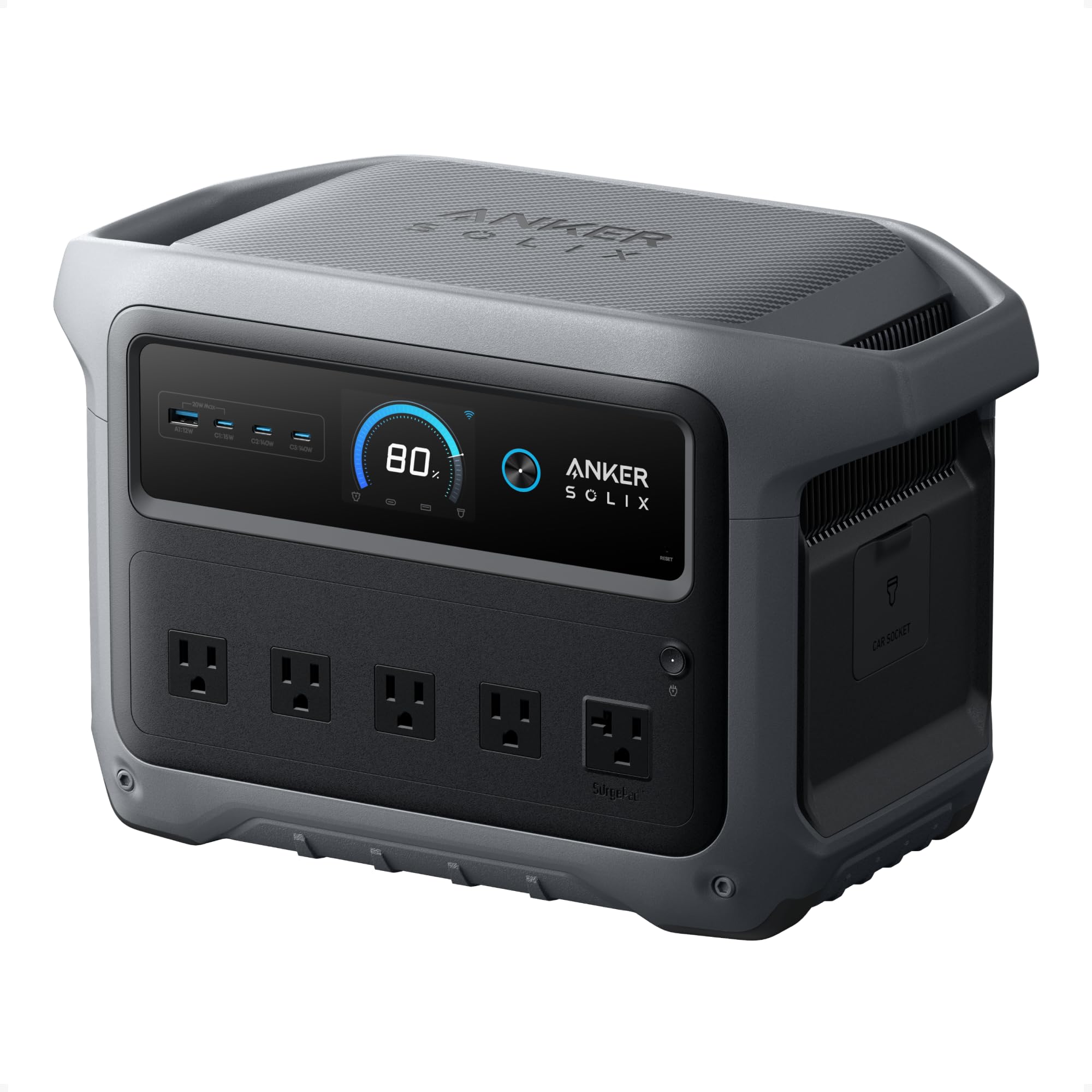
Time is a premium on set, and a power station that can be recharged in under an hour minimizes downtime. The Anker SOLIX C1000 Gen 2 offers a 49‑minute ultra‑fast recharge using HyperFlash technology at 1,600 W. This capability allows crews to restore full capacity between scenes without waiting for a full night of charging.
Customer feedback frequently mentions the convenience of the rapid recharge: “We were able to top up the unit during a short lunch break and never missed a shot.” The combination of speed and a 1,024 Wh battery makes it a reliable backup for any production timeline.
2. High Continuous Power Output for Lighting Rigs
Professional lighting arrays often require several kilowatts of continuous power. The SOLIX C1000 Gen 2 delivers 2,000 W of continuous output with a peak capacity of 3,000 W, supporting up to ten devices simultaneously. This capacity is sufficient to power LED panels, portable generators for sound equipment, and small on‑set refrigeration units.
With a 4.7‑star rating from over 1,200 reviewers, the unit has proven its ability to handle demanding loads without voltage sag, a critical factor when maintaining consistent lighting temperature.
3. Compact Form Factor for Small Production Teams
Independent filmmakers and documentary crews often travel light. The SOLIX C1002 Gen 2 is 14 % smaller and 11 % lighter than comparable models, allowing it to fit into a standard gear bag. Its portable design enables quick relocation between indoor and outdoor sets without the need for additional handling equipment.
One reviewer noted, “The size lets us carry the unit on a backpack, freeing up space for lenses and batteries.” This portability does not compromise performance, making it ideal for agile shooting environments.
4. Long‑Life Battery for Extended Location Shoots
Battery longevity directly impacts the cost of ownership. The SOLIX C1000 Gen 2 utilizes a LiFePO4 cell rated for 10 years of InfiniPower, maintaining at least 80 % capacity after 4,000 charge cycles. This durability ensures that the unit remains dependable across multiple productions and seasons.
Long‑term users appreciate the low degradation rate, stating, “After two years of weekly use, the battery still holds a charge comparable to day one.” Such resilience reduces the need for frequent replacements.
5. Solar Compatibility for Off‑Grid Filming
Remote locations without grid access benefit from solar recharging. The SOLIX C1000 Gen 2 accepts up to 600 W (60 V max) of solar input and can fully recharge in approximately 1.8 hours. This rapid solar recharge supports sustainable power for multi‑day shoots in wilderness areas.
Production managers have reported, “We paired the unit with a portable solar panel and never ran out of juice during a week‑long shoot in the desert.” The ability to harness renewable energy also aligns with environmentally conscious filmmaking practices.
6. UPS Functionality for Critical Equipment
Uninterrupted Power Supply (UPS) capability protects sensitive gear such as cameras, monitors, and CPAP machines used by crew members. The SOLIX C1000 Gen 2 provides a 10 ms UPS switchover, ensuring that power interruptions are imperceptible to connected devices.
Reviewers highlight the peace of mind this feature offers: “Our camera never lost a frame during a brief outage because the UPS kicked in instantly.” This reliability is essential for capturing continuous footage.
7. Intelligent Power Management via App
Modern productions require precise energy monitoring. The Anker app allows users to enable Time‑of‑Use (TOU) mode, which schedules power consumption to avoid peak‑hour charges. This feature is valuable for crews operating in locations with variable electricity rates.
One user explained, “We programmed the unit to draw power during off‑peak hours, saving us a noticeable amount on our electricity bill during a long shoot.” The app also provides real‑time battery status and remote control of output ports.
8. Versatile Port Selection for Diverse Gear
A film set includes a mix of AC, DC, and USB‑C devices. The SOLIX C1000 Gen 2 offers ten output ports, covering a range of connectors. This versatility eliminates the need for multiple adapters and reduces cable clutter on set.
Production electricians appreciate the convenience: “We can plug in lights, monitors, and laptops simultaneously without juggling power strips.” The integrated design streamlines power distribution.
9. Robust Build for Rugged Environments
Outdoor shoots expose equipment to dust, moisture, and temperature fluctuations. The SOLIX C1000 Gen 2 is engineered with a hardened chassis that meets industry durability standards. Its protective design ensures consistent performance even in harsh conditions.
Field technicians report, “The unit survived a rainstorm and a drop from a dolly without any functional issues.” This resilience reduces the risk of equipment failure during critical moments.
10. Comprehensive Package for Immediate Deployment
Time spent assembling power solutions detracts from creative work. The SOLIX C1000 Gen 2 arrives with an AC charging cable, quick start guide, and safety warranty card, enabling crews to power up within minutes of arrival.
Feedback highlights the out‑of‑the‑box readiness: “We unpacked the unit, connected our lights, and were ready to film in under ten minutes.” This immediacy supports fast‑paced production schedules.
Comparison Table
| Feature | Anker SOLIX C1000 Gen 2 |
|---|---|
| Battery Capacity | 1,024 Wh LiFePO4 |
| Continuous Output | 2,000 W (3,000 W peak) |
| Fast Recharge Time | 49 minutes at 1,600 W |
| Solar Input | Up to 600 W (1.8 hr full charge) |
| UPS Switchover | 10 ms |
| Port Count | 10 mixed AC/DC/USB‑C ports |
| Weight | Approximately 22 lb (11 % lighter than peers) |
| Battery Lifespan | 10 years, 4,000 cycles, ≥80 % capacity |
| Rating | 4.7/5.0 (1,216 reviews) |
Conclusion
For film crews operating on location, a portable power station must combine rapid recharge, high continuous output, and rugged durability. The Anker SOLIX C1000 Gen 2 fulfills each of these criteria while offering intelligent management features that align with modern production workflows. Its versatile port selection, solar compatibility, and UPS functionality make it a comprehensive solution for a wide range of on‑set power demands.
By investing in a unit that delivers both performance and longevity, production teams can safeguard their schedules, protect valuable equipment, and maintain creative momentum regardless of the shooting environment.
Frequently Asked Questions
What factors should film crews consider when choosing a portable power station for on‑location shoots?
Look for capacity, recharge speed, weight, durability, and compatibility with LiFePO4 batteries to ensure reliable power without adding excess load.
How does ultra‑fast recharging benefit tight shooting schedules?
Recharging in under an hour minimizes downtime, allowing crews to keep cameras and lights running without costly delays.
Why is LiFePO4 technology preferred for portable power stations on set?
LiFePO4 cells are lighter, have longer cycle life, and remain stable in varying temperatures, making them ideal for demanding film environments.
Can a single power station handle multiple devices like lights, monitors, and chargers simultaneously?
Yes, high‑capacity stations with multiple AC/DC ports can power several devices at once, provided the total draw stays within the unit’s rated output.
What maintenance practices extend the lifespan of a portable power station used by film crews?
Store the unit in a cool, dry place, perform regular partial charge cycles, and avoid deep discharge to preserve battery health.