Introduction
Off‑grid greenhouse and aquaponics operations depend upon a reliable source of electricity to maintain water circulation, lighting, climate control, and monitoring equipment. When the grid is unavailable, a portable power station can provide the necessary wattage while also allowing the operator to incorporate renewable energy sources such as solar panels.
Choosing a power station that balances capacity, recharge speed, safety features, and weight is essential for growers who travel between sites or need a backup solution for emergencies. The following list presents ten criteria that define an ideal portable power solution, and it integrates a real‑world product that satisfies each requirement.
Top 10 Criteria for Portable Power Stations in Off‑Grid Greenhouse and Aquaponics Systems
-
Fast Recharge Capability
Rapid recharging reduces downtime during cloudy days or after a power draw for water pumps. The Jackery Explorer 300 can restore 80 % of its 292 Wh battery in approximately two hours when connected to a wall outlet and a 60 W PD USB‑C port simultaneously. This dual‑input method enables growers to charge the unit while it continues to power low‑draw devices, a feature known as pass‑through charging.
Customer feedback highlights the convenience of this capability: “It took only three hours to reach 99 % charge while I was driving back to the campsite, which saved me from having to wait for a generator.” The fast recharge speed is further enhanced by the built‑in MPPT controller when a compatible solar panel is used.
-
Stable Pure Sine Wave Output
Many greenhouse controllers and aquaponics pumps require a clean sine wave to operate without generating harmonic distortion. The Explorer 300 provides two pure sine wave AC outlets delivering up to 300 W of continuous power, ensuring that sensitive electronics receive a stable voltage. This prevents premature wear on devices such as pH sensors and automated ventilation fans.
Reviewers note that the pure sine wave output “feels as reliable as a mains connection” and that it “keeps my LED grow lights flicker‑free throughout the night.” The stable output also contributes to safety by reducing the risk of electrical arcing.
-
Multiple Output Ports for Diverse Loads
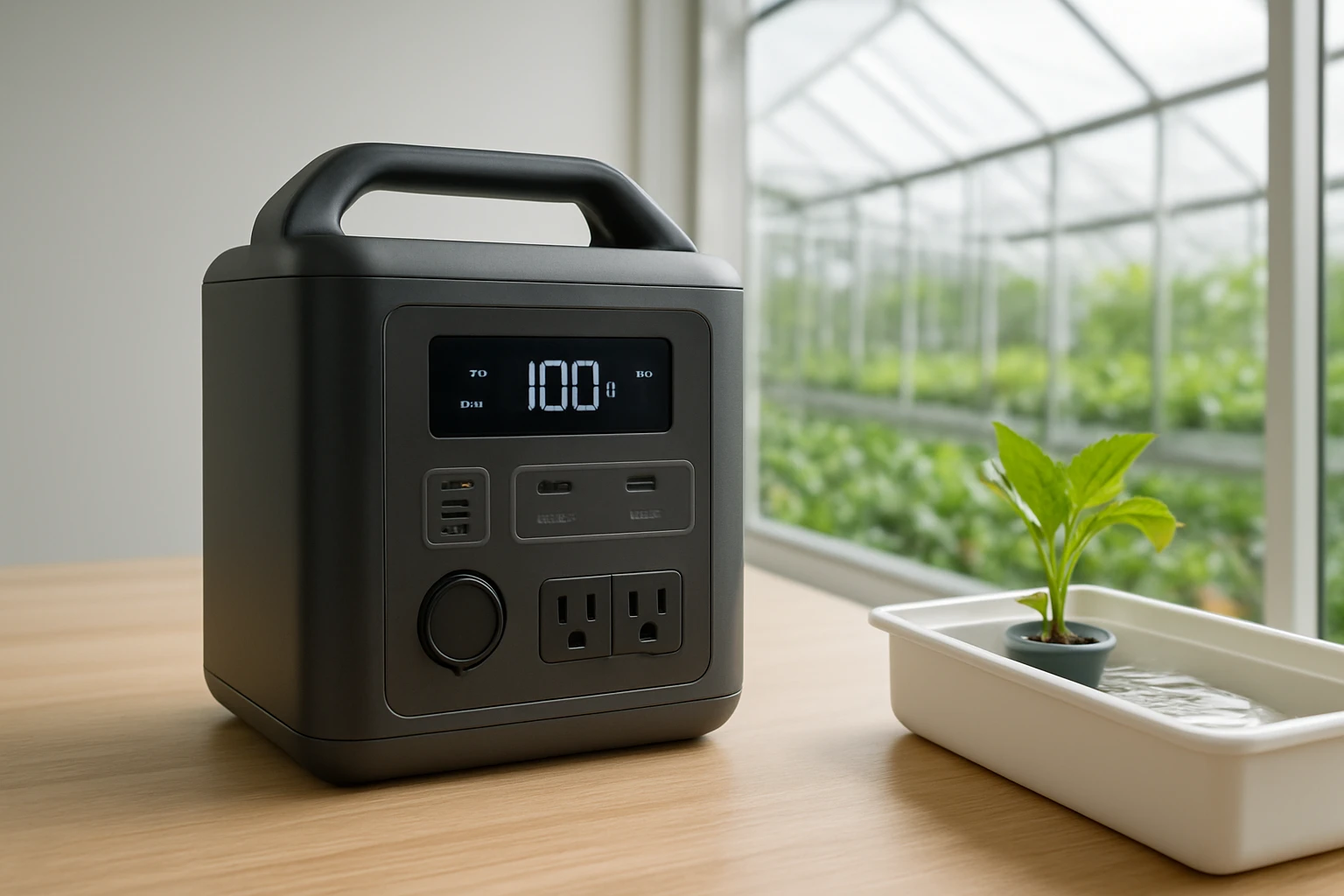
Aquaponics systems often require a mixture of AC, DC, and USB power for pumps, aerators, cameras, and monitoring tablets. The Explorer 300 offers two AC outlets, one 60 W PD USB‑C port (input and output), a fast‑charge 3.0 USB‑A port, an additional USB‑A port, and a 12 V DC car port. This variety allows a single unit to simultaneously charge a laptop, power a water pump, and keep a wireless sensor network online.
One user describes the experience: “I was able to run my 12 V fridge, charge my phone, and keep the control panel powered all from the same station.” The ability to handle up to six devices at once makes the unit a true hub for off‑grid operations.
-
Lightweight and Portable Design
Mobility is a critical factor for growers who relocate greenhouse modules or set up temporary aquaponics tanks. Weighing only 7.1 lb, the Explorer 300 can be carried in a standard backpack or placed on a rolling cart without requiring a dedicated hand‑truck. Its compact dimensions also allow it to fit inside a small utility cabinet or a van’s storage compartment.
Customers appreciate the portability, stating that “the unit is light enough to lift with one hand, yet powerful enough to run my essential equipment.” The reduced weight does not compromise durability; the housing is constructed from impact‑resistant polymer.
-
Solar Compatibility for Green Energy
Integrating solar energy reduces operating costs and aligns with sustainable farming practices. The Explorer 300 is compatible with the Jackery SolarSaga 100 W panel, and the built‑in MPPT charge controller maximizes energy harvest by operating at the panel’s maximum power point. When paired with a solar array, the station can remain charged throughout daylight hours, providing continuous power at night.
One reviewer explains, “Using the SolarSaga panel, I was able to keep the station topped up during a week of sunny weather, eliminating the need for a gasoline generator.” This capability supports off‑grid growers who aim to minimise carbon emissions.
-
Robust Safety Mechanisms
Safety features protect both the battery and connected equipment. The Explorer 300 includes automatic shutdown after twelve hours of low‑load operation, preventing deep discharge that could degrade the lithium‑ion cells. It also incorporates short‑circuit protection, over‑temperature alarms, and a rubber‑covered DC port to guard against foreign‑object insertion.
Feedback from users confirms the effectiveness: “The unit turned itself off when I left a low‑power fan plugged in, which saved the battery and gave me peace of mind.” These safeguards are especially valuable in greenhouse environments where dust and moisture are present.
-
Battery Longevity and Warranty
The Explorer 300 utilizes a LiFePO4 battery chemistry that offers a higher cycle count than traditional lithium‑ion cells, translating to a longer service life for growers who rely on daily cycles. Jackery provides a two‑year manufacturing warranty, and owners can register the product for an additional twelve‑month extension, ensuring long‑term support.
Customers have reported that “after a year of regular use, the battery still holds close to its original capacity,” underscoring the durability of the chemistry and the company’s commitment to after‑sales service.
-
Clear User Interface and Monitoring
The built‑in LCD display presents real‑time information on battery percentage, input wattage, and output load, allowing growers to make informed decisions about power allocation. The interface also flashes warnings when the charge drops below critical thresholds, prompting timely recharging.
Reviewers note, “The screen is easy to read even in low light, and the graphs help me understand how much power my pumps are drawing.” This transparency aids in optimizing energy consumption for cost‑effective operations.
-
Versatile Input Options
In addition to wall outlets and solar panels, the Explorer 300 can be charged via a 12 V car charger, making it suitable for mobile farms that travel on trucks or trailers. The dual‑input capability ensures that the station can be replenished wherever a power source is available, reducing reliance on a single charging method.
One user shared, “During a road trip, I plugged the unit into my vehicle’s cigarette lighter and arrived at the destination with a full charge, which saved me from carrying a heavy generator.” This flexibility is essential for remote locations with limited infrastructure.
-
Cost‑Effective Value Proposition
At a price of $199.00, the Explorer 300 offers a competitive balance of capacity, features, and durability compared with other units in the market. Its 4.6‑star rating from 10,870 reviews indicates broad customer satisfaction, and the inclusion of accessories such as an AC adapter and car charger cable adds immediate utility.
Customers frequently comment that “the price is reasonable for the performance, and I have saved money by not purchasing a separate generator.” For growers operating on a budget, this unit delivers a high return on investment.
Comparison Table
| Feature | Jackery Explorer 300 |
|---|---|
| Battery Capacity | 292 Wh (LiFePO4) |
| Continuous AC Output | 300 W (Pure Sine Wave) |
| USB‑C PD | 60 W (Input/Output) |
| Number of Simultaneous Devices | Up to 6 |
| Weight | 7.1 lb |
| Solar Compatibility | Jackery SolarSaga 100 W (MPPT) |
| Warranty | 2 years (extendable) |
| Price (USD) | $199.00 |
| Amazon Rating | 4.6/5 (10,870 reviews) |
Conclusion
Off‑grid greenhouse and aquaponics growers require a power solution that delivers rapid recharge, stable output, multiple ports, and safety while remaining portable and affordable. The criteria outlined above serve as a framework for evaluating any portable power station, and the Jackery Explorer 300 exemplifies how a single device can satisfy each requirement.
By selecting a unit that integrates fast charging, pure sine wave AC, solar compatibility, and robust safety features, growers can maintain continuous operation of pumps, lights, and monitoring equipment, thereby protecting crop health and ensuring consistent production. The combination of technical specifications, positive customer sentiment, and cost‑effective pricing makes the Explorer 300 a reliable pick for both permanent installations and temporary field trials.
Frequently Asked Questions
What battery capacity is needed for a typical off‑grid greenhouse or aquaponics system?
A 300‑500 Wh unit handles basic lighting and pump cycles, while 1000 Wh+ units support full‑day climate control and larger setups.
How fast can a portable power station recharge during cloudy conditions?
Models like the Jackery Explorer 300 can recover about 80 % of their charge in roughly two hours when connected to a solar panel or AC source.
Can portable power stations be integrated with solar panels for continuous operation?
Yes, most stations feature MPPT solar inputs that allow direct charging from panels, extending runtime without relying on the grid.
What safety features should I look for in a power station for greenhouse use?
Look for built‑in over‑charge, short‑circuit, temperature, and overload protection to safeguard sensitive irrigation and lighting equipment.
Is weight a critical factor when choosing a portable power station for multiple sites?
Lightweight units (under 10 lb) are easier to transport between greenhouse locations, but ensure they still meet your required watt‑hour and output needs.