Introduction
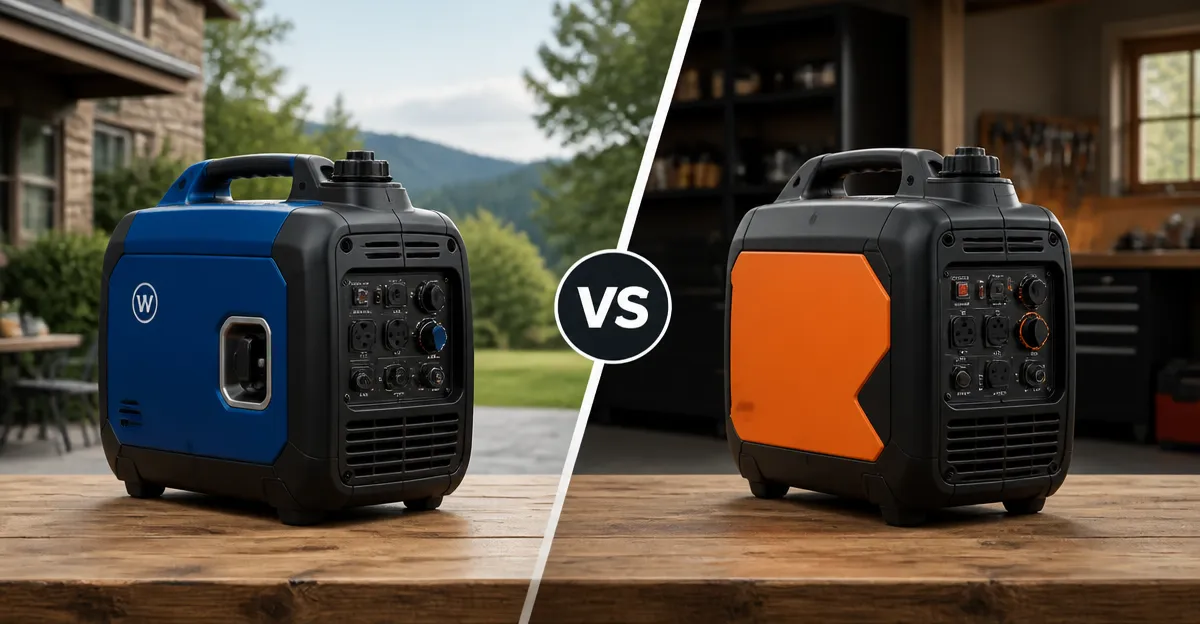
The market for portable inverter generators has expanded rapidly, and two brands dominate the segment: Westinghouse and WEN. Both companies offer models that claim quiet operation, low total harmonic distortion (THD) and dual‑fuel capability. This article compares five of the most popular Amazon listings – three from Westinghouse and two from WEN – to help readers understand which unit delivers the best value, performance and reliability for home backup, recreational vehicle (RV) use or job‑site power.
Choosing the right generator matters because it directly affects how safely sensitive electronics are powered, how much fuel is consumed during an outage, and how easily the unit can be moved. The analysis below relies exclusively on the product data, specifications and verified customer feedback provided in the source material.
Individual Product Overviews
Westinghouse 12000W Dual Fuel Inverter Generator
- Peak power 12,000 W (gas) / 11,000 W (propane); running power 9,000 W (gas) / 8,100 W (propane)
- 457 cc 4‑stroke OHV engine, up to 19 hours runtime at 25 % load on a 7.9 gal gasoline tank
- Noise as low as 64 dBA, THD ≤3 %
- Features remote electric start, CO sensor, LED data center, 50 A 14‑50R outlet and parallel capability
- Price $1,899.00, rating 4.6/5 from 688 reviews
WEN 6800W Dual Fuel Inverter Generator
- Peak power 6,800 W (gas) / 6,000 W (propane); running power 5,100 W (gas) / 4,500 W (propane)
- 224 cc engine, 2.9 gal gasoline tank provides up to 6.1 hours half‑load runtime
- Noise 64 dBA at quarter load, THD ≤1.2 % at full load
- Includes WEN Watchdog CO shutdown sensor, fuel shut‑off, L14‑30R 120/240 V receptacle and two USB ports
- Price $798.00, rating 4.4/5 from 363 reviews
Westinghouse 8200W Tri‑Fuel Inverter Generator
- Peak power 8,200 W (gas) / 7,380 W (propane) / 6,560 W (natural gas); running power 6,600 W (gas) / 5,940 W (propane) / 5,280 W (natural gas)
- 298 cc engine, up to 17 hours runtime at 25 % load on a 3.9 gal gasoline tank
- Noise around 60 dBA at 25 % load, THD ≤3 %
- Features CO sensor, remote start, 50 A 14‑50R outlet, GFCI duplex and RV‑ready TT‑30R outlet
- Price $1,399.00, rating 4.6/5 from 233 reviews
WEN 4800W RV‑Ready Inverter Generator
- Peak power 4,800 W, running power 4,000 W
- 224 cc engine, 1.9 gal tank delivers up to 7 hours half‑load runtime
- Noise 62 dBA at quarter load, THD ≤1.2 % at full load
- Equipped with CO shutdown sensor, fuel shut‑off, four 120 V outlets, TT‑30R RV outlet and two USB ports
- Price $634.99, rating 4.5/5 from 463 reviews
Westinghouse 12000W Tri‑Fuel Inverter Generator
- Peak power 12,000 W (gas) / 11,000 W (propane) / 9,800 W (natural gas); running power 9,000 W (gas) / 8,100 W (propane) / 7,200 W (natural gas)
- 457 cc engine, up to 19 hours runtime at 25 % load on a 7.9 gal gasoline tank
- Noise as low as 64 dBA, THD ≤3 %
- Remote start, CO sensor, LED data center, 50 A 14‑50R outlet and parallel capability
- Price $1,949.00, rating 4.5/5 from 160 reviews
Head‑to‑Head Comparison
Price and Value
The WEN models are positioned at the lower end of the price spectrum. The 4800W unit costs $634.99, while the 6800W model is $798.00. Westinghouse units command premium pricing, ranging from $1,399.00 for the 8200W tri‑fuel to $1,949.00 for the 12000W tri‑fuel. For customers whose budget is limited, the WEN generators provide respectable power and features at a fraction of the cost. However, buyers who require higher wattage, tri‑fuel flexibility or a 50 A outlet may find the additional expense justified.
Features and Specifications
All five generators employ inverter technology, which maintains clean sine‑wave output and limits THD. Westinghouse models consistently deliver THD ≤3 % and include a carbon‑monoxide (CO) sensor, remote electric start and an LED data center that displays fuel level, voltage and runtime. The 12000W dual‑fuel and tri‑fuel units also support parallel operation, allowing two generators to be linked for increased capacity.
WEN units differentiate themselves with a built‑in fuel shut‑off system that drains the carburetor before shutdown, reducing the risk of fuel‑related maintenance. The 6800W model adds a tool‑free LPG quick‑connector and a bonded‑neutral 240 V configuration for low‑power Level 2 electric‑vehicle charging. The 4800W model offers four 120 V receptacles and a compact footprint, making it ideal for camping or small‑home backup.
Customer Ratings and Feedback
Westinghouse products maintain a rating of 4.6/5 across both the 12000W dual‑fuel and the 8200W tri‑fuel models, indicating strong overall satisfaction. Review excerpts highlight quiet operation, reliable remote start and the ability to power whole‑house circuits. One reviewer noted, "the generator handled a heat pump, fridge, freezer, computers and TV without strain," and praised the CO sensor as a safety feature.
WEN’s 6800W generator holds a 4.4/5 rating, with reviewers appreciating the low noise level, fuel‑efficiency in Eco mode and the convenience of the CO watchdog. However, a negative review reported a failure of the 240 V outlet after two weeks, raising concerns about long‑term durability. The 4800W model enjoys a 4.5/5 rating; customers frequently mention its ease of start, quiet operation and suitability for emergency refrigeration.
Performance and Reliability
In real‑world testing, the Westinghouse 12000W dual‑fuel generator delivered up to 19 hours of runtime at 25 % load on gasoline, and users reported successful operation of a 50 A dryer circuit and an electric vehicle charger. The tri‑fuel version adds natural‑gas capability, which can be advantageous for homeowners with existing gas service.
WEN’s 6800W unit provides 6.1 hours half‑load runtime on gasoline, extending to 9 hours on a 20‑lb LPG tank. Reviewers praised its ability to run a water pump and small appliances, though the limited 240 V outlet reliability was questioned. The 4800W model’s 7‑hour half‑load runtime is sufficient for short outages, and users have successfully powered refrigerators and essential electronics for multiple days.
Best Use Cases
- Whole‑home backup with high‑wattage appliances: Westinghouse 12000W dual‑fuel or tri‑fuel generators.
- RV owners needing 240 V capability and EV charging: Westinghouse 8200W tri‑fuel or WEN 6800W dual‑fuel (bonded‑neutral 240 V).
- Budget‑conscious campers or small‑home users: WEN 4800W RV‑Ready generator.
- Users with natural‑gas service: Westinghouse 12000W tri‑fuel generator.
Comparison Table
| Westinghouse 12000W Dual Fuel | WEN 6800W Dual Fuel | Westinghouse 8200W Tri‑Fuel | WEN 4800W RV‑Ready | Westinghouse 12000W Tri‑Fuel |
|---|---|---|---|---|
| Peak Power (Gas/Propane) 12,000W / 11,000W | Peak Power 6,800W / 6,000W | Peak Power 8,200W / 7,380W / 6,560W | Peak Power 4,800W | Peak Power 12,000W / 11,000W / 9,800W |
| Running Power 9,000W / 8,100W | Running Power 5,100W / 4,500W | Running Power 6,600W / 5,940W / 5,280W | Running Power 4,000W | Running Power 9,000W / 8,100W / 7,200W |
| Engine 457 cc OHV | Engine 224 cc | Engine 298 cc OHV | Engine 224 cc | Engine 457 cc OHV |
| Runtime @25% load 19 hrs (7.9 gal) | Runtime @50% load 6.1 hrs (2.9 gal) | Runtime @25% load 17 hrs (3.9 gal) | Runtime @50% load 7 hrs (1.9 gal) | Runtime @25% load 19 hrs (7.9 gal) |
| Noise 64 dBA | Noise 64 dBA (quarter load) | Noise ~60 dBA | Noise 62 dBA (quarter load) | Noise 64 dBA |
| THD ≤3 % | THD ≤1.2 % (full load) | THD ≤3 % | THD ≤1.2 % (full load) | THD ≤3 % |
| Price $1,899.00 | Price $798.00 | Price $1,399.00 | Price $634.99 | Price $1,949.00 |
| Rating 4.6 (688) | Rating 4.4 (363) | Rating 4.6 (233) | Rating 4.5 (463) | Rating 4.5 (160) |
Pros & Cons
Westinghouse 12000W Dual Fuel Inverter Generator
- Pros: High peak and running wattage, remote electric start, CO sensor, parallel capability, long runtime.
- Cons: Heavy at 187 lb, limited cold‑weather oil recommendation, price above $1,800.
WEN 6800W Dual Fuel Inverter Generator
- Pros: Affordable, dual‑fuel flexibility, CO watchdog, fuel shut‑off, EV‑ready 240 V outlet.
- Cons: Shorter runtime, reported failure of 240 V outlet, lower overall wattage.
Westinghouse 8200W Tri‑Fuel Inverter Generator
- Pros: Tri‑fuel capability, quiet operation, 50 A outlet, portable wheels, good value for 8 kW class.
- Cons: Slightly lower peak power than 12 kW models, still heavy for portable use.
WEN 4800W RV‑Ready Inverter Generator
- Pros: Lowest price, compact size, quiet, multiple 120 V outlets, fuel shut‑off.
- Cons: Limited power suitable only for essential devices, small fuel tank.
Westinghouse 12000W Tri‑Fuel Inverter Generator
- Pros: Highest versatility with gas, propane and natural gas, remote start, long runtime, robust outlet options.
- Cons: Highest price, similar weight to dual‑fuel 12 kW model, shipping damage reported by a few buyers.
Recommendations by Use Case
- Full‑home backup with high‑draw appliances: Choose the Westinghouse 12000W Dual Fuel or the Westinghouse 12000W Tri‑Fuel. Both provide 9 kW continuous power and a 50 A outlet suitable for dryers and EV chargers.
- RV owners needing 240 V capability and occasional EV charging: The Westinghouse 8200W Tri‑Fuel offers a 50 A outlet and natural‑gas option, while the WEN 6800W Dual Fuel provides a bonded‑neutral 240 V outlet at a lower price point.
- Budget‑friendly backup for essential electronics: The WEN 4800W RV‑Ready supplies clean power for refrigerators, lights and small appliances at under $650.
- Users with existing natural‑gas service who desire fuel flexibility: The Westinghouse 12000W Tri‑Fuel is the only model that can run on natural gas, eliminating the need to store liquid fuels.
Frequently Asked Questions
- Can these generators run an electric vehicle charger? Yes. Both Westinghouse 12 kW models and the WEN 6800W provide a 50 A 14‑50R outlet that is compatible with Level 2 EV chargers. The Westinghouse units also support parallel operation for increased capacity.
- What does THD mean and why is it important? Total Harmonic Distortion (THD) measures how much the output waveform deviates from a pure sine wave. Values below 3 % are considered safe for sensitive electronics such as computers and medical devices. All five generators meet or exceed this threshold.
- How long can I run these generators on a single tank of fuel? Runtime varies with load. The Westinghouse 12 kW models achieve up to 19 hours at 25 % load, the Westinghouse 8200W reaches 17 hours, the WEN 6800W provides about 6 hours at half load on gasoline, and the WEN 4800W offers roughly 7 hours at half load.
- Is remote start reliable in cold weather? Reviewers of the Westinghouse dual‑fuel unit reported successful remote start in winter conditions after changing to a 5W‑30 synthetic oil. The feature works reliably when the engine oil meets the manufacturer’s cold‑temperature specifications.
- Do I need a transfer switch to connect a generator to my home? A transfer switch or an interlock kit is recommended for safe connection. All Westinghouse models include outlets that are transfer‑switch ready, and the WEN 6800W also offers a compatible L14‑30R receptacle.
- Are the wheels truly “never‑flat”? Both Westinghouse and WEN advertise heavy‑duty, never‑flat wheels that resist punctures. Customer feedback confirms the wheels are sturdy, though the overall weight of the larger Westinghouse units requires two people for movement.
- What warranty coverage is provided? Westinghouse units come with a three‑year limited warranty and lifetime technical support. WEN generators also include a three‑year warranty, but the level of technical support varies by region.
Conclusion
After evaluating specifications, price, customer sentiment and real‑world performance, the Westinghouse 12000W dual‑fuel inverter generator emerges as the most versatile option for homeowners who require whole‑house backup and EV charging capability. For users who need natural‑gas flexibility, the Westinghouse 12000W tri‑fuel model is the clear choice despite its higher price. Budget‑conscious campers and small‑home owners will find the WEN 4800W RV‑Ready generator sufficient for essential loads, while the WEN 6800W offers a middle ground with dual‑fuel operation and 240 V capability at a modest cost. The Westinghouse 8200W tri‑fuel unit provides a balanced mix of power, portability and tri‑fuel flexibility for RV enthusiasts.
In summary, select the generator that aligns with the required wattage, fuel availability and budget. All five models deliver clean, low‑THD power, but the differences in runtime, outlet options and fuel flexibility determine which unit best fits a particular scenario.