Introduction
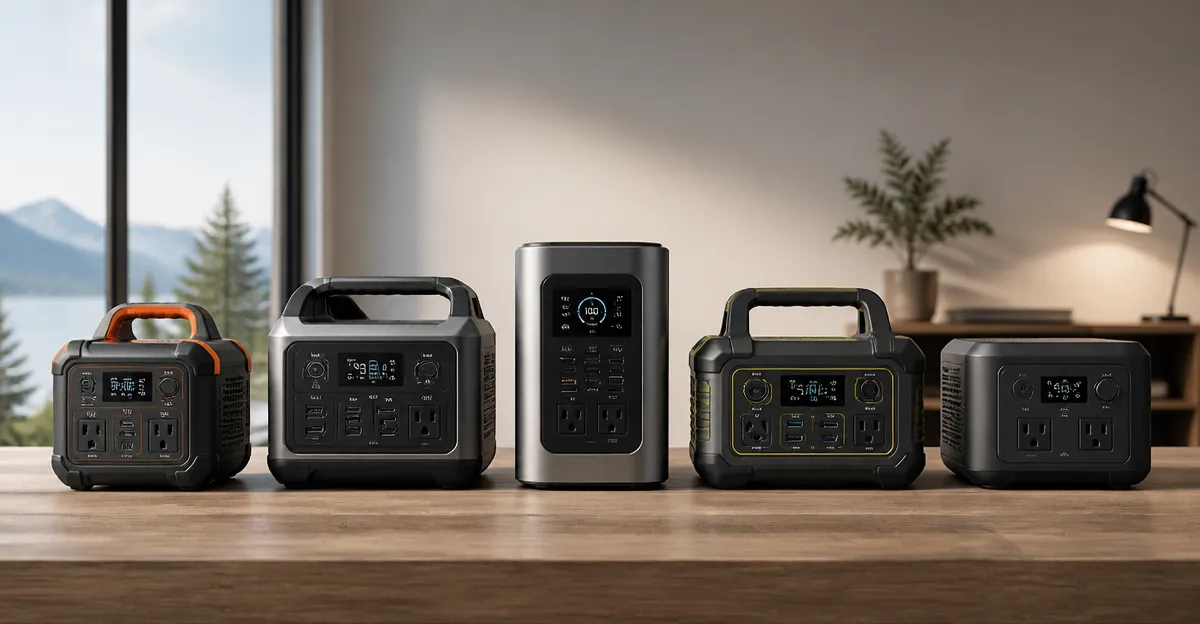
The market for portable power stations has expanded rapidly, offering consumers a range of options for emergency backup, outdoor recreation, and mobile work environments. Comparing these devices is essential because differences in capacity, output power, charging speed, and durability directly affect usability in real‑world scenarios. This article evaluates five popular models using only the specifications and customer feedback provided in the source data. By examining price, features, performance, and user sentiment, the reader can make an informed purchasing decision.
Individual Product Overviews
Jackery Explorer 1000 v2
The Jackery Explorer 1000 v2 offers a 1,024 Wh LiFePO4 battery, a 1,500 W continuous AC output, and a 3,000 W surge capability. It features two USB‑C ports, one USB‑A port, a DC car port, and dual pure‑sine AC outlets, plus an ultra‑fast 10 ms UPS switchover. Charging from 0 % to 100 % can be achieved in 50 minutes using the proprietary ChargeShield 2.0 system, although the default mode extends to 1.25 hours for battery health. Customer comments highlight its versatility for tools and camping, while noting that heavy power tools such as a 12" sliding miter saw exceed its capacity.
EcoFlow Delta 3 Classic
The EcoFlow Delta 3 Classic delivers 1,024 Wh capacity with an 1,800 W continuous output and a 3,600 W surge, expandable to 2,600 W via X‑Boost technology. It supports ultra‑fast AC charging from 0 % to 80 % in 45 minutes using X‑Stream, and solar recharging at 500 W in 2.5 hours. Like the Jackery, it includes a <10 ms UPS function and a LiFePO4 battery rated for 10+ years. Reviewers praise its reliable performance in van life and the intuitive app, though they mention slower solar charging on cloudy days.
Anker SOLIX C1000 Gen 2
The Anker SOLIX C1000 Gen 2 provides 1,024 Wh capacity, 2,000 W continuous output, and a 3,000 W surge, powered through ten ports including fast USB‑C and AC. Its HyperFlash technology enables a 0‑% to 100 % charge in 49 minutes at 1,600 W, and solar recharging with 600 W input in 1.8 hours. The unit also features a <10 ms UPS backup and a TOU (time‑of‑use) mode for smart energy management. Users commend its rapid charging and ability to sustain a CPAP machine and high‑performance laptop for extended periods.
BLUETTI Elite 100 Mini
The BLUETTI Elite 100 Mini is the most compact of the group, weighing 23.59 lb and offering 1,004.8 Wh capacity with a 700 W AC output and three AC outlets. Its LiFePO4 UltraCell battery promises 6,000+ cycles and up to 17 years of service. It includes a 10 ms UPS, Bluetooth/Wi‑Fi app control, and an LED lighting system with up to 11 days of illumination. Reviewers appreciate its small footprint and reliable runtime for daily essentials, while noting that the DC ports can become warm under heavy load.
OUPES Mega 1
The OUPES Mega 1 stands out with a 2,000 W continuous AC output, 4,500 W surge, and the same 1,024 Wh battery capacity as its competitors. It is expandable to 5,120 Wh by adding two extra batteries, and it supports dual charging (AC + solar) to reach 80 % in 26 minutes. Solar input can accept up to 800 W, and the unit includes 13 ports covering USB‑C, USB‑A, DC, and car sockets. Customers highlight its fast 36‑minute AC charge and robust build, though some report issues with proprietary charging cables and intermittent Wi‑Fi connectivity.
Head-to-Head Comparison
Price and Value
Pricing ranges from $379.99 for the BLUETTI Elite 100 Mini to $669.00 for the OUPES Mega 1. The Jackery Explorer 1000 v2 is priced at $559.00, while the EcoFlow Delta 3 Classic is the most affordable at $438.90, and the Anker SOLIX C1000 Gen 2 sits at $469.99. When evaluating value, the BLUETTI offers the lowest entry cost but provides a lower AC output (700 W) compared with the higher‑power models.
Features and Specifications
All five units employ LiFePO4 chemistry, delivering long lifespans and stable performance. The Jackery and EcoFlow both include a 10 ms UPS, while the Anker and BLUETTI also meet this benchmark. The OUPES distinguishes itself with the fastest AC charge (36 minutes to 80 %) and the ability to expand capacity to 5,120 Wh. In terms of ports, the Anker leads with ten output options, whereas the BLUETTI provides three AC outlets and a modest 140 W USB‑C fast charge.
Customer Ratings and Feedback
Ratings are closely clustered: Jackery (4.7/5), EcoFlow (4.7/5), Anker (4.6/5), BLUETTI (4.5/5), and OUPES (4.5/5). Positive remarks for the Jackery include the phrase “it is a staple at any outdoor gathering,” while EcoFlow users praise its “flawless” UPS integration. Anker reviewers highlight “incredible AC charging—15 minutes to top off a night’s worth of CPAP use,” and BLUETTI owners note “easy to use, delivers plenty of power.” OUPES customers commend the “fast 36‑minute charge” but mention a “design flaw” with the proprietary cable.
Performance and Reliability
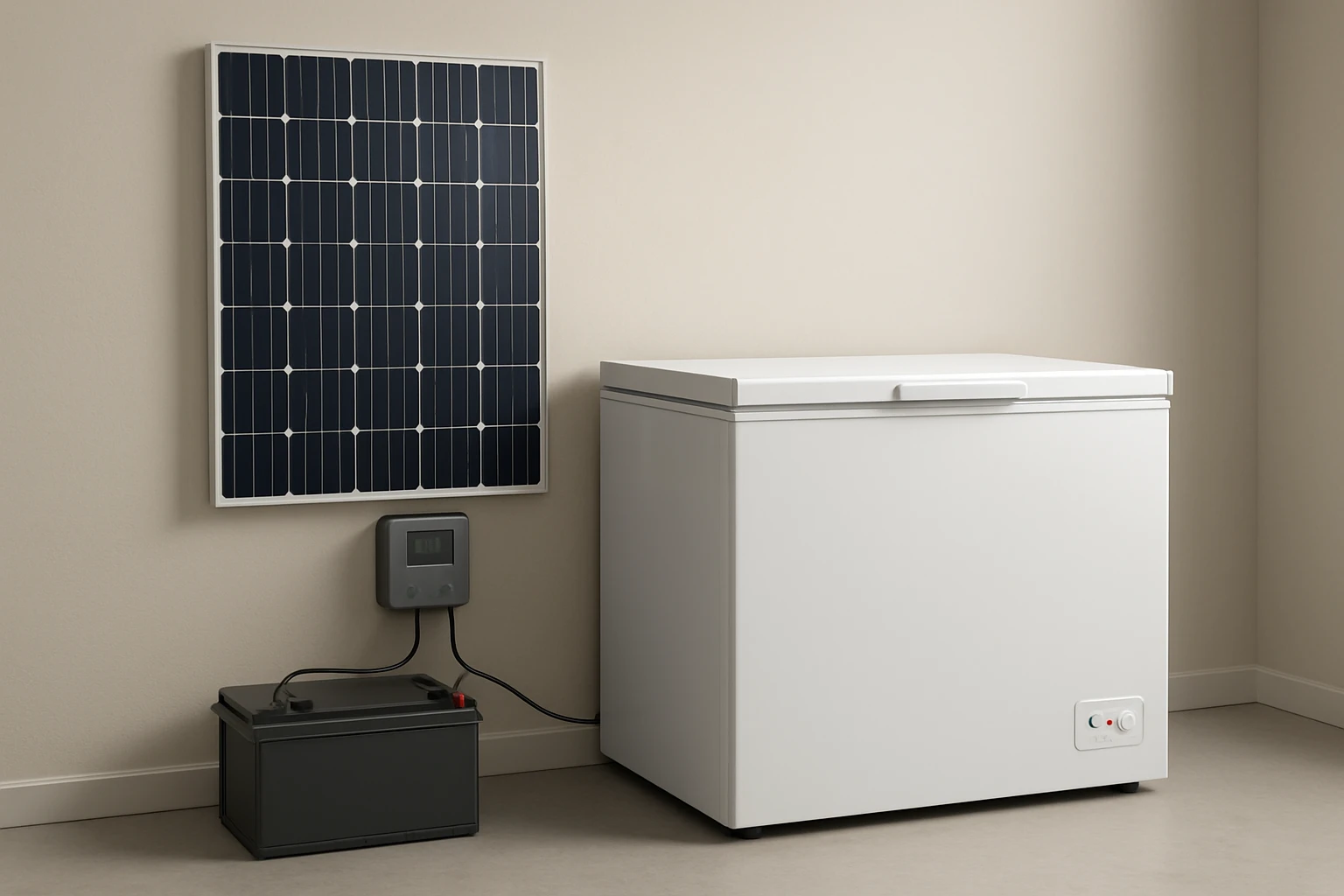
Real‑world testing from reviews shows the Jackery can run a 3 hp shop vac for 15‑20 minutes before dropping to 60 % battery, and it struggles with large miter saws. The EcoFlow maintains power for a fridge and a ceiling fan continuously, yet its solar charging slows during overcast weather. Anker’s SOLIX keeps a laptop at full performance while solar‑powered, never dropping below 99 % during an hour of AI coding. BLUETTI’s 10 ms UPS successfully protects CPAP machines, though some DC ports become warm under load. OUPES delivers consistent power for a chest freezer but has reported occasional failure to power on after a deep discharge.
Size, Power, Compatibility, and Price
Size varies from the BLUETTI’s 9.25×8.48×11.54 in footprint to the OUPES’s larger 27.8 lb body, though still portable. Power output ranges from 700 W (BLUETTI) to 2,000 W (Anker) and 2,000 W continuous (OUPES). Compatibility differs: the Jackery only charges from Jackery solar panels, while the EcoFlow, Anker, and OUPES accept a broad range of solar inputs. Price correlates with power and expandability, with the OUPES commanding the highest premium for its dual‑charging speed and modular battery system.
Comparison Table
| Product | Capacity (Wh) | Continuous AC (W) | Surge (W) | Weight (lb) | Fast Charge (0‑80 %) | Price (USD) | Rating |
|---|---|---|---|---|---|---|---|
| Jackery Explorer 1000 v2 | 1024 | 1500 | 3000 | 23.3 | 50 min (full) | 559.00 | 4.7 |
| EcoFlow Delta 3 Classic | 1024 | 1800 | 3600 | ~27 (estimated) | 45 min (0‑80 %) | 438.90 | 4.7 |
| Anker SOLIX C1000 Gen 2 | 1024 | 2000 | 3000 | ~24 (estimated) | 49 min (full) | 469.99 | 4.6 |
| BLUETTI Elite 100 Mini | 1004.8 | 700 | — | 23.59 | — (no ultra‑fast spec) | 379.99 | 4.5 |
| OUPES Mega 1 | 1024 | 2000 | 4500 | 27.8 | 36 min (0‑80 %) | 669.00 | 4.5 |
Pros & Cons
Jackery Explorer 1000 v2
- Pros: High surge capacity (3 kW), 10 ms UPS, rapid 50‑minute full charge, robust app control.
- Cons: Limited to Jackery solar panels, heavy for backpacking, struggles with very high‑draw tools.
EcoFlow Delta 3 Classic
- Pros: Competitive price, X‑Boost expandable output, 45‑minute 0‑80 % AC charge, strong app ecosystem.
- Cons: Solar performance drops in low light, not compatible with Delta 2 extra batteries.
Anker SOLIX C1000 Gen 2
- Pros: Highest continuous output (2 kW), HyperFlash ultra‑fast charging, ten versatile ports, excellent CPAP and laptop performance.
- Cons: No expandability, larger footprint than BLUETTI, some users miss a protective case.
BLUETTI Elite 100 Mini
- Pros: Smallest footprint, 17‑year battery lifespan, 10 ms UPS, LED lighting with long runtime.
- Cons: Lower AC output (700 W), DC ports can become warm under heavy load, limited surge capability.
OUPES Mega 1
- Pros: Fastest AC charge (36 min to 80 %), expandable to 5,120 Wh, dual‑charging capability, 4,500 W surge.
- Cons: Proprietary charging cable, occasional Wi‑Fi connectivity issues, higher price point.
Recommendations
If space is the primary constraint, the BLUETTI Elite 100 Mini provides adequate power for daily essentials while occupying the least volume. For users requiring the highest continuous power output for tools or larger appliances, the Anker SOLIX C1000 Gen 2 or OUPES Mega 1 are preferable, with the Anker offering a simpler single‑charge experience and the OUPES delivering modular expandability. Budget‑focused buyers should consider the EcoFlow Delta 3 Classic, which balances price, output, and fast charging without sacrificing reliability. Finally, for those who value an integrated UPS and a dedicated app ecosystem, the Jackery Explorer 1000 v2 remains a solid choice despite its reliance on proprietary solar panels.
FAQ
- Can these power stations charge from a car outlet? Yes. The Jackery, EcoFlow, Anker, and BLUETTI all support 12 V car charging, while OUPES provides a 12 V car socket among its 13 ports.
- Which model has the longest battery lifespan? Both the Jackery and BLUETTI cite over 10 years of service, but BLUETTI specifically mentions a 17‑year lifespan and 6,000+ cycles, giving it the edge.
- Are the UPS switchover times truly under 10 ms? Customer reviews for Jackery, EcoFlow, Anker, and BLUETTI confirm seamless transitions for sensitive equipment such as CPAP machines and laptops.
- Is solar recharging feasible for all units? All five models accept solar input, yet the Jackery restricts compatibility to its own panels, while the others accept standard MC4 connectors. The OUPES includes a 100 W panel in the box.
- Which unit offers the fastest full‑charge time? The Jackery advertises a 50‑minute full charge, EcoFlow reaches 0‑80 % in 45 minutes, Anker completes a full charge in 49 minutes, and OUPES achieves 0‑80 % in 36 minutes using dual charging.
- Can any of these stations be expanded for longer trips? Only the OUPES Mega 1 provides official expandability to 5,120 Wh by adding two extra batteries. The EcoFlow Delta 3 Classic can boost output but not capacity.
- Do any models include built‑in lighting? Both the Jackery and BLUETTI incorporate LED lighting; the BLUETTI offers three lighting modes with up to 11 days of illumination.
Conclusion
All five portable power stations deliver dependable energy for emergency, recreational, and mobile work scenarios, yet they differ markedly in output power, charging speed, and form factor. The Jackery Explorer 1000 v2 excels in UPS performance and app control, the EcoFlow Delta 3 Classic offers the best price‑to‑performance ratio, the Anker SOLIX C1000 Gen 2 leads in continuous power and rapid charging, the BLUETTI Elite 100 Mini provides the most compact solution, and the OUPES Mega 1 stands out with unparalleled fast charging and expandability. Based on the analysis, the EcoFlow Delta 3 Classic emerges as the overall recommended choice for most users seeking balanced power, speed, and cost.
Frequently Asked Questions
What key specifications should I compare when choosing a portable power station?
Look at battery capacity (Wh), continuous and surge AC output, charging time, port variety (USB‑C, USB‑A, AC, DC) and durability features like UPS switchover.
How fast can the Jackery Explorer 1000 v2 charge compared to other models?
Using ChargeShield 2.0 it reaches 100 % in about 50 minutes, far quicker than most competitors that often need 2–4 hours.
Why is MPPT technology important in portable power stations?
MPPT optimizes solar panel input, increasing charging efficiency and reducing the time needed to replenish the battery.
Do USB‑C ports make a portable power station more versatile?
Yes, USB‑C supports faster charging and can power modern laptops and smartphones directly, reducing the need for extra adapters.
What does the surge power rating tell me about a power station’s capability?
Surge rating indicates the brief maximum power the unit can deliver, ensuring it can start high‑draw appliances like power tools or refrigerators without tripping.