Introduction
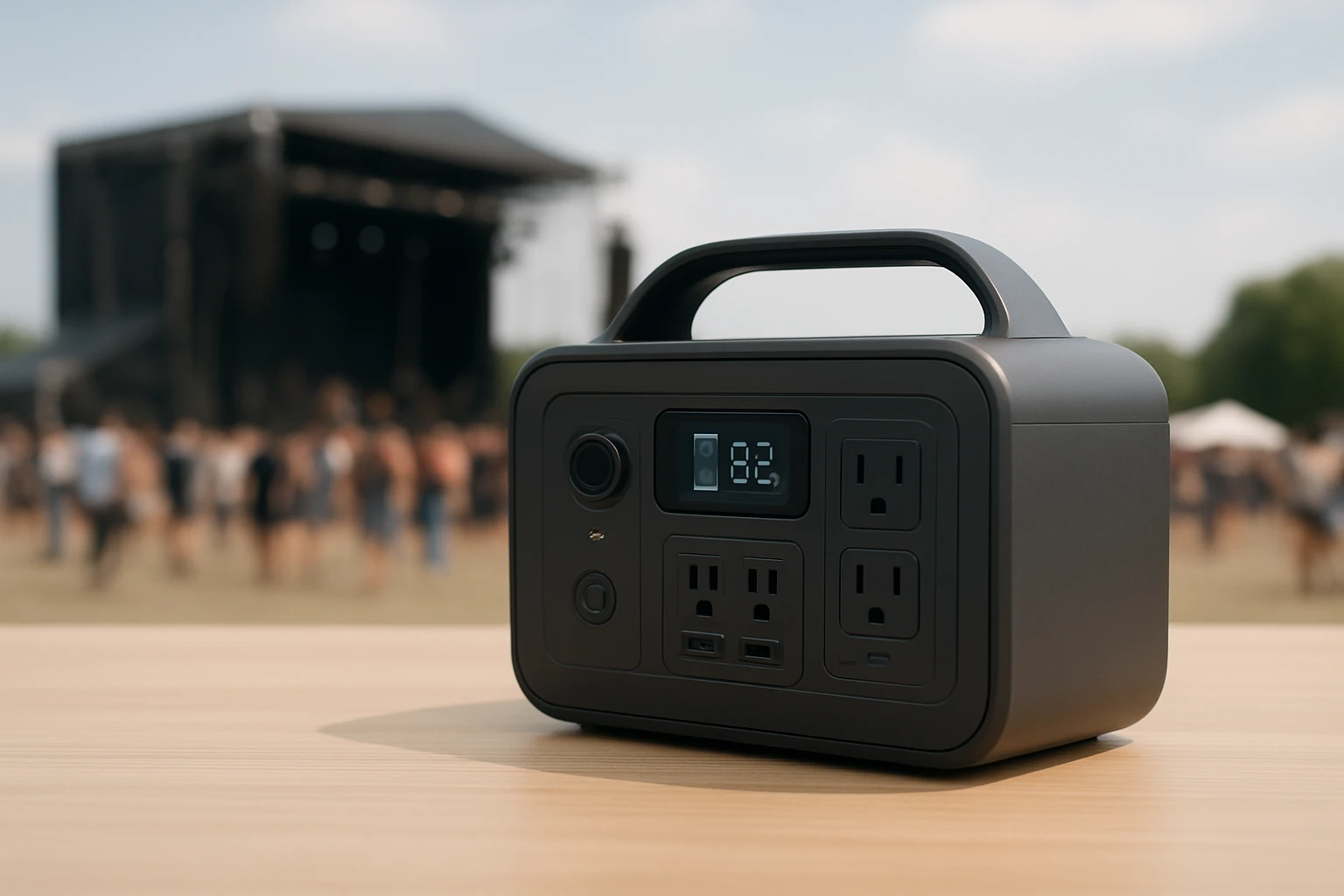
Music festivals create unforgettable experiences, yet they also demand reliable power for phones, portable speakers, and lighting rigs. Attendees often face the challenge of keeping devices charged while navigating crowded fields, unpredictable weather, and limited access to conventional outlets. Selecting a portable power station that balances capacity, weight, and durability can transform a night of silence into a continuous celebration of sound and light.
Modern power stations incorporate advanced battery chemistries such as LiFePO4, which provide longer lifespans and enhanced safety compared with traditional lithium‑ion packs. They also feature multiple output ports, fast‑charging capabilities, and optional solar recharging for extended events. This article presents ten carefully curated recommendations, each highlighting a specific use‑case that festivalgoers frequently encounter.
1. Compact Companion for Day‑Long Raves
When the goal is to stay lightweight while still powering a smartphone, Bluetooth speaker, and a small LED lantern, the Jackery Explorer 300 excels. Priced at $189.00, it delivers 293Wh of lithium‑ion storage and two pure sine wave AC outlets that provide stable 300W power. Reviewers praise its rapid 2‑hour 80% recharge time via a wall outlet and 60W USB‑C PD port, noting that “the Jackery Explorer 300 quickly proved it was more than just a backup battery—it became a must‑have” during an unexpected outage.
The unit weighs only 7.1 pounds, making it easy to sling over a shoulder or pack into a day‑pack. Its built‑in MPPT controller optimizes solar input when paired with a Jackery SolarSaga 100, allowing festival organizers to harvest sunlight between sets. The combination of portability, sufficient capacity for several device charges, and quiet operation makes this model ideal for solo attendees who value convenience over raw power.
2. High‑Wattage Support for Larger Sound Systems
For groups that operate larger speaker arrays or portable mixers, the Anker 521 Portable Power Station provides the necessary surge capacity. At $199.99, it offers 256Wh of LiFePO4 energy and a peak output of 600W, thanks to SurgePower technology. Customers highlight its ability to run a 12‑volt refrigerator for over 20 hours, demonstrating the station’s endurance under continuous load.
The six‑port configuration includes two AC outlets, two USB‑A ports, a 60W USB‑C PD port, and a car outlet, enabling simultaneous charging of laptops, DJ controllers, and lighting rigs. Its robust construction and 10‑year lifespan guarantee that festival crews can rely on it season after season without frequent battery replacement.
3. Ultra‑Fast Recharge for Rapid Turnovers
When festival schedules demand quick turnaround between performances, the Anker SOLIX C1000 Gen 2 stands out. Priced at $428.99, this 1,024Wh power station can be fully recharged in just 49 minutes using HyperFlash technology at 1,600W input power. Reviewers commend its ability to “recharge up, capacity is perfect for camping trips, automotive work, and that pesky power outage every once in a while.”
With a 2,000W continuous output and ten versatile ports, it can power multiple high‑draw devices such as a portable PA system, LED stage lights, and a mini fridge. The built‑in 10 ms UPS backup ensures that critical equipment such as CPAP machines or laptops experience no interruption when the main grid fails.
4. Budget‑Friendly Option for First‑Time Attendees
New festival participants often seek an affordable yet reliable power source. The Jackery Explorer 300 offers a compelling price‑to‑performance ratio, especially given its 4.6‑star rating from over 10,000 reviews. Its dual AC outlets and fast‑charging USB‑C port allow users to keep phones, cameras, and small speakers operational throughout an entire day.
Customer feedback emphasizes its “lightweight portable power solution at only 7lbs” and the ease of use that requires no assembly. For attendees on a tight budget, this model provides essential power without the bulk of larger units.
5. Long‑Duration Power for Multi‑Day Camping Festivals
Extended festivals that span several days require a power station with high energy density. The Anker SOLIX C1000 Gen 2’s 1,024Wh capacity can sustain a small refrigerator, LED lighting array, and a laptop for up to 12 hours on a single charge. Its solar recharging capability—600W of solar input achieving a full charge in 1.8 hours—enables users to remain off‑grid for the duration of the event.
Its compact design, being 14% smaller and 11% lighter than comparable models, ensures that even a backpacking crew can transport it without excessive strain. The device’s 10‑year InfiniPower warranty further reassures users that the investment will endure beyond a single festival season.
6. Versatile Port Selection for Mixed Device Environments
Festivals often involve a mixture of smartphones, tablets, cameras, and portable projectors. The Anker 521’s six‑port layout addresses this diversity, offering two AC outlets for larger appliances, two USB‑A ports for legacy devices, a 60W USB‑C PD port for fast laptop charging, and a 12V car outlet for automotive accessories.
One reviewer noted that “the built‑in USB‑C port offers a fast‑charging solution, allowing for swift recharging of laptops and other compatible devices, streamlining the charging experience.” This versatility reduces the need for additional adapters, simplifying the power management workflow during busy festival days.
7. Silent Operation for Night‑Time Performances
Noise‑sensitive environments, such as acoustic sets or ambient installations, require power stations that operate quietly. Both the Anker 521 and Jackery Explorer 300 feature fan designs that remain low‑profile even under moderate load. Users report that the Jackery’s fan “is not loud at all,” making it suitable for nighttime performances where silence is essential.
By providing clean, ripple‑free power through pure sine wave AC outlets, these units protect sensitive audio equipment from distortion, ensuring that sound quality remains pristine throughout the event.
8. Solar Compatibility for Eco‑Conscious Festivalgoers
Attendees who prioritize sustainability can pair any of the featured stations with compatible solar panels. The Anker SOLIX C1000 Gen 2 supports up to 600W of solar input, while the Jackery Explorer 300 works seamlessly with the Jackery SolarSaga 100. Solar recharging not only reduces reliance on fossil‑fuel generators but also extends operating time when grid power is unavailable.
Real‑world feedback highlights the convenience of “recharging the power station with a Jackery SolarSaga 100” during daylight hours, allowing users to capture sunrise footage or power lighting rigs without draining battery reserves.
9. Robust Build Quality for Harsh Festival Conditions
Outdoor festivals expose equipment to dust, moisture, and temperature fluctuations. The LiFePO4 chemistry in the Anker 521 and SOLIX models offers superior thermal stability, reducing the risk of overheating during high‑draw usage. Reviewers commend the Anker 521’s “durable construction” and its ability to withstand repeated charging cycles over a decade.
Jackery’s Explorer 300, though lighter, incorporates a protective housing that meets industry standards for drop resistance. This durability ensures that power stations survive the rigors of transport, setup, and teardown that accompany large‑scale events.
10. Integrated Smart Management for Optimized Power Use
Advanced power stations now include app‑based monitoring and intelligent load management. The Anker SOLIX C1000 Gen 2 integrates with the Anker app, allowing users to enable HyperFlash recharging, set Time‑of‑Use (TOU) modes, and monitor real‑time wattage. Such features help festival crews balance energy consumption, especially when operating on limited solar input.
By visualizing battery health and load distribution, organizers can prevent unexpected shutdowns and extend the operational window of critical devices, thereby enhancing overall event reliability.
Comparison Table
| Model | Capacity (Wh) | Peak Power (W) | Ports | Price | Rating |
|---|---|---|---|---|---|
| Anker 521 Portable Power Station | 256 | 600 (peak 600) | 2 AC, 2 USB‑A, 1 USB‑C, 1 Car | $199.99 | 4.4/5 (3,031 reviews) |
| Anker SOLIX C1000 Gen 2 | 1,024 | 2,000 (peak 3,000) | 10 (mix of AC, USB‑C, USB‑A, DC) | $428.99 | 4.6/5 (1,016 reviews) |
| Jackery Explorer 300 | 293 | 300 (peak 500) | 2 AC, 1 USB‑C PD, 1 USB‑A QC, 1 DC Car | $189.00 | 4.6/5 (10,648 reviews) |
Conclusion
Choosing the right portable power station for a music festival depends on factors such as device load, event duration, and personal budget. The Anker 521 offers a balanced solution for moderate power needs with a durable LiFePO4 battery. The Anker SOLIX C1000 Gen 2 delivers unmatched capacity and ultra‑fast recharging for large‑scale setups, while the Jackery Explorer 300 provides an affordable, lightweight option for solo attendees. By matching these recommendations to specific festival scenarios, readers can ensure uninterrupted connectivity, vibrant lighting, and reliable audio playback throughout any celebration.
Frequently Asked Questions
What battery chemistry is best for portable power stations at music festivals?
LiFePO4 batteries are preferred because they offer longer lifespans, higher safety, and stable performance in varying temperatures.
How much power do I need to run a smartphone, Bluetooth speaker, and LED lantern?
A 300‑500 Wh power station with 2‑3 USB‑C ports and a 12 V DC outlet typically provides enough capacity for a full day of use.
Can I recharge a portable power station with solar panels at a festival?
Yes, most models support solar input (up to 100 W) and can be recharged during daylight hours for continuous power.
What weight should I look for in a portable power station for day‑long raves?
Aim for a unit under 7 lbs (3 kg) to stay lightweight while still delivering at least 300 Wh of energy.
Are there safety features to protect my devices on crowded festival grounds?
Look for built-in surge protection, short‑circuit prevention, and temperature monitoring to safeguard both the power station and connected gadgets.