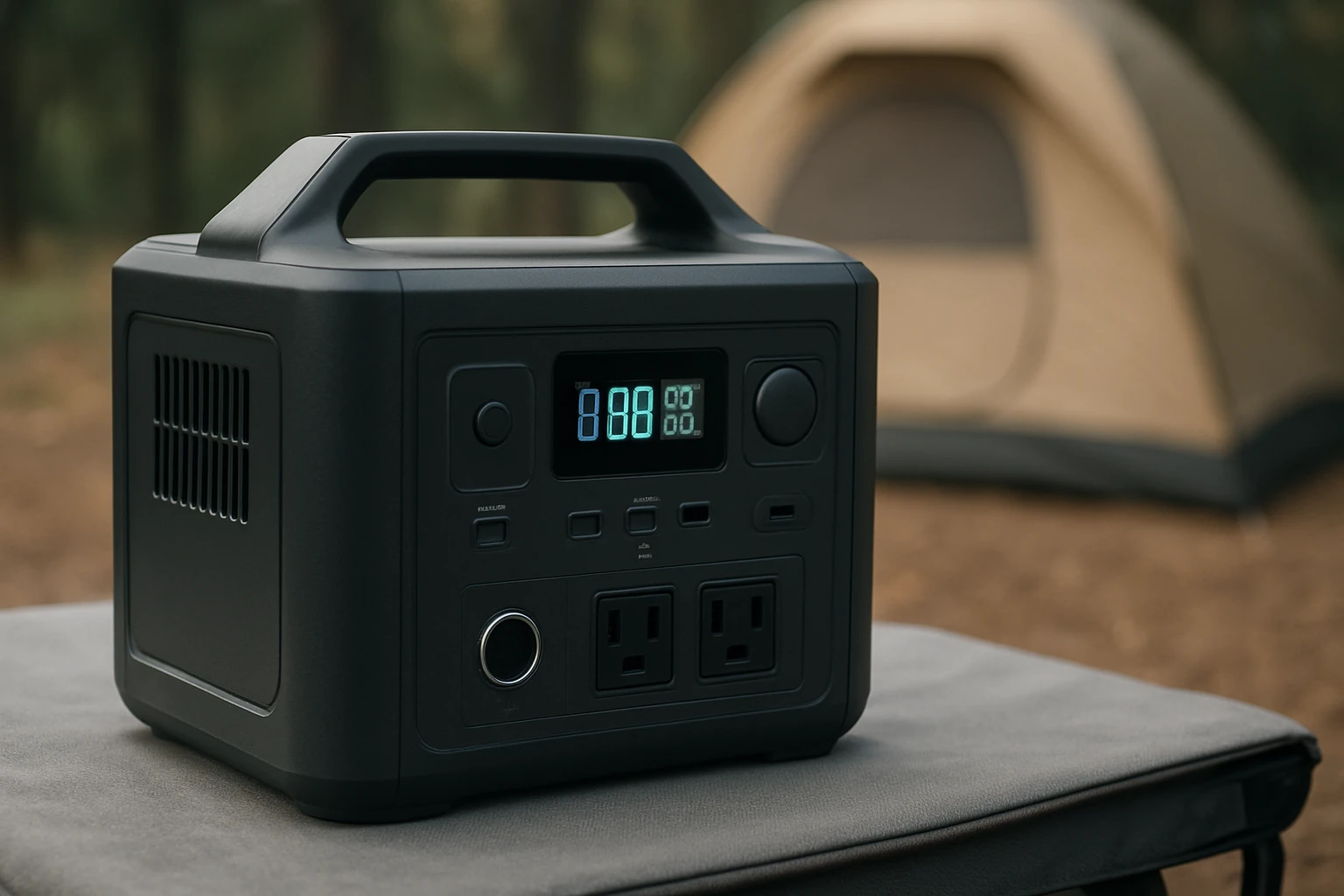
Introduction
Stealth camping demands equipment that is both unobtrusive and reliable. One of the most critical pieces of gear is a portable power station that can supply electricity for lights, communication devices, and small appliances without attracting attention. Quiet operation, compact dimensions, and the ability to recharge from solar panels are essential characteristics for anyone who wishes to remain hidden while still enjoying modern comforts.
In recent years, the market has produced a range of models that balance power output with weight, durability, and intelligent safety systems. The following list evaluates ten distinct categories of power stations, drawing on real‑world user feedback, technical specifications, and price points. By understanding the strengths of each category, one can select the unit that best matches a particular stealth‑camping scenario.
Top 10 Portable Power Stations for Stealth Camping
-
Compact Low‑Weight Units for Easy Transport
When a camper must travel light, weight becomes the primary constraint. A device that weighs less than seven pounds yet still provides enough capacity for phones, a headlamp, and a small fan can be carried in a daypack without sacrificing balance.
The EnginStar 300W Portable Power Station weighs only 6.5 lb and measures 9 × 5.5 × 7.5 in. Its 296 Wh lithium‑ion battery supplies 300 W of continuous AC power, which is sufficient for most personal electronics. Users have praised its “quiet operation” and noted that the pure sine‑wave AC outlet protects sensitive devices such as laptops and cameras.
At a price of $123.44 and a rating of 4.3 / 5 from 1,510 reviews, this unit offers an attractive blend of portability and capability for stealth campers who prioritize weight above all else.
-
High‑Capacity Units for Extended Stays
For multi‑day expeditions, a larger energy reserve is necessary. A power station with a capacity above 1 000 Wh can keep a small refrigerator, a CPAP machine, and multiple USB devices running throughout the night.
The Jackery Explorer 1000 v2 delivers 1 070 Wh of usable energy and a 1 500 W continuous AC output with a 3 000 W surge capability. Its LiFePO4 battery chemistry ensures over 4 000 charge cycles, translating to a lifespan of more than ten years. Reviewers highlight the rapid one‑hour emergency charge and the quiet fan operation, both of which are valuable for low‑profile camping.
Although the unit costs $428.99, its 4.7 / 5 rating from 3,187 reviews reflects strong confidence among long‑term users who need endurance without frequent recharging.
-
Solar‑Ready Models with Built‑In MPPT Controllers
Solar recharging eliminates the need for noisy generators and reduces the ecological footprint of a backcountry adventure. A power station that accepts 12‑25 V solar panels and incorporates a Maximum Power Point Tracking (MPPT) controller can convert sunlight to electricity more efficiently.
The ZeroKor 300W Solar Generator features a 280 Wh lithium‑ion battery and three charging options, including solar, AC wall, and 12 V car input. Its built‑in MPPT controller accelerates solar charging, while multiple protection mechanisms safeguard against over‑voltage and short‑circuit conditions.
At $129.99 and a 4.4 / 5 rating from 1,657 reviews, the ZeroKor unit provides a balanced mix of solar capability, portability, and price.
-
Budget‑Friendly Power Banks for Light‑Weight Tasks
Not every camper requires a full‑size station. For short hikes or weekend trips, a compact power bank can keep phones, GPS units, and small LED lights operational. Affordability and durability become the key decision factors.
The BLAVOR 10,000mAh Solar Power Bank offers 10 000 mAh (approximately 37 Wh) of capacity, a 20 W USB‑C fast‑charging port, and a built‑in solar panel. Its IPX5 rating guarantees resistance to rain and dust, and the dual flashlights provide emergency illumination.
Priced at $25.48 with a 4.3 / 5 rating from 45,914 reviews, this power bank is an economical choice for campers who need only a modest amount of backup power.
-
Units with Multiple Output Ports for Simultaneous Charging
When a group of campers shares a single power source, the ability to charge several devices at once becomes crucial. Models that provide a combination of AC, DC, USB‑A, USB‑C, and even wireless charging ports reduce the need for additional adapters.
The EnginStar station includes eight output ports: two pure sine‑wave AC outlets, two regulated DC ports (12 V/24 V), a fast‑charge USB‑A (5 V/3.1 A), and a USB‑C (18 W). This configuration enables simultaneous charging of laptops, cameras, drones, and small appliances without overloading the system.
Similarly, the Jackery Explorer 1000 v2 supplies three pure sine‑wave AC outlets, two USB‑C ports, a USB‑A port, and a 12 V car socket, allowing a small team to power a mini‑fridge, phones, and a portable fan concurrently.
-
Quiet Operation for Low‑Profile Camping
Noise can betray a camper’s location, especially in wilderness areas where silence is prized. Power stations equipped with low‑decibel fans or passive cooling systems are therefore highly desirable.
Both the EnginStar and Jackery units have been reported by users as “quiet” even under moderate loads. The Jackery Explorer 1000 v2 even offers a 30 dB overnight mode, which is barely audible inside a tent.
Choosing a model with an efficient cooling system ensures that the device does not become a source of unwanted sound during the night.
-
Fast‑Charging Capabilities to Minimise Downtime
Rapid recharging is valuable when a camper must replenish a depleted battery before the next day’s trek. Units that support high‑power input can restore most of their capacity within a few hours.
The Jackery Explorer 1000 v2 features ChargeShield 2.0 technology, allowing a full charge in approximately one hour when the emergency‑charging mode is activated via the companion app. The EnginStar station can reach 80 % charge in two hours using a 65 W wall adapter.
Fast charging reduces the time spent tethered to a wall outlet, preserving the stealth aspect of a camping operation.
-
Durability and Protection Systems for Harsh Environments
Backcountry conditions can subject equipment to temperature extremes, moisture, and accidental drops. Integrated Battery Management Systems (BMS) and robust housings extend the lifespan of a power station.
The EnginStar model incorporates voltage and temperature control, short‑circuit protection, and over‑charge safeguards. The ZeroKor generator adds short‑circuit, over‑current, and overload protection, along with an intelligent cooling fan that activates only when needed.
These protective features ensure that the devices continue to operate safely even when exposed to rugged terrain.
-
Smart App Integration for Remote Monitoring
Modern power stations often provide Bluetooth or Wi‑Fi connectivity, allowing users to monitor remaining capacity, control charging modes, and receive alerts via a smartphone app.
The Jackery Explorer 1000 v2 includes a dedicated app that lets one switch between emergency fast charge, quiet overnight mode, and energy‑efficiency mode. Users appreciate the ability to view real‑time power draw on their phone, which aids in energy budgeting during extended trips.
While not essential for every camper, app integration adds a layer of convenience for those who prefer digital oversight.
-
Emergency Backup Units for Unexpected Power Outages
Stealth camping sometimes occurs in areas prone to sudden weather changes or regulatory shutdowns. Having a reliable backup power source can keep communication devices operational and provide essential lighting.
Both the EnginStar and Jackery models have been highlighted by reviewers as “Plan B” solutions during power outages. The EnginStar’s 296 Wh battery can sustain a small LED lamp and a TV for several hours, while the Jackery’s larger capacity can keep a CPAP machine running throughout the night.
Selecting a unit with a proven emergency track record adds peace of mind for any outdoor enthusiast.
Quick Comparison of Featured Models
| Model | Capacity (Wh) | Max AC Output (W) | Weight (lb) | Price (USD) | Rating |
|---|---|---|---|---|---|
| EnginStar 300W Portable Power Station | 296 | 300 | 6.5 | 123.44 | 4.3 |
| Jackery Explorer 1000 v2 | 1070 | 1500 | 23.8 | 428.99 | 4.7 |
| ZeroKor 300W Solar Generator | 280 | 300 | 5 | 129.99 | 4.4 |
| BLAVOR 10,000mAh Solar Power Bank | 37 | 20 (USB‑C) | 0.6 | 25.48 | 4.3 |
Conclusion
Stealth camping demands a power solution that is quiet, lightweight, and capable of being recharged without drawing attention. The ten categories outlined above demonstrate that a range of products—from the ultra‑compact EnginStar 300W model to the high‑capacity Jackery Explorer 1000 v2—can satisfy those requirements. By matching the specific needs of a trip—whether it is a single‑night hike, a multi‑day wilderness excursion, or an emergency backup scenario—one can select a power station that delivers reliable energy without compromising concealment.
Overall, the EnginStar and ZeroKor units excel in portability and solar readiness, the Jackery leads in capacity and smart features, and the BLAVOR power bank offers an economical entry point for short‑duration outings. Prospective buyers should weigh weight, capacity, charging speed, and durability against their intended use to make an informed decision.
Frequently Asked Questions
What features make a portable power station suitable for stealth camping?
Quiet operation, lightweight design, compact size, and solar‑recharge capability are key for staying hidden while powering essential gear.
How much weight is ideal for a stealth‑camping power station?
Most stealth campers prefer units under 7 pounds to keep the load minimal and easy to carry.
Can a portable power station run small appliances like lights and phones?
Yes, most models provide enough wattage and battery capacity to power LED lights, phones, radios, and other low‑draw devices.
Is solar recharging reliable for a power station in the field?
Solar panels can fully recharge compatible stations in daylight, offering a silent and renewable power source for extended trips.
What safety systems should I look for in a stealth camping power station?
Look for built‑in over‑charge, short‑circuit, and temperature protection to ensure safe operation in rugged outdoor conditions.