2026 Hurricane Season Portable Power Station Checklist: The Ultimate Guide to Staying Powered During Storms
Introduction
The Atlantic hurricane season of 2026 is projected to bring an above‑average number of tropical systems, increasing the likelihood of prolonged power outages for millions of households. This guide equips readers with the knowledge needed to evaluate, select, and operate portable power stations so that essential devices remain functional when the grid fails. By the end of this article, one will understand the technical fundamentals of battery technology, how to match capacity to household needs, and which of the featured products best satisfy specific emergency scenarios.
Background and Context
Portable power stations are essentially rechargeable battery packs equipped with multiple output ports, an inverter, and often solar‑charging capability. They differ from conventional power banks by providing AC outlets, higher wattage, and longer discharge cycles, making them suitable for running small appliances, medical equipment, and communication devices during extended outages.
Two battery chemistries dominate the market: lithium‑ion (NCM) and lithium‑iron‑phosphate (LiFePO4). LiFePO4 cells, used in both featured models, offer superior thermal stability, a longer cycle life (often exceeding 3,000 cycles), and reduced risk of thermal runaway. These attributes are crucial when a power station must endure repeated deep‑discharge cycles over many hurricane seasons.
Key specifications to consider include:
- Energy capacity (watt‑hours, Wh) – determines how long a device can run.
- Continuous power output (watts, W) – indicates the maximum load the inverter can sustain.
- Peak surge capability – essential for devices with high start‑up currents such as mini‑fridges.
- Charging options – AC wall, car, and solar input flexibility.
- Port selection – AC, USB‑C PD, USB‑A, DC barrel, and built‑in lighting.
Understanding these parameters enables one to construct a resilient power plan that aligns with the size of the household, the critical devices to protect, and the expected duration of an outage.
Choosing the Right Portable Power Station
Assessing Household Power Needs
Begin by listing essential devices: communication phones, LED lighting, medical equipment, refrigeration, and possibly a small electric heater. Estimate the wattage of each device and calculate total daily consumption. For example, a typical smartphone charger draws 5 W, a LED lantern 10 W, and a mini‑fridge 45 W. Multiplying by the number of operating hours yields the required Wh capacity.
Most experts recommend a safety margin of 20‑30 % to account for inverter inefficiencies and unforeseen loads. A family of four often finds a 250‑300 Wh station sufficient for a 24‑hour emergency, whereas a larger home may require multiple units or a higher‑capacity model.
Product Recommendations
The two products examined in this guide address distinct power‑budget scenarios.
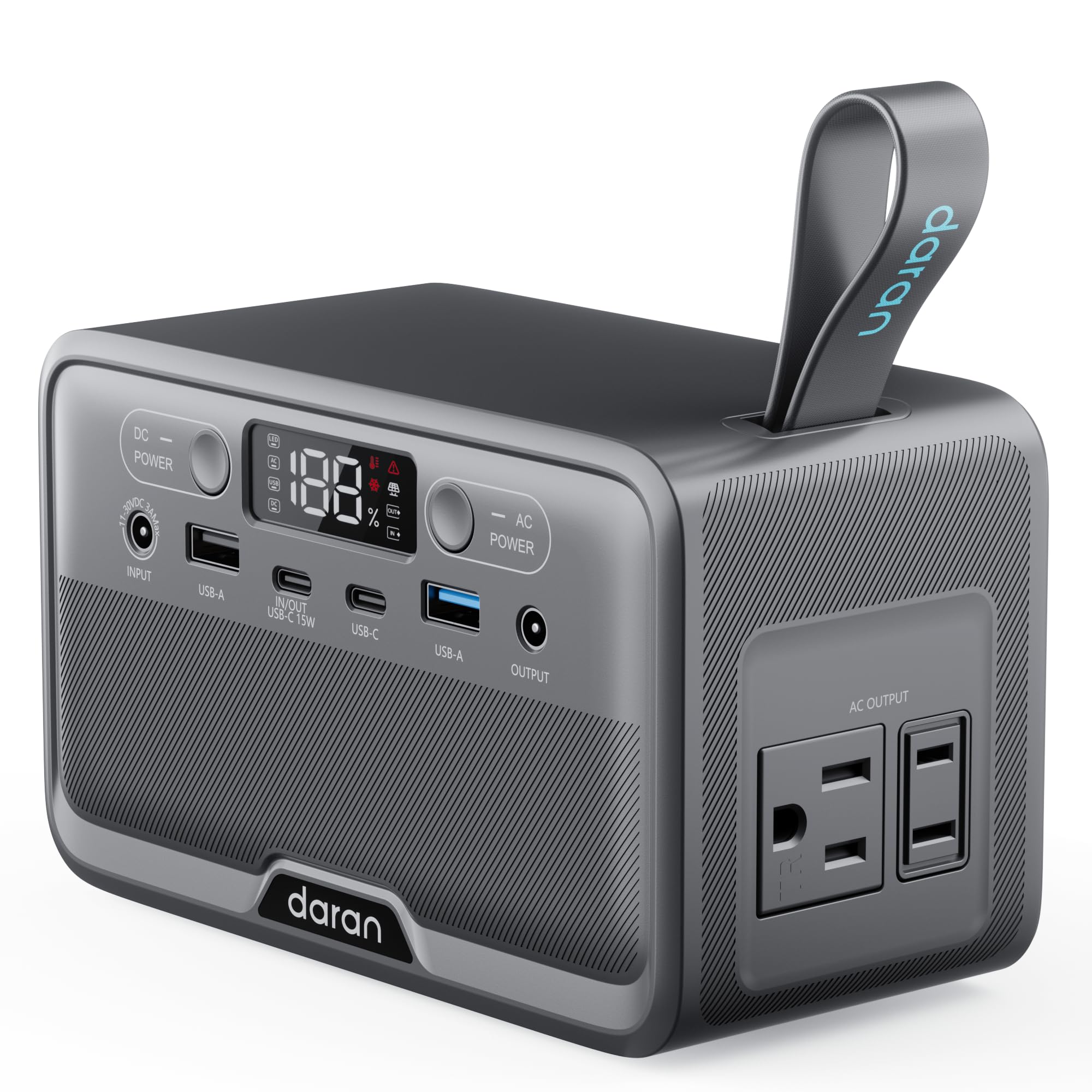
For compact, lightweight needs, the Daran Portable Power Station 89.6Wh provides a slim form factor comparable to a smartphone, weighing only 2.54 lb. Its LiFePO4 battery delivers 3500+ cycles, and the unit supplies 100 W continuous AC power with a 200 W peak, suitable for charging laptops, phones, and a small LED lamp.
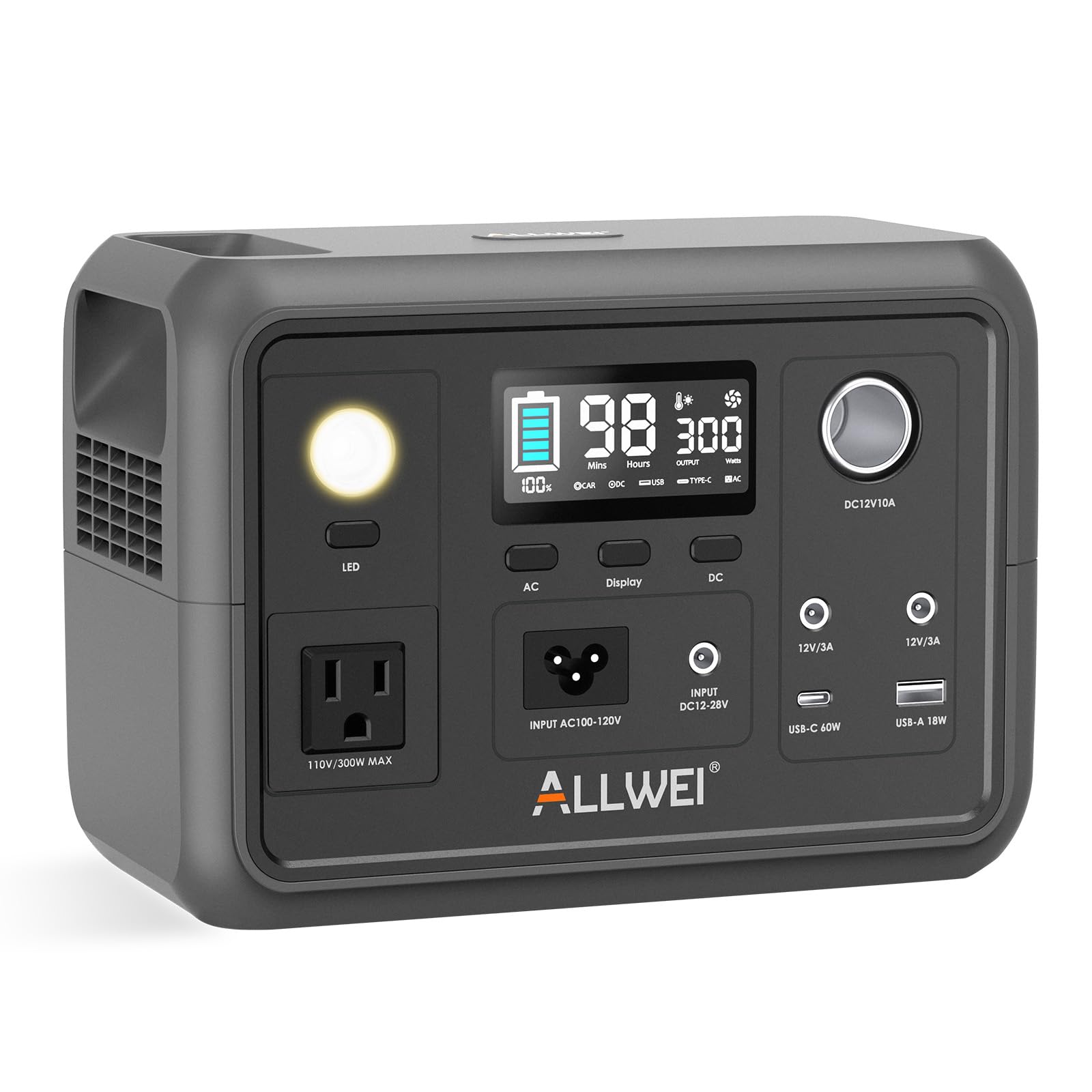
When greater capacity and higher continuous power are required, the Allwei Portable Power Station 300W offers 256 Wh and a pure‑sine‑wave inverter capable of 300 W continuous output and 600 W surge. This model can run a mini‑fridge, a CPAP machine, and multiple USB devices simultaneously, making it ideal for extended outages or off‑grid camping trips.
Feature Comparison Table
| Feature | Daran 89.6Wh | Allwei 300W |
|---|---|---|
| Battery Chemistry | LiFePO4 | LiFePO4 |
| Energy Capacity | 89.6 Wh | 256 Wh |
| Continuous AC Output | 100 W | 300 W (pure sine wave) |
| Peak Surge | 200 W | 600 W |
| Number of Output Ports | 7 (2 AC, 2 USB‑C, 2 USB‑A, 1 DC) | 6 (1 AC, 2 DC, 1 car, 1 USB‑A, 1 USB‑C) |
| Charging Methods | AC wall, USB‑C PD, car, solar (dual simultaneous) | AC wall, car, solar, dual (AC + solar) |
| Charging Speed | 0‑80 % in 1.5 hr (fast PD) | Full charge 3.5‑4 hr (AC) or 2‑2.5 hr dual |
| Weight | 2.54 lb | 6.4 lb |
| Cycle Life | 3,500 + cycles | 3,000 + cycles |
| Rating (as of 2026) | 4.3 / 5 (703 reviews) | 4.4 / 5 (2,208 reviews) |
Best Practices & Tips for Hurricane Preparedness
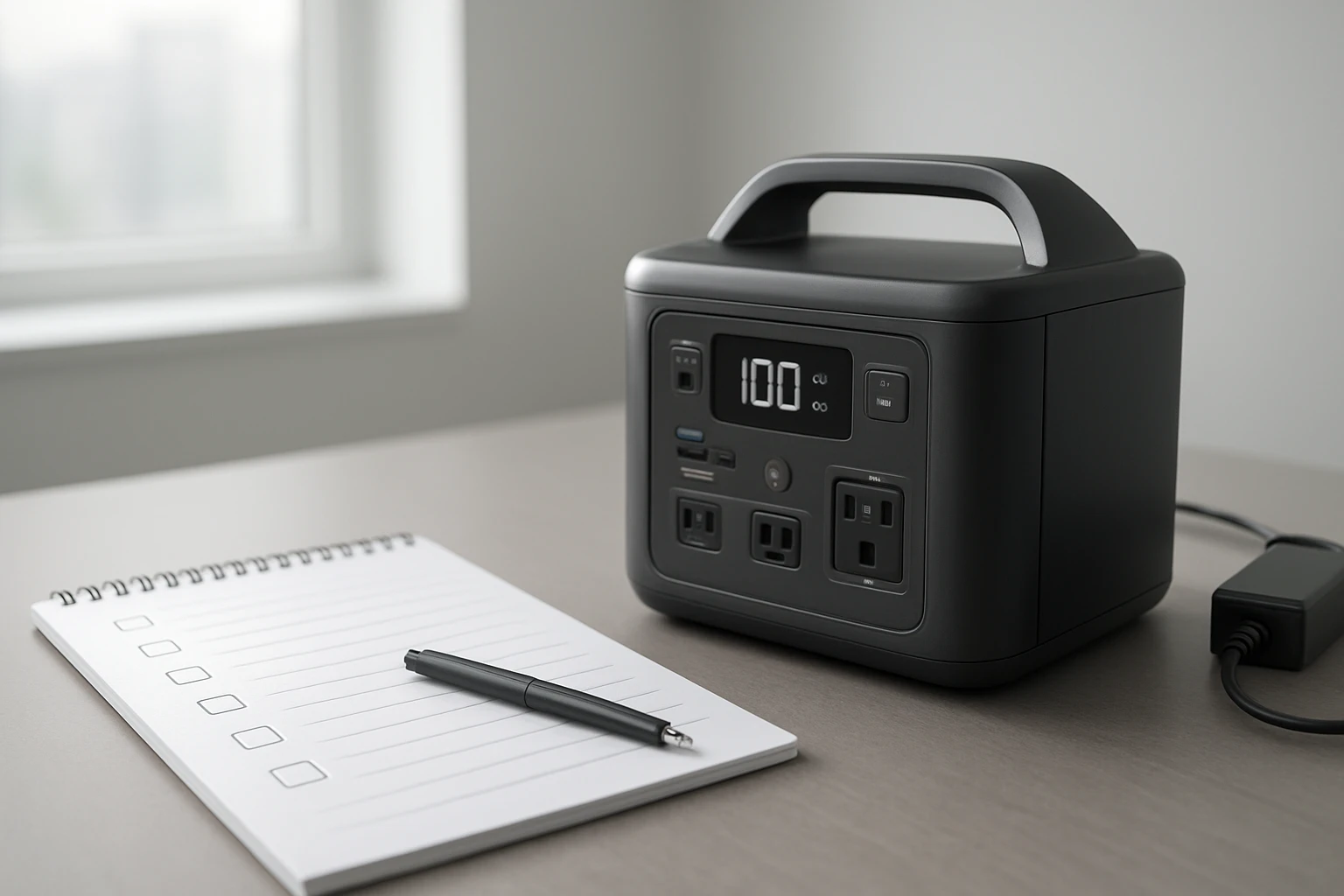
- Pre‑Charge All Units: Fully charge each power station at least 24 hours before the forecasted landfall. LiFePO4 batteries benefit from an initial two‑cycle charge‑discharge to calibrate the BMS.
- Maintain a Solar Backup: Pair each station with a compatible foldable solar panel (e.g., 100 W). Position panels in a sunny, unobstructed location to replenish energy during prolonged outages.
- Organize Cables and Adapters: Store USB‑C, USB‑A, and DC cables in a labeled pouch near the power station. This prevents time‑wasting searches when darkness falls.
- Prioritize Critical Loads: Connect medical devices, communication equipment, and refrigeration first. Use the built‑in LED flashlight on the Daran unit for night‑time visibility without draining the main battery.
- Monitor Battery Health: The LCD display on each unit shows remaining capacity and voltage. Record the reading daily during an outage to anticipate when recharging is necessary.
- Safety First: Place the power stations on a fire‑resistant surface, away from flammable materials. Although LiFePO4 cells are stable, short‑circuit protection can be compromised if the unit is exposed to water.
FAQ
1. How long can a 89.6 Wh power station run a typical smartphone?
A smartphone charger usually consumes 5 W. At 89.6 Wh, the Daran unit can theoretically power the phone for about 17 hours, though real‑world efficiency reduces this to roughly 14 hours.
2. Can I charge the Allwei station while it is powering a device?
Yes. The Allwei model features a pass‑through function that allows simultaneous charging via AC wall or solar while supplying power to connected devices.
3. Are LiFePO4 batteries safe for indoor use?
LiFePO4 chemistry is non‑flammable and exhibits a stable thermal profile, making it safe for indoor emergency use provided the unit is kept dry and on a stable surface.
4. What is the advantage of a pure‑sine‑wave inverter?
Pure‑sine‑wave inverters produce a clean waveform identical to utility power, protecting sensitive electronics such as medical devices, laptops, and audio equipment from distortion.
5. How many cycles can I expect before capacity degrades?
Both units guarantee over 3,000 cycles before the capacity falls below 80 % of the original rating, which translates to roughly a decade of regular use under typical discharge patterns.
6. Do I need a separate solar charge controller?
No. Both power stations integrate MPPT charge controllers that optimize solar input, eliminating the need for an external controller.
7. Can I connect a mini‑fridge to the Daran unit?
The Daran provides 100 W continuous AC output, which is sufficient for most energy‑efficient mini‑fridges that draw 45‑60 W. However, the surge rating of 200 W must not be exceeded during the fridge’s compressor start‑up.
Conclusion
Effective hurricane preparedness hinges on understanding power requirements, selecting a reliable portable power station, and implementing disciplined charging and usage habits. The Daran 89.6 Wh model excels in portability and ultra‑fast charging for small‑scale emergencies, while the Allwei 300 W unit delivers higher capacity and pure‑sine‑wave output for more demanding loads. By integrating either device with solar input, maintaining proper storage, and following the best‑practice checklist, households can ensure critical communication, medical, and comfort devices remain operational throughout the most severe storm events.
Products Featured in This Guide

Daran Portable Power Station 89.6Wh
Price: Not listed; Rating: 4.3/5 (703 reviews)
Featured for its ultra‑compact design, 3500+ cycle LiFePO4 battery, 100 W continuous AC output, and 1.5‑hour fast‑charge capability, making it ideal for backpacking and short‑duration emergency power.

Allwei Portable Power Station 300W
Price: $149.00; Rating: 4.4/5 (2,208 reviews)
Featured for its 256 Wh LiFePO4 capacity, pure‑sine‑wave 300 W inverter, six versatile output ports, and rapid dual‑source charging, providing robust power for larger households and extended outages.
Frequently Asked Questions
What capacity should a portable power station have for a typical 2026 hurricane outage?
Aim for 1,000‑1,500 Wh to run essential lights, phones, and a small refrigerator for 24‑48 hours.
Can I charge a portable power station with solar panels during a storm?
Yes, most units support solar input, but ensure panels are safely positioned away from high winds and rain.
Which battery chemistry is best for hurricane preparedness?
Lithium‑ion offers higher energy density and longer shelf life, while lithium‑iron‑phosphate provides safer thermal stability.
How many AC outlets do I need for emergency devices?
At least two 120 V AC outlets allow you to power a medical device and a small appliance simultaneously.
What maintenance steps keep a power station ready for the season?
Store it at 50‑70 % charge, keep it in a cool dry place, and perform a monthly test run of 30‑60 minutes.