Introduction
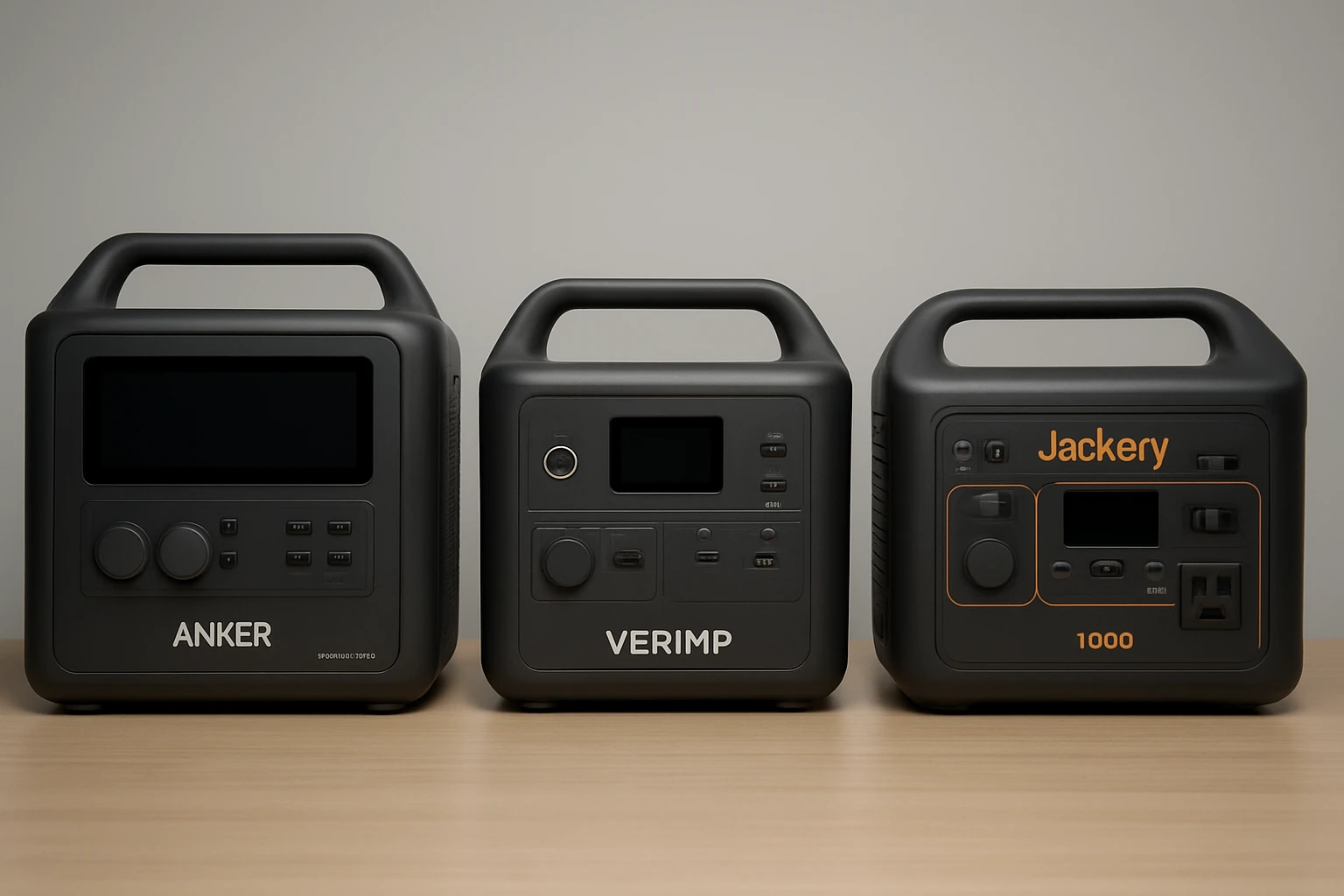
Portable power solutions have become essential for outdoor enthusiasts, emergency preparedness, and off‑grid living. This article compares three distinct Amazon offerings: the Anker SOLIX F2000, the VERIMP Hydrogen Fuel Cell Kit, and the Jackery Solar Generator 1000 v2. Understanding how they differ in price, specifications, and real‑world performance helps buyers select the most suitable device for their needs.
Each product targets a different market segment. The Anker unit is a high‑capacity LiFePO4 power station for home backup and RV use. VERIMP offers an educational hydrogen fuel cell and electrolyzer kit for physics demonstrations. Jackery provides a compact LiFePO4 generator aimed at campers and emergency kits. By examining objective data and authentic customer sentiment, this review delivers a balanced perspective.
Individual Product Overviews
1. Anker SOLIX F2000
The Anker SOLIX F2000 Portable Power Station (also marketed as PowerHouse 767) delivers 2048 Wh of usable capacity and a continuous 2400 W output, with surge capability up to 3600 W. It incorporates Anker’s InfiniPower technology promising a ten‑year lifespan and a five‑year full‑device warranty. Rapid recharging is enabled by HyperFlash, achieving 0‑80 % in 1.4 hours. The unit features four AC outlets, three USB‑C ports, two USB‑A ports, an exclusive RV port, and two car outlets, allowing up to twelve devices to operate simultaneously. Price is $899.99 and it holds a 4.4‑star rating from 511 reviews.
Customers praise the massive capacity, fast recharge, and quiet operation. One reviewer notes the unit powered a full‑size refrigerator for over 24 hours and highlighted the convenient wheels and handle for transport. However, a negative review cites Bluetooth connectivity failures that prevented app control.
2. VERIMP Hydrogen Fuel Cell Kit
The VERIMP Reversible Hydrogen Fuel Cell and Electrolyzer Kit is a physics teaching instrument that demonstrates conversion of chemical energy to electricity. It includes a PEM (proton exchange membrane) fuel cell, an electrolyzer, a small motor, ammeter, and voltmeter. The kit weighs approximately 2 kg and is designed for laboratory or classroom use rather than continuous power supply. The price is $94.90 and it carries a 3.9‑star rating from two reviews.
Key educational features include a visible motor that runs when hydrogen is generated, and detailed instructions for safe operation. The kit emphasizes safety precautions such as avoiding reverse polarity and not applying external voltage to the fuel cell terminals.
3. Jackery Solar Generator 1000 v2
The Jackery Solar Generator 1000 v2 combines a 1070 Wh LiFePO4 battery with a 1500 W continuous AC output and a 3000 W surge peak. It weighs 23.8 lb and includes a foldable handle for portability. Fast charging is advertised as one hour from 0‑100 % using the Jackery app, with a default 1.7‑hour full charge to protect battery health. The unit provides two USB‑C ports, one USB‑A port, a DC car port, and three pure sine‑wave AC outlets. It is priced at $698.99 and enjoys a 4.6‑star rating from 1,136 reviews.
Reviewers commend its lightweight design, reliable solar charging, and versatility for camping, RV trips, and emergency backup. An electronics engineer highlighted its ability to run a 1800 W heater for several hours and praised the clear front panel displaying charge level, load, and input power.
Head‑to‑Head Comparison
Price and Value
At $899.99, the Anker SOLIX F2000 commands a premium price, reflecting its high capacity and robust output. Jackery’s 1000 v2 is $698.99, offering a lower entry point while still delivering over 1 kWh of storage and 1.5 kW output. VERIMP’s kit is the most affordable at $94.90, but it serves a fundamentally different purpose—educational demonstration rather than practical power backup.
Features and Specifications
All three products incorporate LiFePO4 chemistry except the Anker unit, which uses a LiFePO4‑type battery marketed as GaNPrime. Anker provides the highest continuous power (2400 W) and the largest capacity (2048 Wh). Jackery offers a balanced 1500 W output with a 1070 Wh battery, making it lighter and more portable. VERIMP does not provide usable storage capacity; instead, it generates electricity on demand via hydrogen production.
Customer Ratings and Feedback
Anker’s 4.4‑star rating reflects strong satisfaction with performance, though a few users experienced Bluetooth issues. Jackery’s 4.6‑star rating is buoyed by praise for quiet operation, fast charging, and durability across thousands of reviews. VERIMP’s limited two‑review sample yields a 3.9‑star rating, indicating mixed impressions typical for niche educational kits.
Performance and Reliability
Real‑world tests show Anker powering a refrigerator for over a day and sustaining multiple high‑draw devices without overload, thanks to SurgePad technology. Jackery reliably runs camping appliances and even a 1800 W heater for several hours, though prolonged loads above its continuous rating may reduce runtime. VERIMP’s fuel cell demonstrates modest power (enough to spin a small motor) and is sensitive to polarity errors; its reliability hinges on careful setup.
Best Use Cases
- Anker SOLIX F2000: Home backup during outages, RV power management, and off‑grid work sites requiring high wattage.
- VERIMP Hydrogen Fuel Cell Kit: Classroom labs, science fairs, and hobbyist experiments exploring electrochemistry.
- Jackery Solar Generator 1000 v2: Camping trips, lightweight emergency kits, and portable power for small‑scale outdoor events.
Comparison Table
| Feature | Anker SOLIX F2000 | VERIMP Hydrogen Fuel Cell Kit | Jackery Solar Generator 1000 v2 |
|---|---|---|---|
| Price (USD) | $899.99 | $94.90 | $698.99 |
| Battery Capacity | 2048 Wh (LiFePO4) | — (generates on‑demand) | 1070 Wh (LiFePO4) |
| Continuous Output | 2400 W (3600 W surge) | ≈6 V‑12 V motor (≈10‑20 W) | 1500 W (3000 W surge) |
| Ports | 4 AC, 3 USB‑C, 2 USB‑A, 2 car, RV port | Motor, ammeter, voltmeter, fuel cell connections | 3 AC, 2 USB‑C, 1 USB‑A, 1 DC car |
| Recharge Time (0‑80 %) | 1.4 h (HyperFlash) | — (hydrogen generation rate) | ~1 h (app‑enabled fast charge) |
| Weight | — (not specified) | 2 kg | 23.8 lb (≈10.8 kg) |
| Warranty | 5‑year full‑device | — (no warranty info) | 5‑year coverage |
| Average Rating | 4.4/5 (511 reviews) | 3.9/5 (2 reviews) | 4.6/5 (1,136 reviews) |
Pros & Cons
Anker SOLIX F2000
- Pros: Very high capacity (2048 Wh); fast 0‑80 % recharge; supports up to 12 devices; robust 5‑year warranty; quiet operation.
- Cons: Highest price; heavy and bulky; occasional Bluetooth connectivity issues reported.
VERIMP Hydrogen Fuel Cell Kit
- Pros: Educational value; demonstrates real hydrogen fuel cell operation; lightweight (2 kg); affordable.
- Cons: Limited power output; requires careful handling of electrolytes; no warranty information; not suitable for backup power.
Jackery Solar Generator 1000 v2
- Pros: Competitive price; lightweight and portable; fast 1‑hour full charge; solid 5‑year warranty; strong user reviews.
- Cons: Lower capacity than Anker; surge rating limited to 3000 W; solar panel sold separately (optional).
Recommendations
For Home Backup and Heavy‑Duty RV Use: The Anker SOLIX F2000 provides the most energy storage and highest continuous output, making it ideal for powering refrigerators, power tools, and multiple AC appliances during extended outages.
For Educational Demonstrations and Hobbyist Experiments: The VERIMP Hydrogen Fuel Cell Kit delivers hands‑on learning about electrochemical conversion without the cost of a full‑scale generator.
For Camping, Small‑Scale Emergency Kits, and Portability: The Jackery Solar Generator 1000 v2 balances capacity, weight, and price, making it the best choice for lightweight travel and quick solar recharging.
FAQ
- Can the Anker SOLIX F2000 be charged with solar panels?
- Yes; the unit includes a solar charging cable and is compatible with external solar panels, though panels are sold separately.
- How long will the Jackery 1000 v2 run a 500 W load?
- With a 1070 Wh battery, a continuous 500 W load would last roughly 2 hours, assuming ideal conditions and no efficiency losses.
- Is the VERIMP kit safe for home use?
- The kit is intended for supervised educational environments. Users must follow safety precautions, especially regarding hydrogen handling and correct polarity.
- Do any of these units support app‑based monitoring?
- Both the Anker SOLIX F2000 and Jackery 1000 v2 offer smartphone apps for monitoring charge level, load, and charging mode. The VERIMP kit does not include app integration.
- What warranty coverage does Jackery provide?
- Jackery supplies a five‑year coverage plan that includes repair or replacement for manufacturing defects.
- Which unit is the quietest?
- All three are silent in operation because they contain no internal combustion engine. However, the Anker and Jackery units are praised for “whisper‑quiet” performance, while the VERIMP kit produces a faint motor sound during hydrogen generation.
Conclusion
Each product excels within its intended niche. The Anker SOLIX F2000 stands out for sheer power and durability, justifying its premium price for users needing extensive backup capacity. Jackery’s Solar Generator 1000 v2 offers a more affordable, portable solution without sacrificing essential features, making it the top pick for campers and small‑scale emergency kits. VERIMP’s Hydrogen Fuel Cell Kit, while not a power backup device, provides valuable educational insight into renewable energy technology at a modest cost.
Overall, buyers should match their primary use case to the strengths highlighted above. For robust home or RV power, choose Anker. For lightweight, fast‑charging outdoor power, select Jackery. For classroom experiments, opt for VERIMP.
Products Mentioned in This Review
Frequently Asked Questions
What are the main differences between the Anker SOLIX F2000 and the Jackery Solar Generator 1000 v2?
The Anker SOLIX F2000 uses a larger LiFePO4 battery for home backup and RV power, while the Jackery 1000 v2 is a smaller, more portable LiFePO4 unit aimed at camping and emergency kits.
Is the VERIMP Hydrogen Fuel Cell Kit suitable for everyday power needs?
No, the VERIMP kit is designed for educational demonstrations and small experiments, not for regular household or outdoor power supply.
Which of the three products offers the longest runtime on a single charge?
The Anker SOLIX F2000 provides the longest runtime due to its high‑capacity LiFePO4 battery compared to Jackery’s smaller pack and VERIMP’s experimental fuel cell.
Are there safety concerns when using the VERIMP hydrogen fuel cell?
Hydrogen generation requires proper ventilation and handling, so the kit should be used in well‑ventilated areas and supervised by adults.
How do the prices of these three power solutions compare?
Generally, the Anker SOLIX F2000 is the most expensive, Jackery 1000 v2 is mid‑range, and the VERIMP hydrogen kit is the least costly, reflecting their differing capacities and intended uses.