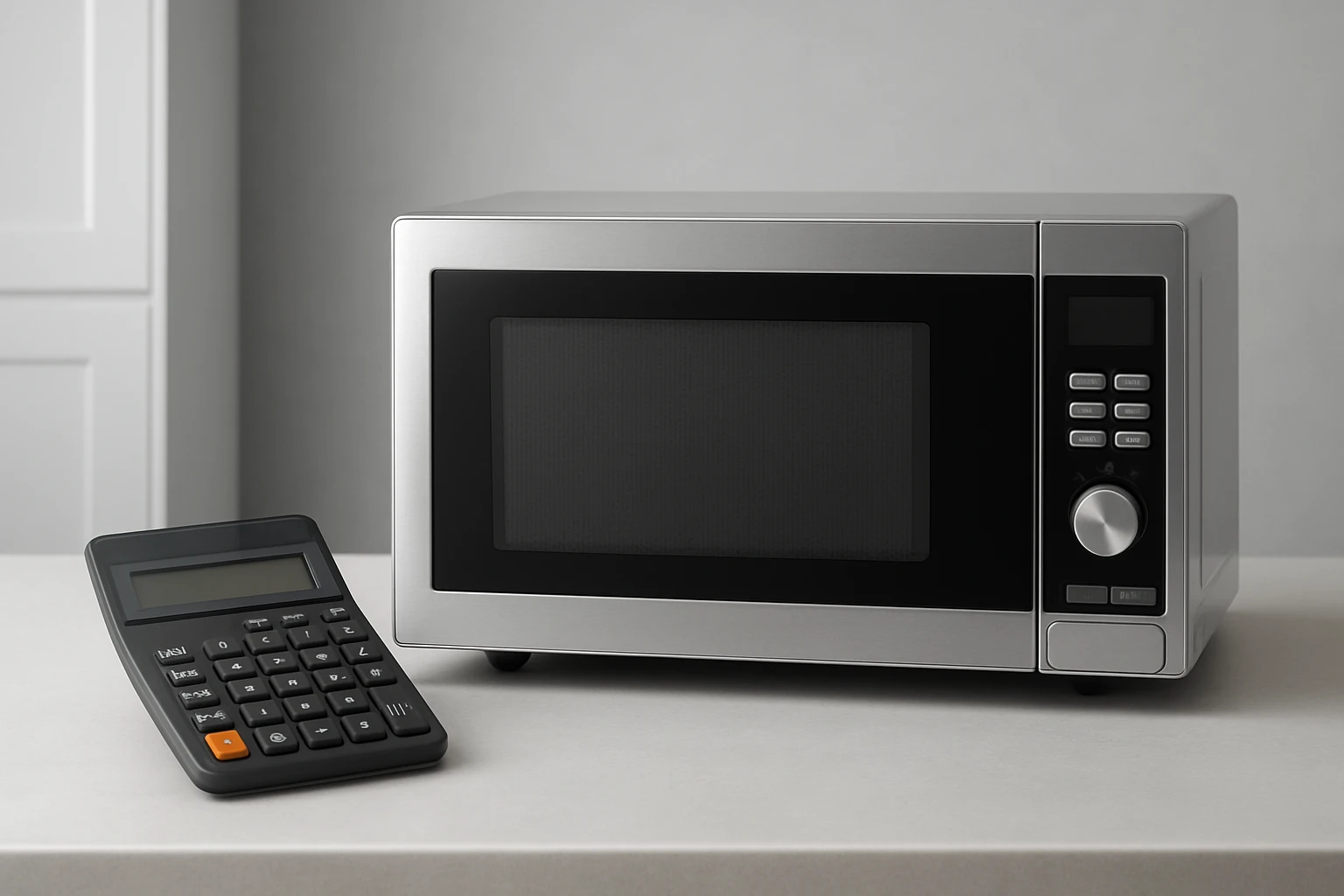
How to Calculate the Right Inverter Size to Run a Microwave from a Portable Power Station
Introduction
In this guide the reader will learn how to determine the appropriate inverter capacity for operating a microwave using a portable power station. The process involves understanding microwave power consumption, accounting for surge demands, and matching those requirements to the specifications of an inverter and battery bank. Accurate calculations prevent overloads, extend battery life, and ensure reliable cooking performance in off‑grid or emergency scenarios. The information is valuable for campers, RV owners, and anyone who wishes to maintain kitchen functionality during power outages.
What You'll Need
- A microwave oven with known wattage (example: Panasonic NN‑SN67QS Microwave).
- A pure sine wave inverter capable of delivering continuous and surge power (example: SigmaWatt 2000W Inverter).
- A portable power station with sufficient battery capacity and appropriate output connectors.
- Multimeter or watt‑meter to verify actual draw.
- Safety equipment such as insulated gloves and eye protection.
Step 1: Determine the Microwave's Power Requirements
The first task is to identify the rated power of the microwave that will be used. Most countertop models list a nominal wattage ranging from 900 W to 1250 W; the Panasonic NN‑SN67QS Microwave, for instance, is rated at 1250 W and carries a price of $295.55 with a rating of 4.7 out of 5 stars based on 26 reviews. An alternative model, the Panasonic NN‑SN686S Microwave, provides 1200 W of power and is priced at $259.95 with a rating of 4.3 out of 5 stars from 8,475 reviews. Knowing the exact wattage is essential because the inverter must supply at least this amount of continuous power.
Microwave manufacturers often publish a “peak” or “surge” power figure that is higher than the nominal rating. This surge occurs when the magnetron first engages and can be up to 1.5 times the nominal value. For a 1250 W unit, the surge may approach 1875 W. Therefore, the inverter must be capable of handling this temporary increase without tripping.
Record the nominal wattage, the estimated surge wattage, and the voltage of the microwave (most U.S. models operate at 120 V AC). These figures will be used in subsequent calculations.
Step 2: Calculate the Continuous Power Needs of the Inverter
Inverter capacity is expressed in watts of continuous output. To size the inverter, start with the microwave's nominal wattage and add a safety margin of 20 percent. The formula is: Continuous Requirement = Nominal Wattage × 1.20. Using the 1250 W Panasonic NN‑SN67QS Microwave, the continuous requirement becomes 1500 W. This margin accommodates minor variations in line voltage and ensures the inverter does not operate at its maximum limit, which can reduce efficiency and lifespan.
If the selected microwave is the 1200 W Panasonic NN‑SN686S, the continuous requirement calculates to 1440 W. Both values are comfortably below the 2000 W continuous rating of the SigmaWatt 2000W Inverter, which is priced at $179.99 and holds a rating of 4.8 out of 5 stars.
It is advisable to verify the continuous rating on the inverter's specification sheet. The SigmaWatt model explicitly states a continuous output of 2000 W and a peak output of 4000 W, making it suitable for the examples presented.
Step 3: Account for Surge Power and Inverter Peak Rating
Next, compare the microwave's surge requirement with the inverter's peak rating. The SigmaWatt 2000W Inverter offers a peak power of 4000 W, which exceeds the estimated 1875 W surge of the 1250 W microwave. This headroom ensures that the inverter will not shut down during the initial magnetron activation.
When selecting an inverter, avoid models that list a peak rating only marginally above the surge requirement, as they may trip under real‑world conditions. The SigmaWatt unit also includes protective features such as overload, short‑circuit, and over‑temperature protection, which enhance safety during high‑current events.
Document the continuous and peak ratings of the chosen inverter alongside the microwave's requirements. This side‑by‑side comparison serves as a quick reference during installation and troubleshooting.
Step 4: Match Inverter Output to Portable Power Station Capacity
Having confirmed that the inverter can handle both continuous and surge loads, the next step is to ensure that the portable power station can supply the necessary energy for the intended cooking duration. Determine the desired runtime in minutes and convert it to hours (e.g., 15 minutes equals 0.25 hours). Multiply the microwave's nominal wattage by the runtime to obtain the energy demand in watt‑hours (Wh).
For a 1250 W microwave used for 15 minutes, the energy demand equals 1250 W × 0.25 h = 312.5 Wh. Add a 20 percent buffer for inverter inefficiency (approximately 90 % efficiency for pure sine wave devices). The adjusted demand becomes 312.5 Wh ÷ 0.90 ≈ 347 Wh. Select a portable power station with a usable capacity greater than this value, such as a 500 Wh unit, to provide comfortable margin.
Confirm that the power station features a pure sine wave AC outlet compatible with the inverter's input voltage and connector type. Some stations include built‑in inverters; however, using a dedicated external inverter like the SigmaWatt model often yields higher efficiency and better surge handling.
Step 5: Connect and Test the System Safely
Begin by placing the inverter on a stable, well‑ventilated surface away from direct sunlight. Connect the inverter's input leads to the power station's DC output, observing proper polarity. Next, plug the microwave into the inverter's AC outlet. Prior to cooking, use a multimeter or a dedicated watt‑meter to verify that the inverter is delivering the expected voltage and that the power station's discharge rate remains within safe limits.
Start the microwave on a low power setting to confirm stable operation. Observe the inverter's LCD display (the SigmaWatt model provides real‑time voltage, load, and frequency data) for any signs of overload. If the load approaches the inverter's continuous rating, reduce the microwave's power level or shorten the cooking time.
After successful testing, document the configuration, including inverter model, power station capacity, and observed load percentages. This record assists future users in replicating the setup and troubleshooting any anomalies.
Tips & Pro Tips
- Prefer pure sine wave inverters over modified‑sine models because microwaves rely on a clean waveform for proper magnetron operation.
- Maintain a 10‑15 percent reserve in the power station's capacity to account for temperature‑related efficiency loss.
- Use the SigmaWatt inverter's remote control feature to power the system on and off without exposing yourself to hot surfaces.
- When possible, pre‑heat food in a conventional oven before using the portable setup to reduce microwave runtime.
- Regularly inspect cable connections for signs of wear or corrosion, especially in outdoor or mobile environments.
Troubleshooting
- Inverter shuts down during operation. This typically indicates that the surge load exceeded the inverter's peak rating. Verify the microwave's actual surge using a watt‑meter and consider a higher‑peak inverter.
- Power station battery drains rapidly. Check the inverter's efficiency setting; some models allow a “eco” mode that reduces idle loss. Also, ensure that no auxiliary devices are drawing power simultaneously.
- Microwave does not heat evenly. Confirm that the inverter is delivering a true sine wave; a distorted waveform can affect magnetron performance. The SigmaWatt inverter guarantees a pure sine wave output.
- Unexpected noise or smell from inverter. Immediately disconnect power and inspect for blocked ventilation. The SigmaWatt unit includes an intelligent temperature‑controlled fan; ensure it is not obstructed.
Conclusion
The reader now possesses a systematic method for calculating the correct inverter size to operate a microwave from a portable power station. By identifying the microwave's nominal and surge power, applying a safety margin, matching those figures to an inverter's continuous and peak ratings, and confirming sufficient battery capacity, reliable off‑grid cooking becomes achievable. Following the safety practices and troubleshooting steps outlined will further enhance system longevity and user confidence.
Products Mentioned in This Guide
Frequently Asked Questions
What inverter wattage is needed to run a typical 1000‑W microwave?
Choose an inverter rated for at least 1500 W continuous to handle the microwave’s 1000 W plus startup surge.
Why is a pure sine wave inverter recommended for microwaves?
Microwaves have sensitive electronic controls that operate reliably only with the clean waveform of a pure sine wave inverter.
How do I calculate the surge power requirement for a microwave?
Multiply the microwave’s rated wattage by 1.5–2; most 1000 W models need a 1500‑2000 W surge capacity.
Can a portable power station’s battery support a microwave for 30 minutes?
Divide the battery’s usable watt‑hour rating by the microwave’s wattage; a 500 Wh battery will run a 1000 W microwave for about 15 minutes.
What safety precautions should I take when connecting a microwave to an inverter?
Use proper gauge cables, ensure the inverter’s overload and short‑circuit protection are active, and never exceed the inverter’s continuous rating.