Can I Deduct a Portable Power Station on My Taxes? Complete Guide to Tax Deductions, Business Use & IRS Rules
Introduction
Portable power stations have become essential tools for freelancers, contractors, and remote workers who require reliable electricity outside of traditional outlets. This guide explains how the Internal Revenue Service (IRS) treats these devices for tax purposes, what deductions are available, and how to document business use properly. Readers will learn the difference between Section 179 expensing, bonus depreciation, and ordinary expense deductions, as well as how to match a power station to specific work scenarios. The article also recommends three highly rated models that align with common business needs.
Background and Context
The IRS permits taxpayers to deduct the cost of equipment that is used predominantly for a trade or business. To qualify, the asset must have a determinable useful life of more than one year and must be placed in service during the tax year. Portable power stations meet these criteria when they are employed to run tools, computers, or lighting at job sites, in an RV office, or during emergency power outages for a home‑based business. Understanding the applicable sections of the tax code is essential to maximize the allowable deduction while remaining compliant.
Two primary mechanisms exist for recovering the cost of equipment: Section 179 expensing and depreciation (including bonus depreciation). Section 179 allows an immediate expense up to a statutory limit, provided the equipment is used more than 50% for business. Bonus depreciation permits a 100% deduction for qualified property placed in service after September 27, 2017, and before January 1, 2023, with a gradual phase‑down thereafter. When neither provision applies, the asset is depreciated over its recovery period, typically five years for electronic equipment.
Key Tax Concepts for Portable Power Stations
1. Determining Business Use Percentage
Taxpayers must allocate the portion of total use that is attributable to business activities. For example, if a power station powers a laptop for eight hours and a television for sixteen hours in a 24‑hour day, the business use percentage is 33.3%. The IRS requires documentation such as mileage logs, usage diaries, or photographs to substantiate the claim.
2. Section 179 Expensing
Section 179 enables an immediate deduction of the full purchase price up to $1,160,000 for 2024, subject to a phase‑out threshold of $2,890,000 in total equipment purchases. The power station must be placed in service during the tax year, and business use must exceed 50%. If the device is used 70% for business, the deductible amount equals 70% of the purchase price.
3. Bonus Depreciation
Bonus depreciation applies automatically unless the taxpayer elects out. It allows a 100% deduction for qualified property in the first year, with the deduction reducing to 80% for property placed in service in 2023, 60% in 2024, 40% in 2025, and 20% in 2026. Portable power stations with a useful life of more than one year qualify, making this a powerful tool for early‑year tax planning.
4. Ordinary Business Expense Deduction
If the power station does not meet the thresholds for Section 179 or bonus depreciation, the cost can still be deducted as an ordinary and necessary business expense under IRC 162. The deduction is limited to the portion of the cost that reflects business use, and the expense must be reasonable in relation to the income generated.
Product Recommendations Aligned with Tax Strategies
Choosing a power station that balances cost, capacity, and durability can influence the tax benefit. The following products are highly rated, provide distinct performance levels, and illustrate how different price points affect the potential deduction.
EF ECOFLOW RIVER 3
The EF ECOFLOW RIVER 3 offers a 245 Wh LiFePO4 battery, 300 W continuous output, and a 1‑hour fast‑charge capability. Weighing only 7.8 lb, it is portable enough for day‑to‑day site work. With a price of $196.32 and a 4.5‑star rating from 825 reviews, it provides an affordable entry point for freelancers who can claim up to 100% of the cost under Section 179 if business use exceeds 50%.
- Industry‑leading GaN technology reduces noise to less than 30 dB.
- Auto‑switching UPS activates within 20 ms during outages.
- IP54 protection ensures resistance to water and dust.
Anker SOLIX C1000 Gen 2
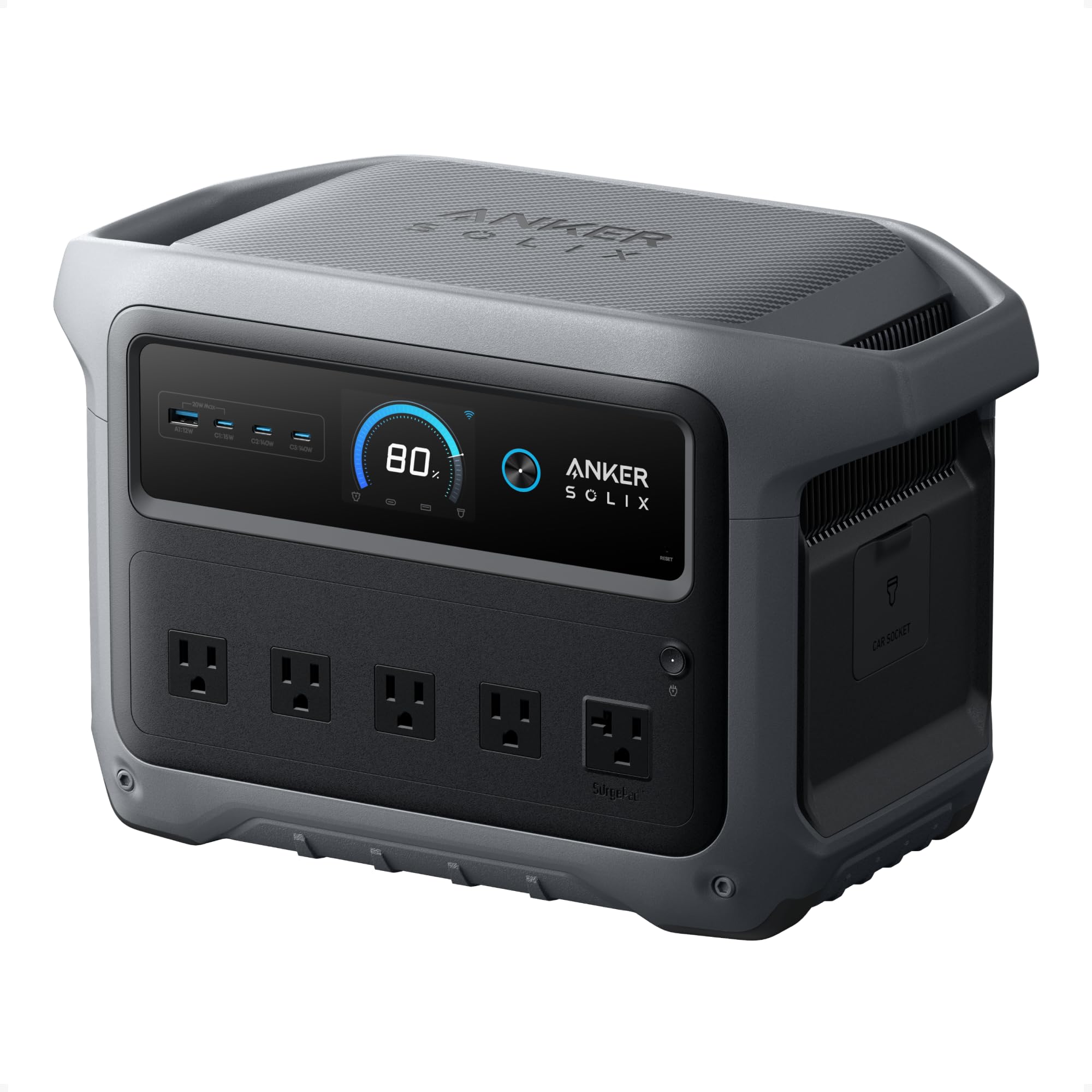
The Anker SOLIX C1000 Gen 2 delivers 2,000 W continuous (3,000 W peak) power and a 1,024 Wh LiFePO4 battery. Priced at $499.99 with a 4.7‑star rating from 1,216 reviews, it is suited for contractors who need to run high‑demand tools such as table‑saws or compressors. The higher cost increases the absolute deduction amount, and the device qualifies for both Section 179 and bonus depreciation because its business use can easily exceed 80%.
- Ultra‑fast 49‑minute recharge via 1,600 W HyperFlash technology.
- Ten ports support diverse equipment simultaneously.
- 10 ms UPS switchover protects sensitive electronics.
Anker SOLIX C300
The Anker SOLIX C300 provides 300 W continuous output with a 288 Wh battery, ideal for travel photographers, hunters, or small‑scale home‑office setups. At $249.99 and a 4.6‑star rating from 1,745 reviews, it occupies a middle ground between the RIVER 3 and C1000 Gen 2. Its moderate price allows a meaningful deduction while keeping cash flow intact for small businesses.
- Eight versatile charging ports, including two 140 W USB‑C outputs.
- Fast 50‑minute charge to 80% via wall outlet.
- Quiet operation at 25 dB from 3.3 ft.
Comparison and Selection Guide
The table below helps readers match their business requirements with the most appropriate power station.
| Feature | EF ECOFLOW RIVER 3 | Anker SOLIX C1000 Gen 2 | Anker SOLIX C300 |
|---|---|---|---|
| Battery Capacity (Wh) | 245 | 1,024 | 288 |
| Continuous Output (W) | 300 | 2,000 | 300 |
| Peak Output (W) | 600 | 3,000 | 600 |
| Fast‑Charge Time | 1 hr (AC) | 49 min (1,600 W) | 50 min (80%) |
| Weight (lb) | 7.8 | ~15 | ~12 |
| Price (USD) | 196.32 | 499.99 | 249.99 |
| Average Rating | 4.5/5 (825) | 4.7/5 (1,216) | 4.6/5 (1,745) |
| Best For | Freelancers, light‑tool use | Contractors, high‑demand equipment | Travel, moderate‑tool use |
Best Practices & Tips for Maximizing Deductions
- Document Business Use: Keep a log that records date, duration, and purpose of each use. Photographs of the device at the job site strengthen the audit trail.
- Allocate Costs Accurately: If the power station is used 60% for business, multiply the purchase price by 0.60 to determine the deductible amount.
- Elect Section 179 When Beneficial: For purchases under the annual limit, electing Section 179 often yields the largest immediate tax benefit.
- Consider Bonus Depreciation Phase‑Down: If the device is placed in service after 2022, calculate the applicable percentage (e.g., 80% for 2023) and compare it with Section 179.
- Maintain Receipts and Warranty Documents: The IRS requires proof of purchase and evidence that the equipment is functional for the claimed period.
- Review State Conformity: Some states do not follow federal depreciation rules; adjust your state tax return accordingly.
Frequently Asked Questions
Can I deduct a portable power station used at home for occasional work?
Yes, if the device is used regularly and exclusively for business purposes in a home office, the portion attributable to business can be deducted. The home‑office deduction rules apply, and the taxpayer must meet the exclusive‑use test.
What if the power station is used 40% for business and 60% personally?
Only the business portion (40%) is deductible. The taxpayer may still claim depreciation on that portion, but cannot claim Section 179 because the business use does not exceed 50%.
Do I need to capitalize the cost if I buy multiple units?
If each unit costs more than $2,500, the IRS generally requires capitalization. However, Section 179 allows each unit to be expensed up to the overall limit, provided the business‑use test is satisfied.
How does the IRS treat solar panel accessories purchased with the power station?
Solar panels are considered separate capital assets. They may be depreciated over a five‑year recovery period or eligible for the residential energy credit if installed at a personal residence.
Can I claim a deduction for a power station used during a natural disaster?
Yes, if the device is used to maintain business operations during a disaster, the expense qualifies as an ordinary and necessary business expense. Proper documentation of the disruption and usage is essential.
Conclusion
Portable power stations represent a legitimate business asset when used to sustain operations, power tools, or support a remote office. By understanding Section 179, bonus depreciation, and the importance of accurate business‑use allocation, taxpayers can capture substantial tax savings. Selecting the appropriate model—whether the budget‑friendly EF ECOFLOW RIVER 3, the high‑capacity Anker SOLIX C1000 Gen 2, or the versatile Anker SOLIX C300—further enhances the financial advantage. Proper recordkeeping and awareness of state variations ensure compliance and maximize the deduction.
Products Featured in This Guide
EF ECOFLOW RIVER 3
Price: $196.32 | Rating: 4.5/5 (825 reviews)
Featured because it provides an affordable, lightweight solution that meets Section 179 eligibility for freelancers and small‑business owners.
Anker SOLIX C1000 Gen 2
Price: $499.99 | Rating: 4.7/5 (1,216 reviews)
Featured because its high output and rapid recharge make it ideal for contractors who can leverage larger deductions under both Section 179 and bonus depreciation.
Anker SOLIX C300
Price: $249.99 | Rating: 4.6/5 (1,745 reviews)
Featured because it balances capacity and portability, offering a moderate deduction for travelers and small‑scale entrepreneurs.

