Scalable Community Shelter Battery Systems vs Single-Home Backup: The Complete Guide to Choosing the Right Emergency Power Solution
Introduction
When power outages strike, the ability to maintain essential electricity becomes a matter of safety, comfort, and continuity. This guide examines two distinct strategies: scalable battery installations for community shelters and compact backup units for individual residences. Readers will learn foundational concepts, evaluate technical specifications, and discover how the BLAVOR 1600W Solar Power Station fits into each approach. By the end, one will be equipped to select the optimal emergency power solution for any circumstance.
Background and Context
Emergency power systems rely on stored electrical energy that can be dispatched when the grid fails, and the most common storage technologies are lithium‑ion and lithium‑iron‑phosphate (LiFePO4) chemistries. LiFePO4 batteries, such as those used in the BLAVOR unit, offer longer cycle life, higher thermal stability, and reduced risk of fire compared with traditional lithium‑ion cells. Understanding battery capacity, power rating, and discharge characteristics is essential for matching a system to the load profile of a shelter or a home. Additionally, the source of recharge—solar panels, grid electricity, or vehicle alternators—affects both the sustainability and the operational cost of the system.
Key Concepts for Selecting an Emergency Power Solution
Capacity, measured in watt‑hours (Wh), determines how long a battery can sustain a given load; a 1024 Wh unit can theoretically run a 100 W device for roughly ten hours under ideal conditions. Power rating, expressed in watts (W), indicates the maximum instantaneous load the system can support; the BLAVOR’s 1600 W continuous output (3200 W surge) allows it to start high‑inrush appliances such as refrigerators. The number and type of outlets—AC, DC, USB‑C, and car socket—affect versatility, while built‑in monitoring displays provide real‑time insight into state of charge and power flow. Finally, durability factors such as cycle count, warranty, and protective BMS (Battery Management System) determine long‑term reliability.
Scalable Community Shelter Battery Systems
Community shelters—schools, disaster relief centers, and municipal buildings—require power solutions that can be expanded as demand grows. A modular architecture, where multiple battery units are linked in parallel, enables capacity scaling without replacing the entire infrastructure. For example, connecting four 1024 Wh BLAVOR stations would yield a combined 4096 Wh storage, sufficient to power lighting, communication equipment, and medical devices for an entire day. The modular nature also simplifies maintenance; a failed module can be swapped without disrupting the whole system.
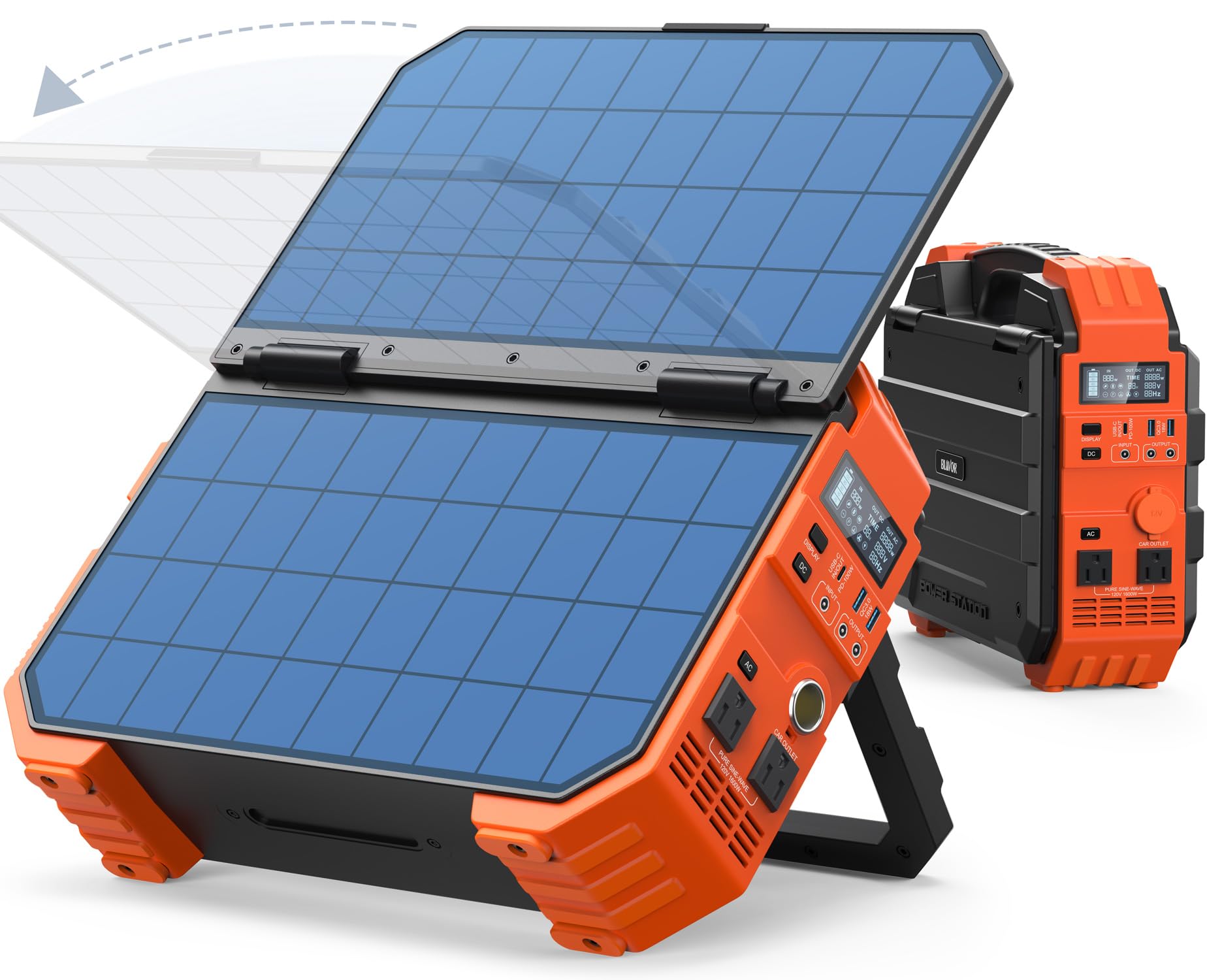
Integration with solar arrays is critical for shelters that aim for off‑grid resilience. The BLAVOR includes a built‑in 40 W foldable solar panel and supports external panels, allowing rapid recharging during daylight hours. When a shelter installs a larger photovoltaic field—say 500 W—the combined charging rate can replenish the battery bank within a few hours, ensuring readiness for successive outages. Moreover, solar charging eliminates fuel costs and reduces emissions, aligning with sustainability goals often mandated for public facilities.
Safety and compliance are paramount in communal environments. The BLAVOR’s smart BMS monitors temperature, voltage, and current to prevent overheating, overload, or short‑circuit conditions, thereby meeting many local electrical codes. Its LiFePO4 chemistry offers a ten‑year lifespan with over 3500 charge cycles, translating to decades of service with minimal performance degradation. Such longevity reduces lifecycle costs compared with lead‑acid alternatives, which require frequent replacement.
Financial considerations include upfront capital, installation labor, and potential incentives. While a single BLAVOR unit costs $598.98, bulk procurement discounts and government grants for renewable energy projects can lower the effective price per kilowatt‑hour. Additionally, the ability to share a common inverter and monitoring platform across multiple modules reduces wiring complexity and operational overhead.
Single‑Home Backup Solutions
Homeowners typically prioritize portability, ease of use, and space efficiency when selecting a backup power source. The BLAVOR 1600W Solar Power Station, with its integrated handle and foldable stand, fits comfortably in a garage, basement, or closet, providing immediate access during an outage. Its 8 versatile outlets—including AC, DC, and a 100 W USB‑C fast‑charge port—allow simultaneous operation of essential devices such as refrigerators, medical equipment, and communication tools.
Charging flexibility is a decisive advantage for residential users. The BLAVOR can be recharged via a standard wall outlet, a 12 V car socket, its built‑in solar panel, or larger external panels, giving homeowners multiple pathways to restore power. The two‑way USB‑C port not only powers laptops and smartphones but also enables the station itself to be charged quickly, a feature especially useful when the grid is down for an extended period.
Noise and emissions are often overlooked but crucial for indoor environments. Unlike gasoline generators, the BLAVOR operates silently and produces zero exhaust, making it suitable for use inside or near sleeping areas without health risks. Its LCD display provides clear visibility of input and output power, allowing users to manage load distribution efficiently and avoid overloading the unit.
Cost‑effectiveness for a single home hinges on the balance between capacity and price. At $598.98, the BLAVOR offers a competitive price per watt‑hour compared with larger, stationary home battery systems that can cost several thousand dollars. Its 10‑year lifespan further improves the total cost of ownership, especially when paired with solar panels that reduce recurring fuel expenses.
Comparison and Selection Guide
| Criterion | Scalable Community Shelter System | Single‑Home Backup |
|---|---|---|
| Typical Capacity Needed | 2 kWh – 10 kWh (expandable) | 0.5 kWh – 2 kWh |
| Power Output Requirement | 1500 W – 5000 W (multiple units) | 1600 W (single unit) |
| Charging Options | Solar array integration, grid, generator backup | Wall outlet, car socket, 40 W built‑in panel, external panels |
| Portability | Modular but typically stationary | Highly portable, built‑in handle |
| Installation Complexity | Professional wiring, permits, BMS networking | Plug‑and‑play, minimal setup |
| Lifecycle Cost | Lower per‑kWh with bulk purchasing and solar | Higher per‑kWh but lower upfront cost |
| Typical Price (USD) | $600 per 1024 Wh module (bulk discounts possible) | $598.98 for 1024 Wh unit |
| Safety Features | Advanced BMS, fire‑retardant enclosures, compliance testing | Smart BMS, over‑heat and overload protection |
To decide which approach best matches a specific need, consider the following decision tree:
- Is the power demand greater than 2 kW or expected to serve multiple households? If yes, pursue a scalable shelter system.
- Do you require rapid deployment and mobility? If yes, a single‑home unit such as the BLAVOR is preferable.
- Is solar integration a priority? Both options support panels, but shelters benefit more from larger arrays.
- What is the budget for initial installation versus long‑term operational cost? Shelters often justify higher upfront spend with grant funding.
Best Practices & Tips
Regardless of scale, the following practices maximize reliability and lifespan of emergency battery systems. First, perform a load audit to identify critical appliances and calculate total wattage and runtime requirements; this prevents undersizing the battery bank. Second, maintain a regular charge‑discharge cycle—ideally 20 % to 80 % state of charge—to preserve LiFePO4 health and avoid deep‑cycle stress.
Third, install a dedicated solar charge controller that matches the battery chemistry; this ensures optimal charging efficiency and protects against over‑voltage. Fourth, keep the battery station in a climate‑controlled environment; extreme temperatures can degrade capacity faster, even with built‑in thermal management. Fifth, test the system quarterly by simulating a blackout, confirming that all outlets function and that the LCD display accurately reports remaining charge.
For community shelters, implement a monitoring dashboard that aggregates data from each module, allowing administrators to track charge levels, solar input, and load distribution in real time. For homes, use the BLAVOR’s LCD and companion mobile app (if available) to set alerts for low battery or abnormal temperature spikes. Finally, document maintenance procedures and keep spare fuses, cables, and a replacement LiFePO4 cell on hand to minimize downtime.
Frequently Asked Questions
- 1. How long does the BLAVOR 1600W Solar Power Station run a typical refrigerator?
- Assuming a 120 W average consumption, the 1024 Wh capacity provides approximately 8.5 hours of continuous operation, though cycling the compressor reduces average draw, extending runtime to roughly 12 hours.
- 2. Can multiple BLAVOR units be linked together?
- Yes, the units support parallel connection through compatible AC output adapters, enabling scalable capacity for larger shelters or extended home backup.
- 3. What is the warranty period for the BLAVOR battery?
- The manufacturer offers a 2‑year limited warranty covering defects in materials and workmanship, with an additional 10‑year performance guarantee for the LiFePO4 cells when used within specified parameters.
- 4. Is the built‑in 40 W solar panel sufficient for daily recharging?
- For light loads such as phones and laptops, the panel can replenish a significant portion of the battery in 6‑8 hours of strong sunlight; for full recharging of 1024 Wh, external panels are recommended.
- 5. How does the BLAVOR compare to traditional lead‑acid generators?
- It is quieter, emission‑free, requires less maintenance, and offers a longer cycle life; however, lead‑acid units may provide higher surge power at a lower upfront cost.
- 6. What safety certifications does the BLAVOR have?
- The unit complies with CE, FCC, and RoHS standards, and its BMS meets UL 2054 safety requirements for portable battery packs.
- 7. Can the BLAVOR be used in cold climates?
- LiFePO4 chemistry tolerates temperatures down to –20 °C, but performance drops; using an insulated enclosure or pre‑heating the battery improves output in extreme cold.
Conclusion
Choosing between a scalable community shelter battery system and a single‑home backup unit hinges on load requirements, deployment speed, budget, and long‑term sustainability goals. The BLAVOR 1600W Solar Power Station exemplifies a versatile solution that can serve both contexts—functioning as a standalone home backup and as a modular component in larger shelter installations. By understanding capacity, power rating, charging flexibility, and safety features, decision‑makers can design resilient power architectures that protect lives and maintain critical operations during grid failures.
Products Featured in This Guide
BLAVOR 1600W Solar Power Station
Price: $598.98
Rating: 4.5 out of 5 stars (61 reviews)
Featured because it combines a high 1600 W continuous output, 1024 Wh LiFePO4 battery, built‑in 40 W solar panel, and multiple charging methods, making it suitable for both individual homes and modular community shelter deployments.