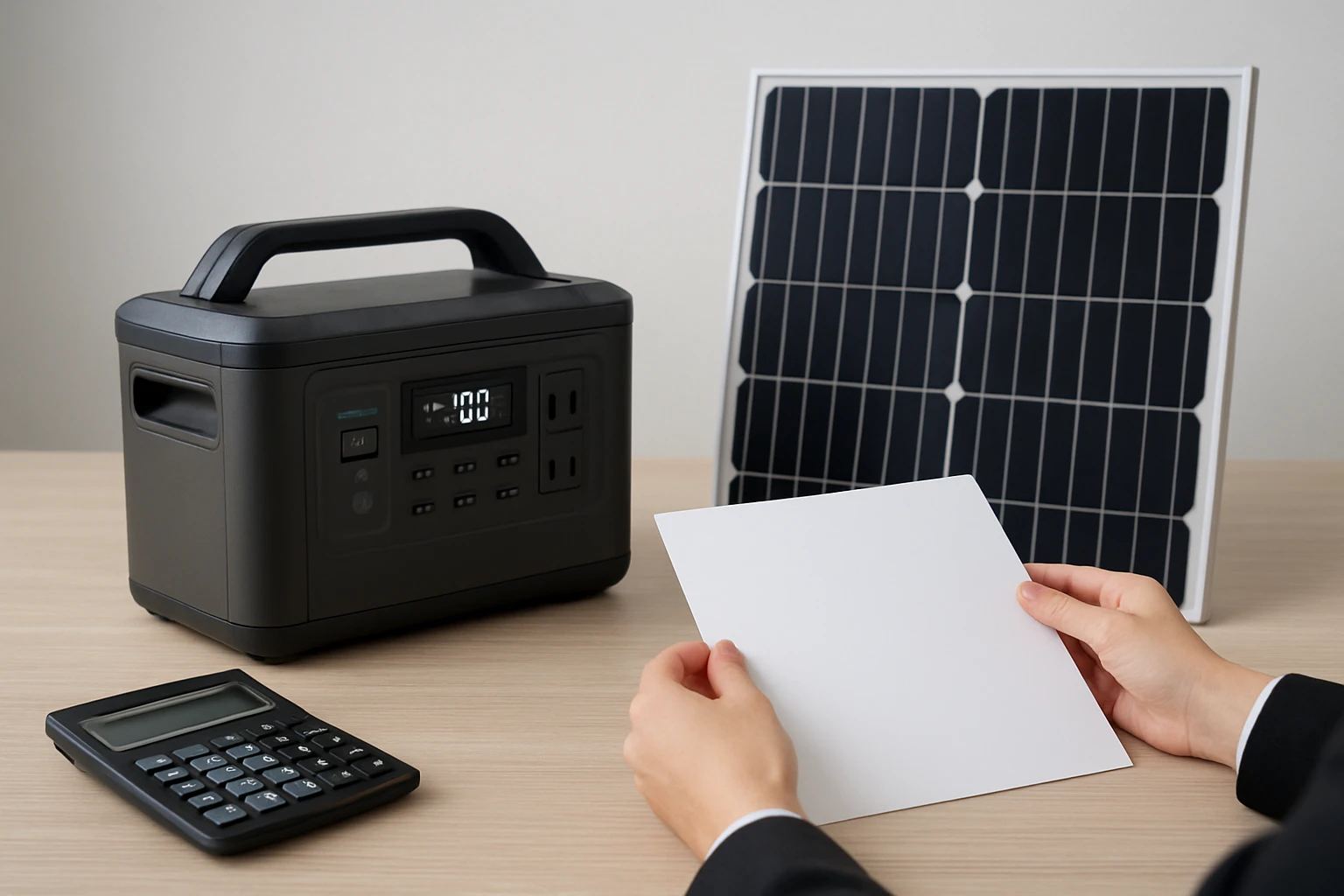
Complete Guide to Financing Solar Generators: Compare Payment Plans, Loans & Leasing
Introduction
The rising cost of electricity and the increasing frequency of power outages have created a strong demand for reliable backup power. This guide explains how consumers can acquire a solar generator without paying the full purchase price up front. Readers will learn about the different financing structures, the advantages and disadvantages of each, and how to match a financing option with a specific generator model. The article also highlights four high‑performing solar generators that illustrate how financing can make advanced technology accessible.
Background and Context
Solar generators combine a battery storage system with an inverter and a set of solar panels to provide clean, portable electricity. The battery chemistry most commonly used is lithium‑iron‑phosphate (LiFePO4), which offers high cycle life and thermal stability. Key specifications include usable capacity measured in watt‑hours (Wh), continuous AC output measured in watts (W), and the number of charging methods available. Understanding these specifications is essential before selecting a financing plan because they affect the total cost of ownership.
Financing a solar generator can be accomplished through three primary mechanisms: installment payment plans offered by retailers, personal or home equity loans, and equipment leasing agreements. Each mechanism has distinct eligibility criteria, interest rates, and tax implications. Consumers should evaluate creditworthiness, expected usage patterns, and the potential for tax credits before committing to a financing option.
Financing Options Explained
1. Retail Installment Payment Plans
Many online retailers provide zero‑interest or low‑interest installment plans that split the purchase price into equal monthly payments. These plans typically require a credit check but do not involve a separate loan agreement. The advantage is simplicity; the consumer receives the product immediately and repays over a predetermined term, often 6, 12, or 24 months.
When evaluating a retail plan, consider the following factors:
- Interest rate or hidden fees
- Length of the repayment term
- Early‑payment penalties
- Impact on credit utilization
Retail plans are most suitable for consumers who prefer a straightforward arrangement and have a stable monthly cash flow.
2. Personal or Home Equity Loans
Personal loans are unsecured credit lines that can be used for any purpose, including the purchase of a solar generator. Interest rates are generally higher than secured loans but lower than credit‑card financing. Home equity loans or lines of credit (HELOC) use the borrower’s property as collateral, often resulting in lower rates and longer repayment periods.
Key considerations for loan financing include:
- Annual percentage rate (APR) and any origination fees
- Loan term and monthly payment amount
- Tax deductibility of interest (home equity interest may be deductible)
- Risk of foreclosure for secured loans
Loans are advantageous for larger purchases where the consumer wishes to spread costs over several years while potentially benefiting from lower interest.
3. Equipment Leasing
Leasing agreements allow the consumer to use a solar generator for a fixed period while making regular lease payments. At the end of the lease term, the consumer may have the option to purchase the equipment at a residual value, renew the lease, or return the unit. Leasing is common among commercial users but is increasingly available to residential customers through specialized green‑energy financing firms.
Leasing benefits include lower upfront costs, predictable monthly expenses, and the ability to upgrade to newer technology at lease end. However, total cost of ownership can be higher than outright purchase, and the consumer does not own the equipment during the lease.
Recommended Products and How Financing Enhances Their Value
Below are four solar generators that illustrate a range of capacities, output options, and portability. Each product is linked to its Amazon listing for convenient reference.
Jackery HomePower 3600 Plus
The Jackery HomePower 3600 Plus delivers 3600 W continuous output (7200 W in parallel) and a usable capacity of 3584 Wh. Its lithium‑iron‑phosphate cells are rated for 6,000 cycles and a ten‑year lifespan, providing reliable power even in sub‑zero temperatures. The unit includes four charging options, allowing a full charge in as little as two hours using hybrid AC + DC input. At a price of $2,399.00 and a rating of 4.6 out of 5 stars, it is positioned for homeowners who require extended backup for a three‑person household.
Financing this higher‑priced unit through a low‑interest personal loan can spread the cost over five years, reducing the monthly burden to approximately $50 when accounting for typical loan rates. Alternatively, a zero‑interest retail installment plan of 24 months would result in payments of $100 per month, which may be attractive for consumers with short‑term cash flow constraints.
Anker SOLIX C1000 Gen 2
The Anker SOLIX C1000 Gen 2 provides 2,000 W continuous output (3,000 W peak) and a 1,024 Wh battery. Its HyperFlash technology enables a full recharge in 49 minutes at 1,600 W, making it ideal for rapid turnaround during short outages. Weighing less than comparable models, it is designed for camping, RV use, and portable office setups. Priced at $499.99 with a 4.7‑star rating, it represents a cost‑effective entry point for users who need moderate power.
Because the purchase price is modest, many consumers can take advantage of a zero‑interest 12‑month retailer plan, resulting in monthly payments of roughly $42. For those who prefer to preserve cash, a short‑term personal loan with a low APR can be repaid within 18 months, keeping the monthly payment below $30.
EcoFlow DELTA Pro 3
The EcoFlow DELTA Pro 3 offers a massive 4,096 Wh capacity, expandable to 48 kWh with additional battery modules. It supplies 4,000 W continuous output (6,000 W with X‑Boost) and supports up to 12,000 W when multiple units are paralleled. With 18 charging combinations, users can recharge via solar, AC, gas generator, or EV charger. The unit is priced at $3,299.00 and holds a 4.5‑star rating, targeting whole‑home backup for larger households or remote workstations.
Given the premium price, a home equity loan with a 4 % APR over ten years would result in a monthly payment of approximately $34, which may be affordable for homeowners with equity. Leasing the DELTA Pro 3 for a three‑year term at $120 per month could also be attractive, especially for users who anticipate upgrading to newer models as technology evolves.
EcoFlow DELTA 2 Max
The EcoFlow DELTA 2 Max provides 2,048 Wh capacity and up to 3,400 W output with X‑Boost. Its dual‑charging technology enables an 0‑to‑80 % charge in 43 minutes when using combined solar and AC input. The included 400 W solar panel reaches 23 % conversion efficiency, and the unit is rated for 3,000 full cycles, delivering more than ten years of service. Priced at $1,298.98 with a 4.6‑star rating, it balances power and portability for both home and outdoor scenarios.
Consumers may opt for a 12‑month zero‑interest retailer plan, resulting in payments of $108 per month. For those who prefer longer terms, a personal loan at 6 % APR over five years would produce a monthly payment of $25, allowing the buyer to retain cash for other emergency supplies.
Comparison and Selection Guide
When selecting a financing method, consider the following decision matrix. The table aligns typical user profiles with the most suitable financing approach and recommended product.
| User Profile | Financing Preference | Recommended Generator | Typical Monthly Cost |
|---|---|---|---|
| Homeowner seeking whole‑home backup for up to two weeks | Home equity loan (low APR, long term) | EcoFlow DELTA Pro 3 | $34 |
| RV traveler needing rapid recharge between trips | Zero‑interest 12‑month retailer plan | Anker SOLIX C1000 Gen 2 | $42 |
| Family of three requiring reliable power for daily use | Retail installment plan (24 months) | Jackery HomePower 3600 Plus | $100 |
| Outdoor enthusiast with moderate power needs | Personal loan (short term, low APR) | EcoFlow DELTA 2 Max | $25 |
The table demonstrates that higher‑priced units often benefit from secured loans, while mid‑range models are well suited to retailer financing. Consumers should also factor in potential tax credits for renewable energy equipment, which can effectively reduce the net cost of the generator.
Best Practices & Tips
- Calculate the total cost of ownership, including interest, fees, and any applicable tax incentives, before signing a financing agreement.
- Maintain a good credit score to qualify for the lowest possible interest rates.
- Verify that the financing contract does not contain prepayment penalties, especially if the borrower anticipates early payoff.
- Consider bundling the generator purchase with a solar panel kit to maximize renewable generation and reduce reliance on grid electricity.
- Use the manufacturer’s mobile app to monitor battery health, set charging schedules, and avoid unnecessary discharge cycles.
- Read customer reviews to assess real‑world reliability; all four featured products have ratings above 4.5 stars, indicating strong user satisfaction.
Frequently Asked Questions
- What is the difference between a loan and a lease for a solar generator?
- A loan provides ownership of the equipment once the debt is repaid, whereas a lease grants the right to use the equipment for a set period without transferring ownership. Leasing may include an option to purchase at the end of the term.
- Can I claim a tax credit for a solar generator purchased with financing?
- In many jurisdictions, the federal Investment Tax Credit (ITC) applies to solar energy systems, including battery storage, as long as the equipment is installed at a primary residence. Financing does not affect eligibility, but the credit is applied to the net cost after incentives.
- How does my credit score affect financing options?
- A higher credit score generally results in lower interest rates and more favorable loan terms. Retailer installment plans may also require a minimum credit threshold.
- Is it better to finance a generator with a personal loan or a home equity loan?
- Home equity loans typically offer lower rates because the loan is secured by the property, but they place the home at risk if payments are missed. Personal loans are unsecured and may have higher rates, but they do not jeopardize the property.
- What should I look for in the warranty when financing a solar generator?
- Review the length of the manufacturer’s warranty, coverage of battery cycles, and any service‑level agreements. A longer warranty can protect the investment, especially when the unit is financed over several years.
- Can I refinance a solar generator loan?
- Yes, refinancing is possible if market rates decline or if the borrower’s credit improves. Refinancing can lower monthly payments or shorten the loan term.
- Do retailer financing plans require a down payment?
- Many zero‑interest retailer plans do not require a down payment, but some may ask for a small initial amount to reduce the financed balance.
Conclusion
Financing a solar generator enables consumers to secure reliable, clean power without the burden of a large upfront expense. By understanding the distinctions between retailer installment plans, personal or home equity loans, and equipment leasing, buyers can select the structure that aligns with their financial situation and power requirements. The four featured generators illustrate how different capacities and price points fit within various financing models. Applying the best practices outlined in this guide will help readers make informed decisions, protect their investment, and enjoy uninterrupted power when it matters most.
Products Featured in This Guide
Jackery HomePower 3600 Plus
Price: $2,399.00 – Rating: 4.6/5 (64 reviews)
Featured because it provides high continuous output, extensive battery capacity, and multiple charging options suitable for whole‑home backup.
Anker SOLIX C1000 Gen 2
Price: $499.99 – Rating: 4.7/5 (1,028 reviews)
Featured for its rapid 49‑minute recharge capability, compact design, and affordability for portable power needs.
EcoFlow DELTA Pro 3
Price: $3,299.00 – Rating: 4.5/5 (77 reviews)
Featured because it delivers massive expandable capacity and high output, making it ideal for whole‑home and commercial backup.
EcoFlow DELTA 2 Max
Price: $1,298.98 – Rating: 4.6/5 (347 reviews)
Featured for its fast dual‑charging technology, portable solar panel, and balanced power output for both indoor and outdoor use.