
Introduction
In environments where patient safety depends on continuous operation of life‑supporting devices, power interruptions can have catastrophic consequences. This guide explains how to design, install, and verify an N+1 redundant portable power solution that safeguards critical medical equipment. Readers will learn how to assess load requirements, select appropriate power stations, integrate protective hardware, and perform regular testing. By following the procedures, one can achieve a resilient power architecture that meets regulatory standards and reduces downtime.
What You’ll Need
- Two or more portable power stations with sufficient watt‑hour capacity for the intended load.
- Appropriate charging cables and adapters for the power stations.
- One Tripp Lite Medical Surge Protector to protect connected devices from voltage spikes.
- Optional: Hopelake Insulin Cooler for temperature‑sensitive medications during transport.
- Mounting hardware, cable management ties, and a multimeter for verification.
Step 1: Assess Power Requirements
The first step is to create an accurate inventory of all medical devices that will rely on backup power. List each device, its nominal power draw in watts, and the duration for which it must operate without utility power. Multiply the wattage by the required runtime to obtain the total energy demand in watt‑hours (Wh). For example, a ventilator drawing 150 W for eight hours requires 1,200 Wh of stored energy. Include a safety margin of at least 20 % to accommodate inefficiencies and future expansion.
Once the total Wh is known, compare it against the specifications of available portable power stations. Choose stations whose combined capacity exceeds the calculated demand plus the safety margin. Document the chosen models, their individual capacities, and the expected runtime for each critical device.
Step 2: Select Portable Power Stations with N+1 Capability
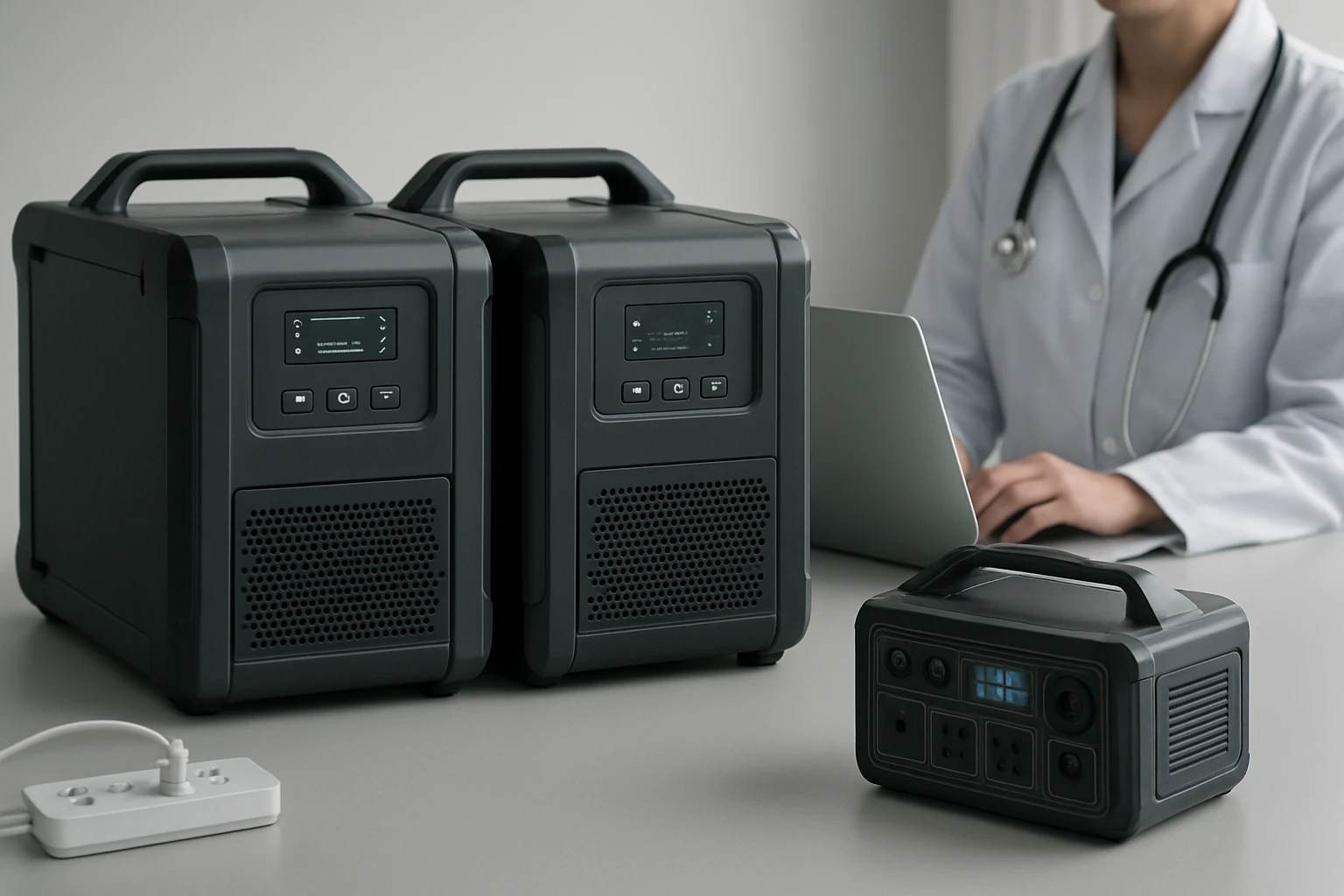
An N+1 configuration requires at least one more power source than the minimum needed to sustain the load. If the load can be supported by two stations, a third station provides the redundancy needed for true N+1 protection. Select stations that support parallel operation or have an external battery‑output port compatible with daisy‑chaining. Ensure that each station offers pure sine wave output, as many medical devices are sensitive to waveform distortion.
When evaluating options, consider weight, recharge time, and environmental ratings. Heavy‑duty lithium‑ion stations often provide higher energy density, reducing the footprint in a mobile clinic. Verify that the stations comply with relevant medical standards such as IEC 60601‑1 for electromagnetic compatibility.
Step 3: Implement N+1 Redundancy Wiring
Begin by positioning the portable power stations on a stable, non‑conductive surface close to the equipment they will serve. Connect the stations in parallel using the manufacturer‑approved cables, ensuring that polarity and voltage ratings match exactly. If the stations feature a dedicated “parallel” port, use that connection to avoid overloading the main AC outlets.
Next, route a single AC branch circuit from the parallel array to a distribution panel. This panel will host the surge protector and any additional outlets required for the medical devices. Use appropriately rated extension cords or hard‑wired connections, and label each cable for future maintenance. Verify that the total current draw does not exceed the rating of the parallel output, typically 15 A for standard portable units.
Step 4: Integrate the Tripp Lite Medical Surge Protector
After the power stations are wired, install the Tripp Lite Medical Surge Protector as the first point of protection for all downstream equipment. This device offers four hospital‑grade NEMA 5‑15R‑HG outlets, each equipped with locking safety covers that prevent accidental contact in patient‑care vicinities. The 6‑ft cord provides ample reach to the power stations while maintaining a tidy layout.
The surge protector delivers 1,410 joules of surge suppression and includes a built‑in 15 A resettable circuit breaker, ensuring that overloads are cleared without manual intervention. Its UL 60601‑1 and UL 60950‑1 compliance guarantees that it meets the stringent safety requirements of clinical environments. Mount the unit on a wall or a sturdy cabinet using the integrated mounting slots, and verify that the all‑metal housing remains securely fastened.
When connecting devices, prioritize life‑supporting equipment such as infusion pumps, monitors, and ventilators to the protected outlets. The automatic site fault detection feature will alert staff if a hazardous voltage condition is detected, allowing immediate corrective action. The switchless design eliminates the risk of accidental power interruption during critical procedures.
Step 5: Protect Temperature‑Sensitive Medications
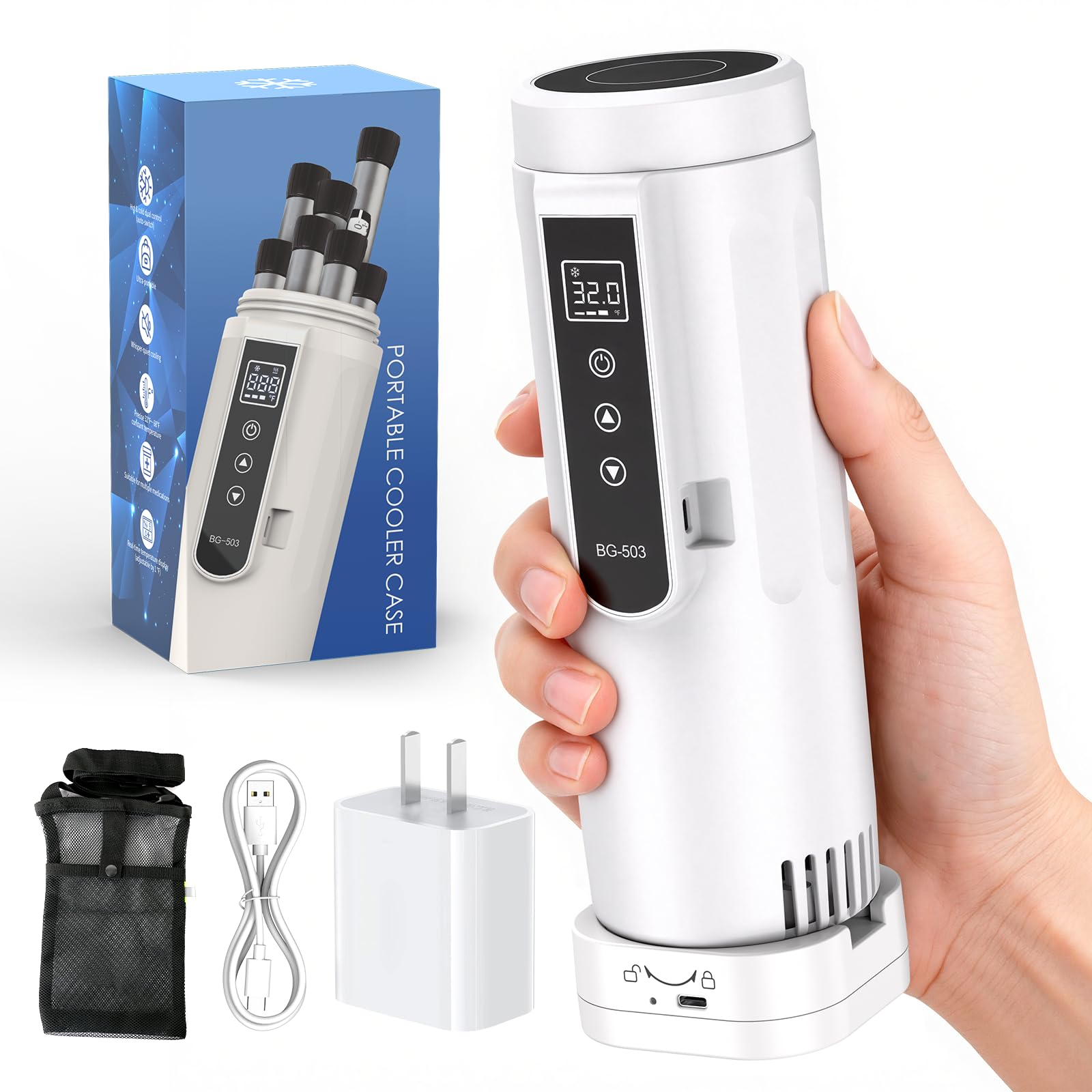
While the primary focus of the power system is to maintain electrical continuity, many clinical settings also require temperature‑controlled storage for insulin and other biologics. The Hopelake Insulin Cooler offers a compact, USB‑chargeable solution that maintains a range of 32 °F to 68 °F. Its 10,500 mAh backup battery provides up to ten hours of cooling, ensuring medication potency even during extended outages.
The cooler features a clear real‑time temperature display, allowing clinicians to monitor conditions at a glance. Its lightweight design (1.15 lb) and dimensions comparable to a mobile phone enable easy placement alongside portable power stations without adding significant bulk. The inclusion of a dedicated backup battery means the cooler remains operational even if the primary power source fails.
Integrate the cooler into the redundant power architecture by connecting it to one of the protected outlets on the Tripp Lite surge protector. This arrangement ensures that both electrical and thermal safeguards are applied simultaneously, reducing the risk of medication degradation during transport or emergency scenarios.
Step 6: Test and Validate the Redundant System
After installation, conduct a comprehensive functional test to confirm that the N+1 configuration operates as intended. Begin by powering all devices from the primary set of portable stations while the redundant unit remains idle. Record voltage, current, and runtime for each device using a calibrated multimeter.
Next, simulate a failure by disconnecting one of the primary stations. Observe whether the redundant station automatically assumes the load without interruption. Verify that the surge protector continues to supply clean power and that the insulin cooler maintains its temperature setpoint throughout the transition.
Document the test results, noting any deviations from expected performance. Repeat the test at least three times to ensure repeatability. Once satisfied, label the system components, update the maintenance log, and train staff on emergency procedures.
Tips & Pro Tips
- Label each power station and cable with clear identifiers to simplify troubleshooting during an emergency.
- Store spare charging cables and a portable solar panel in the same cabinet to extend runtime when grid power is unavailable for extended periods.
- Perform quarterly load‑bank tests to verify that battery capacity has not degraded beyond acceptable limits.
- Consider integrating a remote monitoring module that reports battery state‑of‑charge to a central dashboard, allowing proactive maintenance.
- When positioning the surge protector, maintain a minimum clearance of 3 inches from any water source to comply with infection‑control protocols.
Troubleshooting
Problem: Devices lose power when the redundant station activates.
Solution: Verify that the parallel output ports on the power stations are correctly engaged and that the total load does not exceed the combined output rating. Re‑check cable connections for loose terminals.
Problem: The surge protector trips repeatedly.
Solution: Measure the instantaneous current draw of each connected device. Devices with high inrush currents, such as certain imaging equipment, may require a dedicated line‑level filter or a separate surge protector.
Problem: Insulin cooler temperature rises during a power outage.
Solution: Ensure the cooler is fully charged before use and that its backup battery is not older than 12 months. If the temperature exceeds 40 °F, replace the battery pack immediately.
Conclusion
Implementing an N+1 redundant portable power system for medical backup requires careful planning, selection of compliant hardware, and rigorous testing. By following the steps outlined above, one can achieve uninterrupted power for critical devices, protect sensitive medication, and comply with industry safety standards. Regular maintenance and periodic validation will preserve system reliability over the long term. Readers are encouraged to apply these practices in their own facilities to enhance patient safety and operational resilience.
Products Mentioned in This Guide
Frequently Asked Questions
What does N+1 redundancy mean for portable medical power stations?
N+1 redundancy provides one extra power unit beyond the total load, ensuring continuous operation if any station fails.
How do I calculate the required watt‑hour capacity for an N+1 setup?
Add the watt‑hour needs of all critical devices, then multiply by 1.1 to include the additional backup unit.
Which protective hardware should be used with portable power stations?
A medical‑grade surge protector, such as the Tripp Lite model, safeguards equipment from voltage spikes.
What regular tests verify the reliability of an N+1 redundant system?
Perform load‑bank testing and battery discharge checks monthly to confirm each station can sustain the full load.
Do N+1 portable power solutions meet medical regulatory standards?
When designed with proper load assessment, surge protection, and documented testing, they comply with most healthcare facility guidelines.