Introduction
The rapid growth of portable power stations has increased the demand for responsible battery management. This guide explains the environmental and safety considerations of solar battery recycling and disposal. Readers will learn essential terminology, practical strategies, and product recommendations that enhance safety while reducing waste. By the end of the article, one will be equipped to make informed decisions about handling lead‑acid and lithium batteries.
Background and Context
Solar batteries store electrical energy generated by photovoltaic panels for later use. Two primary chemistries dominate the market: lead‑acid (including AGM) and lithium‑ion (including LiFePO4). Lead‑acid batteries are recyclable in most municipal programs, whereas lithium batteries require specialized handling due to fire risk. Understanding the life‑cycle of these batteries is critical for compliance with regulations and for protecting personal property.
Regulatory frameworks such as the Resource Conservation and Recovery Act (RCRA) in the United States define hazardous waste criteria for batteries. Many jurisdictions mandate that batteries be delivered to certified recyclers rather than placed in general trash. Failure to comply can result in fines and environmental damage. Therefore, establishing a clear disposal workflow is a fundamental part of any solar power system plan.
Key Concepts in Solar Battery Recycling
Recycling begins with proper segregation of battery types. Lead‑acid batteries contain lead and sulfuric acid, which can be reclaimed and reused after smelting. Lithium batteries contain valuable metals such as cobalt, nickel, and lithium that can be extracted through pyrometallurgical processes. Both processes reduce the need for virgin material extraction, conserving resources and lowering carbon footprints.
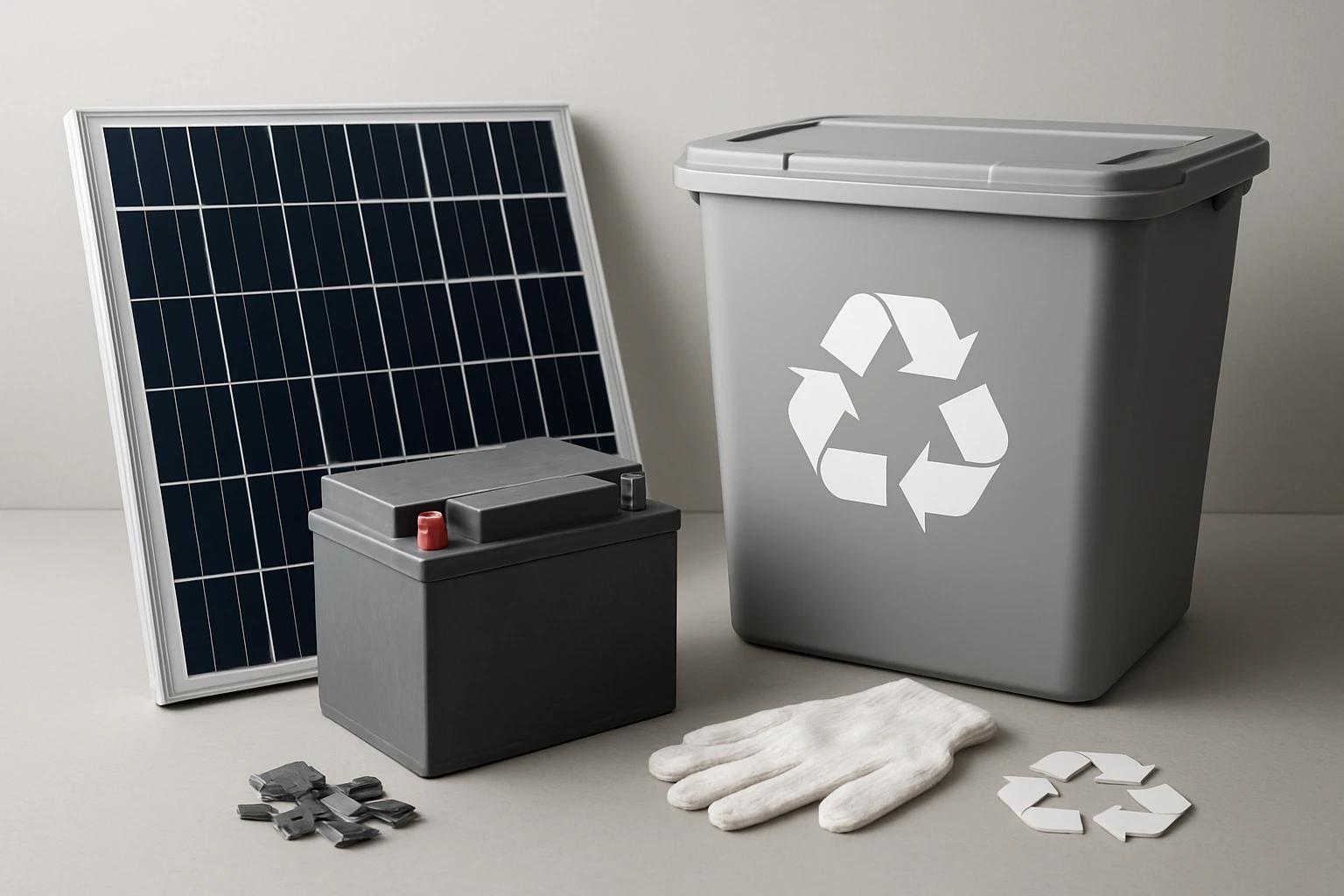
Safety is paramount when handling batteries that have reached the end of their service life. Protective equipment, such as gloves and eye protection, should be worn to prevent exposure to corrosive electrolytes. Batteries should be stored upright in a well‑ventilated area to avoid gas accumulation. For lithium batteries, temperature monitoring is essential because thermal runaway can occur if cells are damaged or shorted.
Choosing the Right Storage and Recycling Solutions
When selecting a storage container, durability, leak‑proof design, and ease of labeling are essential criteria. The EasyPak Battery Recycling Container offers a sturdy, fire‑resistant enclosure suitable for both lead‑acid and lithium cells. Its compact footprint allows placement in garages or workshops, and the clear labeling area simplifies compliance with local recycling mandates.
For households requiring a larger capacity, the Nova 2‑Gallon Battery Collection Bin provides an 8‑liter volume that can accommodate multiple batteries without compromising safety. The bin’s durable construction prevents accidental punctures, and its lid secures contents against moisture ingress.
When dealing with high‑capacity lithium packs, the ECO‑WORTHY 48V 314Ah LiFePO4 Battery includes built‑in fire‑suppression modules and an active balancing BMS, reducing the risk of thermal events during storage. Although this product is a power source rather than a container, its safety features illustrate the importance of integrated protection in modern lithium systems.
For traditional lead‑acid solutions, the Renogy 12V 200Ah AGM Battery provides a maintenance‑free design with a low self‑discharge rate, making it suitable for long‑term storage before recycling. Its robust construction minimizes the likelihood of leaks, simplifying handling during end‑of‑life processing.
Comparison and Selection Guide
| Feature | Renogy 12V 200Ah AGM Battery | ECO‑WORTHY 48V 314Ah LiFePO4 Battery | EasyPak Recycling Container | Nova 2‑Gallon Bin |
|---|---|---|---|---|
| Battery Chemistry | Lead‑acid AGM | Lithium‑Iron‑Phosphate | N/A | N/A |
| Capacity | 200 Ah (12 V) | 314 Ah (48 V, 16.07 kWh) | – | 8 L |
| Safety Features | Thick AGM separators, no acid leakage | Active cell balancing, aerosol fire protection | Fire‑resistant material, sealed lid | Durable, leak‑proof construction |
| Price (USD) | $395.99 | $2,259.99 | $181.00 | $35.99 |
| Amazon Rating | 4.4/5 (1,133 reviews) | 4.9/5 (11 reviews) | 4.1/5 (3 reviews) | 4.7/5 (29 reviews) |
| Best Use Case | RV, off‑grid cabins, marine | Home backup, large off‑grid systems | General battery collection | Household or small‑office battery storage |
The table highlights that product selection depends on system scale, chemistry, and safety requirements. For small‑scale RV owners, the Renogy AGM battery offers a cost‑effective, low‑maintenance solution. Larger home‑backup installations benefit from the ECO‑WORTHY LiFePO4 pack, which includes advanced BMS and fire‑suppression technology. Containers such as EasyPak and Nova complement any battery system by providing compliant storage before recycling.
Best Practices & Tips for Safe Disposal
- Always discharge batteries to a safe level before transport; for lead‑acid aim for less than 20 % state‑of‑charge, for lithium aim for 30‑40 %.
- Label containers clearly with battery type, capacity, and date of removal to aid recycling facilities.
- Store containers in a cool, dry environment away from direct sunlight and flammable materials.
- Use a dedicated battery tester, such as the one included with the QHAND Battery Recycling Bin with Tester, to verify charge levels before disposal.
- Arrange regular drop‑off schedules with certified recyclers; many municipalities offer free collection events.
- For large lithium packs, consider a professional de‑energizing service to ensure cells are balanced and safe for transport.
Frequently Asked Questions
- Can I recycle an AGM battery with my regular curbside program?
- Most curbside programs treat AGM batteries as hazardous waste and require drop‑off at a certified recycling center. Check local guidelines before disposal.
- What temperature range is safe for storing lithium batteries before recycling?
- Store lithium batteries between 0 °C and 25 °C (32 °F‑77 °F) to minimize the risk of thermal runaway. Avoid extreme cold, which can cause internal damage.
- Do I need a fire extinguisher near my battery storage area?
- For lithium systems, a Class D fire extinguisher is recommended. Lead‑acid systems can be safely managed with a standard ABC extinguisher.
- How often should I replace my portable power station batteries?
- Typical cycle life for AGM batteries is 500‑800 cycles, while LiFePO4 cells can exceed 2,000 cycles. Replace when capacity falls below 70 % of original rating.
- Is it legal to ship used batteries to a recycler?
- Shipping regulations vary; many carriers require special labeling and packaging for hazardous materials. Consult the recycler’s shipping policy.
Conclusion
Proper recycling and disposal of solar batteries protect both the environment and personal safety. By understanding battery chemistries, employing appropriate storage containers, and following best‑practice guidelines, one can extend the life of portable power stations while minimizing waste. The products highlighted in this guide provide reliable solutions for a range of applications, from small household bins to high‑capacity lithium packs.
Implementing a structured recycling workflow not only ensures regulatory compliance but also contributes to a circular economy where valuable materials are reclaimed. As solar technology continues to evolve, staying informed about safe disposal practices will remain a critical component of responsible energy independence.
Products Featured in This Guide
Renogy 12V 200Ah AGM Battery
Price: $395.99 | Rating: 4.4/5 (1,133 reviews)
Featured for its maintenance‑free AGM design, low self‑discharge rate, and suitability for RV, marine, and off‑grid applications.
ECO‑WORTHY 48V 314Ah LiFePO4 Battery
Price: $2,259.99 | Rating: 4.9/5 (11 reviews)
Featured for its high 16.07 kWh capacity, active balancing BMS, and integrated aerosol fire‑suppression system.
EasyPak Battery Recycling Container
Price: $181.00 | Rating: 4.1/5 (3 reviews)
Featured as a durable, fire‑resistant container suitable for both lead‑acid and lithium battery collection.
Nova 2‑Gallon Battery Collection Bin
Price: $35.99 | Rating: 4.7/5 (29 reviews)
Featured for its compact 8‑liter capacity and robust, leak‑proof construction for household battery storage.
QHAND Battery Recycling Bin with Tester
Price: $21.99 | Rating: 4.7/5 (30 reviews)
Featured for its integrated battery tester, allowing users to verify charge levels before disposal, and its space‑saving design.