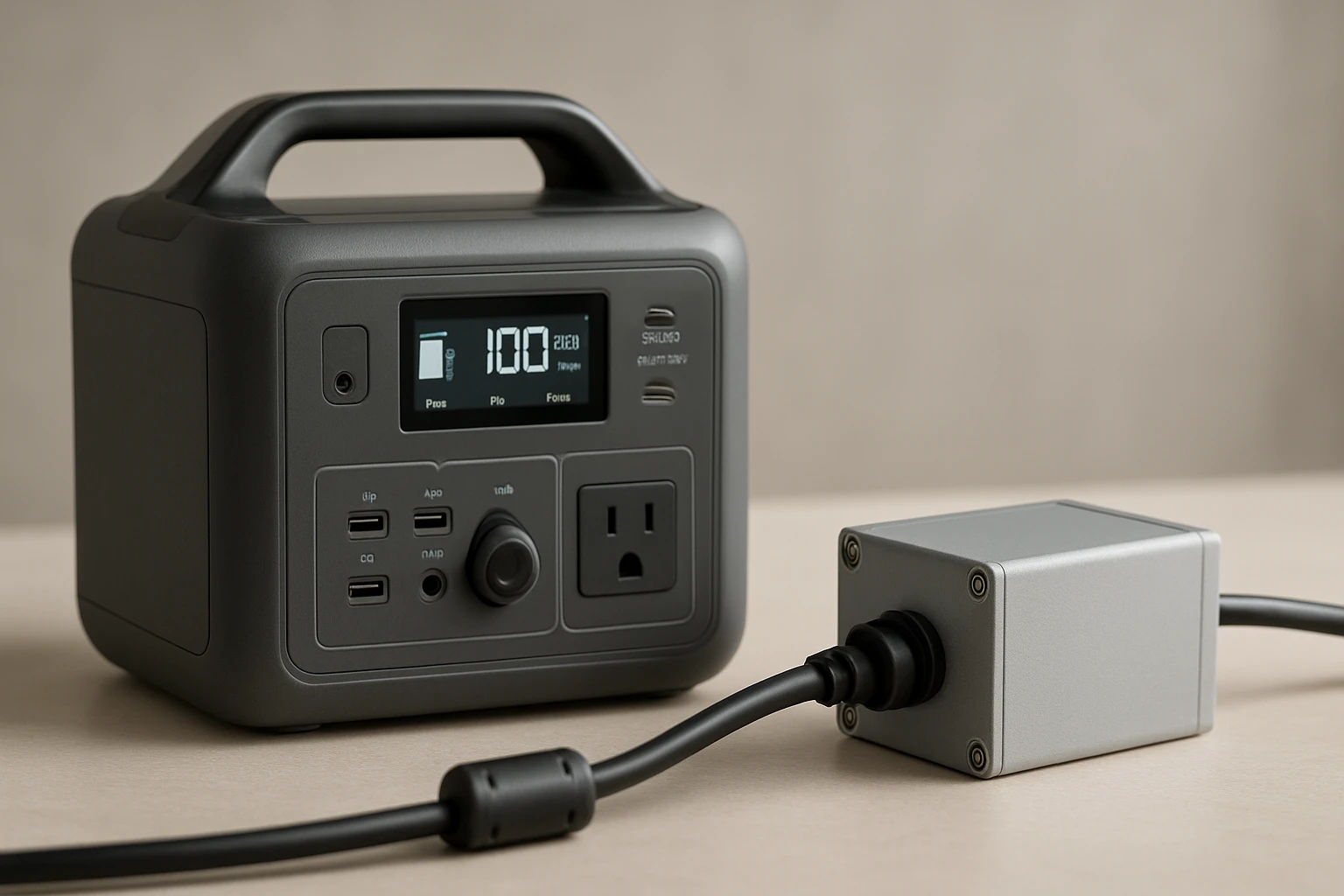

Complete Guide to Eliminating Electromagnetic Interference (EMI) from Portable Power Stations in Audio Recording
Introduction
This guide explains how electromagnetic interference (EMI) generated by portable power stations can degrade audio recordings. Readers will learn the physical causes of EMI, practical mitigation techniques, and how to select effective accessories. The article also recommends two proven products that address common noise sources in recording environments. By the end of the guide, one will be equipped to maintain clean signal paths while enjoying the convenience of portable power.
Portable power stations have become essential for field recording, live streaming, and mobile studios. However, their switching converters and high‑current outputs often emit broadband noise that couples into audio circuitry. Understanding both the theory and the tools available is essential for any engineer or hobbyist seeking professional‑grade results.
Background and Context
Electromagnetic interference is unwanted radio‑frequency energy that interferes with the intended signal. In audio recording, EMI manifests as hum, hiss, or intermittent pops that are audible on playback. The primary sources within a power station are the inverter, DC‑DC converters, and large capacitors that switch at frequencies ranging from a few kilohertz to several megahertz.
When a power station powers microphones, preamps, or mixers, the noise can travel via two main pathways: conductive coupling through power cables and radiative coupling through the surrounding air. Conductive coupling is mitigated by filtering the power line, while radiative coupling often requires physical isolation or grounding strategies.
Audio equipment typically expects clean sinusoidal AC or stable DC. Any deviation from this ideal can cause distortion in sensitive analog front ends. Therefore, designers and users must employ both passive components (filters, isolators) and best‑practice installation techniques to preserve signal integrity.
Understanding EMI Sources in Portable Power Stations
Portable power stations use lithium‑ion batteries combined with an inverter that converts DC to AC. The inverter operates by rapidly switching transistors, creating high‑frequency noise that can escape through the chassis or power cords. Additionally, the internal power regulation circuitry can generate ground‑loop currents when multiple devices share a common ground reference.
Key concepts to grasp include:
- Common‑mode noise: Voltage that appears equally on both conductors relative to ground, often mitigated by line‑level EMI filters.
- Differential‑mode noise: Voltage that appears between conductors, typically filtered by capacitors placed across the line.
- Ground loops: Unintended current paths that cause low‑frequency hum, especially prevalent when audio gear and power stations share a grounding point.
Recognizing which type of noise dominates a given setup informs the choice of mitigation tools. For most portable‑station scenarios, a combination of a line‑filter and a ground‑loop isolator provides comprehensive protection.
Mitigation Strategies and Product Recommendations
1. Power Line EMI Filtering
A high‑quality EMI filter placed at the power input of audio equipment blocks both common‑mode and differential‑mode noise. The uxcell EMI Power Noise Filter is a compact, metal‑cased device rated for 115/250 V AC at 30 A. Its specifications include a 9.5 × 4 × 5 cm form factor, a 5 mm mounting hole, and a weight of 204 g. With a rating of 4.4 out of 5 stars from 41 reviews, users praise its easy installation and effective noise reduction.
The filter’s metal housing provides shielding, while its silver‑tone finish blends with most studio racks. It is designed for single‑phase AC lines, making it suitable for connecting a portable power station to mixers, audio interfaces, or powered speakers. By attenuating high‑frequency spikes, the filter prevents those spikes from reaching the audio circuitry.
Installation is straightforward: drill a 5 mm hole at the indicated distance, mount the filter, and connect the power cord through the device. No additional tools or configuration are required, allowing field engineers to deploy the solution quickly.
2. Ground Loop Isolation for Audio Signals
Even with a clean power line, ground‑loop currents can introduce low‑frequency hum. The BESIGN Ground Loop Noise Isolator addresses this problem by providing a 3.5 mm audio isolation transformer. It is priced at $9.99, carries a 4.4 rating from over 9,000 reviews, and includes a short audio cable for immediate use.
The isolator is miniature, portable, and requires no power source, making it ideal for on‑the‑go recording setups. By breaking the conductive path between the source and the speaker, it eliminates the hiss and buzz caused by shared grounding. It works with any device that features a 3.5 mm jack, including smartphones, tablets, mp3 players, and portable mixers.
Users often pair the isolator with Bluetooth receivers in car audio or home stereo applications, where ground‑loop issues are common. Its plug‑and‑play design ensures that even non‑technical users can achieve cleaner audio without complex configuration.
Comparison and Selection Guide
| Feature | uxcell EMI Power Noise Filter | BESIGN Ground Loop Noise Isolator |
|---|---|---|
| Primary Function | Suppresses line‑level EMI from AC power | Eliminates ground‑loop induced hum in audio signals |
| Voltage Rating | 115/250 V AC, 30 A | Passive – works with any 3.5 mm audio source |
| Installation | Mountable with 5 mm hole; requires drilling | Plug‑and‑play, no tools required |
| Dimensions | 9.5 × 4 × 5 cm (L × W × H) | Compact, cable length ~15 cm |
| Weight | 204 g | Light‑weight, <1 g |
| Price (USD) | $20.59 | $9.99 |
| Amazon Rating | 4.4/5 (41 reviews) | 4.4/5 (9,075 reviews) |
| Best For | Filtering power‑line noise for mixers, audio interfaces, and powered speakers | Resolving hum in headphone outputs, portable speakers, and car audio rigs |
When selecting a solution, consider the dominant noise type. If high‑frequency spikes dominate, prioritize the uxcell filter. If low‑frequency hum persists despite clean power, the BESIGN isolator is the appropriate addition.
Best Practices & Tips for EMI‑Free Recording
- Place the power station at least one meter away from microphones and preamps to reduce radiative coupling.
- Use shielded power cables with ferrite beads to further attenuate high‑frequency noise.
- Ground all audio equipment to a single point to prevent multiple ground potentials.
- Enable the power station’s low‑noise mode if available; many units provide a “quiet” setting that reduces inverter switching frequency.
- Run audio cables perpendicular to power cables to minimize inductive coupling.
- Periodically inspect cable connections for corrosion, which can exacerbate ground‑loop currents.
- Consider using battery‑powered audio gear when absolute silence is required; this eliminates AC‑related noise entirely.
Frequently Asked Questions
- Can a power line filter eliminate all types of EMI? No; a filter primarily addresses conductive noise on the AC line. Radiated noise and ground loops often require additional isolation or shielding measures.
- Will the uxcell filter work with 120 V systems in the United States? Yes; the filter is rated for 115/250 V AC, making it compatible with both North American and international voltages.
- Is the BESIGN isolator suitable for balanced XLR connections? The included model is a 3.5 mm transformer designed for unbalanced connections. For balanced XLR lines, a dedicated ground‑loop isolator with appropriate connectors is recommended.
- Do I need to power the ground‑loop isolator? No; the BESIGN isolator is a passive device that requires no external power, batteries, or switches.
- Can I use both products simultaneously? Absolutely. Installing the uxcell filter on the power input and the BESIGN isolator on the audio signal chain provides comprehensive protection against both line‑level and signal‑level noise.
- How often should I replace the EMI filter? Filters typically have a service life of several years. If you notice a resurgence of hum or hiss, inspect the filter for physical damage and consider replacement.
- Are there any safety concerns when drilling the mounting hole for the uxcell filter? Ensure the power is disconnected before drilling. Follow the manufacturer’s recommended hole size (5 mm diameter) and maintain proper clearance to avoid damaging internal components.
Conclusion
Electromagnetic interference from portable power stations can compromise audio recordings, but a systematic approach mitigates the risk. By understanding the sources of EMI, applying line‑level filtering with the uxcell EMI Power Noise Filter, and eliminating ground‑loop hum using the BESIGN Ground Loop Noise Isolator, engineers can achieve clean, professional recordings in mobile environments.
Combining these hardware solutions with best‑practice installation techniques ensures that portable power stations enhance rather than hinder audio quality. Whether recording a podcast in a van or capturing field sound for a documentary, the strategies outlined in this guide empower users to maintain pristine signal integrity.
Products Featured in This Guide

uxcell EMI Power Noise Filter
Price: $20.59
Rating: 4.4/5 (41 reviews)
Featured because it provides robust line‑level EMI suppression for portable power stations, protecting mixers and audio interfaces from high‑frequency noise.

BESIGN Ground Loop Noise Isolator
Price: $9.99
Rating: 4.4/5 (9,075 reviews)
Featured because it offers a simple, passive solution to eliminate ground‑loop hum in 3.5 mm audio connections, essential for clean portable recordings.
