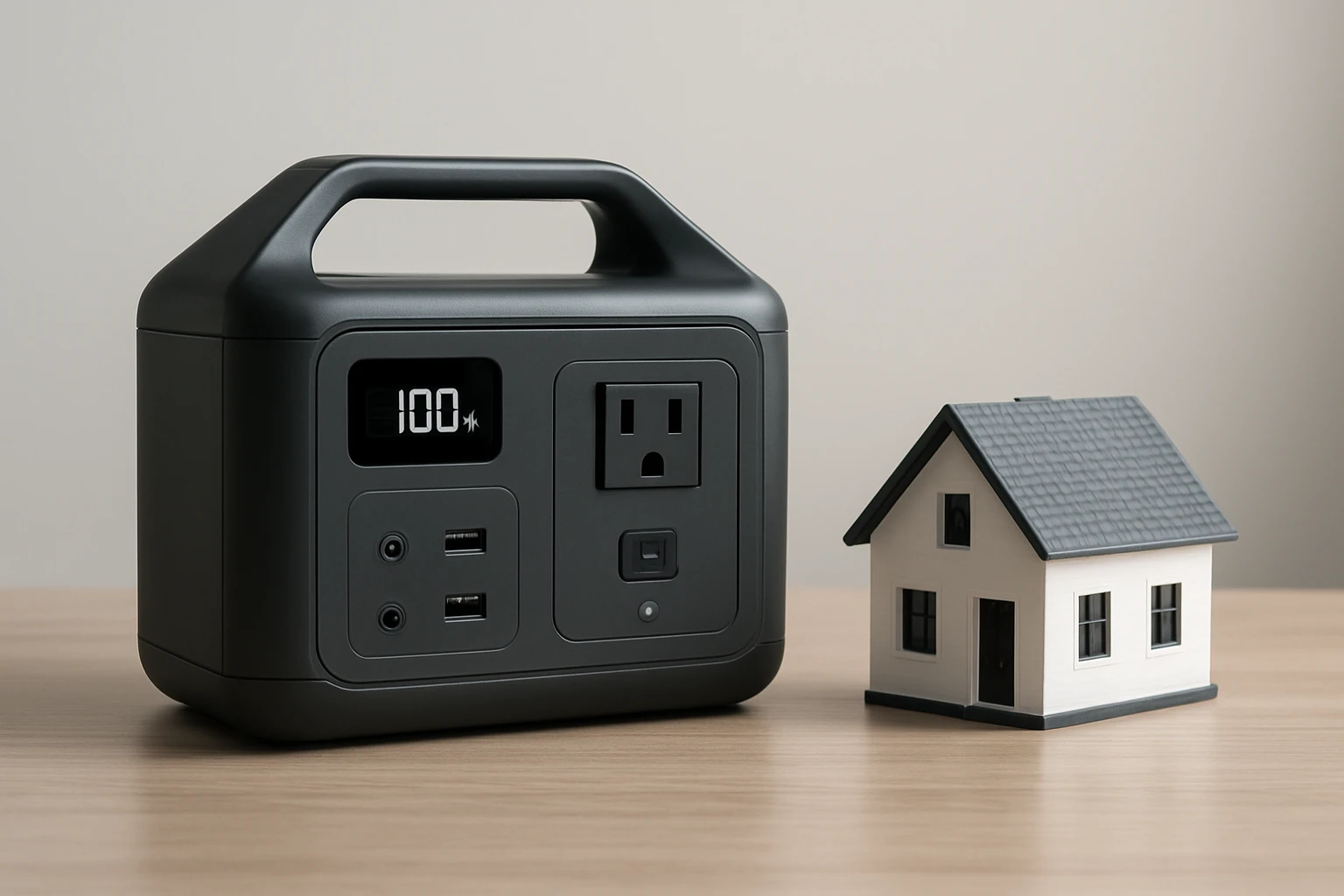
Homeowner Insurance for Portable Power Stations: Complete Guide
Introduction
Portable power stations have become essential tools for homeowners seeking reliable backup electricity during outages, storms, or remote work situations. This guide explains how homeowner insurance policies address these devices, what coverage options exist, and how to file successful claims. Readers will learn the fundamentals of insurance for backup power, compare popular models, and receive actionable best‑practice tips to protect their investment.
By the end of this article, one will understand the interplay between personal property coverage, endorsements, and specialized equipment riders. The information presented balances theoretical knowledge with practical product recommendations, ensuring that even readers who do not purchase a power station gain valuable insight into insurance considerations.
Background and Context
Homeowner insurance traditionally covers the structure of a dwelling and its personal belongings against perils such as fire, theft, and certain natural disasters. Portable power stations fall under the category of personal property, but insurers may treat them differently depending on their value, usage, and whether they are considered essential safety equipment. Understanding these nuances is critical for homeowners who rely on devices like the Jackery Explorer 300 or the Anker SOLIX C1000 for emergency power.
Insurance policies often include a personal property limit that caps the total payout for all belongings. High‑value power stations may exceed this limit, prompting the need for a scheduled personal property endorsement. Additionally, some insurers offer equipment breakdown coverage, which can protect against mechanical failure or accidental damage not covered by standard policies.
Regulatory environments also influence coverage. In regions prone to hurricanes or wildfires, insurers may require proof of adequate backup power for certain claims. Therefore, homeowners should evaluate both the financial and functional aspects of their power stations when selecting insurance options.
Key Insurance Concepts for Portable Power Stations
Understanding the following concepts will help homeowners navigate coverage decisions effectively.
- Actual Cash Value (ACV) vs. Replacement Cost: ACV policies reimburse the depreciated value of the equipment, while replacement cost policies cover the price of a new, comparable unit.
- Scheduled Personal Property Endorsement: This rider lists high‑value items individually, often raising the coverage limit and providing replacement‑cost protection.
- Equipment Breakdown Coverage: Protects against sudden mechanical or electrical failure, which can be especially relevant for lithium‑ion battery systems.
- Perils Covered: Typical policies cover fire, lightning, windstorm, and theft, but may exclude flood or earthquake unless added through separate endorsements.
When evaluating a policy, one should verify whether the insurer recognizes portable power stations as essential emergency equipment. Some carriers offer discounts for devices that include safety features such as pure sine wave output, which reduces the risk of damage to connected appliances.
Product Recommendations Integrated with Insurance Strategies
Choosing a power station that aligns with insurance considerations can reduce premiums and simplify claims. The following products illustrate how specific features influence coverage.
Jackery Explorer 300
The Jackery Explorer 300 provides a 293Wh lithium‑ion battery, two pure sine wave AC outlets, and a 60W USB‑C PD port that can recharge the unit in as little as two hours. Its lightweight design (7.1 lb) makes it ideal for camping and emergency kits.
Insurance implications include:
- Value Assessment: At a moderate price point, the unit typically falls within standard personal property limits, reducing the need for a scheduled endorsement.
- Safety Features: Pure sine wave output minimizes the risk of damage to sensitive electronics, a factor insurers may view favorably.
- Compatibility with Solar: The ability to connect to the Jackery SolarSaga 100 enhances off‑grid resilience, potentially qualifying the system for equipment‑breakdown riders focused on renewable energy assets.
For more details, visit the product page: Jackery Explorer 300.
Anker SOLIX C1000
The Anker SOLIX C1000 Gen 2 delivers 2,000 W continuous (3,000 W peak) output from a 1,024 Wh LiFePO4 battery, and it recharges fully in 49 minutes via HyperFlash technology. It includes ten ports, a 10 ms UPS backup, and a robust 10‑year InfiniPower warranty.
Insurance considerations for this higher‑value unit ($428.99, 4.6/5 rating) include:
- Scheduled Coverage: Because the price exceeds typical personal property thresholds, homeowners should add a scheduled endorsement to ensure replacement‑cost reimbursement.
- Battery Chemistry: LiFePO4 cells are less prone to thermal runaway than traditional lithium‑ion, which may lower the risk profile for insurers.
- Warranty and Longevity: A 10‑year warranty signals durability, potentially reducing the likelihood of equipment‑breakdown claims.
Explore the product further: Anker SOLIX C1000.
Comparison and Selection Guide
When selecting a portable power station for insurance purposes, evaluate the following criteria:
| Criterion | Jackery Explorer 300 | Anker SOLIX C1000 |
|---|---|---|
| Battery Capacity | 293 Wh | 1,024 Wh |
| Continuous Output | 300 W | 2,000 W (3,000 W peak) |
| Recharge Time (Wall) | 2 hrs for 80 % | 49 min (1,600 W) |
| Solar Compatibility | Jackery SolarSaga 100 (optional) | Up to 600 W solar, 1.8 hr full charge |
| Weight | 7.1 lb | Approx. 22 lb (estimated) |
| Price | Not listed (generally under $400) | $428.99 |
| Rating | Not provided | 4.6/5 (902 reviews) |
Homeowners seeking a lightweight, budget‑friendly solution may prefer the Jackery Explorer 300, especially if they already own compatible solar panels. Those requiring higher power for home backup, such as running a refrigerator or multiple tools, will find the Anker SOLIX C1000 more suitable, albeit with a higher insurance premium due to its value.
Best Practices & Tips
To maximize insurance benefits and protect portable power stations, follow these recommendations.
- Document the Equipment: Keep receipts, photographs, and serial numbers in a safe place. This documentation simplifies claim verification.
- Update Your Policy Annually: As you add or upgrade power stations, adjust coverage limits or endorsements accordingly.
- Store Units Properly: Keep the devices in a dry, temperature‑controlled environment when not in use to reduce the risk of damage that could be deemed neglect.
- Maintain Service Records: For units with warranties, retain service logs. Insurers often request proof of regular maintenance for equipment‑breakdown claims.
- Bundle with Home Security: Some insurers offer discounts when backup power devices are part of a broader home safety system, including smoke detectors and surge protectors.
Additionally, consider registering the product with the manufacturer’s warranty portal. Registration can provide proof of ownership and may be required for certain claim types.
Frequently Asked Questions
1. Does standard homeowner insurance cover portable power stations?
Typically, standard personal property coverage includes portable power stations, but only up to the policy’s overall limit and at actual cash value. For higher‑priced units, a scheduled endorsement is advisable.
2. What is the difference between ACV and replacement cost for these devices?
Actual cash value reimburses the depreciated amount based on age and condition, whereas replacement cost provides funds to purchase a new, comparable model regardless of depreciation.
3. Can I claim damage caused by a power surge from my station?
Damage caused by a power surge may be covered under equipment‑breakdown or surge protection endorsements, provided the surge originated from the insured device and not an external source.
4. How does solar compatibility affect insurance?
Solar panels themselves often require separate coverage. However, a power station that integrates solar charging may be viewed as a renewable energy asset, potentially qualifying for specialized endorsements.
5. Are there discounts for having a backup power station?
Some insurers offer premium reductions for homes equipped with emergency power solutions, especially when the device includes safety features such as pure sine wave output and built‑in UPS functionality.
6. What should I do immediately after a loss?
Secure the damaged unit, photograph the scene, contact your insurer to initiate the claim, and provide all documentation, including purchase receipts and maintenance records.
7. Is LiFePO4 battery chemistry safer for insurance purposes?
LiFePO4 batteries have a lower risk of thermal runaway compared to traditional lithium‑ion cells, which can result in lower risk assessments and potentially lower premiums.
Conclusion
Portable power stations like the Jackery Explorer 300 and Anker SOLIX C1000 provide essential resilience for homeowners facing power disruptions. Understanding insurance terminology, selecting appropriate endorsements, and maintaining proper documentation ensure that these valuable assets are protected financially. By applying the best‑practice tips and leveraging the comparison guide, homeowners can make informed decisions that balance cost, capability, and coverage.
Products Featured in This Guide
Jackery Explorer 300
Price: Not listed
Rating: Not provided
Featured because it offers a lightweight, affordable backup solution with pure sine wave AC outlets and rapid 2‑hour wall charging, making it suitable for standard homeowner policies.
Anker SOLIX C1000
Price: $428.99
Rating: 4.6/5 (902 reviews)
Featured because its high capacity, rapid 49‑minute recharge, and robust LiFePO4 battery make it a premium choice that often requires scheduled personal property endorsement for full coverage.