Introduction
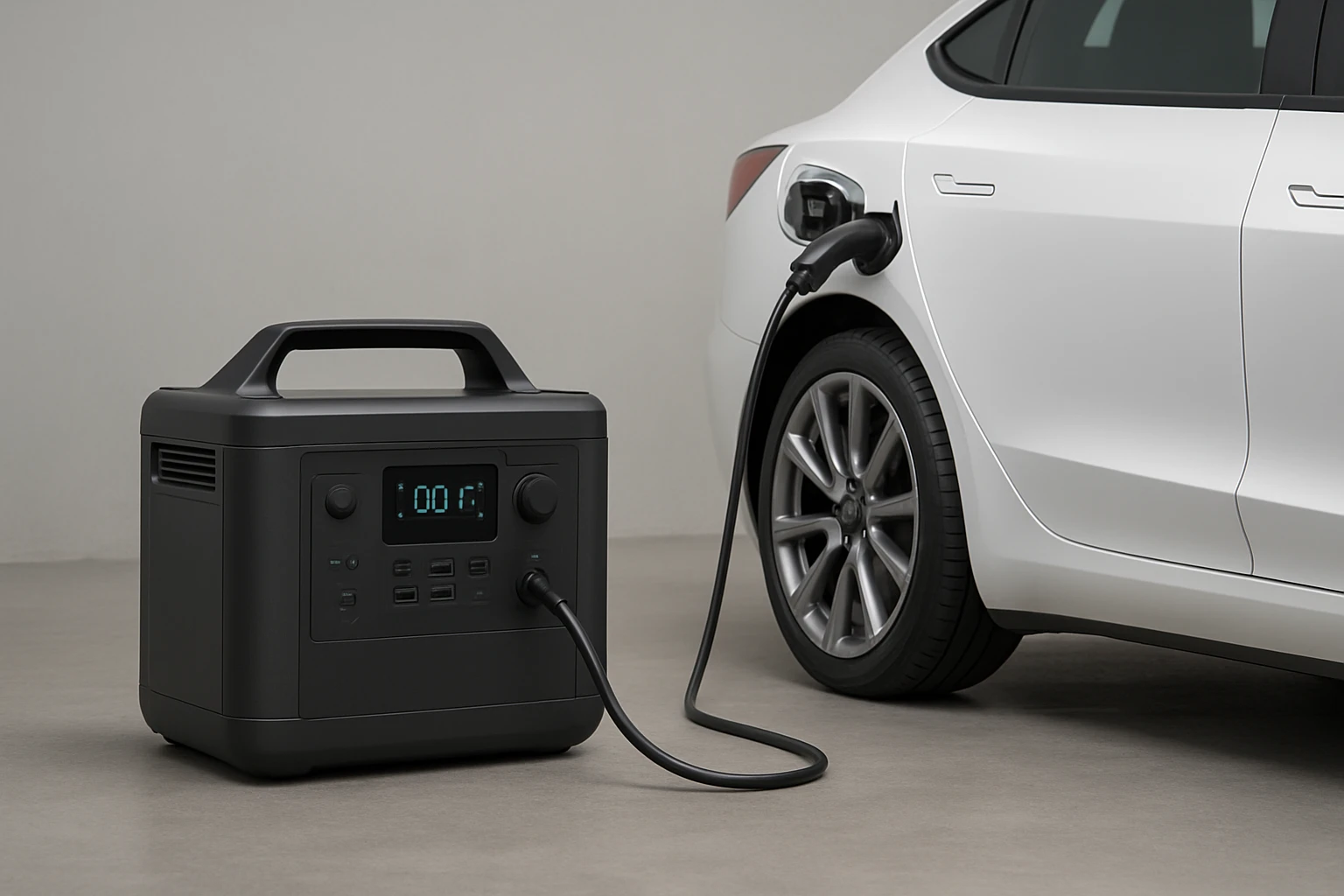
This guide explains how to charge an electric vehicle (EV) using a portable power station. One will discover why a portable power station can serve as a reliable backup during outages, on road trips, or at remote work sites. The instructions are designed for drivers who already own an EV and possess basic electrical knowledge. By following each step, one can safely deliver power to an EV without compromising battery health or personal safety.
Portable power stations provide clean, pure‑sine‑wave electricity, which is essential for preserving the long‑term health of lithium‑ion vehicle batteries. They also enable charging in locations without grid access, such as campsites, RV parks, or disaster‑affected neighborhoods. The guide balances technical depth with practical advice, ensuring that readers can act confidently.
What You’ll Need
- Compatible portable power station (see product recommendations below)
- EV charging cable that matches the vehicle’s inlet (typically Type 1 or Type 2)
- Appropriate adapters for AC to DC conversion if the power station does not provide a dedicated EV outlet
- Personal protective equipment: insulated gloves and safety glasses
- Smartphone or tablet with the Anker app for monitoring (optional but recommended)
Step 1: Verify EV Compatibility
Before connecting any external power source, confirm that the EV accepts Level 1 (120 V) or Level 2 (240 V) AC charging. Most passenger EVs support Level 1 charging via a standard household outlet, while larger battery packs benefit from Level 2. Review the vehicle’s manual to identify the maximum allowable charging current and voltage. This information determines which portable power station can meet the required power draw without exceeding its inverter capacity.
If the EV requires a 240 V input and the chosen power station only supplies 120 V, an appropriate step‑up converter must be employed. However, using a power station that natively delivers the required voltage simplifies the setup and reduces conversion losses.
Step 2: Choose the Appropriate Portable Power Station
The two Anker models discussed in this guide address different charging scenarios. For modest charging needs—such as topping off a vehicle overnight or providing emergency power for a low‑draw EV—the Anker SOLIX C300 is an excellent choice. It delivers 300 W continuous output (600 W surge) and stores 288 Wh of energy. Its 140 W USB‑C fast‑charging ports also allow simultaneous charging of personal devices.
Key specifications of the C300 include:
- Price: $249.99
- Rating: 4.6/5.0 (1,805 reviews)
- Three AC outlets (300 W total), one 120 W car socket, and multiple USB‑C/USB‑A ports
- LiFePO4 battery chemistry for 3,000 cycles and 10‑year lifespan
- Recharge to 80 % in 50 minutes via wall outlet
For higher‑power applications—such as charging a larger battery pack, running a home backup while the EV charges, or supporting multiple devices simultaneously—the Anker SOLIX C1000 Gen 2 is more suitable. It provides 2,000 W continuous output (3,000 W peak) and a 1,024 Wh LiFePO4 battery, allowing faster replenishment of an EV’s state of charge.
Key specifications of the C1000 Gen 2 include:
- Price: $469.99
- Rating: 4.6/5.0 (855 reviews)
- Ten output ports, including high‑current AC outlets and USB‑C PD ports
- Ultra‑fast 49‑minute full recharge via HyperFlash (1,600 W input)
- 10 ms UPS switchover for uninterrupted power to critical devices
Select the model that matches the EV’s charging power requirement and the expected duration of use. For a typical passenger EV that draws 7–10 kW at Level 2, the C1000 Gen 2 can provide a meaningful supplemental charge, whereas the C300 is best suited for Level 1 scenarios.
Step 3: Connect the Power Station to the EV
Begin by positioning the power station on a stable, level surface near the vehicle. Ensure adequate ventilation; both Anker models operate quietly (approximately 25 dB for the C300) and generate minimal heat.
Next, attach the EV charging cable to the power station’s AC outlet. If the power station supplies a 120 V outlet and the EV requires 240 V, insert a certified step‑up converter between the outlet and the EV cable. Verify that the combined load does not exceed the power station’s continuous rating. For example, when using the C300, limit the EV draw to 300 W to avoid inverter overload.
Secure the connection, then unlock the EV’s charging port according to the manufacturer’s procedure. Initiate charging from the vehicle’s dashboard or mobile app. The power station will begin supplying power, and the Anker app (if installed) will display real‑time voltage, current, and battery state of charge.
Step 4: Monitor the Charging Process
Continuous monitoring ensures safe operation and prevents over‑discharge of the portable power station. The Anker app provides visual indicators for input power, output load, and internal temperature. Keep the output load below 80 % of the station’s rated capacity for prolonged sessions; this practice extends battery life and reduces thermal stress.
For the C300, a typical Level 1 charge (120 V, 12 A) will draw approximately 1.44 kW·h per hour, allowing roughly two hours of charging before the internal battery depletes. The C1000 Gen 2, with its larger capacity, can sustain Level 2 charging (240 V, 8 A) for several hours, delivering up to 1.9 kW·h per hour of EV charge.
If solar panels are available, connect a compatible Anker 100 W or 60 W solar panel to the power station’s input port. Solar recharging can extend operating time, especially in remote locations. Remember that the C300 is not compatible with Anker SOLIX PS30 panels; use only the recommended 100 W or 60 W panels.
Step 5: Safely Disconnect
When the desired state of charge is reached, stop the charging session from the vehicle’s interface. Allow the EV to complete its internal shutdown sequence before unplugging the cable. Disconnect the EV cable from the power station, then turn off the power station using its main power button.
Store the power station in a dry, temperature‑controlled environment. If the unit will not be used for an extended period, maintain a charge level of 50‑70 % to preserve battery health. The LiFePO4 chemistry used in both Anker models tolerates deep discharge better than traditional lithium‑ion cells, but regular full‑cycle depletion should still be avoided.
Tips & Pro Tips
- Always verify that the power station’s inverter rating exceeds the EV’s instantaneous draw.
- Use the dedicated AC outlets rather than the car socket for EV charging to ensure stable voltage.
- When operating in hot climates, place the power station in shade to maintain optimal internal temperature.
- Utilize the Anker app’s TOU (time‑of‑use) mode to schedule charging during off‑peak electricity rates if the station is connected to grid power.
- For extended trips, carry a spare 100 W solar panel; it can replenish up to 80 % of the C300’s capacity in a sunny afternoon.
Troubleshooting
Problem: Power station shuts down during charging.
Solution: Verify that the total load does not exceed the continuous rating. Reduce the EV’s charging current or disconnect auxiliary devices.
Problem: The app loses connection to the power station.
Solution: Ensure the device running the app is within Bluetooth range (typically <10 m). Remove obstacles such as walls or metal objects that may interfere with the signal.
Problem: Solar input is lower than expected.
Solution: Check panel orientation, clean the panel surface, and confirm that the solar panel model is compatible (use only Anker 100 W or 60 W panels with the C300).
Conclusion
Charging an EV with a portable power station offers flexibility, resilience, and independence from the grid. By assessing vehicle requirements, selecting the appropriate Anker power station, and following safe connection and monitoring procedures, one can reliably charge an EV in a variety of environments. The steps outlined in this guide empower drivers to respond to power outages, embark on off‑grid adventures, and maintain mobility without compromising battery health.
Remember to monitor load, keep the station well‑ventilated, and use the Anker app for real‑time insights. With the right tools, portable EV charging becomes a practical reality.
Products Mentioned in This Guide
Frequently Asked Questions
Can a portable power station fully charge an electric vehicle?
Most portable stations can provide only a limited kilowatt output, so they are best for topping up or emergency charging rather than a full charge.
What type of cable is required to connect a portable power station to an EV?
Use an EV charging cable that matches your vehicle’s inlet (Type 1 or Type 2) and ensure the station’s outlet can accommodate it or use an appropriate adapter.
Is a pure‑sine‑wave output necessary for EV charging?
Yes, pure‑sine‑wave power protects the vehicle’s lithium‑ion battery and ensures efficient, safe charging.
How do I know if my portable power station is compatible with my EV?
Check the station’s AC output voltage (typically 120 V or 240 V), wattage rating, and connector type against your EV’s charging specifications.
Can I use a portable power station during a power outage to charge my EV?
Yes, as long as the station is fully charged and rated for the required power, it can serve as a reliable backup charger during outages.