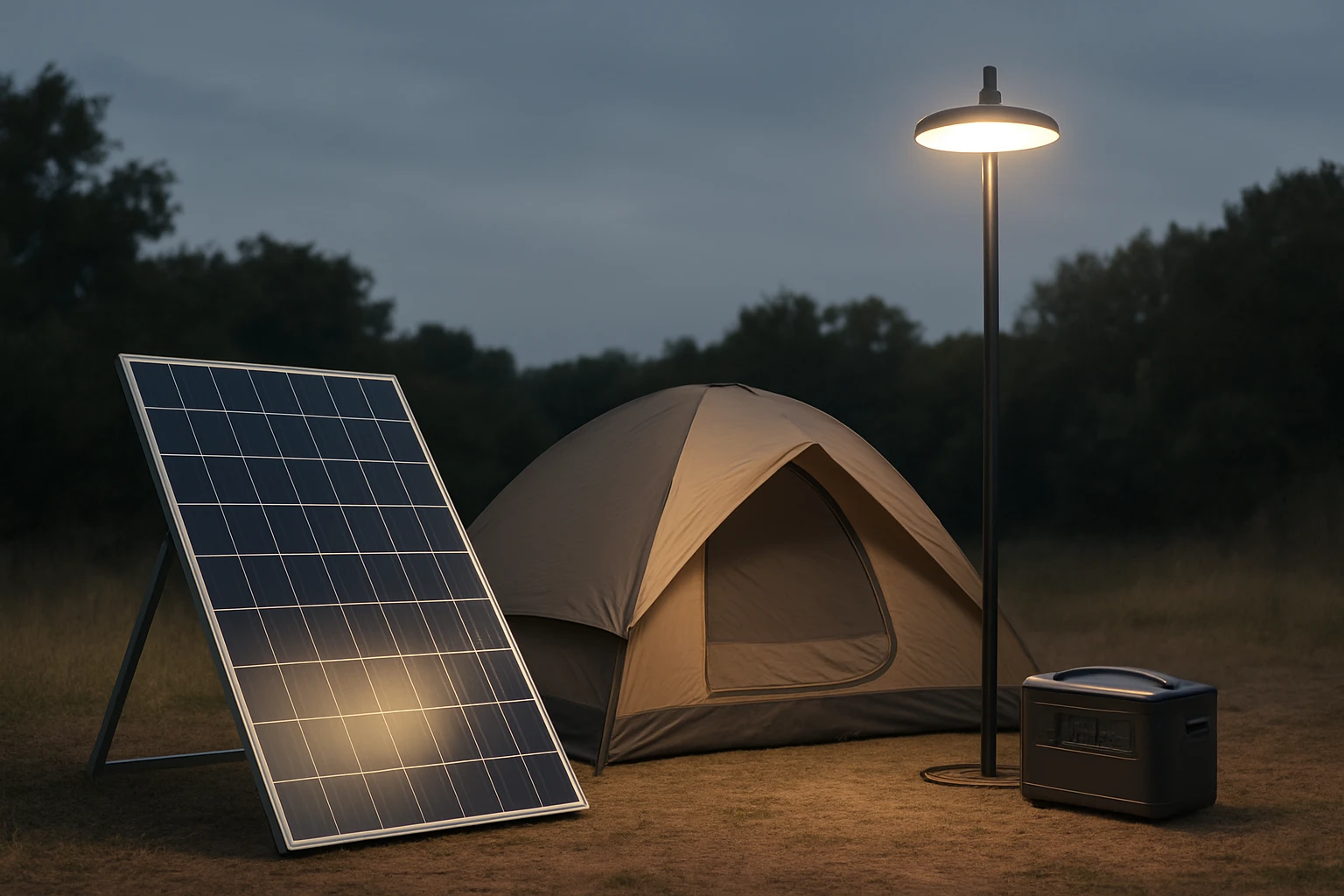
How to Design a Solar-Powered Campsite Lighting System: Step-by-Step Guide to Energy-Efficient Off-Grid LED Lighting
One who ventures into the wilderness often discovers that reliable illumination can transform a modest campsite into a comfortable refuge. Understanding the principles of solar energy, battery storage, and LED efficiency enables the creation of a lighting system that operates without grid connection. This guide will demonstrate how to assess power needs, select appropriate solar tools, and install a resilient network of lights for any outdoor adventure. By following each step, the reader will gain confidence to design a system that reduces fuel consumption and enhances safety.
What You'll Need
- Solar panels or solar‑charged lanterns (e.g., Otovoda Solar Camping Lantern)
- Inflatable or collapsible lanterns for large‑area lighting (e.g., BILTRTE Inflatable Solar Lantern)
- String lights for ambient illumination (e.g., OOOLED Solar String Lights)
- Portable power banks with solar charging capability (e.g., MPOWERD Luci Solar String Lights)
- Mounting hardware such as hooks, magnets, and rope
- Basic tools including wire cutters, electrical tape, and a multimeter
Step 1: Assess Lighting Requirements and Site Layout
The first task is to determine the number of illumination zones required for cooking, sleeping, and socializing. One should sketch a simple map of the campsite, marking tent locations, cooking area, and any pathways that need safety lighting. Estimating the watt‑hour demand for each zone helps to size the solar battery capacity and select appropriate fixtures. For example, a 10‑watt LED lamp operating for eight hours consumes 80 watt‑hours, which guides the choice of a 3600 mAh power bank such as the Otovoda Lantern.
Step 2: Choose Solar Collection Method and Position Panels
Selecting an efficient solar collector is critical because it determines how quickly the battery will recharge during daylight. One can use dedicated fold‑out solar panels, but many portable lanterns incorporate built‑in panels that simplify deployment. The Otovoda Solar Camping Lantern features three foldable solar panels that can be angled up to 90 degrees, maximizing sunlight capture and reducing charging time. Position the panels on a south‑facing surface free of shade, and secure them with the lantern’s built‑in hook or magnetic base for stability.
Step 3: Install Primary Lighting Fixtures
Primary lighting should provide bright, directional illumination for tasks such as cooking and gear assembly. The Otovoda Solar Camping Lantern offers seven versatile lighting modes, including three headlight settings and four side‑light configurations, making it suitable for both focused beams and wide‑area coverage. Its 3600 mAh battery also functions as an emergency power bank, allowing campers to charge smartphones while the lantern supplies light. At a price of $18.89 with a 4.6‑star rating from 28 reviews, it delivers high value for essential campsite lighting.
Step 4: Add Ambient Lighting with String Lights
Ambient lighting creates a welcoming atmosphere for evening meals and social gatherings without overwhelming the eyes. The OOOLED Solar String Lights provide 35 feet of waterproof, shatter‑proof LED bulbs that can be dimmed via a remote controller, allowing gradual light transitions. Each bulb operates at 2700 K, delivering a warm glow reminiscent of traditional campfires. Priced at $26.99 and rated 4‑star by over one thousand reviewers, these lights combine durability with aesthetic appeal, and their IP65 rating ensures reliable performance in rain or dew.
Step 5: Deploy Inflatable Lantern for Large‑Area Illumination
When a campsite includes a spacious tent or a communal gathering area, an inflatable lantern can illuminate a broad surface with minimal weight. The BILTRTE Inflatable Solar Lantern inflates to a 24‑inch tube in five seconds, providing a lighting area four times larger than conventional lanterns. Its dual charging options—solar panels and USB‑C fast charging—ensure continuous operation, while the 2000 mAh battery delivers up to 12 hours of light. At $25.99 with a 4.4‑star rating from 208 reviews, it offers an excellent balance of portability and brightness for large‑scale lighting needs.
Step 6: Integrate Portable Power Bank and Backup Solutions
Reliable power storage is essential for off‑grid lighting, especially during cloudy days or extended stays. The Otovoda Lantern already includes a power bank function, but an additional dedicated charger such as the MPOWERD Luci Solar String Lights can provide redundancy. Luci’s built‑in 2000 mAh lithium‑ion battery supplies up to 20 hours of illumination and can charge mobile devices via USB, offering a dual‑purpose solution. With a price of $38.73 and a 4.5‑star rating from over four thousand reviewers, Luci delivers long‑lasting light and emergency charging capability.
Step 7: Connect Fixtures Safely and Test the System
After positioning all lighting components, one should connect them using weather‑resistant wiring and secure connections with electrical tape. Verify that each lantern’s smart‑memory function restores the last used mode, reducing the need for manual adjustments after power cycles. Use a multimeter to confirm that the solar panels are delivering the expected voltage, typically around 5 V for USB‑compatible devices. Conduct a night‑time test to ensure that all zones illuminate as intended and that backup power banks activate when solar input diminishes.
Tips & Pro Tips
- Orient solar panels toward true south (or north in the Southern Hemisphere) and adjust the angle seasonally for optimal sun exposure.
- Utilize the magnetic base on the Otovoda Lantern to attach it to metal camping tables, freeing hands for cooking tasks.
- Inflate the BILTRTE lantern inside a protective mesh to prevent accidental punctures from sharp branches.
- When using string lights, wrap the cord around a sturdy pole rather than tying knots that could damage the waterproof coating.
- Schedule a brief charging session each morning to maintain full battery capacity, especially during multi‑day excursions.
Troubleshooting
- Lantern does not turn on after sunset: Verify that the solar panel received sufficient sunlight; clean any dust from the panel surface and reset the smart‑memory mode.
- Power bank fails to charge devices: Check the USB output with a multimeter; if voltage is below 5 V, replace the internal battery or use an alternative charger such as the Luci power bank.
- String lights flicker or dim: Ensure the remote dimmer is set to a stable level and that the battery pack is fully charged; replace depleted batteries if necessary.
Conclusion
Designing a solar‑powered campsite lighting system requires careful assessment of illumination needs, strategic placement of solar collectors, and selection of reliable LED fixtures. By following the seven steps outlined above, one can assemble a flexible, energy‑efficient network that provides bright task lighting, gentle ambient glow, and emergency power backup. The recommended products—Otovoda Solar Camping Lantern, BILTRTE Inflatable Solar Lantern, OOOLED Solar String Lights, and MPOWERD Luci Solar String Lights—offer proven performance, durability, and value for a wide range of camping scenarios. Implement these practices to enjoy safe, sustainable illumination on every outdoor adventure.
Products Mentioned in This Guide
Frequently Asked Questions
What factors should I consider when calculating the power needs for a solar campsite lighting system?
Estimate total watt-hours by adding the LED wattage of each light and the expected usage hours, then include a safety margin for cloudy days.
How do I choose the right size solar panel for off‑grid campsite lighting?
Select a panel that can generate at least 1.5–2 times your daily energy consumption, based on its watt rating and average sunlight hours at your location.
What type of battery is best for storing solar energy for campsite lights?
Lithium‑iron‑phosphate (LiFePO4) batteries offer high cycle life, lightweight design, and safe temperature tolerance for outdoor use.
Can inflatable or collapsible lanterns be integrated with a solar panel system?
Yes, many inflatable lanterns have built‑in solar cells or can be connected to a portable panel and battery pack for continuous illumination.
How do I maintain a solar‑powered lighting setup to ensure reliable performance?
Keep panels clean of dust and debris, regularly check battery voltage, and store lights in a dry place when not in use.