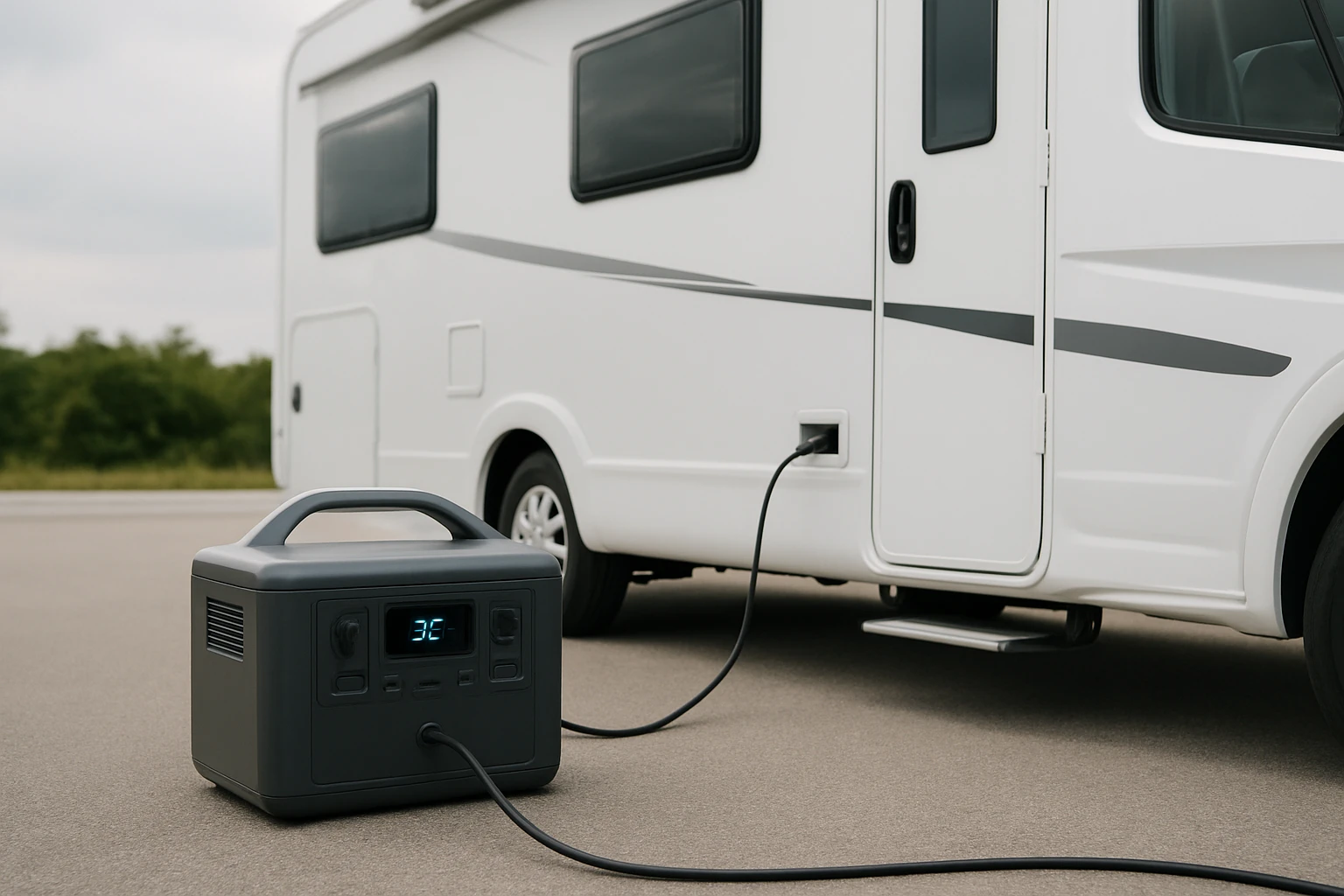
Introduction
One will discover how to connect a portable power station to an RV electrical system in a manner that maximises reliability and safety. The guide explains the required tools, the wiring sequence, and the protective measures that prevent damage to both the vehicle and the battery. By following the steps, the user can enjoy uninterrupted power for appliances, lighting, and electronic devices during travel or while parked. The knowledge gained also reduces dependence on noisy gasoline generators.
What You’ll Need
- Portable power station (recommended: Jackery Explorer 2000 v2 or Jackery Explorer 1000 v2)
- 12 V DC to AC inverter cable kit
- Ring terminal connectors, crimping tool, and heat‑shrink tubing
- Marine‑grade fuse block rated for the station’s maximum output
- Wire gauge appropriate for the expected current (typically 8 AWG for 2000 W loads)
- Multimeter for voltage verification
- Electrical tape, cable ties, and a drill with appropriate bits
- Safety glasses and insulated gloves
Step 1: Assess Power Requirements and Select the Appropriate Station
One should begin by calculating the total wattage of the RV appliances that will be powered simultaneously. Common loads include a refrigerator (≈150 W), LED lighting (≈20 W), a water pump (≈80 W), and a microwave (≈1200 W). Adding a safety margin of 20 percent ensures that the power station will not be overstressed. For full‑home backup, the Jackery Explorer 2000 v2 offers 2200 W continuous output and a 2042 Wh LiFePO4 battery, which comfortably covers the majority of RV loads while remaining portable.
The Explorer 2000 v2 is priced at $799.00, holds a 4.7‑star rating from 670 reviews, and weighs 39.5 lb, making it the lightest 2 kWh unit on the market. Its USB‑C PD 100 W port also allows rapid charging of personal devices without additional adapters. If the RV requires only modest power, the Jackery Explorer 1000 v2 provides 1500 W continuous output, 1070 Wh capacity, and a one‑hour fast‑charge capability, at a lower price point of $449.00 and a 4.7‑star rating from 3,164 reviews.
Step 2: Prepare the RV Battery Compartment
One must locate the RV’s auxiliary battery compartment, which typically houses a 12 V lead‑acid or AGM battery. The compartment should be cleaned of debris, and the battery terminals inspected for corrosion. Using a multimeter, verify that the battery voltage reads between 12.4 V and 12.8 V before proceeding.
Install a marine‑grade fuse block on the positive battery cable to protect the wiring from short circuits. The fuse rating should match the maximum current expected from the power station; for the Explorer 2000 v2, a 200 A fuse is appropriate, while the Explorer 1000 v2 can be protected with a 100 A fuse. Secure the fuse block with cable ties and ensure that all connections are tight.
Step 3: Connect the Power Station to the RV Battery
One should use a heavy‑gauge (8 AWG) cable to link the power station’s DC input to the RV battery’s positive terminal. Strip the cable ends, attach ring terminals, and crimp securely. Slide heat‑shrink tubing over each terminal before crimping to provide insulation against vibration.
Connect the negative side of the power station to the battery’s chassis ground using a short 6 AWG wire. This grounding step eliminates potential floating voltage that could damage sensitive electronics. Once the cables are in place, double‑check that the fuse block is positioned between the battery and the power station to guarantee over‑current protection.
Step 4: Integrate the AC Output with the RV’s Shore Power Inlet
One can install a dedicated AC inlet box near the RV’s existing shore power connector. This inlet will receive power from the station’s AC output ports. Use a three‑wire cable (hot, neutral, ground) sized for the station’s maximum AC output; 12 AWG is sufficient for 1500 W loads, while 10 AWG is recommended for the 2200 W output of the Explorer 2000 v2.
Connect the station’s AC output to the inlet using a plug‑in adapter that matches the station’s outlet type (typically NEMA 5‑15). Secure the inlet with screws and seal any gaps with silicone to prevent moisture ingress. After installation, test the inlet with a low‑power lamp to confirm correct polarity and grounding.
Step 5: Configure the Power Station’s Charging Modes
One should download the Jackery mobile app and pair it with the selected power station. The app enables selection of charging modes such as “Emergency Super Charging” for rapid replenishment after a power outage, or “Silent Charging” for low‑noise operation during nighttime. For RV use, the “Energy Efficiency” mode extends runtime by limiting the charge‑discharge cycles.
The Explorer 2000 v2 can reach 80 % charge in 66 minutes using AC fast charging, while the Explorer 1000 v2 achieves a full charge in one hour when the emergency mode is activated. Adjust the mode based on the available shore power source; if the campsite provides only 120 V at 15 A, the one‑hour charge is ideal.
Step 6: Verify System Operation and Safety
One must perform a comprehensive test before relying on the system during travel. Turn on the RV’s interior lights, then switch on a small appliance such as a fan. Use a multimeter to confirm that the voltage at the AC inlet remains stable between 115 V and 125 V.
Observe the power station’s LCD display for any error codes. The Explorer 2000 v2 includes a pass‑through charging feature that allows simultaneous battery discharge and recharge, which is useful when the RV is plugged into shore power while the station supplies backup to critical loads. Ensure that the station does not exceed its temperature limits; the built‑in smart temperature control will reduce fan speed if the internal temperature rises above 45 °C.
Tips & Pro Tips
- Always disconnect the RV battery before modifying wiring to avoid accidental short circuits.
- Use marine‑grade connectors and corrosion‑resistant terminals to extend the lifespan of the installation.
- When operating the station in a confined RV interior, enable the Silent Charging mode to keep noise below 30 dB.
- Consider adding a secondary small inverter for 12 V DC accessories that do not require AC power.
- Regularly inspect the fuse block and cable connections for signs of wear, especially after long trips.
Troubleshooting
Problem: The AC inlet does not supply power.
Solution: Verify that the power station is switched on and that the selected AC outlet is functional. Check the fuse rating and replace any blown fuse. Use a multimeter to confirm continuity through the inlet wiring.
Problem: The power station shuts down during high‑load operation.
Solution: Ensure that the total connected load does not exceed the station’s continuous rating (2200 W for the Explorer 2000 v2, 1500 W for the Explorer 1000 v2). Reduce the number of simultaneous appliances or upgrade to a higher‑capacity unit.
Problem: Excessive heat is detected on the station.
Solution: Activate the Silent Charging mode to lower fan speed, improve ventilation around the unit, and avoid placing the station in direct sunlight.
Conclusion
One now possesses a clear roadmap for integrating a portable power station into an RV electrical system, from assessing power needs to securing safe wiring and performing final checks. The recommended Jackery models deliver high capacity, rapid charging, and quiet operation, making them ideal companions for mobile living. By adhering to the safety practices outlined, the user can enjoy reliable power for appliances, entertainment, and emergency situations without relying on noisy fuel‑based generators.
Products Mentioned in This Guide
Frequently Asked Questions
What tools are required to connect a portable power station to an RV?
You need a 12 V DC‑to‑AC inverter cable kit, ring terminals, a crimping tool, heat‑shrink tubing, a marine‑grade fuse block, appropriate‑gauge wire (e.g., 8 AWG), and a multimeter.
Why is a marine‑grade fuse block important for the installation?
It protects the RV’s wiring and the power station from overloads and short circuits, ensuring safe operation under the station’s maximum output.
What wire gauge should I use for a 2000 W load when wiring to the power station?
Typically 8 AWG copper wire is recommended for a 2000 W load to handle the current without excessive voltage drop.
Can I use the Jackery Explorer 1000 v2 instead of the Explorer 2000 v2?
Yes, the Explorer 1000 v2 works for lower‑power setups, but ensure the inverter cable kit and fuse block match its output specifications.
How does integrating a portable power station improve RV power reliability?
It provides clean, quiet electricity for appliances and devices, reducing reliance on noisy gasoline generators and minimizing the risk of power loss while traveling or parked.