Introduction
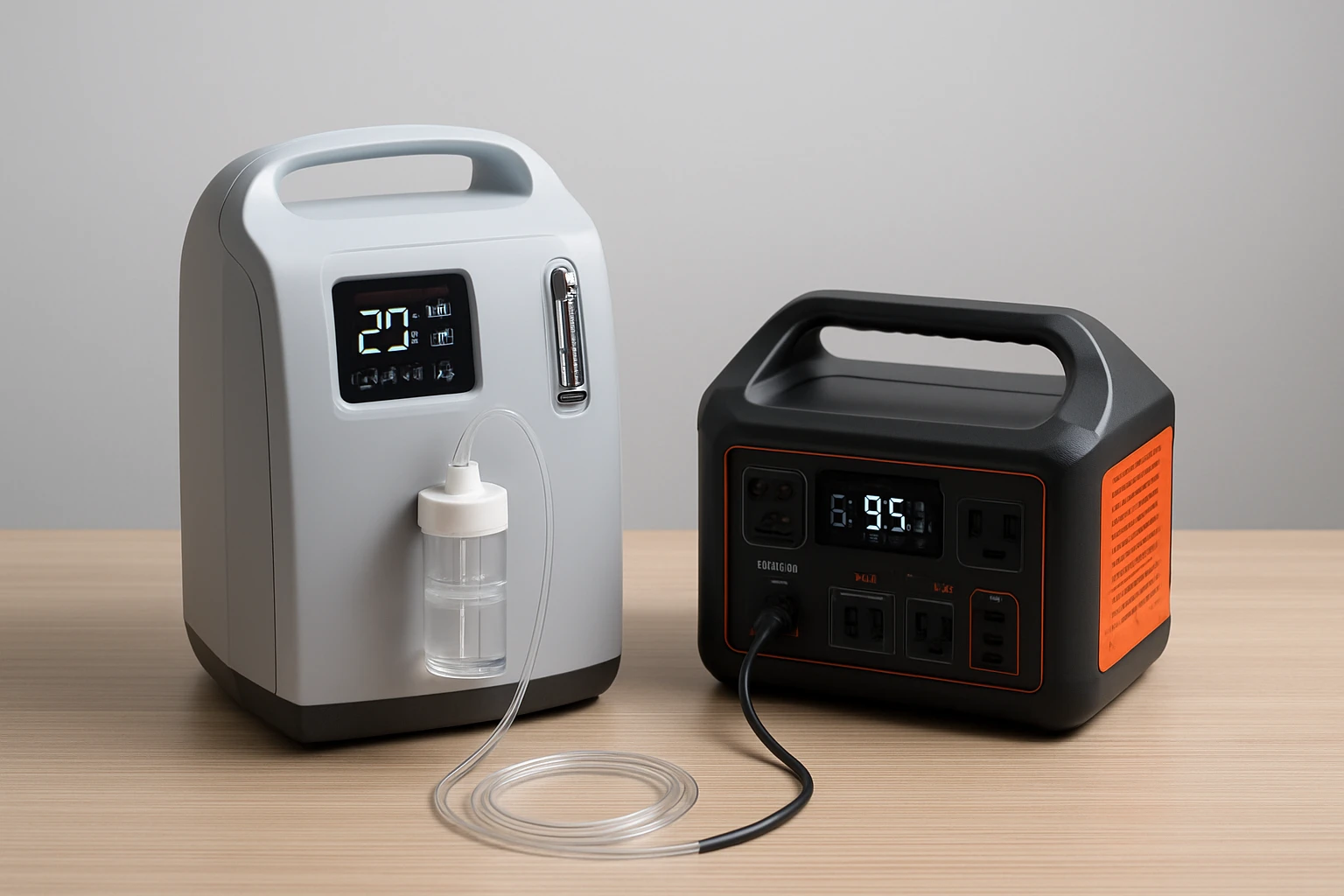
This guide explains how to power a portable oxygen concentrator using a portable power station in a safe and reliable manner. Readers will learn how to assess power requirements, select an appropriate power station, calculate expected runtime, and perform a secure setup. The information is valuable for individuals who travel, camp, or require emergency backup power for medical devices. By following the step‑by‑step instructions, one can maintain continuous oxygen delivery without compromising safety.
What You’ll Need
- Portable power station (e.g., Anker SOLIX C300 or Jackery Explorer 300)
- AC power supply compatible with the oxygen concentrator (e.g., SeQual Eclipse 5 Charger)
- Oxygen tubing support accessories (e.g., Oxygen Tube Support Pack)
- Standard household outlet or compatible solar panel (optional)
- Multimeter or power monitor for verification
Step 1: Assess the Power Consumption of the Oxygen Concentrator
The first task is to determine the wattage that the oxygen concentrator draws during normal operation. Most portable concentrators specify a power range between 30 W and 80 W; the SeQual Eclipse 5, for example, typically consumes around 45 W. Consult the user manual or manufacturer specifications to obtain an exact figure. Recording this value is essential for accurate battery sizing and runtime estimation.
Step 2: Calculate Required Battery Capacity and Expected Runtime
Battery capacity is expressed in watt‑hours (Wh). To estimate runtime, divide the battery capacity by the concentrator’s wattage and apply a safety factor of 0.8 to account for conversion losses. For instance, a 288 Wh battery such as the Anker SOLIX C300 would provide approximately (288 Wh × 0.8) / 45 W ≈ 5.1 hours of continuous operation. The Jackery Explorer 300 offers 293 Wh, yielding a similar runtime of about 5.2 hours.
Step 3: Choose a Portable Power Station that Matches Your Needs
Both the Anker SOLIX C300 and the Jackery Explorer 300 are reputable options, yet they differ in charging speed, weight, and port configuration. The Anker model provides 140 W two‑way USB‑C ports, three AC outlets, and a rapid 50‑minute wall‑recharge to 80 percent, making it ideal for users who require fast turnaround between trips. It is priced at $249.99 and holds a 4.6‑star rating from 1,803 reviews.
The Jackery Explorer 300, priced at $189.00 with a 4.6‑star rating from 11,036 reviews, is lighter at 7.1 lb and includes two pure sine‑wave AC outlets, a 60 W USB‑C PD port, and pass‑through charging capability. Its ability to recharge from a solar panel (Jackery SolarSaga 100) adds flexibility for off‑grid scenarios. Selecting between them depends on whether rapid wall charging or lightweight portability is the priority.
Step 4: Acquire the Correct AC Adapter for the Concentrator
The SeQual Eclipse 5 requires a stable AC source that can simultaneously charge its internal battery. The SeQual Eclipse 5 Charger delivers this functionality by providing a dedicated AC outlet and charging circuitry in a single unit. It is priced at $174.99 and carries a 4.2‑star rating from seven reviews. Using this charger ensures that the concentrator receives pure sine‑wave power, which protects sensitive medical electronics.
Step 5: Prepare Tubing and Support Accessories
Properly supported oxygen tubing prevents kinks that could restrict airflow. The Oxygen Tube Support Pack includes twenty PVC crimp straighteners that attach easily to the tubing without tools. Priced at $4.99 with a 4.4‑star rating from eleven reviews, this accessory is inexpensive yet highly effective. Install one support every 12 inches of tubing to maintain a smooth path for the oxygen stream.
Step 6: Connect the System and Perform a Safety Check
Begin by placing the power station on a stable, non‑conductive surface. Connect the AC outlet of the power station to the SeQual charger using a standard IEC cable. Next, plug the oxygen concentrator into the charger. Verify that the power station displays the correct input voltage (120 V AC) and that the charger indicates a stable charge. Use a multimeter to confirm that the output voltage remains within the concentrator’s specified range. Finally, engage the power station’s battery mode and observe the concentrator for uninterrupted operation.
Step 7: Deploy the Setup in Real‑World Scenarios
For camping, position the power station inside a waterproof container and connect a compatible solar panel, such as the 100 W Anker or Jackery SolarSaga, to extend runtime. In an emergency home setting, keep the power station near the main living area and ensure that the unit is fully charged before a power outage occurs. Regularly test the system every month to confirm battery health and charger functionality.
Tips & Pro Tips
- Always operate the power station in a well‑ventilated area; although the Anker SOLIX C300 emits only 25 dB, heat buildup can affect battery longevity.
- Utilize the built‑in LCD display to monitor remaining capacity; plan recharging before the battery drops below 20 % to avoid deep‑cycle stress.
- When using solar panels, align them toward the sun at a 30‑degree angle for optimal photovoltaic efficiency.
- Store the power station at ambient temperature; extreme cold can reduce effective capacity by up to 20 %.
- Consider purchasing a carrying strap for the Anker SOLIX C300, as the unit does not include one by default.
Troubleshooting
- Power station does not turn on: Verify that the AC input cable is securely connected and that the wall outlet supplies power. Reset the unit by holding the power button for ten seconds.
- Concentrator shuts down after a few minutes: Check that the power station is not in low‑battery protection mode; recharge to at least 30 % before use.
- Solar panel provides insufficient charge: Ensure that the panel is free of shading and that the MPPT controller is engaged. Use a higher‑wattage panel if ambient sunlight is weak.
- Charging cable missing from SeQual charger: Contact the seller for a replacement; operating the charger without the proper cable may void the warranty.
Conclusion
By following the steps outlined in this guide, one can safely power a portable oxygen concentrator using a reliable portable power station. Accurate sizing, appropriate accessories, and routine testing combine to provide uninterrupted oxygen therapy in camping, travel, or emergency situations. The recommended products—Anker SOLIX C300, Jackery Explorer 300, SeQual Eclipse 5 Charger, and Oxygen Tube Support Pack—offer proven performance and ease of use, ensuring confidence in critical medical equipment.
Products Mentioned in This Guide
Frequently Asked Questions
How do I determine the power requirements of my portable oxygen concentrator?
Check the device’s voltage and wattage label or manual, then match or exceed those specs with a power station’s AC output.
Can the Anker SOLIX C300 or Jackery Explorer 300 safely run a portable oxygen concentrator?
Yes, both provide pure sine‑wave AC output and sufficient wattage for most concentrators, but verify the concentrator’s exact watt draw first.
How long will a 300 Wh power station run a typical oxygen concentrator?
Divide the battery’s watt‑hours by the concentrator’s wattage (e.g., 300 Wh ÷ 40 W ≈ 7.5 hours) and factor in inverter efficiency.
What safety steps should I follow when connecting a power station to an oxygen concentrator?
Use a certified AC adapter, place the power station in a well‑ventilated area, avoid moisture, and monitor temperature during use.
Is a portable power station a reliable emergency backup for medical oxygen?
It provides short‑term backup during outages or travel, but always have a secondary power source or spare batteries for extended emergencies.