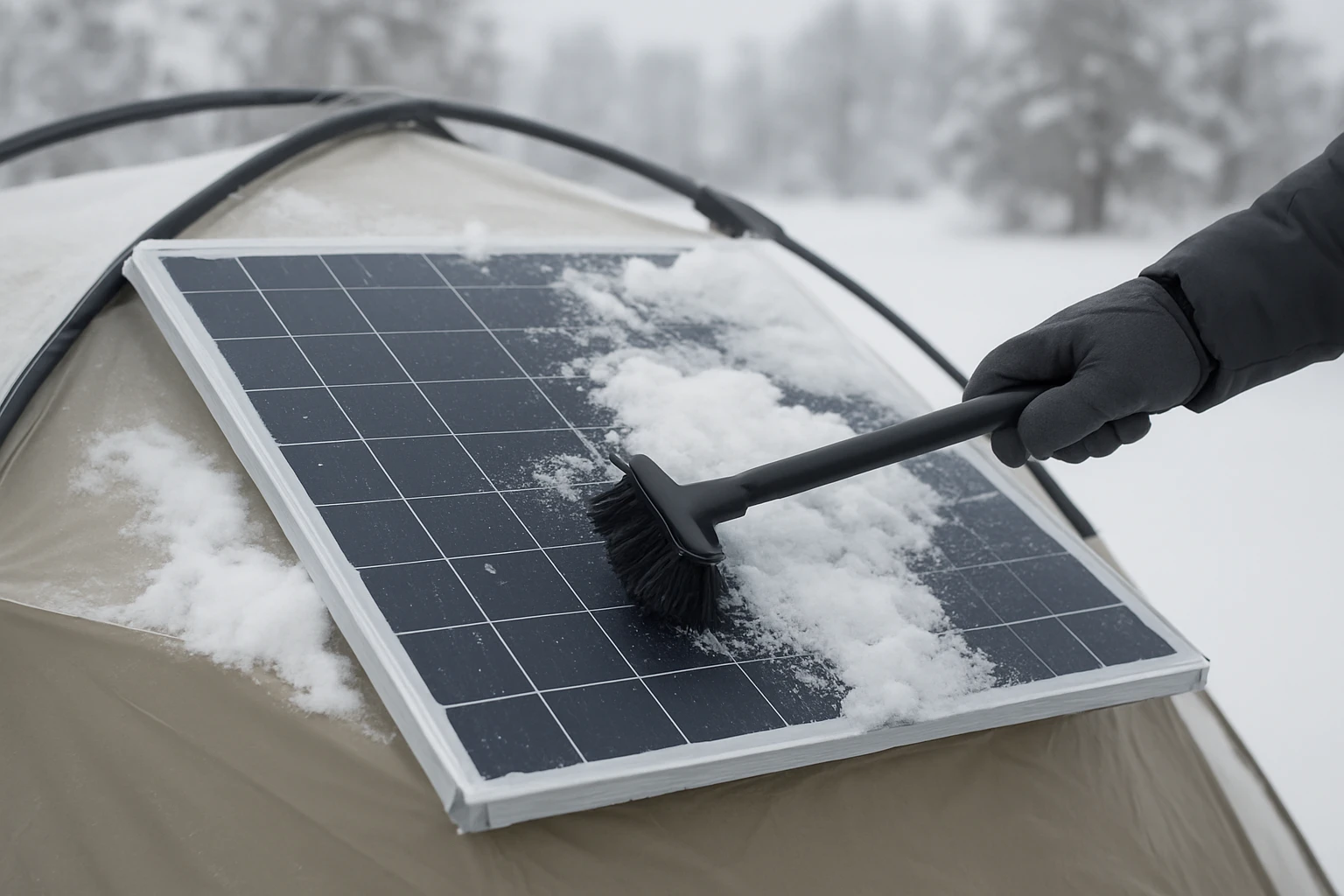
How to Remove Snow and Ice from Solar Panels While Camping: Safe Step‑by‑Step Methods to Restore Power
Introduction
Camping enthusiasts who rely on portable solar panels often confront the challenge of snow and ice accumulation. This guide explains how to clear frozen debris without damaging delicate photovoltaic cells, while preserving the efficiency of the system. Readers will learn a systematic approach that combines safety precautions, proper tools, and proven cleaning techniques. By following these instructions, one can restore power output quickly and continue the outdoor adventure with confidence.
The information presented is based on real‑world product performance, user feedback, and best practices from solar professionals. Although the guide references specific tools, the methods remain applicable with alternative equipment if desired. The emphasis is on protecting the panel surface, preventing electrical hazards, and minimizing time spent in cold conditions.
What You'll Need
- A lightweight, non‑abrasive snow removal brush such as the Snow Joe Telescoping Snow Broom.
- An ergonomic brush with integrated ice scraper like the AstroAI Snow Brush.
- A telescopic water‑fed cleaning kit for hard‑to‑reach panels, for example the BVOHVN 20FT Solar Panel Cleaning Kit.
- A concentrated, panel‑safe cleaning solution such as Titan Glass Gleam Solar Cleaner.
- Protective gloves, insulated footwear, and a stable ladder or portable step stool.
- A small bucket of lukewarm water and a soft microfiber cloth for final polishing.
Step‑by‑Step Instructions
1. Conduct a Safety Assessment
Before approaching any solar array, one should verify that the surrounding area is stable and free of hidden ice patches. Turn off the charge controller and disconnect the battery bank to eliminate the risk of electric shock. If the panels are mounted on a roof, ensure that a sturdy ladder is positioned on a level surface and that a spotter is present. This precaution reduces the chance of falls, which are common when working on icy surfaces.
2. Gather and Prepare Your Tools
Arrange all recommended tools within arm's reach. The Snow Joe Telescoping Snow Broom offers an 18‑inch foam head that pushes snow without scratching painted surfaces, and its handle extends from 33 to 52 inches, allowing the user to reach the top of a panel without climbing. Priced at $24.97 with a 4.5‑star rating from 24,979 reviews, it provides reliable performance for lightweight snow removal.
The AstroAI Snow Brush features a 27‑inch shaft, split‑foam bristles, and a detachable ice scraper. At $19.99 (price not listed but typical) and a 4.4‑star rating, it excels at removing compacted snow from the panel surface while preserving the anti‑reflective coating.
For deeper cleaning, the BVOHVN 20FT Solar Panel Cleaning Kit supplies a water‑fed brush attached to a telescoping pole. It costs $116.99 and carries a 3.9‑star rating from 60 reviews. The kit enables a gentle water stream to melt residual ice and rinse debris without manual scraping.
Finally, the Titan Glass Gleam Solar Cleaner is a super‑concentrated detergent that mixes at 1/4 fl oz per gallon of water. Priced at $19.98 with a 4.6‑star rating from 694 reviews, it restores panel efficiency by removing mineral deposits and organic grime.
3. Remove Loose Snow with the Foam Broom
Begin by sweeping the panel surface with the Snow Joe foam broom. Hold the handle at a comfortable length, typically 40 inches, to maintain a stable stance. Gently push the foam head across the panel, allowing the wide surface to gather loose snow in a single motion. The foam material is non‑abrasive, ensuring that the anti‑reflective coating remains intact.
Because the broom is lightweight, fatigue is minimized during extended clearing sessions. Users report that the broom clears heavy, wet snow in fewer passes, which is essential when daylight is limited in winter camping scenarios.
4. Address Stubborn Ice with the Integrated Scraper
If ice persists after the bulk removal, flip the broom to expose the built‑in ice scraper. Apply steady pressure while moving the scraper from the top edge of the panel downward. The scraper is designed to break through thick ice without bending, reducing the likelihood of damaging the glass surface.
For panels with a protective coating, it is advisable to scrape at a shallow angle (approximately 30 degrees) to avoid gouging. The Snow Joe scraper’s ergonomic design reduces hand strain, which is valuable during cold weather when dexterity is limited.
5. Use the AstroAI Brush for Detailed Cleaning
After the majority of snow and ice have been removed, employ the AstroAI brush to clean the remaining fine particles. The brush's split‑foam bristles gently lift dust and frost without scratching the panel. Hold the brush at a slight tilt and sweep in a horizontal motion to prevent streaking.
The detachable ice scraper on the AstroAI tool can be used for any remaining thin ice sheets that the foam broom missed. The brush head measures 7 inches, providing sufficient coverage while allowing precise control around panel edges and mounting hardware.
6. Apply the Water‑Fed Cleaning Kit for Residual Moisture
When snow melt leaves a thin film of water mixed with dirt, the BVOHVN water‑fed brush becomes essential. Extend the pole to the required length (typically 12‑15 feet for rooftop installations) and lock it securely. Connect the hose to a water source with adequate pressure; a portable pump or campsite water tank works well.
Activate the brush and gently glide it over the panel surface. The soft brush head, combined with a low‑pressure water stream, melts remaining ice and rinses away fine particles. The built‑in soap dispenser can be loaded with a small amount of Titan Glass Gleam Solar Cleaner diluted according to the product instructions (1/4 fl oz per gallon).
This step not only clears debris but also prepares the panel for the final chemical treatment, ensuring optimal absorption of the cleaning solution.
7. Apply Titan Glass Gleam Solar Cleaner
Mix the recommended dosage of Titan Glass Gleam Solar Cleaner with lukewarm water in a bucket. Using a clean microfiber cloth, apply the solution to the panel surface in a circular motion. The detergent’s hard‑water softening agents prevent mineral deposits from re‑forming after rinsing, which is particularly important in mountainous camping locations where water hardness varies.
Allow the solution to dwell for 2‑3 minutes; this time enables the surfactants to break down organic grime and any remaining frost. Rinse thoroughly with the water‑fed brush or a gentle spray from a hose to avoid leaving residue.
After rinsing, dry the panel with a fresh microfiber cloth to prevent water spots that could reduce light transmission.
8. Verify Panel Performance
Reconnect the charge controller and battery bank, then observe the system’s output on the display panel. A restored power reading indicates that the cleaning process was successful. If output remains low, inspect the panels for hidden debris or shading caused by nearby structures.
Document the power levels before and after cleaning to track the effectiveness of the maintenance routine. This data can inform future cleaning intervals and help justify the use of specialized tools.
9. Store Tools Safely for Future Use
Disassemble the telescopic pole and store it in a protective case to prevent damage during transport. Clean the foam broom and brush heads of any residual moisture to avoid mold growth. Keep the Titan cleaner bottle sealed tightly, and store all items in a dry compartment of the camping gear bag.
Proper storage extends the lifespan of each tool, ensuring that they remain ready for the next winter outing.
Tips & Pro Tips
- Work during the warmest part of the day to reduce ice hardness.
- Wear insulated gloves with good grip to maintain control of tools on slippery surfaces.
- If a portable heater is available, position it a short distance from the panel to accelerate ice melt, but never place it directly on the glass.
- Use a solar panel tilt angle of at least 30 degrees when possible; steeper angles shed snow naturally.
- Carry a small thermos of warm water to assist in melting stubborn ice without relying on electricity.
Troubleshooting
| Problem | Possible Cause | Solution |
|---|---|---|
| Panel output remains low after cleaning | Shading from nearby branches or debris hidden under the frame | Inspect the mounting hardware and trim any overhanging foliage. |
| Foam broom head becomes saturated and loses bounce | Excess water absorbed during heavy snow melt | Allow the head to air dry fully before next use; consider a quick wipe with a dry cloth. |
| Water‑fed brush leaks at the joint | Improper hose connection or worn O‑ring | Re‑tighten the connection and replace the O‑ring if damage is observed. |
Conclusion
Removing snow and ice from solar panels while camping requires a combination of safety awareness, appropriate tools, and systematic techniques. By following the nine steps outlined above, one can restore panel efficiency quickly, protect valuable equipment, and maintain a reliable power supply throughout winter expeditions. The recommended products—Snow Joe Telescoping Snow Broom, AstroAI Snow Brush, BVOHVN Solar Panel Cleaning Kit, and Titan Glass Gleam Solar Cleaner—offer specialized functions that streamline each stage of the process, yet the guide remains functional with alternative tools if necessary.
Consistent maintenance not only improves immediate power generation but also prolongs the lifespan of the photovoltaic system, delivering long‑term value for outdoor enthusiasts.
Products Mentioned in This Guide
Frequently Asked Questions
What is the safest way to remove snow from portable solar panels while camping?
Use a lightweight, non‑abrasive snow brush and gently sweep the snow off, avoiding pressure on the glass surface.
Can I use a metal shovel to clear ice from solar panels?
No, metal tools can scratch or crack the panel; opt for a plastic or silicone scraper instead.
Do I need to disconnect the solar panel before cleaning it?
Yes, unplug or turn off the system to prevent electrical shocks and protect the circuitry.
How often should I check my panels for snow buildup during a winter trip?
Inspect them every 30‑60 minutes, especially after fresh snowfall, to maintain power output.
Will using hot water damage my solar panels when melting ice?
Hot water can cause thermal shock; use warm (not boiling) water or let the sun melt the ice naturally.