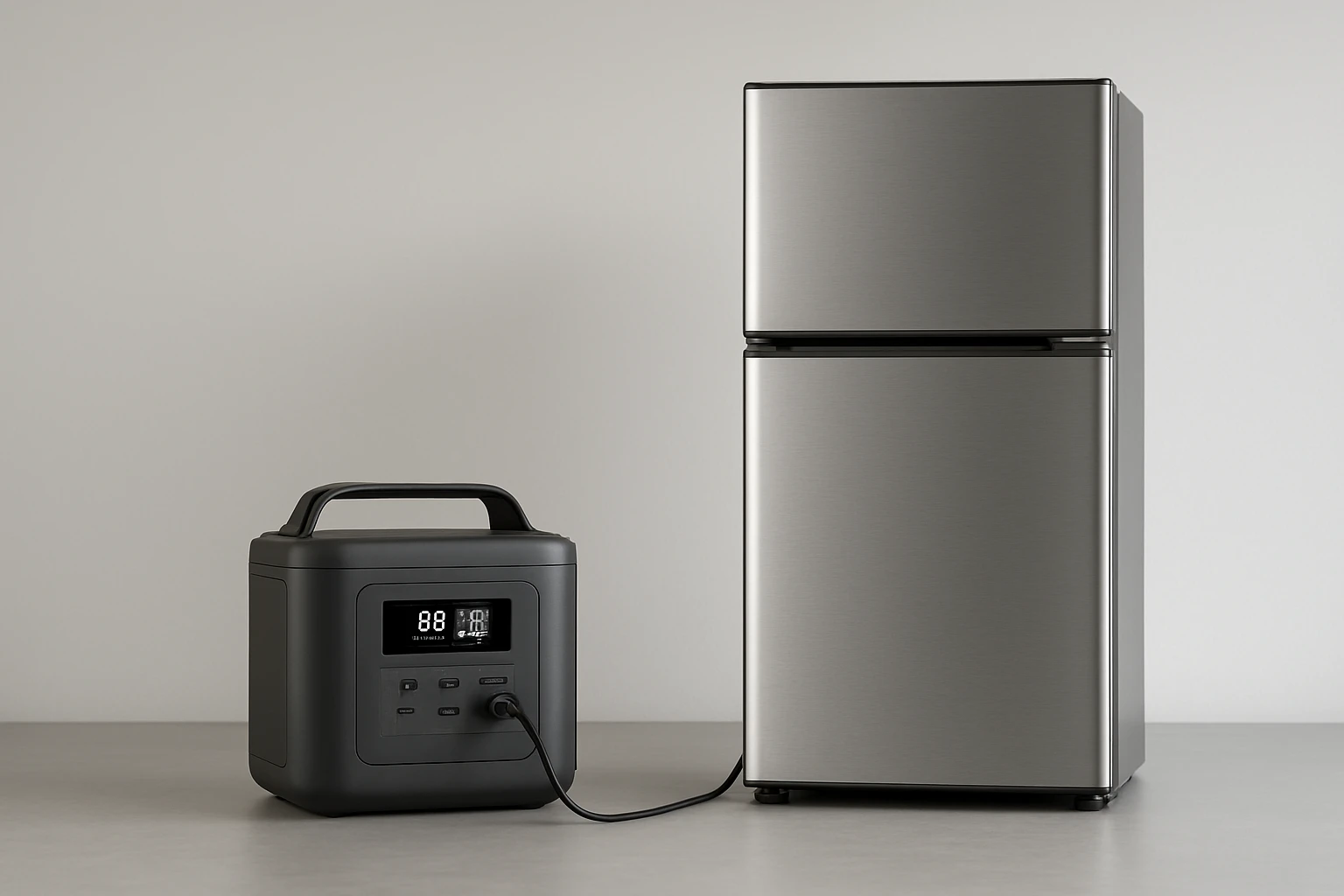
How to Run a Refrigerator Overnight with a Portable Power Station: Calculate Power Needs & Maximize Runtime
Introduction
Running a refrigerator while traveling, camping, or during a power outage can be challenging without a reliable energy source. This guide explains how to calculate the energy consumption of a typical 12 V car fridge, select a portable power station that meets those demands, and apply best‑practice techniques to extend runtime throughout the night. By following the steps, one will be able to keep food and medication safely chilled without compromising battery life or safety.
The information presented is based on real‑world product specifications, user reviews, and engineering principles. It is valuable for outdoor enthusiasts, RV owners, and anyone who needs a dependable backup power solution.
What You’ll Need
- 12 V portable refrigerator (e.g., BougeRV Car Fridge)
- Portable power station with sufficient wattage and capacity (options described in the steps)
- Appropriate charging cables (AC, car, or solar)
- Digital multimeter or power monitor (optional but recommended)
- Extension cord or power strip with surge protection (optional)
Step 1: Determine the Refrigerator’s Power Consumption
The first task is to establish how many watts the refrigerator draws during normal operation and during the compressor start‑up surge. The BougeRV 12 V Car Fridge lists a low‑power ECO mode of approximately 36 W and a maximum draw of 45 W. Because compressors cycle on and off, the average consumption over an hour is typically around 40 W.
To calculate nightly energy use, multiply the average wattage by the number of hours the fridge will run. Assuming a 12‑hour night and an average draw of 40 W, the total energy requirement equals 480 Wh (40 W × 12 h). Adding a 10 % safety margin for temperature fluctuations yields roughly 530 Wh.
Understanding this figure is essential because it determines the minimum battery capacity required from the portable power station.
Step 2: Choose an Appropriate Portable Power Station
With a target of at least 530 Wh, one must compare available units. Three models are highlighted below, each with distinct advantages.
- DARAN Portable Power Station – 600 W continuous output, 288 Wh LiFePO4 battery, 2 hr fast AC charging, and six simultaneous output ports. Priced at $180.49 with a 4.1‑star rating, it provides a solid balance of power and portability. The pure sine wave inverter protects sensitive refrigerator compressors, and the built‑in LED light offers emergency illumination.
- GRECELL Portable Power Station – 330 W continuous output, 288 Wh capacity, and eight versatile ports including USB‑C PD 60 W. At $99.98 and a 4.4‑star rating, it is the most budget‑friendly option, though its continuous wattage is lower than the refrigerator’s surge requirement. It is suitable if the fridge’s start‑up surge can be managed by the built‑in BMS.
- Anker SOLIX C300 Power Station – 300 W continuous output, 288 Wh LiFePO4 battery, 140 W dual USB‑C fast‑charge, and a 25 dB quiet operation. Priced at $249.99 with a 4.7‑star rating, it offers premium build quality and a rapid 50‑minute 80 % charge time, making it ideal for users who value speed and durability.
Because the refrigerator’s maximum draw is 45 W, any of these units can sustain the load. However, the DARAN model provides the highest continuous wattage (600 W) and the most robust surge handling, which ensures reliable compressor start‑up without voltage sag.
For the purpose of this guide, the DARAN Portable Power Station will be used as the primary recommendation due to its superior power margin, fast charging, and durable LiFePO4 chemistry.
Step 3: Connect and Configure the System
Begin by placing the power station on a stable surface away from direct sunlight. Connect the AC outlet of the DARAN unit to the refrigerator’s 12 V DC input using the supplied car socket adapter. If the fridge includes a dedicated AC‑to‑DC converter, plug the adapter into the power station’s standard AC outlet.
Next, verify that the power station’s battery management system (BMS) is active. The DARAN’s BMS monitors temperature, overload, and short‑circuit conditions, automatically shutting down the output if a fault is detected. This protection is crucial for preventing damage to both the refrigerator and the battery pack.
After the connection is secure, turn on the refrigerator and observe the LED indicator on the power station. The DARAN’s rear LED offers three modes; select the steady‑beam mode for continuous monitoring. Use a digital multimeter to confirm that the voltage remains within the refrigerator’s specified range (12–14 V) during the first compression cycle.
Finally, enable any energy‑saving features on the fridge, such as the ECO mode, to reduce average draw and extend runtime.
Step 4: Optimize Runtime for Overnight Use
Even with a capable power station, extending runtime requires strategic adjustments. Follow these recommendations:
- Pre‑cool the fridge: Before connecting to the power station, allow the fridge to reach the desired temperature using the vehicle’s battery or a wall outlet. This reduces the compressor’s workload during the night.
- Maintain ambient temperature: Place the refrigerator in a shaded area or inside a well‑ventilated enclosure. Lower ambient heat reduces the compressor’s duty cycle.
- Utilize the power station’s low‑power mode: The DARAN unit automatically reduces inverter loss when the load is below 100 W, conserving battery capacity.
- Schedule solar recharging: If a 100 W solar panel is available, position it to receive maximum sunlight before sunset. The DARAN supports 100 W solar input and can replenish up to 80 % of its charge in two hours of strong sun, providing a buffer for the night.
By combining these practices, one can often achieve 12‑hour operation with a single 288 Wh charge, especially when the fridge operates primarily in ECO mode.
Step 5: Monitor and Safeguard the System
Continuous monitoring ensures that the system remains within safe operating limits. The DARAN power station features an LCD display that shows remaining capacity, input power, and output load. Keep the display visible or connect a Bluetooth‑enabled monitoring app if available.
If the battery level drops below 20 %, consider switching the fridge to a lower cooling setting or temporarily disconnecting non‑essential accessories. The built‑in BMS will emit an audible alarm if the battery temperature exceeds safe thresholds.
For longer trips, carry a spare 100 W solar panel or an additional power station to provide redundancy. The modular design of the DARAN system allows parallel connection of multiple units for increased capacity.
Tips & Pro Tips
- Complete two full charge‑discharge cycles on a new power station before first use. This calibrates the battery management system and maximizes lifespan.
- Recharge the battery every 1–2 months even if not in use, to prevent capacity loss inherent to LiFePO4 chemistry.
- Use a high‑quality car socket cable with adequate gauge to minimize voltage drop when powering the fridge directly from a vehicle.
- Consider a voltage‑monitoring relay that automatically shuts off the fridge if vehicle battery voltage falls below a safe threshold, protecting the vehicle’s starter battery.
- Label all cables and keep a spare set in a waterproof bag to avoid confusion during emergency situations.
Troubleshooting
| Problem | Possible Cause | Solution |
|---|---|---|
| Power station shuts down unexpectedly | Battery temperature too high or overload | Ensure adequate ventilation, reduce fridge load, or use the low‑power mode. |
| Refrigerator does not cool | Insufficient voltage from power station | Check cable connections, verify the power station is set to AC output, and confirm the fridge’s DC input rating. |
| Battery depletes faster than expected | Ambient temperature too high or fridge set to high‑cool mode | Move the fridge to a cooler location, enable ECO mode, and consider adding a solar panel for supplemental charge. |
Conclusion
By accurately calculating the refrigerator’s energy demand, selecting a power station with sufficient wattage and capacity, and applying runtime‑extension techniques, one can reliably operate a portable fridge throughout the night. The DARAN Portable Power Station, with its high continuous output, fast charging, and robust safety features, stands out as the most versatile solution for this application. Implementing the tips and monitoring practices outlined above will further safeguard the system and ensure food remains safely chilled during any off‑grid adventure.
Products Mentioned in This Guide
Frequently Asked Questions
How do I calculate the power consumption of a 12 V car fridge?
Multiply the fridge's amp draw (e.g., 4 A) by the voltage (12 V) to get watts, then estimate nightly usage by multiplying watts by the hours it runs.
What size portable power station is needed to run a refrigerator overnight?
Choose a station with at least 1.5 × the fridge’s wattage and a capacity (Wh) that exceeds the total nightly energy demand, typically 300–500 Wh for a 12 V car fridge.
Can I safely run a refrigerator with a portable power station during a power outage?
Yes, as long as the station’s continuous output matches the fridge’s wattage and you follow the manufacturer’s wiring and ventilation guidelines.
How can I maximize the runtime of my portable power station when powering a fridge?
Set the fridge to its eco mode, keep it fully stocked, pre‑cool items, and operate it in a shaded, well‑ventilated area to reduce the compressor’s workload.
Are there any safety precautions when connecting a refrigerator to a portable power station?
Use the correct gauge cable, ensure proper polarity, avoid overloading the station, and keep the unit away from heat sources to prevent fire hazards.