Introduction
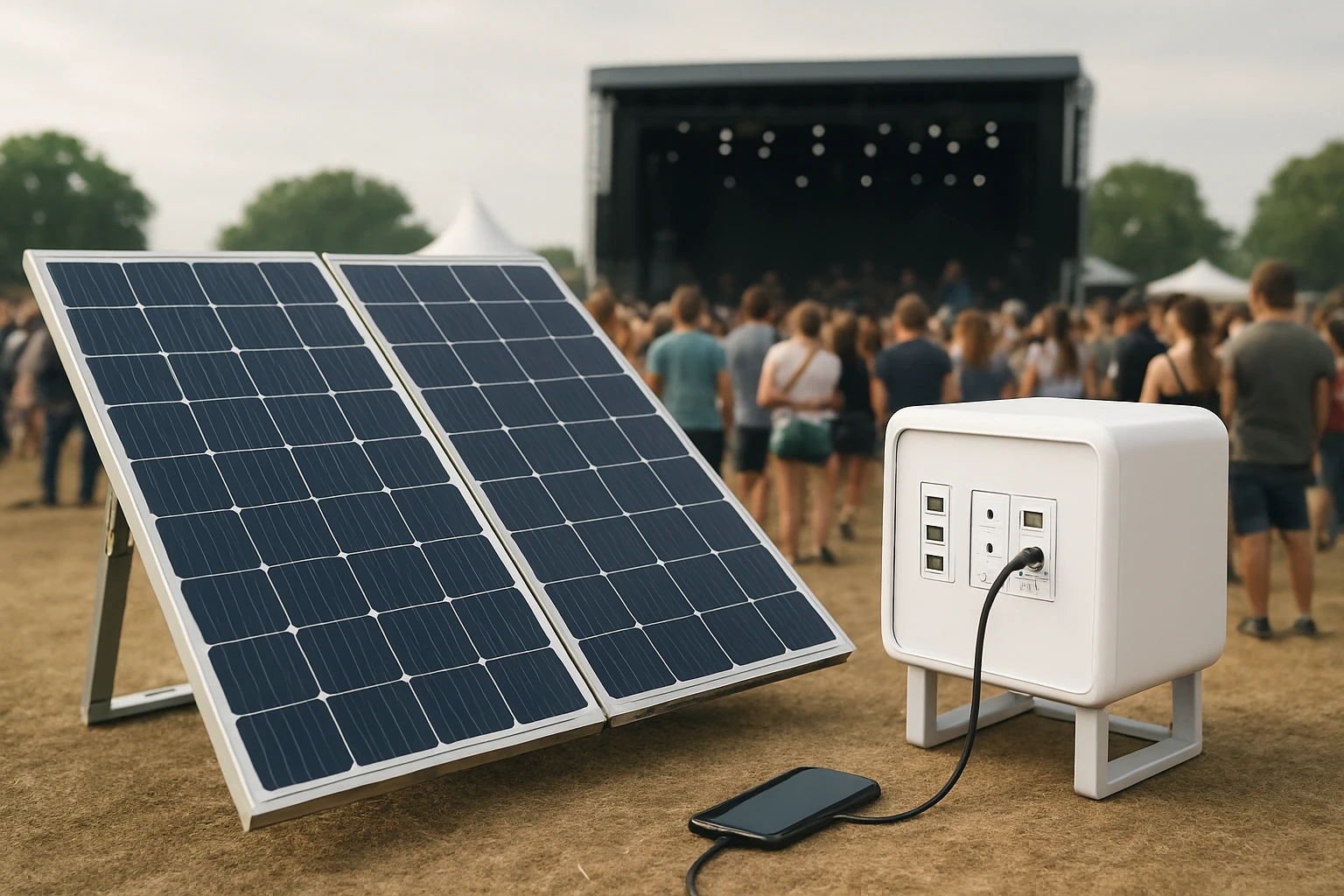
This guide explains how to create a reliable solar charging station for festivals, covering legal requirements, power distribution design, equipment installation, and safety best practices. Readers will learn how to obtain the necessary permits, select appropriate solar generators, integrate battery storage, and protect attendees and equipment from electrical hazards. The information is valuable because festivals often lack stable grid power, and a well‑planned solar station can provide clean, uninterrupted energy for phones, lights, and small appliances. By following the steps, organizers can reduce operational costs, improve sustainability, and enhance the overall attendee experience.
What You’ll Need
- Portable solar panels – EcoFlow 220W Portable Solar Panel
- Secondary foldable panel for redundancy – Zoupw 100W Portable Solar Panel
- High‑capacity solar power bank for handheld charging – BLAVOR Solar Power Bank
- Charge controller with MPPT capability (compatible with the panels)
- Weather‑proof cable trays, MC4 connectors, and grounding rods
- Portable power distribution box with USB‑C, USB‑A, and AC outlets
- Safety equipment: fire extinguisher, circuit breakers, and signage
- Tools: drill, wrench set, cable ties, and multimeter
Step 1: Obtain Permits and Site Approval
The first major step is to secure all required permits from the local municipality and the festival organizers. Most jurisdictions require a temporary electrical permit for any off‑grid power system that exceeds a certain wattage, typically 500 W. Organizers should submit a detailed site plan that shows panel locations, cable routing, and safety zones. It is advisable to consult a licensed electrician to verify that the design complies with the National Electrical Code (NEC) and any local amendments. Failure to obtain proper permits can result in fines, forced removal of equipment, or liability in the event of an accident.
Step 2: Design Power Distribution Layout
After permits are approved, the next phase is to design a logical power distribution layout. Begin by estimating the total load: smartphones (5 W each), LED lighting (10 W per fixture), and small appliances such as portable speakers (20 W each). Multiply the number of devices by their power draw to obtain an approximate wattage requirement. For a medium‑size festival booth, a total demand of 800 W to 1,200 W is common. The design should include a primary solar array, a battery buffer, and a distribution hub that protects against overloads. Using a modular layout allows the organizer to add or remove panels quickly as crowd density changes.
Step 3: Install Solar Panels
Install the primary array using the EcoFlow 220W Portable Solar Panel. This panel features a bifacial N‑type solar cell design that delivers up to 25 % conversion efficiency, making it one of the most effective portable solutions on the market. Its adjustable kickstand enables optimal sun angle between 30° and 60°, which maximizes energy capture during the festival’s daylight hours. The panel is rated IP68 for water and dust resistance, ensuring reliable operation in rain or dusty environments. At a price of $279.00 and a rating of 4.5 / 5.0 from over 3,300 reviewers, it provides a strong balance of performance and durability.
For redundancy and additional capacity, deploy the Zoupw 100W Portable Solar Panel. This unit uses high‑efficiency monocrystalline cells with a 23.5 % efficiency rating and includes a 5‑in‑1 cable that connects to most portable power stations without adapters. Its foldable frame and magnetic handle make it easy to reposition throughout the day, allowing organizers to capture sunlight from multiple angles. The panel is IP67 waterproof and weighs only 9.48 lb, making it ideal for rapid deployment in crowded festival aisles. Priced at $105.99 with a 4.6 / 5.0 rating from 870 reviewers, it offers excellent value for supplemental power.
Mount both panels on sturdy, non‑conductive stands or directly on the ground using weighted sandbags. Secure the panels with cable ties to prevent accidental movement caused by wind or foot traffic. Connect the panels to an MPPT charge controller using MC4 connectors; the controller will optimize voltage and protect the battery bank from over‑charging.
Step 4: Set Up Battery Storage and Power Bank
Battery storage smooths out fluctuations in solar generation and provides power during cloudy periods or after sunset. A lithium‑cobalt battery bank with a capacity of at least 10 Ah per kilowatt of demand is recommended. Once the battery bank is wired to the charge controller, integrate a portable power bank for immediate handheld charging. The BLAVOR Solar Power Bank offers a 10,000 mAh capacity, 20 W USB‑C fast charging, and dual flashlights for night‑time visibility. Its IPX5 rating protects it from splashes, and the flame‑retardant ABS shell enhances durability in high‑traffic festival environments. Although a price is not listed, the power bank’s features—such as simultaneous charging of three devices and a built‑in compass carabiner—make it a practical tool for staff and attendees who need on‑the‑go power.
Place the power bank within easy reach of the distribution hub, and connect it to the battery bank using a USB‑C cable. This configuration allows the power bank to act as a buffer, delivering instant power to smartphones while the larger battery system continues to charge from the solar panels.
Step 5: Connect Distribution Cables and Safety Devices
Run weather‑proof cable trays from the battery bank to a portable distribution box that contains AC outlets, USB‑C ports, and USB‑A ports. Use color‑coded cables to differentiate high‑voltage (DC) from low‑voltage (USB) lines, reducing the risk of accidental cross‑connection. Install circuit breakers rated slightly above the expected load on each branch circuit; this protects both equipment and users from overloads. Ground all metal frames and stands using grounding rods driven into the soil, and attach a ground‑fault circuit interrupter (GFCI) to the main AC outlet to prevent electric shock in wet conditions.
Post clear signage indicating “No Open Flame” and “Do Not Cover Panels” to remind attendees of safety protocols. Keep a Class ABC fire extinguisher nearby, and train staff on how to use it in case of an electrical fire. Conduct a final inspection with a multimeter to verify that voltage levels are within safe limits before opening the station to the public.
Tips & Pro Tips
- Orient panels toward true south (or north in the southern hemisphere) for maximum daily exposure.
- Use reflective tarps behind panels to increase albedo and boost energy capture on cloudy days.
- Schedule regular cleaning of panel surfaces to remove dust and pollen, which can reduce efficiency by up to 10 %.
- Employ a portable solar tracker if the budget allows; it can increase output by 15‑20 % compared with fixed mounts.
- Store excess energy in a secondary battery bank to provide power during night‑time performances.
Troubleshooting
Problem: Panels produce less than expected power.
Solution: Verify that the panels are angled correctly and free of shade. Check MC4 connectors for corrosion and ensure the charge controller is set to the correct voltage mode.
Problem: Battery bank does not charge.
Solution: Confirm that the MPPT controller is receiving input from both panels and that the battery’s temperature is within the operating range. Reset the controller according to the manufacturer’s manual.
Problem: Distribution box trips the circuit breaker.
Solution: Reduce the number of simultaneous devices, or upgrade to a higher‑amp breaker if the wiring gauge permits. Inspect all connections for loose terminals.
Conclusion
By following this comprehensive guide, festival organizers can establish a safe, efficient, and environmentally friendly solar charging station. The process begins with securing permits, proceeds through thoughtful layout design, and culminates in the installation of high‑quality solar panels, battery storage, and protective equipment. Proper planning and adherence to safety standards ensure that attendees receive reliable power while minimizing the event’s carbon footprint. Organizers are encouraged to evaluate the recommended products, adapt the design to the specific venue, and continuously monitor performance throughout the festival.
Products Mentioned in This Guide
Frequently Asked Questions
What permits are required to operate a solar charging station at a festival?
You need a temporary electrical permit from the local authority and, if required, a fire safety clearance; check the venue’s regulations well before the event.
How many solar panels are recommended for a small‑to‑medium festival?
A typical setup uses 2–3 portable panels (200‑300 W each) plus a backup 100 W panel to ensure enough power for phones, lights, and small appliances.
What type of battery storage should be paired with the solar panels?
Use a high‑capacity lithium‑ion power bank or portable solar generator (10‑15 kWh) that can store excess energy for use after sunset.
How can I safely distribute power to multiple charging stations?
Install a weather‑rated power distribution box with circuit breakers and use USB‑C or standard AC outlets, keeping cables organized and away from foot traffic.
What safety measures protect attendees from electrical hazards?
Ground all equipment, use surge protectors, provide clear signage, and conduct a pre‑event inspection to verify wiring and panel stability.