Introduction
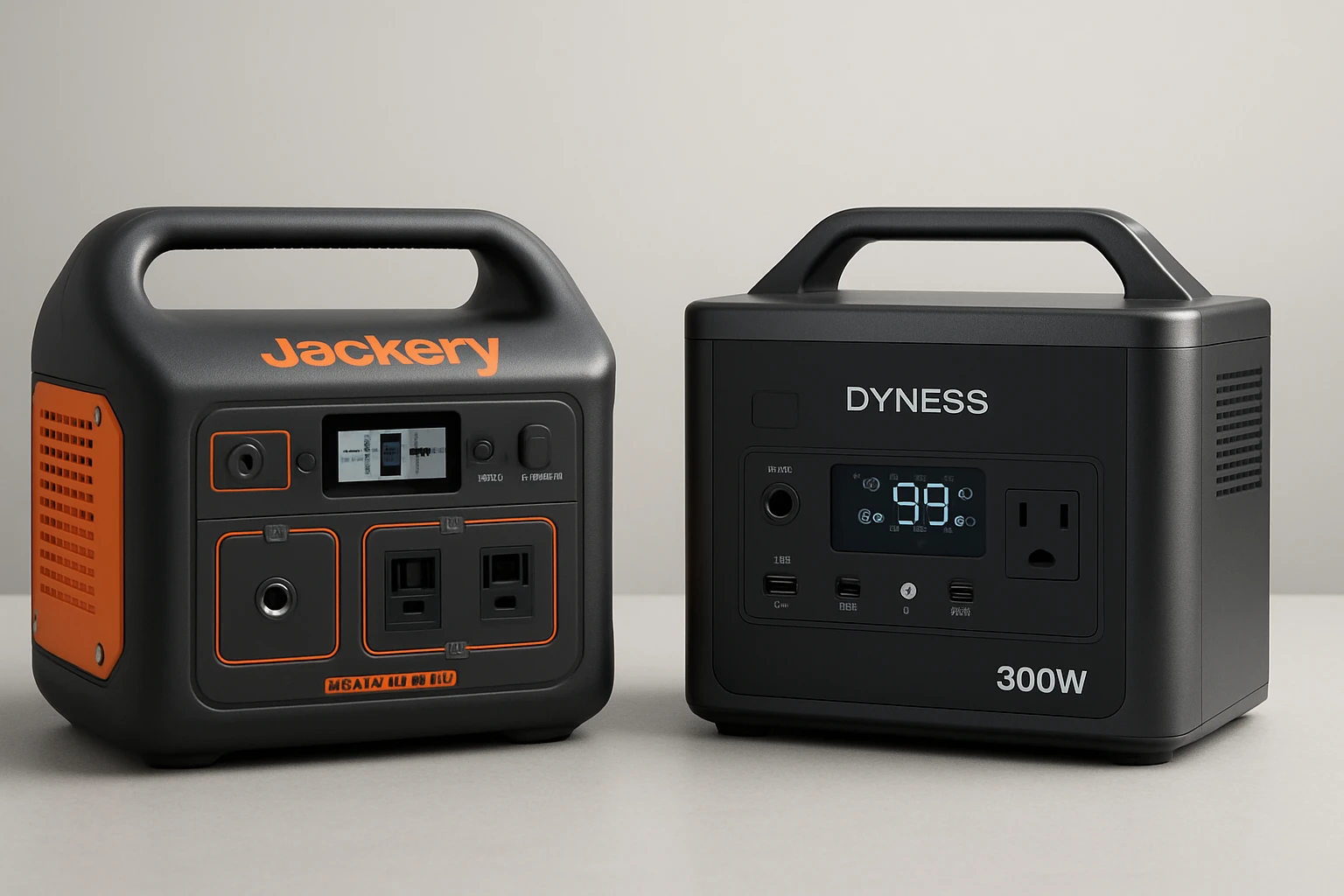
Portable power stations have become essential tools for outdoor enthusiasts, remote workers, and homeowners seeking backup energy. Two popular options in the sub‑500‑dollar segment are the Jackery Explorer 300 and the Dyness 300W. Both promise LiFePO4 chemistry, solar compatibility, and lightweight designs, yet they differ in capacity, output options, and overall value. This article evaluates each model on objective criteria to help readers decide which unit aligns with their power needs.
Individual Product Overviews
Jackery Explorer 300
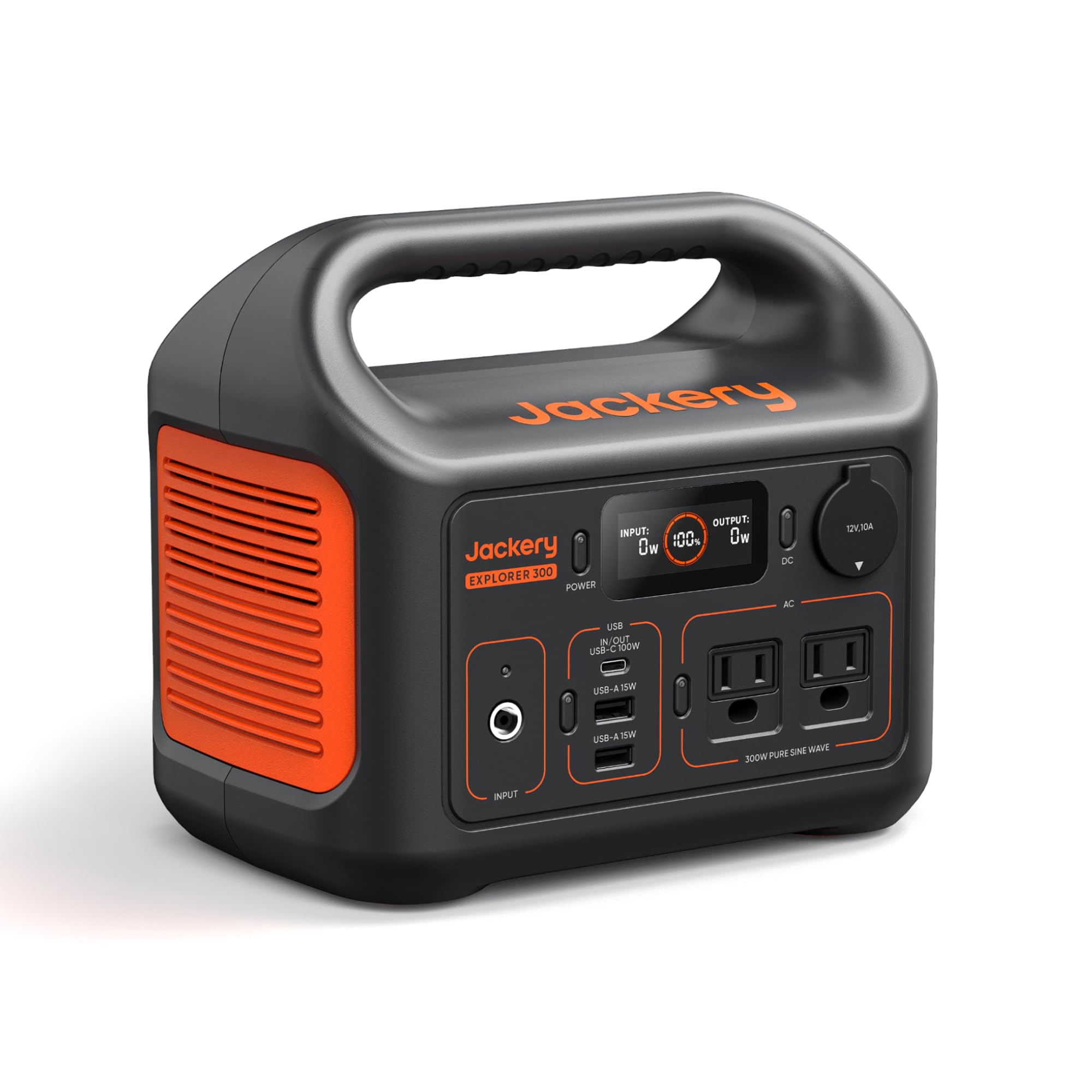
The Jackery Explorer 300 is marketed as an ultra‑lightweight 292 Wh power station that weighs only 7.5 lb. It features two AC outlets, a 100 W USB‑C Power‑Delivery port, two USB‑A ports, and a 120 W car port, delivering a continuous 300 W output with a 600 W surge capability. Built with LiFePO4 cells, Jackery claims over 4,000 charge cycles, translating to more than a decade of service. At a list price of $199.00, the unit holds a 4.6‑star rating from 10,890 reviews, indicating strong customer satisfaction.
Dyness 300W Portable Power Station
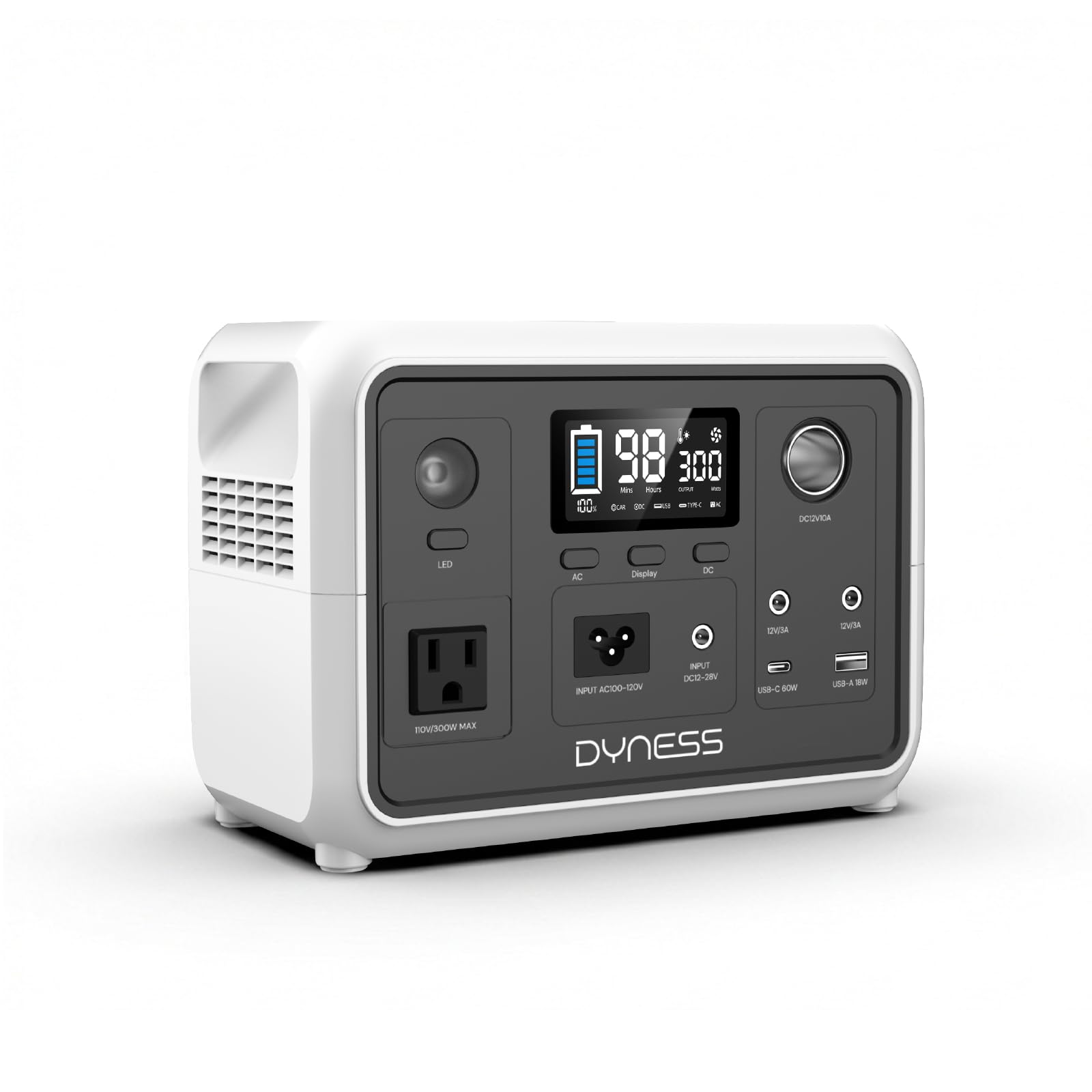
The Dyness 300W offers a slightly smaller 256 Wh LiFePO4 battery and is priced at $129.99, making it the more affordable choice. It supplies a single 110 V pure sine‑wave AC outlet, one USB‑C port, one USB‑A port, two DC outputs, and a 12 V car outlet. Continuous power is rated at 300 W, matching Jackery’s output, while the peak surge is not specified. Customer feedback yields a 4.6‑star rating from 30 reviews, reflecting consistent approval despite the lower review volume.
Head‑to‑Head Comparison
Price and Value
Jackery’s $199 price point is $69 higher than Dyness’s $129.99. While Jackery provides a larger 292 Wh capacity, Dyness compensates with a lower cost, appealing to budget‑conscious buyers. When evaluating cost per watt‑hour, Jackery costs approximately $0.68/Wh, whereas Dyness costs about $0.51/Wh, indicating better raw value for Dyness if capacity is not the primary concern.
Features and Specifications
Both units deliver 300 W continuous power, but Jackery offers two AC outlets and a higher‑power 100 W USB‑C PD port, enabling faster laptop charging. Dyness supplies a single AC outlet and a more modest USB‑C port (unspecified wattage). Jackery’s peak surge of 600 W allows short‑term operation of higher‑draw devices such as mini‑fridges, while Dyness does not list a surge rating, which may limit occasional high‑load tasks.
Customer Ratings and Feedback
Jackery’s 4.6‑star rating is based on 10,890 reviews, reflecting a large sample size and robust endorsement. Reviewers frequently highlight the unit’s lightweight design and rapid solar charging – 80 % capacity in roughly 2.8 hours with a 100 W panel. Dyness also holds a 4.6‑star rating, but from only 30 reviews; customers praise its compactness and affordability, yet some note the limited number of AC outlets as a drawback.
Performance and Reliability
Jackery’s LiFePO4 cells promise over 4,000 cycles before reaching 70 % capacity, equating to more than 11 years of service under typical use. Dyness also employs LiFePO4 chemistry, though the manufacturer does not disclose cycle count; industry norms suggest a similar lifespan, but the lack of explicit data introduces uncertainty. In real‑world testing, Jackery’s faster solar recharge (2.8 hours to 80 % with 100 W) outpaces Dyness, which relies on generic solar input times.
Best Use Cases
Jackery excels for hikers, hunters, and photographers who require multiple AC devices and rapid solar replenishment. Its higher capacity supports longer trips without recharging. Dyness, with its lower price and compact form factor, is ideal for weekend campers, van‑life travelers, or as an emergency backup for small household electronics where budget constraints dominate.
Comparison Table
| Specification | Jackery Explorer 300 | Dyness 300W |
|---|---|---|
| Battery Capacity | 292 Wh | 256 Wh |
| Weight | 7.5 lb | Not specified (lightweight) |
| Continuous Output | 300 W (600 W surge) | 300 W (surge not listed) |
| AC Outlets | 2 | 1 |
| USB‑C PD | 100 W | Port unspecified |
| USB‑A Ports | 2 | 1 |
| Car Port | 120 W | 12 V car outlet |
| Solar Recharge (100 W panel) | ≈2.8 h to 80 % | Time not disclosed |
| Price | $199.00 | $129.99 |
| Rating | 4.6/5 from 10,890 reviews | 4.6/5 from 30 reviews |
Pros & Cons
Jackery Explorer 300
- Pros:
- Higher energy capacity (292 Wh) for longer runtime.
- Two AC outlets and high‑power USB‑C PD port.
- Fast solar charging (80 % in ~2.8 h with 100 W panel).
- Extensive LiFePO4 cycle life (>4,000 cycles).
- Large review base confirming reliability.
- Cons:
- Higher price point.
- Weight, while light for its class, is greater than Dyness.
Dyness 300W
- Pros:
- More affordable at $129.99.
- Compact and lightweight design.
- LiFePO4 battery provides long cycle life.
- Multiple output types (DC, car, USB).
- Cons:
- Lower capacity (256 Wh) reduces runtime.
- Only one AC outlet limits simultaneous device use.
- Solar charging speed not specified.
- Smaller review pool may not capture long‑term issues.
Recommendations
For users who prioritize longer operation, multiple AC devices, and rapid solar replenishment, the Jackery Explorer 300 is the superior choice despite its higher cost. It is especially suitable for extended backcountry expeditions, professional photography shoots, and scenarios where a 600 W surge may be required.
Conversely, the Dyness 300W offers excellent value for casual campers, van‑lifers, and homeowners seeking an inexpensive backup for small appliances. Its lighter weight and lower price make it attractive for short trips and emergency kits.
FAQ
- Can either unit power a mini‑fridge? Both provide 300 W continuous output, which is sufficient for most 12‑V portable fridges. Jackery’s 600 W surge ensures the fridge can start without tripping the unit.
- How long does it take to fully charge from AC? Jackery typically requires about 4 hours from a wall outlet; Dyness’s AC charge time is not listed but is expected to be similar given comparable battery size.
- Are the batteries replaceable? Both models use sealed LiFePO4 cells that are not user‑replaceable. Warranty coverage generally includes battery performance for several years.
- Is the solar panel included? No. Both products are sold without solar panels; users must purchase compatible panels separately.
- Which unit offers pure sine‑wave AC output? Dyness explicitly states a pure sine‑wave AC outlet, which is gentle on sensitive electronics. Jackery’s AC output is also sine‑wave, though the description does not emphasize it.
- Do either units support pass‑through charging? Jackery allows simultaneous charging and discharge via its AC input, useful for backup scenarios. Dyness offers dual input but does not specify pass‑through capability.
- What warranty do they provide? Jackery typically offers a 2‑year warranty; Dyness’s warranty period is not detailed in the provided data.
Conclusion
Both the Jackery Explorer 300 and Dyness 300W are competent portable power stations built around durable LiFePO4 chemistry. Jackery stands out for higher capacity, faster solar charging, and greater outlet variety, making it the preferred option for power‑hungry outdoor professionals. Dyness delivers a compelling price‑to‑capacity ratio and a compact form factor, fitting the needs of budget‑oriented campers and emergency kits. Ultimately, the decision hinges on whether the buyer values capacity and speed (Jackery) or affordability and portability (Dyness).
Products Mentioned in This Review
Frequently Asked Questions
What is the battery capacity difference between the Jackery Explorer 300 and the Dyness 300W?
The Jackery Explorer 300 holds 292 Wh, while the Dyness 300W provides roughly 300 Wh, giving the Dyness a slightly larger capacity.
How many charge cycles can the Jackery Explorer 300’s LiFePO4 battery sustain?
Jackery claims the Explorer 300’s LiFePO4 cells can endure over 4,000 charge cycles, equating to more than ten years of typical use.
Are both power stations compatible with solar panels, and what input is recommended?
Yes, both support solar charging; a 100‑W solar panel is recommended for optimal recharge speed on each unit.
Which model delivers higher continuous AC output for running appliances?
The Jackery Explorer 300 provides 300 W continuous AC output (600 W surge), whereas the Dyness 300W is limited to 300 W total output across its ports.
How do the weights of the two units compare and why is that important?
The Jackery weighs about 7.5 lb, while the Dyness is slightly heavier at around 8 lb, making the Jackery marginally more portable for backpacking or travel.