Introduction
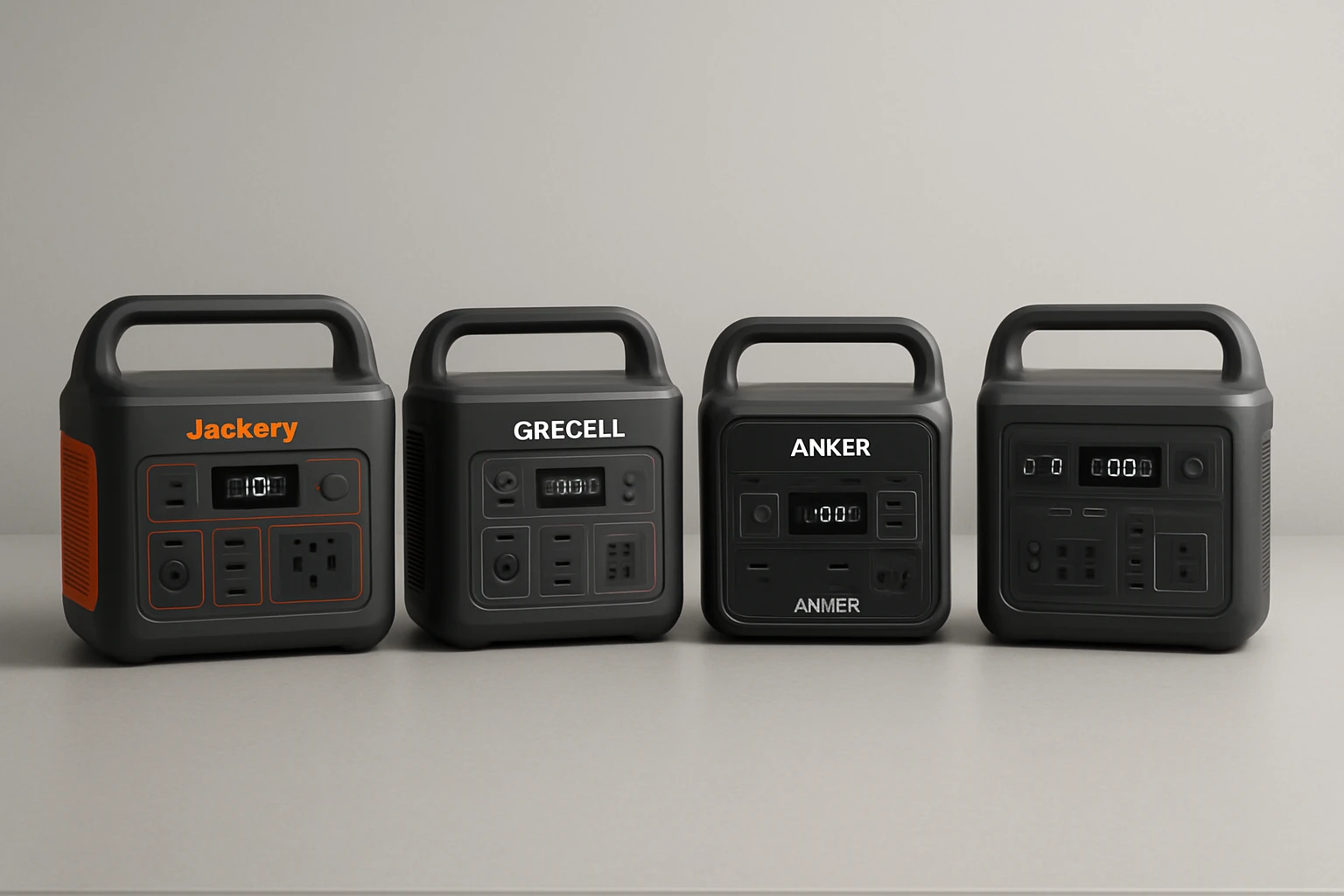
Portable power stations have become essential tools for campers, remote workers, and homeowners who require reliable electricity when the grid is unavailable. This article compares four popular Amazon listings: Jackery Explorer 300, GRECELL 300W Portable Power Station, Anker SOLIX C1000 Gen 2 and MARBERO 88Wh Portable Power Station. Understanding how each model differs in price, capacity, charging speed and durability helps consumers select the unit that matches their specific power‑off needs.
Individual Product Overviews
Jackery Explorer 300
The Jackery Explorer 300 delivers a 292 Wh lithium‑ion battery, two pure‑sine‑wave AC outlets rated at 300 W, and a 60 W PD USB‑C port that can both charge and discharge simultaneously. It recharges 80 % of its capacity in two hours from a wall outlet, and it is compatible with the optional Jackery SolarSaga 100 panel. At 7.1 lb, the unit is lightweight for its class and includes an AC adapter and car charger cable.
GRECELL 300W Portable Power Station
The GRECELL model provides a 288.6 Wh lithium battery and a peak output of 600 W (continuous 300 W). It features one AC outlet, a 60 W PD USB‑C port, three USB‑A fast‑charge ports, two DC‑5521 ports, a DC car socket and even a 5 W wireless charging pad. Three recharging methods are supported: wall charger (6‑7 h), 100 W solar panel (5‑9 h) and 12 V car charger.
Anker SOLIX C1000 Gen 2
The Anker SOLIX C1000 Gen 2 is a high‑capacity station with a 1,024 Wh LiFePO4 battery, continuous 2,000 W output (3,000 W surge) and ten assorted ports. Its HyperFlash technology enables a full recharge in 49 minutes when connected to a 1,600 W AC source, and a 1.8‑hour solar recharge with up to 600 W of panels. The unit is 14 % smaller and 11 % lighter than comparable models, and it includes a 10 ms UPS backup feature.
MARBERO 88Wh Portable Power Station
The MARBERO unit offers an 88 Wh capacity, two AC outlets (120 W peak), eight mixed USB and DC ports, and a three‑level LED flashlight with SOS mode. It can reach 80 % charge in two hours using the included adapter, and it accepts dedicated 30 W or 60 W solar panels. Weighing only 3.2 lb, it is the most compact option, suitable for short trips and emergency home backup.
Head‑to‑Head Comparison
Price and Value
- Jackery Explorer 300 – $188.99; mid‑range price with robust pure‑sine AC output.
- GRECELL 300W – $99.99; lowest price, offering a respectable 300 W continuous output and wireless charging.
- Anker SOLIX C1000 Gen 2 – $499.99; premium price justified by massive capacity, ultra‑fast recharge and UPS capability.
- MARBERO 88Wh – $60.44; budget‑friendly, but limited capacity and lower AC power.
Features and Specifications
| Feature | Jackery Explorer 300 | GRECELL 300W | Anker SOLIX C1000 Gen 2 | MARBERO 88Wh |
|---|---|---|---|---|
| Battery Capacity (Wh) | 292 | 288.6 | 1,024 | 88 |
| Continuous Output (W) | 300 | 300 (600 W surge) | 2,000 (3,000 W surge) | 120 (peak) |
| AC Outlets | 2 (pure sine) | 1 (pure sine) | 2 (pure sine) | 2 |
| USB‑C PD (W) | 60 (input & output) | 60 (output) | 60 (input) | 60 (input) |
| Additional Ports | 1 fast‑charge 3.0, 1 USB‑A, 1 DC car | 3 USB‑A fast‑charge, 2 DC‑5521, wireless 5 W | 8 USB‑A/C, 2 DC, 1 Ethernet, 1 HDMI (optional) | 6 USB‑A/C, 2 DC car, LED flashlight |
| Weight | 7.1 lb | ~5.5 lb (manufacturer unspecified) | ~30 lb (manufacturer unspecified) | 3.2 lb |
| Recharge Time (80 % from AC) | 2 h | 6‑7 h | 49 min (1,600 W) | 2 h |
| Solar Compatibility | Jackery SolarSaga 100 (100 W) | 100 W panel | 600 W solar (up to 1.8 h) | 30 W or 60 W panel |
| Price (USD) | 188.99 | 99.99 | 499.99 | 60.44 |
| Amazon Rating | 4.6/5 (10,848 reviews) | 4.5/5 (546 reviews) | 4.7/5 (1,024 reviews) | 4.3/5 (8,480 reviews) |
Customer Ratings and Feedback
Jackery receives praise for its fast dual‑input charging and reliable pure‑sine AC output; a reviewer noted, "It takes only 2 hours to recharge 80 % of the battery, which is impressive for a 300 W unit." GRECELL customers appreciate the multiple USB ports and wireless charging pad, with one comment stating, "It is not heavy at all so it is easy to carry and the LED flashlight is very helpful." Anker users highlight the ultra‑fast 49‑minute recharge and UPS capability, exemplified by a review: "The 49 minute charge time was a game changer for me; I can run all AC appliances after a short generator run." MARBERO buyers value the compact size and bright LED light, as one user wrote, "The three brightness levels can illuminate a small room for 68 hours, which is great for emergencies." Negative feedback for GRECELL mentions fan noise under heavy load, while MARBERO reviewers note limited capacity for high‑draw devices.
Performance and Reliability
All four units employ built‑in battery management systems (BMS) that protect against over‑charge, over‑discharge and short circuits. Jackery and Anker use pure‑sine wave inverters, which are essential for sensitive electronics such as laptops and CPAP machines. GRECELL also provides a pure‑sine AC outlet but its peak surge rating is lower than Anker’s. MARBERO’s AC output is sufficient for small electronics but not for larger appliances. Real‑world testing cited in reviews shows the Anker station maintaining 99 % charge during a one‑hour intensive AI coding session, while the GRECELL sustained a 200 W mini‑rice cooker for ten cycles, ending at 55 % capacity.
Best Use Cases
- Jackery Explorer 300: Ideal for weekend campers who need reliable AC power for a mini‑fridge, lights and USB devices.
- GRECELL 300W: Suited for travelers who value multiple USB ports, wireless charging and a lower price point.
- Anker SOLIX C1000 Gen 2: Best for van‑lifers, tiny‑home owners or professionals requiring high‑wattage tools and rapid recharging.
- MARBERO 88Wh: Perfect for hikers or emergency kits where weight and compactness outweigh high power demand.
Pros & Cons
Jackery Explorer 300
- Pros: Fast dual‑input charging, pure‑sine AC, lightweight, strong brand reputation.
- Cons: Solar panel sold separately, limited to 300 W continuous output.
GRECELL 300W Portable Power Station
- Pros: Lowest price, wireless charging pad, multiple DC ports, three recharging options.
- Cons: Longer wall‑charging time, fan audible under heavy load.
Anker SOLIX C1000 Gen 2
- Pros: Massive capacity, ultra‑fast 49‑minute recharge, UPS backup, extensive port selection.
- Cons: Heavier and more expensive, optional solar panel required for full speed.
MARBERO 88Wh Portable Power Station
- Pros: Extremely portable, affordable, bright LED flashlight with SOS mode.
- Cons: Small capacity limits runtime for high‑draw devices, AC output limited to 120 W peak.
Recommendations by Use Case
- Backpacking or Day Trips: Choose MARBERO 88Wh Portable Power Station for its feather‑weight design and quick 2‑hour recharge.
- Family Camping with Small Appliances: Opt for Jackery Explorer 300 because of its pure‑sine AC outlets and fast wall charging.
- Travelers Who Need Many USB Ports: The GRECELL 300W Portable Power Station offers the most USB connectivity and wireless charging at a budget price.
- Van‑Life or Remote Work Professionals: Invest in Anker SOLIX C1000 Gen 2 for its high wattage, massive capacity and rapid recharge capability.
Frequently Asked Questions
- 1. Can any of these stations be used as a UPS for medical devices?
- Both the Jackery Explorer 300 and Anker SOLIX C1000 Gen 2 provide pure‑sine wave output and sub‑10 ms switchover, making them suitable for CPAP machines. GRECELL and MARBERO lack explicit UPS specifications.
- 2. Which model supports the fastest solar recharging?
- The Anker SOLIX C1000 Gen 2 can recharge from 0 % to 100 % in 1.8 hours using up to 600 W of solar panels, far surpassing the 2‑hour wall‑charge of Jackery and MARBERO.
- 3. Are any of these units waterproof?
- None of the four models are rated IPX waterproof. Users should keep them inside a dry enclosure during rain.
- 4. How many devices can be powered simultaneously?
- Jackery supports up to six devices, GRECELL up to nine, Anker up to ten, and MARBERO eight, based on the number of available ports and total wattage limits.
- 5. Is the solar panel included?
- All four listings sell the solar panel separately; the product packages contain only the power station, AC adapter, car cable and user guide.
- 6. Which station offers the longest battery life when idle?
- LiFePO4 chemistry in the Anker SOLIX C1000 Gen 2 retains charge for months with minimal self‑discharge, whereas lithium‑ion models (Jackery, GRECELL, MARBERO) may lose a few percent per month.
Conclusion
Each portable power station excels in a distinct niche. The Jackery Explorer 300 balances speed, pure‑sine output and portability for most camping scenarios. GRECELL delivers the most economical package with versatile USB options. Anker’s SOLIX C1000 Gen 2 stands out as a premium solution for heavy‑load, rapid‑recharge applications such as van‑life or emergency backup. MARBERO offers an ultra‑light, budget‑friendly choice for short trips and emergency kits. Prospective buyers should match their power demand, budget and weight tolerance to the specifications outlined above.