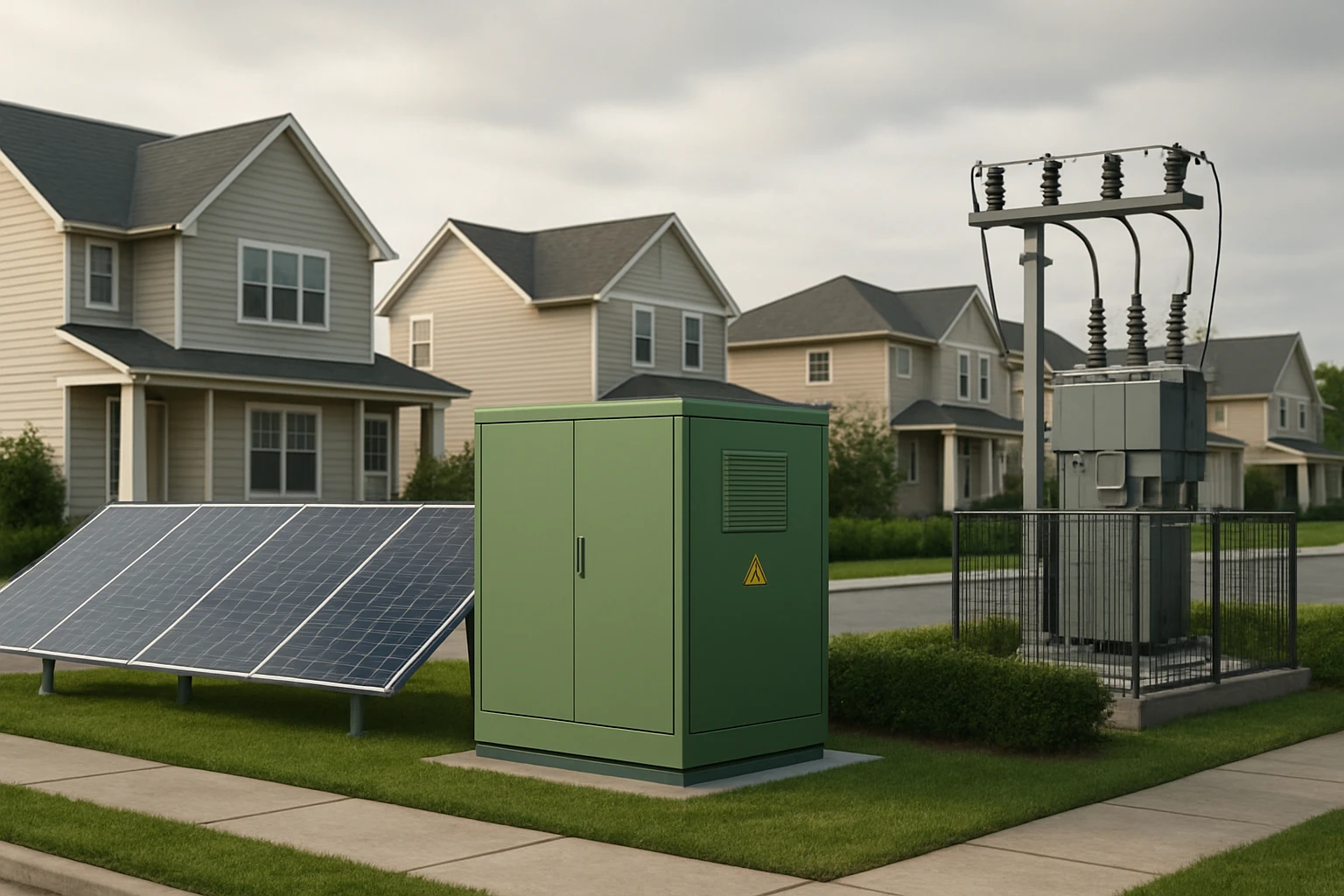
Introduction
This guide explains how neighborhoods can develop microgrids that provide reliable emergency backup power. Readers will learn the fundamental concepts, design strategies, cost considerations, and community resilience benefits. The article also recommends proven hardware that can be integrated into a local microgrid. By the end of the guide, one will possess a clear roadmap for planning, financing, and operating a neighborhood microgrid.
Background and Context
A microgrid is a localized electricity network that can operate independently from the main grid when needed. It typically combines distributed generation, energy storage, and control systems to balance supply and demand. Recent extreme weather events have highlighted the vulnerability of centralized grids, making microgrids an attractive solution for community preparedness. Understanding the technical and regulatory landscape is essential before embarking on a microgrid project.
Key Concepts and Design Strategies
Effective microgrid design begins with a thorough load assessment. One must identify critical loads such as medical equipment, communication devices, and refrigeration, then size generation and storage accordingly. Distributed generation options include solar photovoltaic arrays, wind turbines, and natural‑gas generators; each has distinct performance and cost profiles. Energy storage, typically battery systems, smooths short‑term fluctuations and enables seamless islanding during outages.
Control architecture determines how the microgrid responds to grid disturbances. Centralized controllers coordinate generation and storage, while decentralized controllers allow individual assets to operate autonomously. Advanced control algorithms can prioritize renewable sources, minimize fuel consumption, and maintain power quality. For community members seeking deeper technical insight, the reference Microgrids: Architectures and Control offers a practical introduction to topology and control planning.
Essential Hardware for Emergency Backup
Backup power devices protect critical loads during short‑term outages and serve as the first line of defense in a microgrid. The APC Back‑UPS Pro 1500VA provides 1500VA/900W capacity, ten outlets, automatic voltage regulation, and a user‑replaceable battery. With a 4.4‑star rating from over 12,800 reviewers, it demonstrates reliability for home and small‑business applications.
For larger community‑scale storage, the BLUETTI Elite 30 V2 delivers 600W continuous (1500W surge) power and 288Wh of LiFePO4 capacity in a 9.4‑lb package. Its 10‑ms UPS switch protects sensitive equipment, and the unit supports solar, wall, and car charging. Reviewers praise its quiet operation and fast charging, giving it a 4.5‑star rating from 377 customers.
Portable power stations such as the Jackery Explorer 300 are ideal for distributed backup in individual homes. It offers 293Wh capacity, two pure‑sine‑wave AC outlets, and a 60W USB‑C PD port, all within a 7.1‑lb chassis. The device earned a 4.6‑star rating from more than 11,000 reviewers, highlighting its ease of use and rapid recharge capability.
For high‑capacity community needs, the Anker SOLIX C1000 Gen 2 supplies 2,000W continuous output, 1,024Wh LiFePO4 storage, and ultra‑fast 49‑minute recharging via HyperFlash technology. Its 10‑port design and 10 ms UPS transition make it suitable for powering multiple critical loads simultaneously. The product holds a 4.6‑star rating from 883 reviewers, confirming its performance in demanding scenarios.
Cost Estimation and Financial Planning
Budgeting for a neighborhood microgrid involves capital costs for generation, storage, control hardware, and installation. Solar PV modules typically cost $1,000–$1,500 per kilowatt, while lithium‑ion battery storage averages $150–$200 per kilowatt‑hour. Control systems and protective relays add $5,000–$10,000 depending on complexity. One should also allocate funds for permitting, grid interconnection studies, and community outreach.
Financing options include municipal bonds, utility incentive programs, and private‑public partnerships. Some jurisdictions offer tax credits for renewable generation and energy storage, which can reduce net capital expense by up to 30 percent. A phased implementation—starting with critical load backup using devices such as the APC Back‑UPS Pro—allows the community to spread costs while demonstrating value.
Comparison and Selection Guide
| Product | Power Capacity | Storage | Key Features | Price | Rating |
|---|---|---|---|---|---|
| APC Back‑UPS Pro 1500VA | 1500VA / 900W | Battery (replaceable) | Automatic Voltage Regulation, 10 outlets, Energy‑Star certified | $189.99 | 4.4/5 (12,801 reviews) |
| BLUETTI Elite 30 V2 | 600W continuous (1500W surge) | 288Wh LiFePO4 | 10 ms UPS, solar & car charging, ultra‑low standby power | $218.99 | 4.5/5 (377 reviews) |
| Jackery Explorer 300 | 300W continuous (500W peak) | 293Wh lithium‑ion | Pure sine wave, MPPT solar controller, dual AC outlets | $189.00 | 4.6/5 (11,080 reviews) |
| Anker SOLIX C1000 Gen 2 | 2000W continuous (3000W peak) | 1,024Wh LiFePO4 | 49‑min ultra‑fast recharge, 10 ms UPS, 10 ports | $469.99 | 4.6/5 (883 reviews) |
When selecting equipment, one should match the device’s power rating to the critical load profile, consider scalability, and evaluate warranty terms. The APC unit excels for individual households, while the Anker SOLIX provides community‑scale capacity. The BLUETTI and Jackery models occupy the middle ground, offering portable yet robust backup for small clusters of homes.
Best Practices and Implementation Tips
- Conduct a detailed load inventory before sizing generation and storage.
- Prioritize renewable generation to reduce long‑term operating costs and carbon footprint.
- Implement automatic transfer switches to ensure seamless transition during outages.
- Maintain regular battery health checks and replace batteries according to manufacturer recommendations.
- Engage local stakeholders early to secure buy‑in and address regulatory requirements.
Integrating a microgrid with existing utility infrastructure requires a clear interconnection agreement that defines protection settings and data sharing protocols. Using a modular control platform enables future expansion as community needs evolve. Finally, document all design decisions, test procedures, and maintenance schedules to ensure long‑term reliability.
Frequently Asked Questions
- What is the difference between a microgrid and a regular backup generator? A microgrid combines multiple generation sources, storage, and intelligent controls, allowing it to operate autonomously, whereas a generator provides power only when manually started and lacks storage.
- How long can a typical battery‑based microgrid supply power? Duration depends on storage capacity and load; a 1 MWh battery can sustain a 100 kW critical load for ten hours.
- Do I need a professional engineer to design a neighborhood microgrid? While small pilot projects can be self‑designed, most jurisdictions require certified engineering plans for safety and compliance.
- Can solar panels be used in cloudy climates? Yes; solar inverters can harvest diffuse light, and pairing panels with batteries mitigates variability.
- What maintenance is required for battery storage? Regular temperature monitoring, voltage balancing, and periodic capacity testing extend battery life; manufacturers such as Anker and BLUETTI provide detailed guidelines.
Conclusion
Neighborhood microgrids empower communities to maintain essential services during grid disruptions, reduce reliance on fossil fuels, and enhance overall resilience. By following the planning steps, cost analysis, and best practices outlined in this guide, one can develop a robust emergency backup solution that scales with community growth. Selecting the right hardware—from the APC Back‑UPS Pro for individual homes to the Anker SOLIX for larger clusters—ensures reliable performance and long‑term value.
Products Featured in This Guide
Microgrids: Architectures and Control
Price: $68.45 | Rating: 4.3/5 (5 reviews)
Featured because it provides the theoretical foundation for microgrid topology, control strategies, and planning methodologies.
APC Back‑UPS Pro 1500VA
Price: $189.99 | Rating: 4.4/5 (12,801 reviews)
Featured as a reliable, affordable UPS that protects critical household loads and can be aggregated into a neighborhood microgrid.
BLUETTI Elite 30 V2
Price: $218.99 | Rating: 4.5/5 (377 reviews)
Featured for its compact 600W continuous output, rapid UPS response, and flexible charging options suitable for small community nodes.
Jackery Explorer 300
Price: $189.00 | Rating: 4.6/5 (11,080 reviews)
Featured because it offers lightweight, pure‑sine‑wave power that can be deployed to individual homes within a microgrid.
Anker SOLIX C1000 Gen 2
Price: $469.99 | Rating: 4.6/5 (883 reviews)
Featured for its high‑power output, large LiFePO4 storage, and ultra‑fast recharging, making it ideal for community‑scale backup.