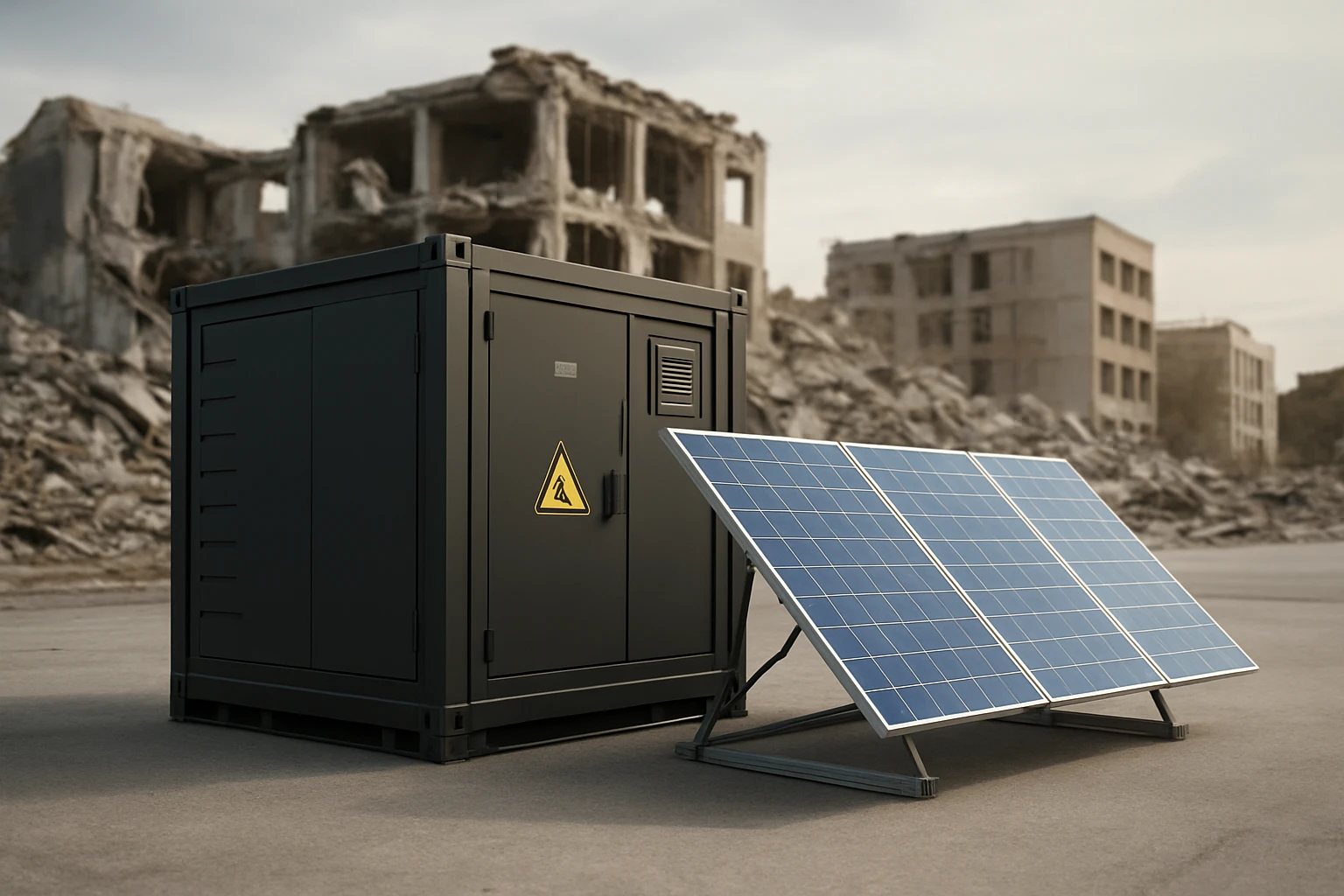
Portable Microgrid Kit for Disaster Relief – The Ultimate Guide to Choosing, Deploying, and Maintaining Emergency Power
Introduction
This guide explains how individuals, NGOs, and small communities can assemble a portable microgrid that provides reliable electricity during natural disasters or power outages. Readers will learn essential terminology, evaluate three market‑tested products, and discover step‑by‑step deployment strategies. The article also offers best‑practice maintenance tips and answers common questions to ensure long‑term readiness.
Background and Context
A portable microgrid combines generation, storage, and distribution components into a single, transportable system. In emergency scenarios, such a system supplies lighting, communication devices, medical equipment, and essential appliances when the main grid is unavailable. The core elements include renewable generators (solar panels or hand‑crank radios), battery banks, power conversion devices, and smart controllers that balance load and charge.
Modern microgrids benefit from advances in lithium‑ion technology, high‑efficiency solar cells, and compact power electronics. Understanding the difference between wattage (instantaneous power) and kilowatt‑hours (energy capacity) is crucial for sizing a system that matches the intended load profile. For example, a 20‑watt LED lamp consumes 0.02 kW, while a small refrigerator may require 100 W continuously, translating to 2.4 kWh per day.
Regulatory considerations also play a role. Many jurisdictions require that portable generators meet emissions standards, and battery systems must comply with safety certifications such as UL‑2054. Selecting components that are both certified and widely supported simplifies future repairs and expansions.
Key Concepts and Strategies
Effective microgrid design follows three strategic pillars: generation diversity, storage adequacy, and intelligent distribution.
- Generation Diversity – Combine solar panels, hand‑crank, and optional grid‑tied inverter to ensure power is available under varying conditions.
- Storage Adequacy – Size the battery bank to provide at least 24‑48 hours of autonomy for critical loads.
- Intelligent Distribution – Use a MPPT (Maximum Power Point Tracking) controller or smart inverter to maximize energy harvest and protect devices from voltage spikes.
These principles guide the selection of the three featured products, each of which addresses a different segment of the microgrid architecture.
Product Recommendations
Below are three highly rated Amazon products that complement a portable microgrid. The first mention of each product includes a direct affiliate link.
1. Semmorn Emergency Radio & Power Bank
This 2‑in‑1 device merges an FM/NOAA weather radio with a 22 000 mAh solar‑charged power bank. It offers wireless charging, a 20 W USB‑C fast‑charge port, and a hand‑crank generator for manual power regeneration. The built‑in SOS flashlight provides up to 65 hours of illumination, while the radio can operate for up to 190 hours on a single charge. Key specifications include:
- Battery capacity: 22 000 mAh (non‑removable)
- Charging ports: 4 (iOS, USB‑A, USB‑C input/output, wireless)
- Charging methods: Solar panel, hand‑crank, USB‑C
- Rating: 4.5/5 from 169 reviews
- Price: $43.69
The device is rugged, constructed from zinc alloy, silicone, and ABS, making it shock‑proof and dust‑proof. Its compact dimensions (7.3 × 3.9 × 1.4 in) allow easy transport in a disaster‑relief backpack.
2. Eujgoov Mini Solar Panel Kit
The kit contains three 6 V, 1 W polysilicon panels with a 30 cm cable for rapid installation. Panels are snow‑proof and wind‑proof, suitable for harsh climates. They are ideal for low‑power applications such as charging handheld radios, LED lights, or sensor nodes in a microgrid.
- Output: 6 V @ 1 W per panel
- Material: Polysilicon, water‑resistant coating
- Included accessories: 30 cm red/black cable
- Rating: 4.1/5 from 178 reviews
- Price: $19.83
Because the panels are small, they can be mounted on backpacks, tents, or portable frames, providing supplemental power when sunlight is limited.
3. ECO‑WORTHY RV Solar Panel System
This comprehensive 800 W kit is designed for off‑grid RVs but scales well to larger portable microgrids. It includes four 200 W bifacial panels, a 3000 W inverter‑charger, two 12.8 V 280 Ah lithium batteries, and a 60 A MPPT controller with Bluetooth monitoring. The system can store up to 7.168 kWh, enough to run most household appliances for a full day.
- Total panel power: 800 W (four 200 W panels)
- Battery storage: 7.168 kWh (two 280 Ah lithium batteries)
- Inverter: 3000 W, UPS capable
- Controller: 60 A MPPT with Bluetooth
- Rating: 4.2/5 from 8 reviews
- Price: $2,199.98
The kit is marketed as a plug‑and‑play solution with a four‑step installation guide, making it suitable for teams with limited technical expertise.
Comparison and Selection Guide
Choosing the right components depends on the intended scale, budget, and environmental conditions. The table below contrasts the three products across critical dimensions.
| Feature | Semmorn Emergency Radio & Power Bank | Eujgoov Mini Solar Panel Kit | ECO‑WORTHY RV Solar Panel System |
|---|---|---|---|
| Primary Function | Radio + Power Bank | Standalone Solar Panels | Full‑scale Solar‑Battery‑Inverter Kit |
| Power Output | 20 W USB‑C fast charge, wireless | 1 W per panel (3 W total) | 800 W panel array, 3000 W inverter |
| Energy Storage | 22 000 mAh internal battery | None (requires external battery) | 7.168 kWh lithium bank |
| Portability | Hand‑held, fits in a backpack | Lightweight panels, easy to mount | Requires mounting frame; suited for vehicle or trailer |
| Price (USD) | 43.69 | 19.83 | 2,199.98 |
| Average Rating | 4.5/5 | 4.1/5 | 4.2/5 |
For a lightweight, individual‑focused kit, the Semmorn device offers the best balance of communication, power, and durability. When the goal is to add solar generation to an existing battery bank, the Eujgoov panels provide a low‑cost, weather‑resistant solution. For a community or RV deployment that demands high‑capacity power and the ability to run appliances such as refrigerators and air conditioners, the ECO‑WORTHY system is the most appropriate choice.
Best Practices & Tips for Deployment and Maintenance
- Perform a Load Assessment – List all devices that must remain operational during an outage and calculate total wattage. Prioritize life‑support and communication equipment.
- Stage Energy Storage – Keep batteries at a state of charge above 50 % whenever possible. For lithium batteries, avoid deep discharge below 20 % to prolong cycle life.
- Use Redundant Generation – Combine solar panels with a hand‑crank or small gasoline generator to mitigate periods of low sunlight.
- Protect Connections – Employ waterproof connectors, fuse blocks, and cable management sleeves to prevent corrosion and short circuits.
- Monitor System Health – Leverage Bluetooth or Wi‑Fi monitoring tools (available on the ECO‑WORTHY MPPT controller) to track voltage, current, and state‑of‑charge in real time.
- Schedule Regular Testing – Conduct a full system test at least once every three months. Simulate a power outage and verify that critical loads remain powered for the intended duration.
- Maintain Clean Solar Surfaces – Dust, snow, or bird droppings can reduce panel efficiency by up to 30 %. Clean panels with a soft brush and water before each deployment season.
Following these practices ensures that the microgrid remains reliable when it is needed most.
Frequently Asked Questions
- What is the difference between a power bank and a battery bank? A power bank is a portable, typically low‑capacity lithium‑ion pack designed for charging smartphones and small devices. A battery bank, such as the lithium modules in the ECO‑WORTHY kit, provides kilowatt‑hour scale storage suitable for running appliances.
- Can I use the hand‑crank feature to charge the ECO‑WORTHY system? The ECO‑WORTHY inverter includes a DC input that can accept external generators, but it does not directly accept hand‑crank power. One could connect a small DC‑DC converter to the hand‑crank output of the Semmorn device, though efficiency will be limited.
- How many solar panels are required to fully charge the 22 000 mAh battery in the Semmorn unit? Under optimal sunlight, the built‑in solar cell can replenish the battery in approximately 8‑10 hours. Adding an external panel such as the Eujgoov kit can reduce recharge time to roughly 4‑5 hours.
- Is the ECO‑WORTHY system compatible with standard 120 V AC outlets? Yes, the included 3000 W inverter provides pure sine‑wave AC output that can power typical household appliances up to its rated capacity.
- What safety certifications should I look for? UL 2054 for battery safety, IEC 62109 for inverter safety, and FCC Part 15 for wireless communication devices are common benchmarks. All three featured products meet at least one of these standards.
- How do I protect the system during extreme weather? Store the portable units in waterproof containers, secure solar panels with mounting brackets, and use surge protectors on all AC connections.
- Can I expand the system later? The modular nature of the ECO‑WORTHY kit allows additional panels and batteries to be added in parallel, provided the controller’s current rating is not exceeded.
Conclusion
Building a portable microgrid for disaster relief requires a clear understanding of power generation, storage, and distribution. By assessing load requirements, selecting appropriate components, and following maintenance best practices, responders can ensure continuous electricity for critical operations. The three products highlighted—Semmorn Emergency Radio & Power Bank, Eujgoov Mini Solar Panel Kit, and ECO‑WORTHY RV Solar Panel System—provide scalable solutions for individual, small‑team, and larger community deployments. Proper planning and regular testing transform these tools from optional gadgets into essential lifelines when the grid fails.
Products Featured in This Guide
Semmorn Emergency Radio & Power Bank
Price: $43.69 | Rating: 4.5/5 (169 reviews)
Featured for its all‑in‑one communication, solar charging, and rugged portability, making it ideal for individual responders and small kits.
Eujgoov Mini Solar Panel Kit
Price: $19.83 | Rating: 4.1/5 (178 reviews)
Featured for its low‑cost, weather‑proof panels that can be added to any battery system to increase solar input in compact deployments.
ECO‑WORTHY RV Solar Panel System
Price: $2,199.98 | Rating: 4.2/5 (8 reviews)
Featured for its comprehensive 800 W solar array, high‑capacity lithium batteries, and MPPT controller, providing a full‑scale microgrid solution for RVs and community shelters.