Introduction
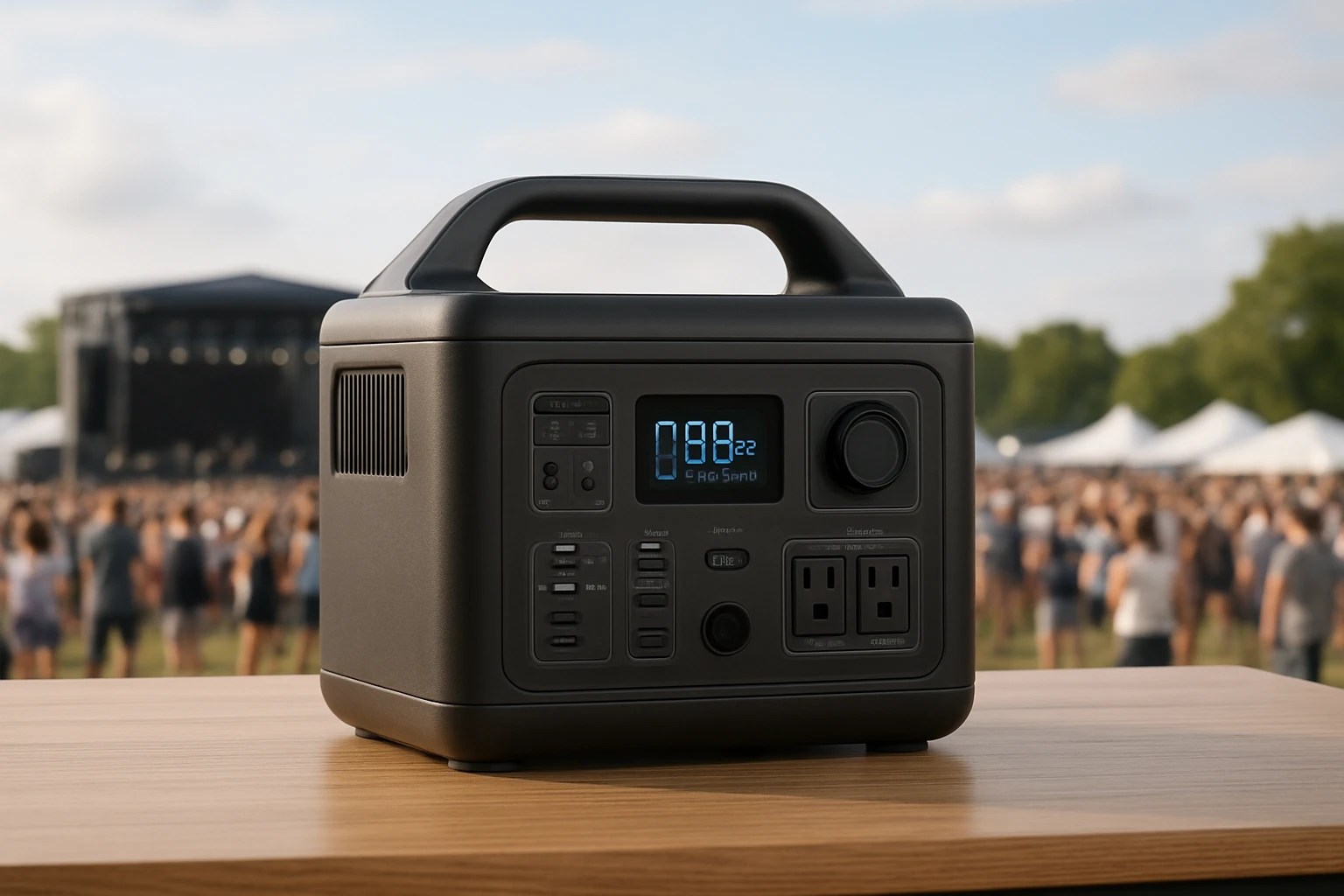
Festivals attract thousands of attendees who expect reliable electricity for lighting, sound, and personal devices. This guide explains the essential considerations for renting portable power stations, outlines safety best practices, and highlights two products that excel in festival environments. Readers will learn how to assess power requirements, compare key specifications, and operate rented equipment responsibly. By the end of this article, one will be equipped to make an informed decision and ensure uninterrupted power throughout any event.
Background and Context
Portable power stations are battery‑based generators that deliver AC, DC, and USB power without the noise or emissions of fuel‑driven generators. They rely on lithium‑based cells, often LiFePO4, which provide longer cycle life and enhanced safety compared with traditional lithium‑ion chemistry. Festival organizers typically require units that can sustain high‑power loads such as stage lighting, PA systems, and refrigeration while remaining lightweight for transport. Understanding voltage, wattage, and surge capacity is critical because many audio mixers and lighting rigs demand brief power spikes that exceed continuous ratings.
Key Concepts for Festival Power Planning
Assessing total energy demand begins with listing every device, noting its wattage, and estimating operating hours. The formula energy (Wh) = power (W) × time (h) yields the required battery capacity. For example, a 500 W sound mixer running for four hours consumes 2,000 Wh, which suggests a power station with at least that capacity plus a safety margin. Another important metric is the inverter efficiency, which determines how much stored energy is actually delivered to AC loads. Inverters with 90 % efficiency lose less energy as heat, extending runtime.
Charging flexibility influences rental logistics. Units that accept AC wall power, 12 V vehicle input, and solar panels provide redundancy in case one source fails. Rapid recharge capability is valuable when multiple events occur on consecutive days; a station that can recover 80 % of its capacity in under an hour reduces downtime dramatically.
Recommended Products for Festival Rentals
The first product recommended for high‑demand festival setups is the Anker SOLIX C1000 Gen 2 Portable Power Station. This unit delivers 2,000 W continuous output with a 3,000 W surge capability and stores 1,024 Wh in a LiFePO4 battery. Its 49‑minute ultra‑fast recharge using HyperFlash technology restores full capacity at 1,600 W, enabling rapid turnaround between performances. With ten output ports, organizers can power lighting rigs, audio mixers, refrigeration units, and personal devices simultaneously. The station holds a 4.7‑star rating from 1,024 reviews, indicating strong customer satisfaction, and is priced at $499.99.
The second product suited for smaller stages or vendor booths is the GRECELL 300W Portable Power Station. It provides 300 W continuous output (600 W surge) and a 288.6 Wh lithium battery, making it lightweight and easy to transport. The unit includes one AC outlet, a 60 W USB‑C PD port, three USB‑A fast‑charge ports, and a DC car socket, allowing up to nine devices to be powered concurrently. Charging options include a 110 V wall charger (6–7 hours), a 100 W solar panel (5–9 hours), and a 12 V vehicle source. With a 4.5‑star rating from 545 reviews and a price of $99.99, it offers a cost‑effective solution for low‑to‑moderate power needs.
Comparison and Selection Guide
| Feature | Anker SOLIX C1000 Gen 2 | GRECELL 300W |
|---|---|---|
| Continuous Power Output | 2,000 W | 300 W |
| Surge Capacity | 3,000 W | 600 W |
| Battery Capacity | 1,024 Wh (LiFePO4) | 288.6 Wh (Lithium) |
| Recharge Time (80 % to 100 %) | 49 minutes at 1,600 W | Approximately 1 hour via AC |
| Number of Output Ports | 10 (AC, DC, USB, car) | 9 (1 AC, 1 USB‑C PD, 3 USB‑A, 2 DC, 1 car, wireless) |
| Weight | Approximately 23 lb (14 % lighter than competitors) | Approximately 7 lb |
| Price | $499.99 | $99.99 |
| Average Rating | 4.7/5 (1,024 reviews) | 4.5/5 (545 reviews) |
When selecting a unit, one should match the required continuous power to the station’s rating, then add a 20 % safety margin for unexpected spikes. For large stages with multiple lighting arrays, the Anker model provides ample headroom and rapid recharge, minimizing the need for multiple units. For vendor stalls, food trucks, or small acoustic performances, the GRECELL model supplies sufficient power at a lower cost and with simpler handling.
Best Practices and Tips for Safe Festival Power Use
- Perform a load analysis at least two weeks before the event to verify that the chosen power station can sustain the total wattage for the planned duration.
- Place the power station on a stable, non‑conductive surface away from direct sunlight and moisture to prevent overheating and accidental short circuits.
- Utilize the built‑in UPS (uninterruptible power supply) feature of the Anker unit, which switches to battery within 10 ms, protecting sensitive equipment such as laptops and medical devices.
- Connect high‑draw devices first, then add lower‑power accessories to avoid exceeding the surge limit.
- Maintain a clear cable management system; label each cord and use cable ties to prevent tripping hazards in crowded festival aisles.
- Monitor battery state of charge through the companion app for the Anker model or the LCD display on the GRECELL unit, and schedule recharge periods during low‑attendance intervals.
- Carry a fire‑resistant protective case for the power station, especially when transporting it between stages or storing it overnight.
Frequently Asked Questions
- How many units are needed for a 10‑kilowatt stage? Calculate the total continuous load, then divide by the unit’s continuous output. For a 10 kW load, three Anker SOLIX C1000 units operating in parallel would provide sufficient capacity with redundancy.
- Can solar panels fully recharge these stations during a festival day? The Anker model can replenish 1,024 Wh in 1.8 hours with a 600 W solar array, while the GRECELL unit requires a 100 W panel for 5–9 hours, depending on sunlight intensity.
- Is it safe to operate the power station in rainy conditions? Both units are rated for indoor use; exposure to moisture can damage internal components. Use a weather‑proof enclosure or keep the station under a canopy.
- What is the expected lifespan of the batteries? The Anker LiFePO4 battery retains at least 80 % capacity after 4,000 charge cycles, equivalent to roughly ten years of typical festival use. The GRECELL lithium battery is designed for 500‑800 cycles before noticeable capacity loss.
- Do I need an inverter for low‑voltage DC devices? Both stations include built‑in pure‑sine wave inverters for AC loads and provide DC ports for direct connection, eliminating the need for a separate inverter for most applications.
Conclusion
Renting portable power stations for festivals requires careful evaluation of power demand, recharge speed, and safety features. The Anker SOLIX C1000 Gen 2 excels in high‑output scenarios with rapid recharge and robust build quality, while the GRECELL 300W offers an economical solution for modest power needs. By applying the load‑analysis methodology, adhering to safety best practices, and selecting the appropriate unit, organizers can deliver reliable electricity that enhances attendee experience and protects valuable equipment.
Products Featured in This Guide
Anker SOLIX C1000 Gen 2 Portable Power Station
Price: $499.99
Rating: 4.7/5 (1,024 reviews)
Featured because it provides 2,000 W continuous output, 1,024 Wh LiFePO4 capacity, and ultra‑fast 49‑minute recharge, making it ideal for high‑demand festival stages.
GRECELL 300W Portable Power Station
Price: $99.99
Rating: 4.5/5 (545 reviews)
Featured because it delivers 300 W continuous power, 288 Wh capacity, multiple charging modes, and a budget‑friendly price, suitable for small booths and vendor stalls.