
Introduction
Landlords who provide battery backup systems for rental units must navigate a complex set of safety standards, electrical codes, and practical considerations. This guide explains the essential rules governing transfer switches, outlines code compliance requirements, and offers actionable recommendations for selecting and installing reliable equipment. Readers will gain a clear understanding of how manual and automatic switches differ, what the National Electrical Code (NEC) demands for rental properties, and which products deliver the best value without compromising safety.
By the end of this article, landlords will be equipped to make informed decisions, avoid costly violations, and ensure tenants enjoy uninterrupted power during outages. The information is presented in a structured, step‑by‑step format, allowing both seasoned property managers and newcomers to follow the recommendations with confidence.
Background / Context
Battery backup systems, often paired with generators or solar arrays, are becoming a standard amenity in multifamily housing. They protect essential loads such as refrigeration, medical equipment, and security systems. However, the mere presence of a battery bank does not guarantee safe operation; a transfer switch is required to isolate the backup source from the utility grid.
The NEC, particularly Articles 700 (Emergency Systems) and 705 (Interconnected Power Production Sources), defines how transfer switches must be installed, labeled, and protected. In rental properties, additional local ordinances may impose stricter requirements for fire safety, accessibility, and tenant notification. Understanding these regulations is the first step toward a compliant installation.
Beyond code, landlords must consider reliability, ease of maintenance, and tenant usability. A poorly chosen switch can lead to nuisance tripping, premature equipment failure, or even hazardous back‑feeding of electricity onto the public grid.
Understanding Transfer Switches
A transfer switch is a device that disconnects the utility supply and connects a backup power source when the grid fails. There are two primary categories: manual and automatic. Manual switches require a landlord or tenant to operate a lever or handle, whereas automatic switches detect loss of voltage and changeover within fractions of a second.
Key performance metrics include ampere rating, voltage compatibility, switching time, enclosure rating (e.g., NEMA 3R for outdoor exposure), and safety features such as lockout mechanisms. The choice between manual and automatic often hinges on the criticality of the loads being protected and the budget allocated for the installation.
For example, a property that houses medical‑grade refrigeration may justify the higher cost of an automatic switch, while a standard residential unit with basic lighting and a refrigerator can rely on a robust manual switch.
Manual vs. Automatic Switches: When to Use Each
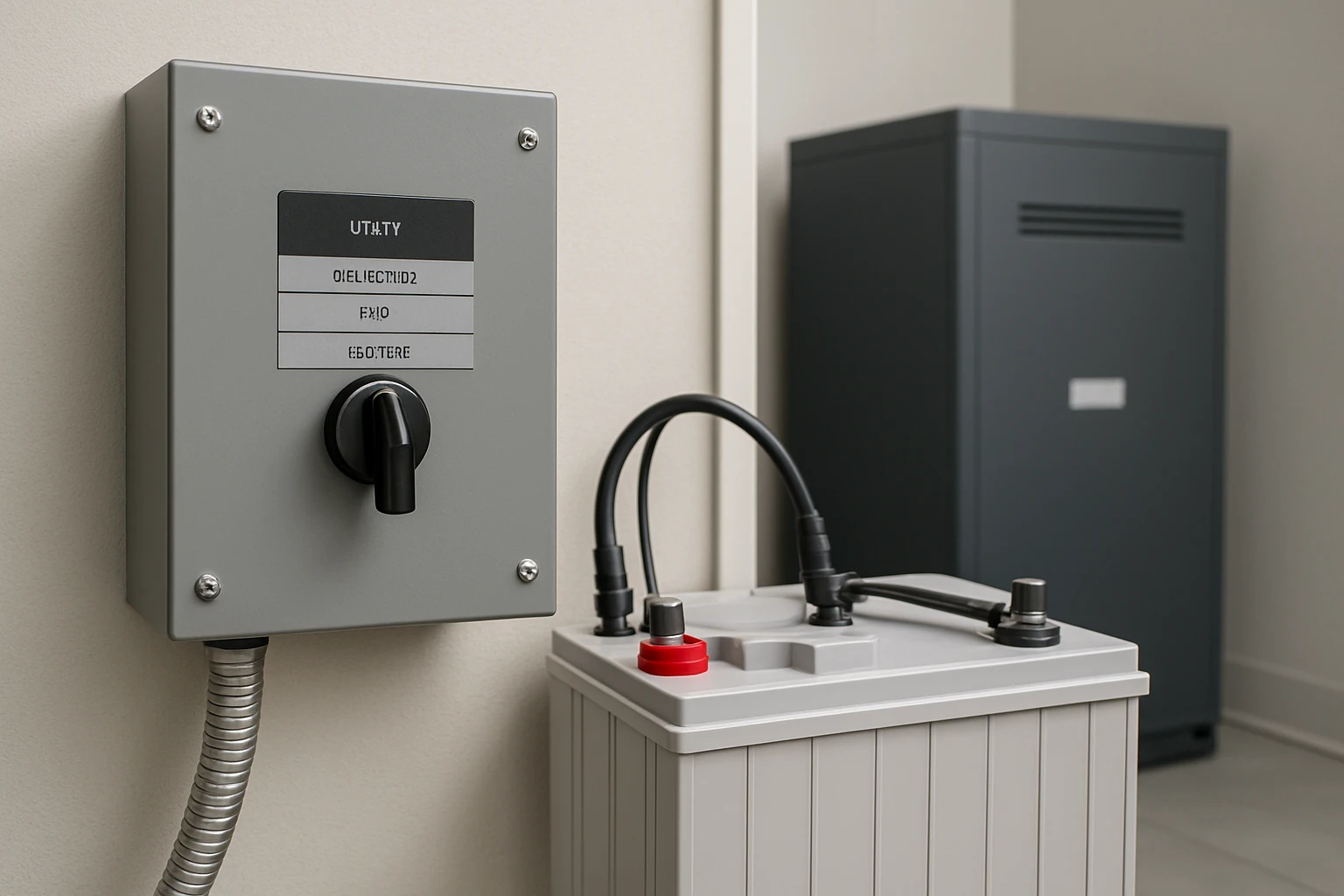
Manual switches, such as the MUJURUR 100A Manual Transfer Switch, provide a simple, cost‑effective solution. They are ideal for properties where the landlord can respond quickly to outages or where tenants are educated on proper operation. The MUJURUR unit offers a 100‑amp rating, 24,000‑watt capacity, and a galvanized steel NEMA 3R enclosure that resists rain and corrosion. With a 4.6‑star rating from 212 reviews and a 10‑year warranty, it balances durability with affordability at $58.99.
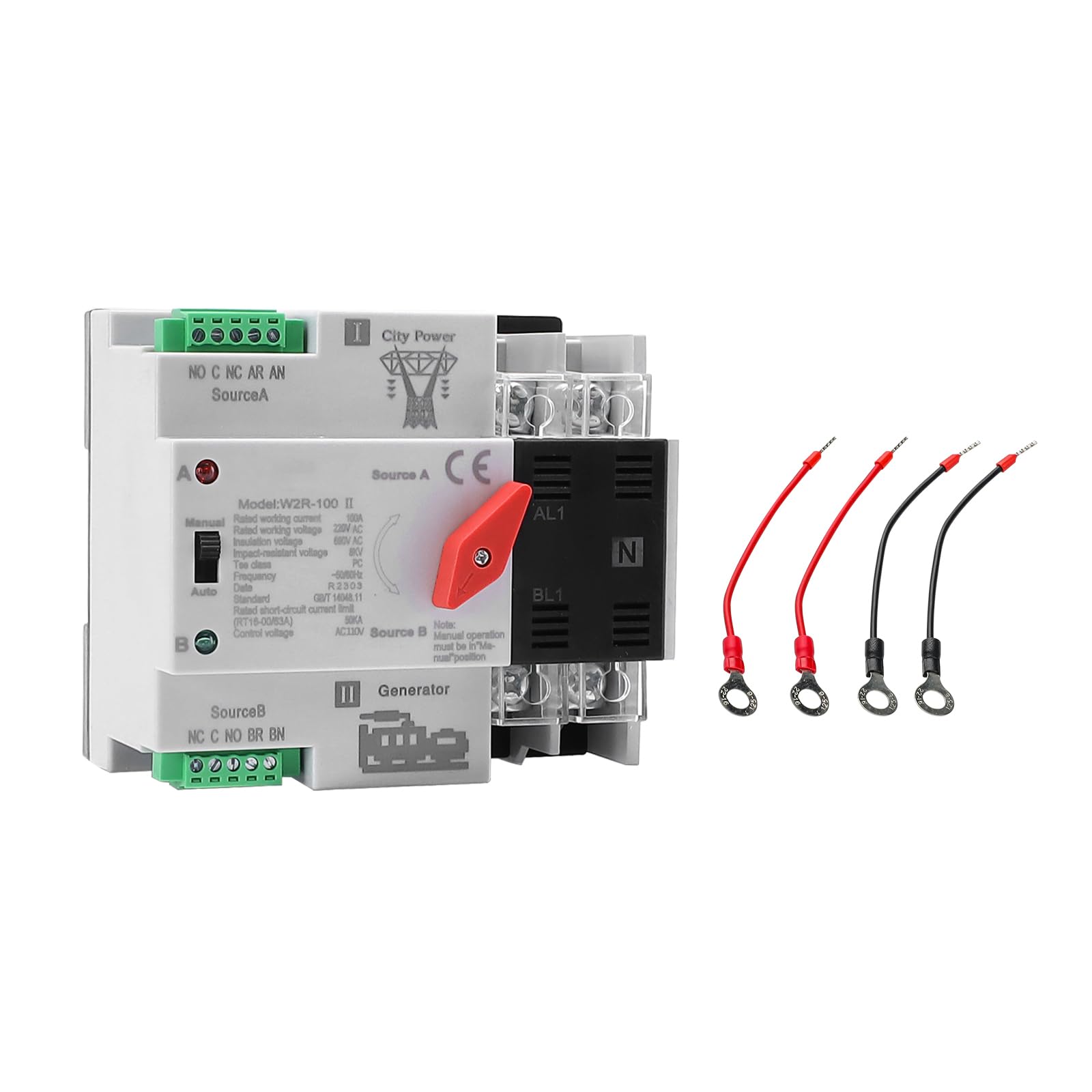
Automatic switches, like the IGE YAPA 100A Automatic Transfer Switch, detect voltage loss and switch within 0.05 seconds. This rapid response is critical for equipment that cannot tolerate even brief interruptions, such as sump pumps or server racks. The IGE YAPA model supports dual‑power sources, includes LED indicators for status monitoring, and provides over‑voltage/under‑voltage protection. It holds a 4.6‑star rating from 175 reviews and is priced at $36.99, making it an attractive option for high‑demand applications.
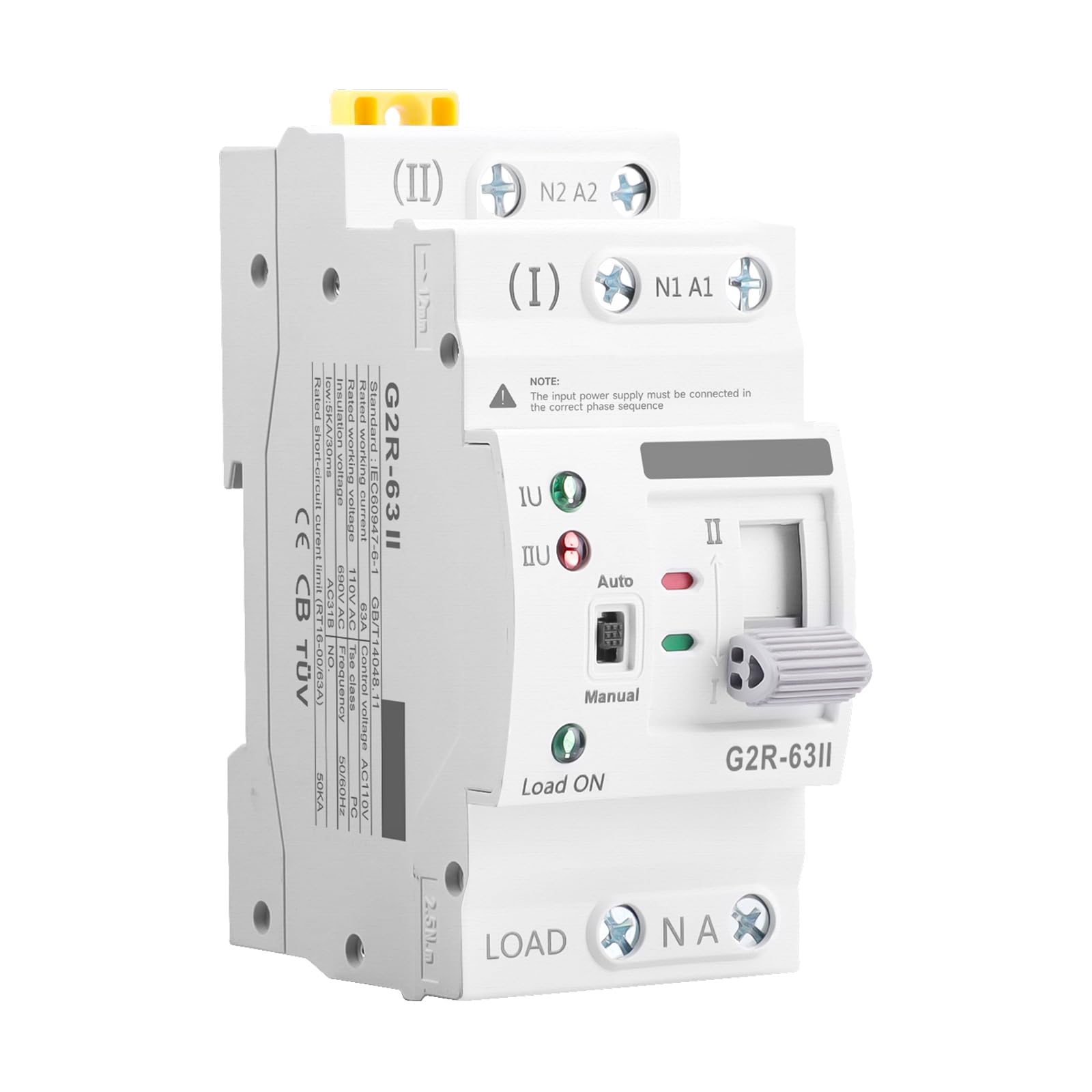
For smaller loads or limited panel space, the IGE YAPA 63A Mini Automatic Transfer Switch offers a compact solution. Rated for up to 63 amps, it delivers fast automatic changeover for UPS‑backed circuits, such as home office equipment or security systems. With a 4.5‑star rating from 114 reviews and a price of $38.99, it provides a balance between performance and size constraints.
Code Compliance for Rental Properties
NEC compliance begins with proper labeling. Every transfer switch must be clearly marked with its rating, source identification (Utility vs. Backup), and disconnect status. In addition, the switch must be installed in a location that is readily accessible to qualified personnel but not easily reachable by untrained tenants.
Article 700 requires that emergency power systems be capable of supplying essential loads for a minimum of 90 minutes. This translates to selecting a switch whose ampere rating matches or exceeds the calculated load of the essential circuit panel. For a typical one‑bedroom unit, a 100‑amp manual switch often suffices, whereas larger units with multiple high‑draw appliances may need a 150‑amp automatic solution.
Grounding and bonding are non‑negotiable. The transfer switch must have a dedicated grounding point, as highlighted in the MUJURUR product description, to prevent stray currents. Additionally, local fire codes may mandate that outdoor enclosures meet NEMA 3R standards, ensuring resistance to rain, hail, and wind.
Selection Guide: Matching Switches to Property Needs
| Property Type | Recommended Switch | Key Reasons |
|---|---|---|
| Single‑Family Rental (≤2 bedrooms) | MUJURUR 100A Manual Transfer Switch | Adequate 100 A capacity, outdoor‑rated enclosure, low cost, simple operation. |
| Multi‑Unit Building with Critical Loads | IGE YAPA 100A Automatic Transfer Switch | Fast 0.05 s changeover, dual‑source flexibility, built‑in voltage protection. |
| Small Office or Home‑Office Suite | IGE YAPA 63A Mini Automatic Transfer Switch | Compact size, suitable for UPS circuits, automatic operation for sensitive electronics. |
When evaluating a product, consider the following checklist:
- Amperage rating meets or exceeds calculated essential load.
- Voltage compatibility (120 V vs. 240 V) aligns with the property’s wiring.
- Enclosure rating (NEMA 3R for outdoor, NEMA 1 for indoor).
- Safety features: lockout holes, grounding terminals, over‑voltage protection.
- Warranty length and manufacturer support.
Installation Considerations
Even the most reliable switch can become a hazard if installed incorrectly. Landlords should engage a licensed electrician to perform the following tasks:
- Conduct a load analysis to verify that the switch rating matches the essential circuit.
- Install a dedicated disconnecting means within sight of the transfer switch, as required by NEC 702.11.
- Secure the enclosure to a non‑combustible surface, ensuring proper clearances for ventilation.
- Bond the grounding terminal to the building’s grounding electrode system.
- Label all circuits clearly, indicating whether they are powered by utility or backup source.
For manual switches, provide tenants with a concise operation guide that includes safety warnings about never operating the switch while the generator is running without proper ventilation. For automatic switches, verify that the LED indicators function correctly and that the device logs events for future troubleshooting.
Maintenance and Testing
Regular testing is essential to ensure that the backup system performs when needed. Landlords should schedule a quarterly test that includes:
- Simulating a power outage by disconnecting the utility feed.
- Observing the transfer switch’s response time and confirming that the backup source energizes the essential circuits.
- Checking battery voltage levels and electrolyte condition (if applicable).
- Inspecting the enclosure for corrosion, loose connections, or damaged wiring.
Document each test in a maintenance log and retain records for at least one year, as many local jurisdictions require proof of compliance during inspections.
Best Practices & Tips
1. Standardize equipment. Using the same brand and model across multiple units simplifies spare‑part inventory and technician training.
2. Integrate with smart monitoring. Many modern automatic switches can interface with building management systems, providing real‑time alerts via email or SMS.
3. Plan for future expansion. Select a switch with a higher amp rating than currently required if you anticipate adding more essential loads.
4. Educate tenants. Provide a one‑page cheat sheet near the switch that outlines safe operation, emergency contacts, and the location of the generator.
5. Consider insurance implications. Some insurers offer premium discounts for properties equipped with NEC‑compliant transfer switches and documented maintenance programs.
Frequently Asked Questions
- What is the difference between a “transfer switch” and a “breaker”?
- A transfer switch isolates the utility from a backup source, while a breaker merely protects a circuit from overload. The switch prevents back‑feeding, which can endanger utility workers.
- Do I need a permit to install a transfer switch?
- Most jurisdictions require an electrical permit for any permanent installation that modifies the service entrance. Check with the local building department before proceeding.
- Can I install a transfer switch myself?
- Only a licensed electrician should perform the wiring, as improper connections can violate NEC Article 110 and void insurance coverage.
- How often should I test my battery backup system?
- Quarterly testing is recommended, with a full load test at least once a year to verify battery capacity and switch performance.
- What happens if the transfer switch fails during an outage?
- If a manual switch fails, the utility will remain disconnected and the backup source will not energize. Automatic switches typically have self‑diagnostic features that alert the owner to failures.
Conclusion
Providing reliable battery backup in rental properties is both a tenant amenity and a compliance obligation. By selecting the appropriate transfer switch—whether the sturdy MUJURUR 100A Manual Transfer Switch, the rapid IGE YAPA 100A Automatic Transfer Switch, or the compact IGE YAPA 63A Mini Automatic Transfer Switch—landlords can meet NEC requirements, protect critical loads, and enhance property value. Proper installation, regular testing, and clear tenant communication complete the compliance loop, ensuring that backup power functions flawlessly when it is needed most.
Products Featured in This Guide
MUJURUR 100A Manual Transfer Switch
Price: $58.99 | Rating: 4.6/5 (212 reviews)
Featured because it offers a high‑capacity 100 A rating, NEMA 3R outdoor enclosure, and a 10‑year warranty, making it ideal for single‑family rentals that need a cost‑effective, reliable manual solution.
IGE YAPA 100A Automatic Transfer Switch
Price: $36.99 | Rating: 4.6/5 (175 reviews)
Featured for its rapid 0.05 s changeover, dual‑source capability, and built‑in voltage protection, which are essential for multi‑unit buildings with critical loads.
IGE YAPA 63A Mini Automatic Transfer Switch
Price: $38.99 | Rating: 4.5/5 (114 reviews)
Featured because its compact design and 63 A rating suit small office spaces or UPS‑protected circuits where space is limited but automatic protection is desired.