The Ultimate Guide to Inverter Topologies: Noise, Efficiency, and Choosing Between Pure Sine and Modified Sine
Introduction
Inverter technology powers everything from recreational vehicles to remote cabins, yet many users remain uncertain about the nuances of waveform quality, efficiency, and audible noise. This guide explains the fundamental topologies, clarifies the practical impact of pure sine versus modified sine wave output, and equips readers with a systematic method for selecting the optimal inverter for their specific applications. Readers will discover how waveform shape influences sensitive electronics, why efficiency matters for battery longevity, and which safety features should never be ignored. By the end of this article, one will be prepared to make an informed purchasing decision backed by technical insight.
Background and Context
Inverters convert direct current (DC) from batteries or solar panels into alternating current (AC) suitable for household appliances. The conversion process involves switching devices, magnetic components, and control algorithms that together define the output waveform. Historically, modified sine wave (also called quasi‑square) inverters dominated the market because they were inexpensive to produce, but advances in semiconductor technology have made high‑quality pure sine wave inverters more affordable. Understanding the electrical characteristics of each waveform type is essential for preventing equipment damage, minimizing energy waste, and reducing audible hum in living spaces.
Key Inverter Topologies
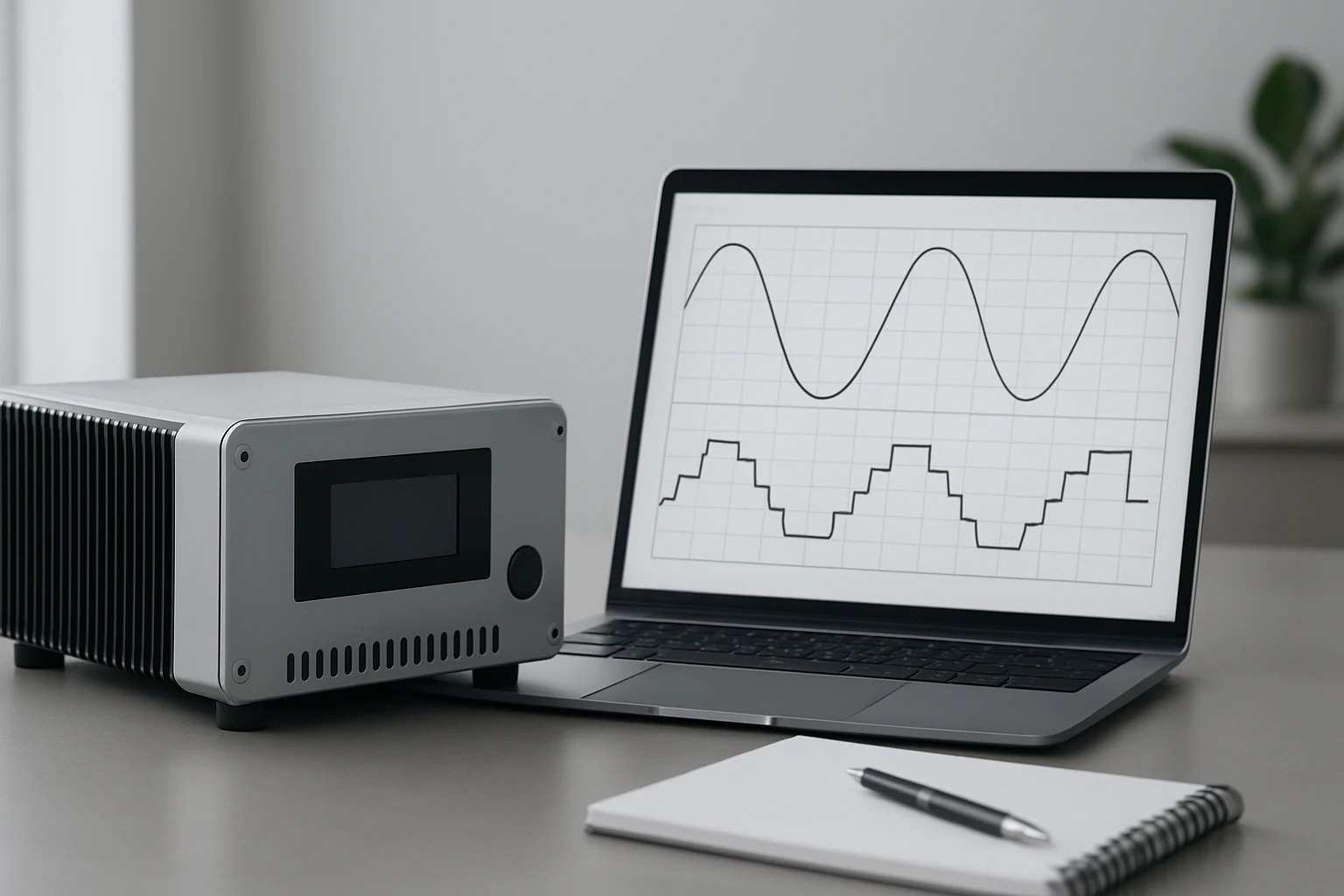
Three primary topologies dominate the market: square wave, modified sine wave, and pure sine wave. Square‑wave inverters generate a simple on‑off voltage that is unsuitable for most modern electronics; they are rarely recommended outside of niche industrial tools. Modified sine wave inverters approximate a sine shape by alternating between positive, zero, and negative voltage levels, resulting in a stepped waveform that can cause motor vibration and increased heat in some devices. Pure sine wave inverters employ pulse‑width modulation (PWM) or multilevel switching to synthesize a smooth sinusoidal output that mirrors utility power, ensuring compatibility with all AC loads.
Pure Sine Wave vs. Modified Sine Wave
Pure sine wave inverters deliver a continuous, smooth voltage curve with total harmonic distortion (THD) typically below 5 %. This low distortion protects sensitive electronics such as laptops, medical equipment, and audio‑visual gear from interference and premature wear. Modified sine wave inverters exhibit higher THD, often ranging between 15 % and 30 %, which can lead to audible buzzing in speakers, reduced motor efficiency, and occasional malfunction of devices that rely on precise timing signals. For users who prioritize quiet operation and equipment longevity, pure sine wave technology is the superior choice.
Efficiency Considerations
Efficiency measures the proportion of DC power that is successfully converted to usable AC power. Modern pure sine wave inverters achieve efficiencies above 90 % under typical loads, thanks to advanced MOSFET or IGBT switching and optimized control loops. Modified sine wave units may claim similar peak efficiencies, but their higher harmonic content often results in additional losses within connected loads, effectively lowering overall system efficiency. When operating off‑grid, every percentage point of efficiency translates directly into longer battery runtime and reduced solar panel size requirements.
Noise and Harmonics
Audible noise originates from two sources: the inverter’s internal cooling fans and the electromagnetic vibrations produced by the switching process. Pure sine wave designs typically employ smart cooling algorithms that activate fans only when temperature or load thresholds are exceeded, keeping noise levels below 65 dB in most residential scenarios. Modified sine wave inverters often run fans continuously to dissipate the extra heat generated by harmonic currents, resulting in a louder operating profile. Additionally, harmonic distortion can cause electromagnetic interference (EMI) that manifests as static on radio receivers or flickering LED lighting.
Product Recommendation
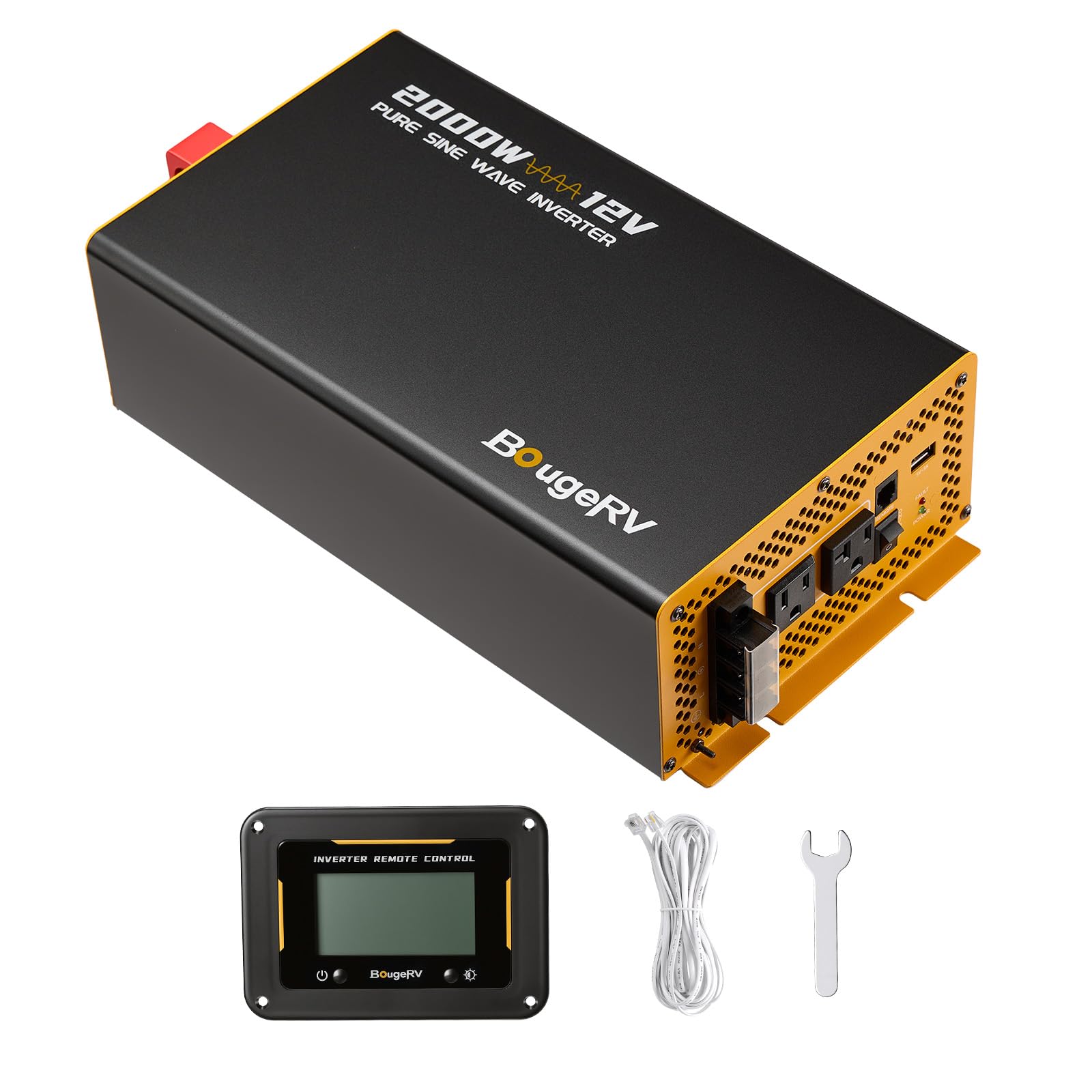
For readers seeking a reliable, high‑performance solution, the BougeRV 2000W Pure Sine Wave Inverter stands out as an exemplary choice. This inverter delivers a continuous 2000 W output through a 20 A outlet, with a peak capacity of 4000 W, ensuring that heavy‑duty appliances such as microwaves or power tools operate without interruption. Its pure sine wave output maintains THD ≤5 %, safeguarding laptops, smartphones, and medical devices from voltage irregularities. The unit incorporates dual smart monitoring modes—a 19.68‑ft wired remote and a 32.8‑ft Bluetooth‑enabled app—allowing users to track performance metrics from a distance, an advantage for concealed installations in RVs or solar‑powered cabins. Smart cooling, driven by dual intelligent fans, activates only when temperatures exceed 113 °F or load surpasses 800 W, keeping noise below 65 dB and preserving battery life. The inverter arrives with 2 AWG, 3‑ft battery cables and an 18‑month technical support guarantee, reinforcing its suitability for off‑grid enthusiasts.
Comparison and Selection Guide
When evaluating inverters, consider the following criteria:
- Power Rating: Match the continuous wattage to the highest‑consuming appliance you intend to run; include a safety margin of 20 %.
- Waveform Quality: Choose pure sine wave for sensitive electronics and low‑noise environments; select modified sine only for simple resistive loads.
- Efficiency: Look for specifications indicating >90 % efficiency at 50 % load; verify real‑world test results when possible.
- Cooling System: Prefer smart fan control that reduces audible noise and extends inverter lifespan.
- Safety Features: Ensure the presence of overload, short‑circuit, over‑temperature, and low‑voltage shutdown protections.
- Monitoring Options: Remote displays or mobile apps provide valuable insight into battery health and load distribution.
Applying this framework, the BougeRV model excels in power rating, waveform purity, efficiency, and monitoring capabilities, making it a strong candidate for both RV travelers and stationary off‑grid homes.
Best Practices & Tips
- Size the battery bank to supply at least 1.5 times the inverter’s continuous load, accounting for depth‑of‑discharge limits.
- Use appropriately gauged cables; for a 2000 W inverter, 2 AWG copper is recommended to minimize voltage drop.
- Install the inverter in a well‑ventilated enclosure, but avoid direct sunlight to reduce cooling demand.
- Periodically clean fan filters and inspect connections for corrosion, especially in marine or humid environments.
- Enable the inverter’s built‑in low‑voltage shutdown to protect batteries from deep discharge during extended outages.
Frequently Asked Questions
- What is the practical difference between THD 5 % and THD 20 %?
- Lower THD means the voltage waveform is closer to a perfect sine wave, resulting in less heat generation in devices, reduced electromagnetic interference, and longer equipment lifespan.
- Can a pure sine wave inverter run a refrigerator efficiently?
- Yes; pure sine wave inverters provide the stable voltage required by compressor motors, reducing start‑up current spikes and preventing premature wear.
- Is the BougeRV inverter compatible with solar charge controllers?
- It is fully compatible; the inverter’s 12 V DC input can be connected directly to a solar‑charged battery bank managed by any standard MPPT or PWM charge controller.
- How does the remote app improve inverter management?
- The app displays real‑time voltage, current, power output, and temperature, allowing users to adjust loads before reaching overload thresholds.
- What safety certifications should an inverter have?
- Look for UL, CE, or IEC certifications, which indicate compliance with international safety and electromagnetic compatibility standards.
Conclusion
The choice between pure sine and modified sine wave inverters hinges on waveform quality, efficiency, and noise considerations. Pure sine wave technology, exemplified by the BougeRV 2000W Pure Sine Wave Inverter, delivers low harmonic distortion, higher efficiency, and quieter operation, making it the preferred solution for most off‑grid and mobile applications. By applying the comparison criteria and best‑practice tips outlined in this guide, readers can confidently select an inverter that meets their power demands while safeguarding their equipment and extending battery life.
Products Featured in This Guide
BougeRV 2000W Pure Sine Wave Inverter
Price: $199.99
Rating: 5/5.0 (3 reviews)
Featured because it provides a high‑power pure sine output, smart monitoring, and robust safety features that illustrate the advantages discussed throughout the guide.