Introduction
Power outages are becoming more frequent as extreme weather events increase in intensity and duration. Homeowners, campers, and remote workers require reliable backup power that can sustain essential devices for days or even weeks. This guide explains the fundamental concepts behind portable solar generators, provides a step‑by‑step method for sizing a system, and outlines maintenance practices that extend battery life. Readers will also discover two highly rated products that exemplify the balance between performance and portability.
The article is organized to first establish a technical foundation, then explore practical considerations such as load analysis, solar input, and expansion options. Throughout, the guide references real‑world examples to illustrate how the principles apply in everyday situations.
Background and Context
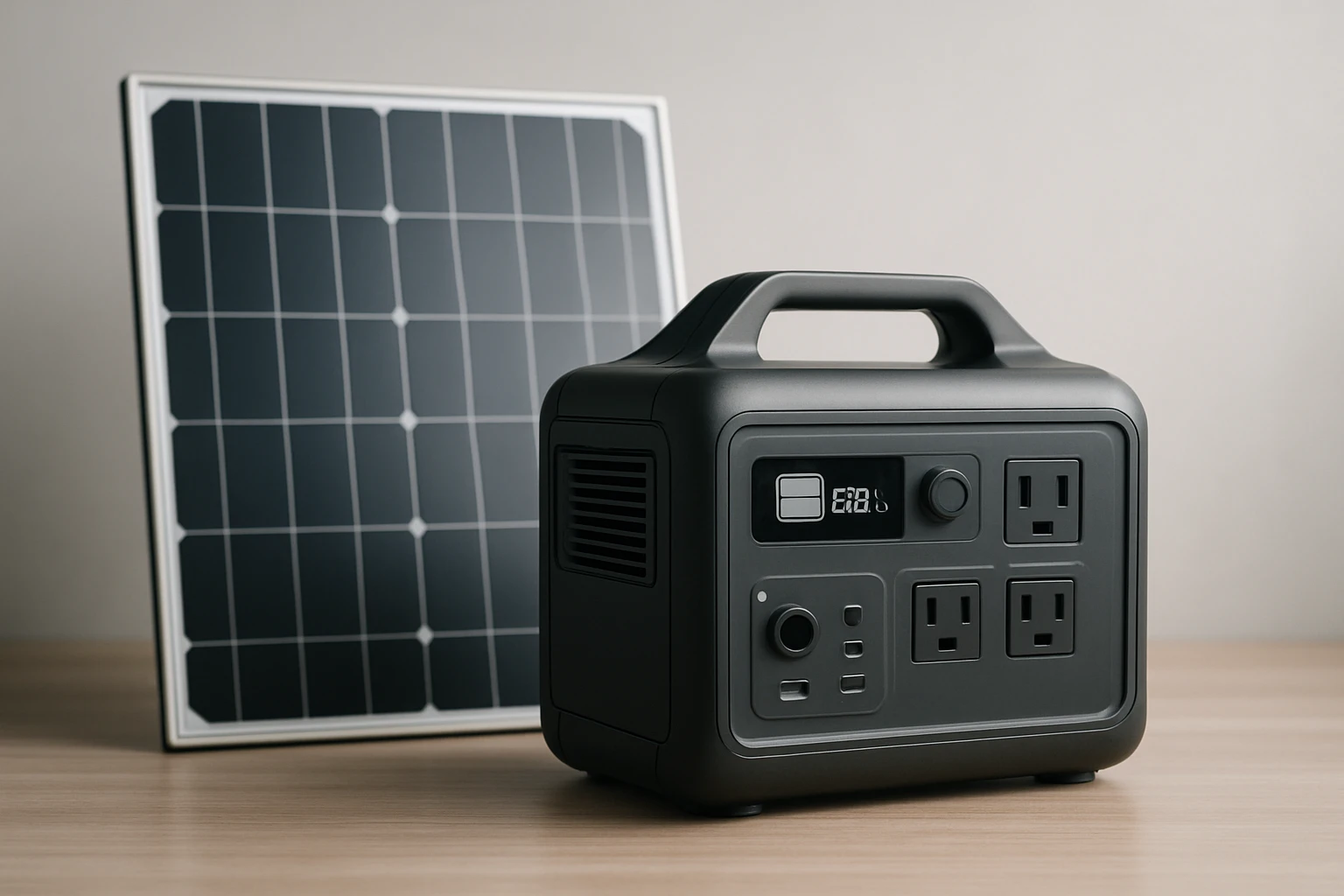
Portable solar generators combine a rechargeable battery, an inverter, and a charge controller in a single enclosure. The battery stores electrical energy that can be drawn through AC outlets, DC ports, or USB connections. When paired with photovoltaic panels, the system can replenish its charge without reliance on the utility grid.
Two battery chemistries dominate the market: lithium‑ion (Li‑ion) and lithium iron phosphate (LiFePO4). LiFePO4 offers higher cycle life and improved thermal stability, making it well suited for long‑term backup scenarios. However, Li‑ion typically provides higher energy density, which translates to lighter units for the same capacity.
Understanding the relationship between rated power, peak power, and battery capacity is essential. Rated power indicates the continuous output the inverter can sustain, while peak power represents short‑term bursts for high‑startup appliances such as refrigerators or power tools. Battery capacity, expressed in watt‑hours (Wh), determines how long a given load can be powered before recharging is required.
Key Concepts for Selecting a Portable Solar Generator
Before purchasing a generator, assess the critical loads that must remain operational during an outage. Common items include refrigeration, communication devices, lighting, and medical equipment. Calculate the total wattage of these devices and multiply by the expected duration of use to estimate required Wh.
Next, consider the inverter capacity. A 300 W inverter can comfortably run a laptop and a LED lamp, but it will struggle with a window‑air‑conditioner that may draw 1 200 W at startup. Selecting a unit with a higher peak rating provides a safety margin for appliances with surge requirements.
Solar input capability determines how quickly the battery can be recharged in daylight. An 800 W solar input, for example, can replenish a 2 000 Wh battery in under three hours under optimal sun conditions. Ensure the generator supports the solar panel wattage you intend to use.
Finally, evaluate portability. Weight, dimensions, and handle design affect how easily the unit can be moved between a garage, campsite, or emergency shelter. A balance between capacity and weight is often the deciding factor for users who need both backup power and mobility.
Product Recommendations
Two products stand out for their blend of power, efficiency, and user‑friendly features. The first recommendation addresses high‑capacity home backup, while the second excels in lightweight, short‑duration scenarios.
Anker SOLIX C2000 delivers 2 400 W continuous output and a peak of 4 000 W, powered by a 2 048 Wh LiFePO4 battery. Its standby consumption is only 9 W, allowing a dual‑door refrigerator to operate for up to 32 hours without recharging. The unit can be expanded to 4 kWh with an additional battery module, effectively doubling runtime for larger loads. Six charging methods—including AC, car alternator, and solar—enable a full charge in 58 minutes, a speed rarely seen in comparable generators. At 41.7 lb, the C2000 Gen 2 is 25 % lighter than many competitors, making it suitable for both home and mobile use.
Jackery Explorer 300 provides 293 Wh of lithium‑ion capacity with a pure‑sine‑wave inverter rated at 300 W. Weighing only 7.1 lb, it is ideal for camping, hunting trips, or as an emergency charger for smartphones and laptops. The Explorer 300 can be recharged to 80 % in two hours using a wall outlet and a 60 W USB‑C Power Delivery port simultaneously. It also accepts up to 100 W of solar input via the optional SolarSaga panel, enabling off‑grid recharging in daylight.
Both generators have earned high customer ratings—4.7/5 from 225 reviews for the Anker model and 4.6/5 from over 10 000 reviews for the Jackery. These scores reflect consistent performance, durability, and user satisfaction across a wide range of applications.
Comparison and Selection Guide
| Feature | Anker SOLIX C2000 | Jackery Explorer 300 |
|---|---|---|
| Battery Capacity | 2 048 Wh (expandable to 4 kWh) | 293 Wh |
| Continuous Power | 2 400 W | 300 W |
| Peak Power | 4 000 W | 300 W (same as continuous) |
| Charging Methods | AC, car alternator (800 W), solar (up to 800 W), USB‑C, wall outlet | AC, car outlet, solar (up to 100 W), USB‑C PD |
| Charge Time (full) | 58 min (AC), 3 h (car alternator) | ~2 h to 80 % (wall + USB‑C) |
| Weight | 41.7 lb | 7.1 lb |
| Price | $799.99 | $199.00 |
| Rating | 4.7/5 (225 reviews) | 4.6/5 (10 751 reviews) |
When selecting a generator, match the device to the intended use case. For whole‑home backup during prolonged outages, the Anker SOLIX C2000 offers sufficient capacity to run refrigeration, communication equipment, and essential lighting for multiple days. For lightweight travel or short‑term emergencies, the Jackery Explorer 300 provides enough power to keep phones, lights, and a small fan operational without adding significant weight.
Consider future expansion as well. The C2000’s modular battery system allows users to increase stored energy without purchasing an entirely new unit. Conversely, the Explorer 300’s compact form factor makes it easy to carry multiple units for extended trips, though each additional unit adds cost.
Best Practices & Tips for Long‑Term Reliability
- Perform a monthly self‑test by discharging the battery to 20 % and then recharging it to full capacity. This practice maintains battery health and verifies system functionality.
- Store the generator in a cool, dry environment when not in use. Extreme temperatures accelerate capacity loss, especially for lithium‑ion chemistries.
- When using solar panels, position them at a 30‑degree angle facing true south (or north in the southern hemisphere) for optimal sun exposure. Clean the panel surface regularly to prevent dust buildup.
- Utilize pure‑sine‑wave inverters for sensitive electronics such as medical devices, laptops, and audio equipment. Pure‑sine output mimics grid power and reduces the risk of damage.
- Integrate a battery management system (BMS) that monitors cell voltage, temperature, and state‑of‑charge. Both featured products include built‑in BMS, but external monitoring can provide additional peace of mind for larger installations.
Frequently Asked Questions
- How long can a portable solar generator power a refrigerator? The Anker SOLIX C2000 can run a dual‑door refrigerator for up to 32 hours on a single charge, and up to 64 hours with an expanded 4 kWh battery. The Jackery Explorer 300 can operate a small 12 V fridge for approximately 4‑5 hours before requiring a recharge.
- Can I use the generator while it is charging? Yes. Both units support pass‑through charging, allowing devices to draw power while the battery is being replenished via solar or AC input.
- What type of solar panel is recommended? Panels with a maximum power point tracking (MPPT) controller are ideal. The Anker model accepts up to 800 W of solar input, so multiple 200 W panels can be connected in parallel. The Jackery Explorer 300 is compatible with the SolarSaga 100 W panel, but higher‑wattage panels may not be recognized.
- Is there a warranty? The Anker SOLIX C2000 includes a standard manufacturer warranty (typically 2 years). The Jackery Explorer 300 is covered by a 2‑year warranty as well. Verify warranty terms on the Amazon product page.
- How does temperature affect performance? Battery capacity decreases in extreme cold. For best performance, keep the unit above 0 °C (32 °F). Some models provide a low‑temperature protection mode that reduces output to prevent damage.
Conclusion
Portable solar generators provide a versatile solution for both emergency backup and off‑grid adventures. By understanding load requirements, inverter capacity, and solar input, users can select a system that delivers reliable power for the duration of an outage. The Anker SOLIX C2000 excels in high‑capacity home backup, while the Jackery Explorer 300 offers lightweight convenience for short trips and emergency kits. Regular maintenance, proper storage, and mindful charging practices ensure that these devices remain ready when power is needed most.
Products Featured in This Guide
Anker SOLIX C2000
Price: $799.99
Rating: 4.7/5 (225 reviews)
Featured because it provides high continuous and peak power, rapid 58‑minute full charge, expandable 4 kWh capacity, and a durable LiFePO4 battery suitable for long‑term home backup.
Jackery Explorer 300
Price: $199.00
Rating: 4.6/5 (10,751 reviews)
Featured because it offers a compact, lightweight design, pure‑sine‑wave output, fast dual‑source charging, and sufficient capacity for short‑duration emergencies and outdoor activities.